
Quick Answer
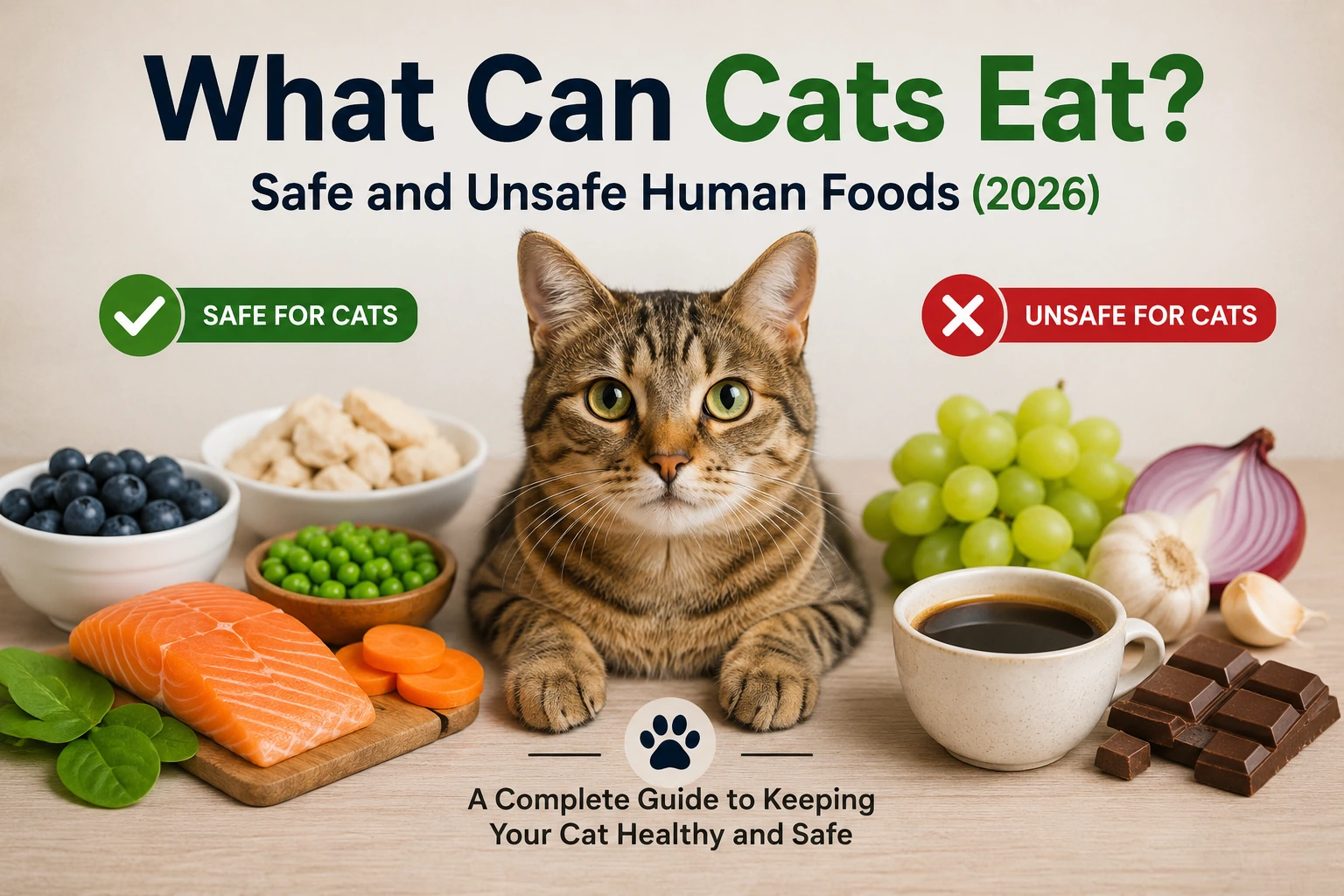
Cats can safely eat small amounts of plain cooked meat, plain cooked fish, cooked eggs, a few cooked vegetables and tiny portions of certain fruits. Everything else in their bowl should come from a complete and balanced cat food. Human food must stay under 10 percent of your cat’s daily calories. Onions, garlic, chocolate, grapes, raisins, alcohol, caffeine and anything containing xylitol are never safe, at any amount.
Reviewed for accuracy against ASPCA Animal Poison Control, WSAVA and AAFCO guidance. This article is educational and does not replace advice from your own veterinarian.
What Can Cats Eat? The Short Answer
If you are standing in the kitchen with a cat staring at your plate, the honest answer is that very little of what you are eating is necessary for your cat, and some of it is dangerous.
Cats are obligate carnivores. Their bodies are built to get nearly all nutrition from animal tissue, and they have lost the ability to make several nutrients that other animals produce internally. A complete commercial cat food supplies those nutrients in the correct ratios. Human food, however wholesome it looks to you, does not.
So the useful question is not “what can cats eat” in general. It is which human foods a cat can eat occasionally without harm. This guide answers that in three parts: foods that are genuinely safe in small portions, foods that are toxic and need a vet call, and a third group almost nobody writes about, the foods that are not poisonous but still a poor idea.
Why a Cat’s Diet Works Differently From Yours
Understanding one biological fact makes every feeding decision easier.
Cats cannot make taurine, an amino acid essential for heart muscle function, vision and reproduction. Dogs and humans manufacture their own. Cats must eat it, and it is found almost exclusively in animal tissue. A taurine deficient diet can cause dilated cardiomyopathy, a serious heart condition, and retinal degeneration that leads to blindness. Both can develop slowly and silently over months.
Three more differences matter at the dinner table:
- Cats cannot taste sweetness: They lack functioning sweet taste receptors. When your cat shows interest in your ice cream, it is responding to the fat and dairy, not the sugar.
- Cats have limited carbohydrate processing: Their liver produces less of the enzymes needed to break down starch efficiently, which is why bread and rice offer them almost nothing.
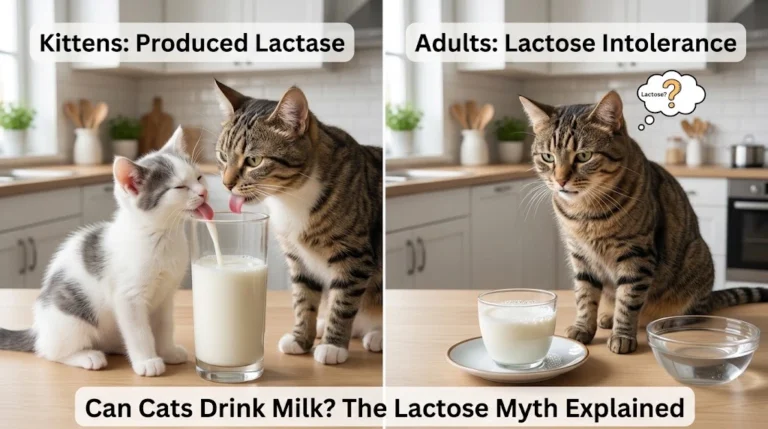
- Most adult cats lose lactase: After weaning, the enzyme that digests milk sugar declines sharply. This is why the saucer of milk in old storybooks is a genuinely bad idea.
Everything below follows from those four facts.
The 10 Percent Rule: How Much Human Food Is Actually Safe
Veterinary nutrition bodies including WSAVA recommend that treats and extras stay under 10 percent of a cat’s total daily calories. The remaining 90 percent should come from a complete diet.
That sounds generous until you see the actual numbers. Cats are small animals with modest calorie needs, so 10 percent is a very small amount of food.
| Cat weight | Approximate daily calories | 10 percent treat budget | What that looks like |
| 3 kg (7 lb) | 160 to 200 kcal | 16 to 20 kcal | About one teaspoon of cooked chicken |
| 4 kg (9 lb) | 200 to 240 kcal | 20 to 24 kcal | About two teaspoons of cooked chicken |
| 5 kg (11 lb) | 240 to 300 kcal | 24 to 30 kcal | Roughly one tablespoon of cooked fish |
| 6 kg (13 lb) | 280 to 340 kcal | 28 to 34 kcal | Slightly more than one tablespoon |
These are general maintenance figures for neutered adult cats with typical indoor activity. Kittens, pregnant cats, seniors and cats with medical conditions have different requirements, so treat this as a starting point rather than a prescription.
There is one detail that most owners miss, and it undoes the whole rule: you have to subtract the treat calories from the meal, not add them on top. A tablespoon of tuna given after a full dinner is not a 10 percent treat. It is a 10 percent calorie surplus, repeated daily. That is how indoor cats gain weight without anyone noticing.
If your cat is already carrying extra weight, our guide to low calorie treats and portion control covers how to apply this rule during a weight management plan.
Human Foods Cats Can Eat Safely
Each food below is safe in small, plain, properly prepared portions. Plain means no salt, no oil, no butter, no garlic, no onion and no seasoning of any kind.
Cooked Meat and Poultry
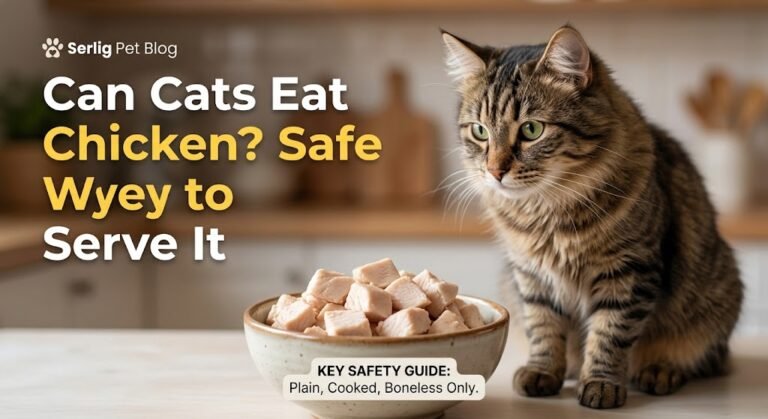
Plain cooked chicken, turkey, beef and lamb are the safest human foods you can offer a cat. They are species appropriate, protein rich and usually well tolerated.
Serve them boiled or baked with nothing added. Remove all skin, fat and bone. Cooked bones splinter and can perforate the digestive tract, and poultry bones are the worst offenders. Shred the meat into small pieces so it is easy to swallow.
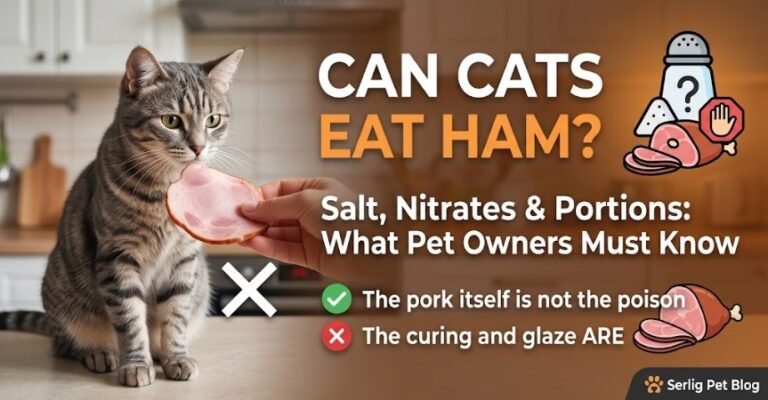
Avoid processed meats such as ham, bacon, sausage and deli slices. They are extremely high in sodium and often contain garlic or onion powder, which is toxic to cats even in small quantities.
Cooked Fish
Cooked salmon, cod, haddock and sardines packed in water are safe occasional treats. They provide protein and omega 3 fatty acids that support skin and coat condition.
Two cautions apply. First, always cook fish thoroughly. Raw fish carries a parasite risk and contains thiaminase, an enzyme that destroys thiamine and can cause a serious vitamin B1 deficiency. Second, keep fish occasional rather than routine. Large predatory fish accumulate mercury, and a cat eating tuna daily can build up an unhealthy load over time.
If your interest in fish is really about coat condition, a measured supplement is more reliable than food scraps. Our comparison of fish oil options for cats explains dosing properly.
Cooked Eggs
Cooked eggs are an excellent protein source for cats and are generally well accepted. Scramble or boil them with no butter, oil or salt.
Never offer raw egg. Raw whites contain avidin, which binds biotin and blocks its absorption, and raw egg carries a salmonella risk for both your cat and your household. We cover portion sizes and preparation in more detail in our guide to eggs for cats.
Dairy: Mostly a No
This is the food most owners get wrong. Most adult cats are lactose intolerant, and milk commonly causes diarrhoea, gas and stomach discomfort within hours.
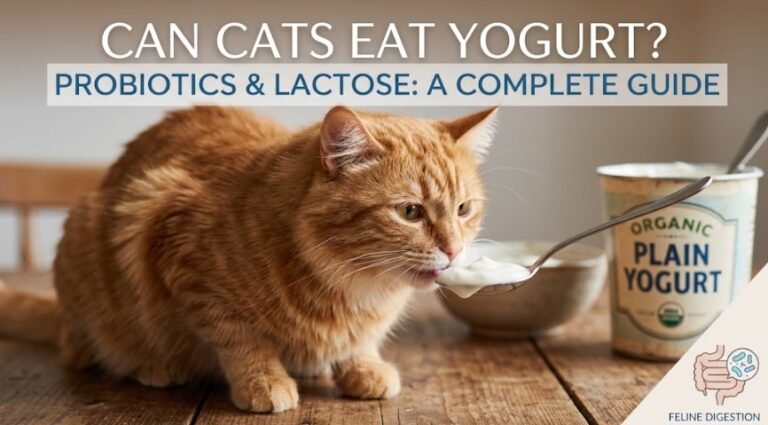
Hard aged cheeses such as cheddar contain less lactose and are tolerated by some cats in tiny amounts, though they are high in fat and salt. Plain unsweetened yogurt is sometimes better tolerated because live cultures partly break down the lactose. Neither is necessary. Our detailed look at cheese and cats explains where the line sits.
If your cat has ever had loose stools after dairy, stop offering it entirely.
Cooked Vegetables
Some cats accept small amounts of steamed carrot, green beans, peas, broccoli or plain pumpkin. These offer fibre and moisture, and plain pumpkin is sometimes recommended by vets to help with mild constipation.
Vegetables are not a natural part of a feline diet, so keep portions tiny and expect many cats to simply refuse them. Never offer onion, garlic, leek, shallot or chives in any form, cooked or raw.
Fruit in Very Small Amounts
Seedless watermelon flesh, banana, blueberries and small pieces of peeled apple are not toxic to cats. They are also mostly sugar and water, and since cats cannot taste sweetness, the appeal is usually texture rather than flavour.
If you offer fruit, one or two small pieces is the whole portion. Always remove seeds, pips and rind. Grapes and raisins are strictly excluded and appear in the toxic list below.
Cooked Grains
Plain cooked rice, oatmeal and couscous are safe in very small amounts. Cats digest starch poorly, so these are filler rather than nutrition. The one practical use is during recovery from a mild digestive upset, when a vet may suggest a small amount of plain rice alongside a bland protein.
Foods That Are Never Safe for Cats
These require no debate. If your cat eats any of the following, contact your veterinarian or an animal poison control service immediately.
| Food | Why it is dangerous | Urgency |
| Onion, garlic, leek, chives, shallot | Destroy red blood cells and cause haemolytic anaemia. Powdered forms are more concentrated and more dangerous. | Call the vet |
| Chocolate | Theobromine and caffeine cause heart arrhythmia, tremors and seizures. Dark chocolate is worst. | Emergency |
| Grapes and raisins | Linked to acute kidney failure. No safe dose has been established. | Emergency |
| Xylitol | Artificial sweetener that triggers a dangerous insulin release and liver damage. Found in sugar free gum, some peanut butters and baked goods. | Emergency |
| Alcohol | Cats are extremely sensitive. Even trace amounts can cause collapse. | Emergency |
| Caffeine | Coffee, tea, energy drinks. Causes rapid heart rate, tremors and seizures. | Emergency |
| Raw yeast dough | Expands in the stomach and ferments into alcohol. Causes bloating and alcohol poisoning together. | Emergency |
| Raw meat, fish and eggs | Salmonella, listeria, parasites, plus thiaminase in raw fish and avidin in raw egg white. | Call the vet |
| Cooked bones | Splinter and can perforate the throat, stomach or intestine. | Call the vet |
| Macadamia nuts | Poorly studied in cats but documented as toxic in dogs. Avoid entirely. | Call the vet |
Our dedicated guide to human foods that are toxic to cats covers the symptoms of each in more detail, including what to watch for in the first few hours.
Foods That Are Not Toxic but Still a Bad Idea
Most articles stop at “safe” and “toxic.” In practice there is a large middle group, and it causes more slow damage than outright poisoning.
- Ham, bacon and deli meat. High sodium, and many are seasoned with garlic or onion powder.
- Bread. Harmless in a crumb, nutritionally empty, and it displaces calories your cat needs.
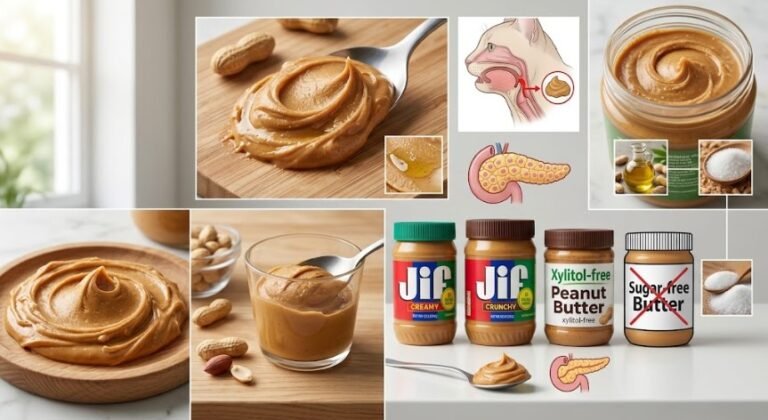
- Peanut butter. High fat, sticky enough to be a choking risk, and some brands contain xylitol.
- Milk. The single most common cause of avoidable diarrhoea in cats.
- Tuna as a daily habit. Cats can become fixated on it and refuse balanced food, and mercury accumulates.
- Dog food. One accidental mouthful is not dangerous, but it lacks the taurine and arachidonic acid cats require.
These foods rarely cause an emergency. They cause weight gain, nutritional imbalance and fussy eating, which are much harder to reverse than a single bad night.
What Can Cats Eat With a Health Condition?
Standard advice assumes a healthy adult cat. If yours is not, the rules tighten considerably.
Kidney disease: Protein and phosphorus need controlling. Meat or fish scraps can undo a prescription renal diet.
Diabetes: Unplanned treats interfere with insulin dosing and blood glucose stability.
Pancreatitis: Fat is the main trigger, so fatty scraps, cheese and oily fish should be avoided completely.
Urinary tract issues: Salty human foods work directly against a diet managing mineral content and hydration.
Overweight cats: Many vets cut extras close to zero during active weight loss, since poorly managed weight loss in cats carries its own risk of hepatic lipidosis.
Kittens: Growing cats need dense, complete nutrition and have very little room for empty calories. Our kitten feeding schedule sets out age appropriate portions.
Senior cats: Reduced kidney function, dental disease and lower metabolism are common. A sudden change in appetite in an older cat is a reason to see a vet, not to start offering tempting human food. Read our guide to why a cat stops eating before assuming it is fussiness.
How to Introduce a New Food Safely
If you decide to offer something new, this five step process reduces the chance of an upset stomach.
- Offer a single new food at a time: If two new things go in together and your cat reacts, you will not know which caused it.
- Start with a portion smaller than you think reasonable: For a first trial, that means one or two pea sized pieces, not a teaspoon.
- Serve it plain and at room temperature: Cold food straight from the fridge is more likely to be regurgitated.
- Wait 24 to 48 hours before offering it again: Food reactions and mild intolerances usually show up within that window.
- Watch the litter tray: Loose stools, straining or a change in frequency are the earliest signals that something did not agree with your cat.
Stop immediately if you see vomiting, diarrhoea, lethargy, itching or facial swelling. Persistent vomiting in particular deserves attention rather than observation, and our guide on why cats vomit explains when it becomes urgent.
What to Do If Your Cat Eats Something Unsafe
Act on this sequence rather than searching for reassurance.
- Remove any remaining food so your cat cannot eat more while you deal with the situation.
- Do not induce vomiting. Methods that are sometimes used for dogs are unsafe in cats and can cause serious injury.
- Identify exactly what and how much. Keep the packaging. For chocolate, the type matters. For xylitol, the position on the ingredient list matters.
- Call your vet or a poison control service straight away. Do not wait for symptoms. With onion, grape and xylitol exposure, the damage begins before any signs appear.
- Have this information ready: your cat’s weight, the food eaten, the estimated amount, the time it happened, and any current medications or conditions.
Signs that mean you should not wait include repeated vomiting, tremors, unsteady walking, pale or yellow gums, laboured breathing, collapse or straining to urinate. Cats also hide discomfort well, so subtle changes matter. Our article on recognising pain in cats covers the quieter signals owners often miss.
Common Mistakes Owners Make
- Treating “not toxic” as “good for them.” Bread is not toxic. It is also not food for a carnivore.
- Adding treats on top of full meals instead of subtracting the calories.
- Feeding from the plate, which teaches begging and makes portion control almost impossible.
- Assuming what is safe for dogs is safe for cats. Cats are far more sensitive to onion, and their taurine requirement has no canine equivalent.
- Free feeding dry food all day. It makes calorie tracking guesswork. A portion controlled feeder helps in multi cat households.
Frequently Asked Questions
What human food can cats eat every day? None, ideally. A complete cat food should provide the full daily diet. If you offer something daily, keep it within the 10 percent calorie budget and subtract it from meals. Plain cooked chicken is the most sensible daily option if you insist on one.
Can cats eat cooked chicken every day? In small amounts within the treat budget, yes. Chicken alone is not a complete diet and lacks the calcium and taurine balance a cat needs, so it must stay a topper rather than a meal.
Is milk bad for cats? For most adult cats, yes. Lactase levels drop after weaning, so milk commonly causes diarrhoea and stomach upset. Water is the only drink a cat needs.
Can cats eat dog food in an emergency? A single accidental mouthful is not dangerous. Regular feeding is, because dog food lacks sufficient taurine and arachidonic acid for feline health.
What fruits are safe for cats? Seedless watermelon flesh, banana, blueberries and peeled apple in very small pieces. Grapes and raisins are never safe.
How do I know if a food upset my cat? Watch for vomiting, diarrhoea, reduced appetite, lethargy or increased hiding within 24 to 48 hours. Any of these after a new food is a reason to stop offering it.
Can kittens eat the same human foods as adult cats? Kittens have far less room for extras because their growth needs are so high. Keep human food to occasional tiny tastes.
The Bottom Line
The most useful answer to “what can cats eat” is a narrow one. Plain cooked meat, plain cooked fish, cooked egg, a few cooked vegetables and the occasional small piece of fruit are safe in genuinely small portions. Onion, garlic, chocolate, grapes, raisins, alcohol, caffeine and xylitol are never safe.
Everything else your cat needs is already in a complete and balanced cat food, formulated to meet requirements a human kitchen was never designed to satisfy. Sharing food is an act of affection, but for cats the more affectionate choice is usually restraint, a measured portion, and a phone call to the vet when something goes wrong.
About the Author
Written by Alex, Serlig Pet Blog. Alex writes Serlig’s cat and dog nutrition guides and has spent several years researching and testing feeding routines across multi cat households. Every nutrition article on Serlig is checked against current guidance from recognised veterinary bodies before publication.

6 Comments