
Quick Answer
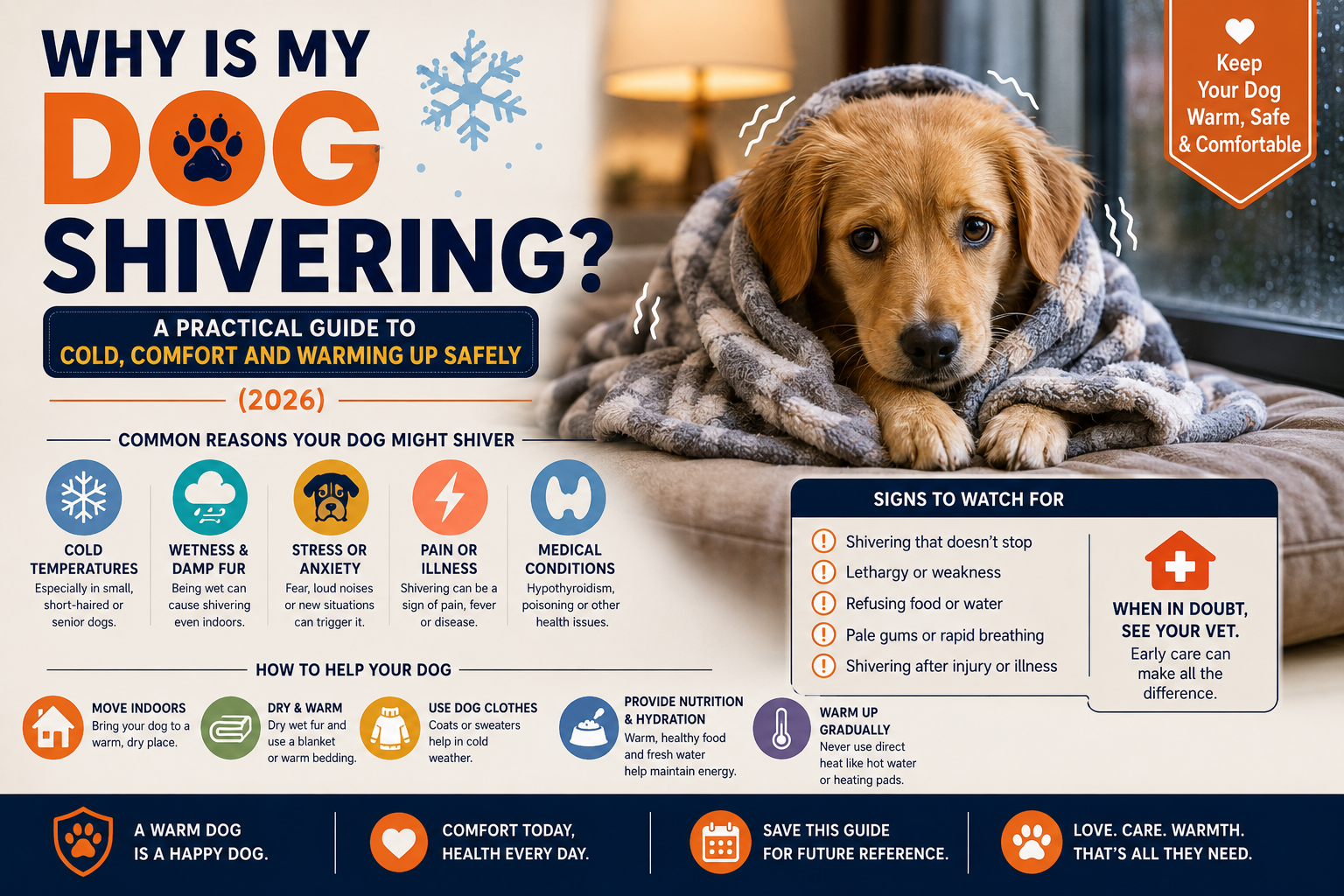
Shivering is your dog’s heating system working rapid muscle contraction generates warmth. In most cases it means your dog is genuinely cold, wet, or has just come in from outside, and it stops within minutes of warming up. If your dog shivers indoors at a comfortable temperature, shivers for more than 20–30 minutes after being dried and warmed, or shivers alongside weakness or confusion, the cause is not temperature and needs a different answer.
Key Takeaways
- Shivering is a normal thermoregulatory reflex, not a disease.
- Wet fur strips heat far faster than cold air alone drying matters more than heating.
- Small, thin-coated, very young, very old, and lean dogs feel cold soonest.
- Below 7°C / 45°F vulnerable dogs need protection; below 0°C / 32°F most dogs do.
- Never warm a cold dog with a hot water bottle, hair dryer, or heat pad directly on skin.
- Shivering that continues once warm is a signal to read our guide on shaking instead.
How Shivering Actually Works
When body temperature starts to fall, the hypothalamus triggers rapid, involuntary muscle contractions. Muscle activity produces heat as a by-product, so shivering is essentially your dog burning fuel to stay warm. It is efficient in the short term and exhausting over hours which is why a dog left cold for a long period eventually stops shivering. A very cold dog that has stopped shivering is more worrying, not less.
A dog’s normal body temperature is 38.3–39.2°C (101–102.5°F) warmer than ours, which is why dogs often feel warm to the touch even when they are losing heat.
Which Dogs Get Cold First?
| Higher risk | Why |
| Small and toy breeds | High surface area relative to body mass; heat is lost fast |
| Thin-coated breeds Greyhounds, Whippets, Boxers, Dobermanns, Vizslas | Minimal insulation and little body fat |
| Puppies under 12 weeks | Immature temperature regulation |
| Senior dogs | Reduced muscle mass, slower circulation, often arthritic |
| Underweight or recently ill dogs | Less insulating fat, lower reserves |
| Recently clipped dogs | Coat removed |
| Dogs with hypothyroidism, kidney disease, or heart disease | Impaired temperature regulation |
| Lower risk | Why |
| Double-coated northern breeds Huskies, Malamutes, Samoyeds, Newfoundlands | Dense undercoat traps air |
| Large, well-muscled, well-conditioned dogs | Favourable mass-to-surface ratio |
Even cold-hardy breeds are not immune. Wind, rain, and time outdoors change the calculation for every dog.
Temperature Thresholds: A Practical Guide
These are general guides, not rules wind chill, damp, activity level, and individual tolerance all shift them.
| Temperature | What it means |
| Above 10°C / 50°F | Comfortable for most healthy dogs |
| 7–10°C / 45–50°F | Small, thin-coated, young, senior, and unwell dogs may need a coat |
| 0–7°C / 32–45°F | Most vulnerable dogs need a coat; shorten walks |
| -6 to 0°C / 20–32°F | Limit outdoor time for all dogs; monitor closely |
| Below -6°C / 20°F | Brief toilet breaks only for most dogs; risk of frostbite on ears, tail, paws |
Why Wet Dogs Shiver So Much
Water conducts heat away from the body roughly 25 times faster than air. This is why a dog that was fine on a dry walk shivers violently after a bath or a swim, even indoors.
Dry properly, warm gradually:
- Towel dry thoroughly, paying attention to the chest, belly, armpits, and between the toes.
- Use a pet dryer or a hair dryer on the cool or lowest warm setting, held well back and kept moving. Never use a hot setting.
- Offer a warm, dry bed away from draughts.
- Let a warm room do the rest.
Shivering after a bath usually stops within 10–20 minutes once the dog is dry. If it does not, treat that as a signal rather than an inconvenience.
Warming a Cold Dog Safely
Do:
- Move indoors and remove wet bedding, harnesses, and coats
- Towel dry completely
- Wrap in a dry blanket, warmed briefly in a tumble dryer if you have one
- Offer room-temperature or slightly warm water
- Warm the room rather than applying heat directly
- Rewarm gradually
Do not:
- Place a hot water bottle or heat pad against bare skin dogs get contact burns easily and may not move away
- Use a hair dryer on a hot setting
- Immerse a very cold dog in hot water rapid rewarming can cause a dangerous drop in blood pressure
- Give alcohol or “warming” home remedies
- Leave a shivering dog outside in a kennel to “toughen up”
Hypothermia: When Cold Becomes Dangerous
| Stage | Body temperature | Signs |
| Mild | 32–37°C / 90–99°F | Strong shivering, cold ears and paws, seeking warmth, mild lethargy |
| Moderate | 28–32°C / 82–90°F | Shivering weakens or stops, muscle stiffness, confusion, slow shallow breathing |
| Severe | Below 28°C / 82°F | No shivering, collapse, fixed dilated pupils, very slow heart rate, unresponsive |
Call a veterinarian immediately if your dog stops shivering while still cold, becomes confused or unsteady, has pale or grey gums, or will not rouse. Wrap in dry blankets and transport do not attempt aggressive rewarming yourself.
When Shivering Is Not About Temperature
If the room is warm and your dog is dry, temperature is not the answer. Consider:
- Emotion fear, anxiety, or overexcitement
- Pain arthritis, dental disease, abdominal or back pain
- Nausea often with drooling and lip licking
- Fever shivering as temperature climbs; check for lethargy and warm ears
- Toxin exposure sudden onset with drooling or wobbliness is a red flag; see foods toxic to dogs
- Low blood sugar especially in toy breeds and puppies
- Neurological or muscular conditions persistent, unexplained tremor
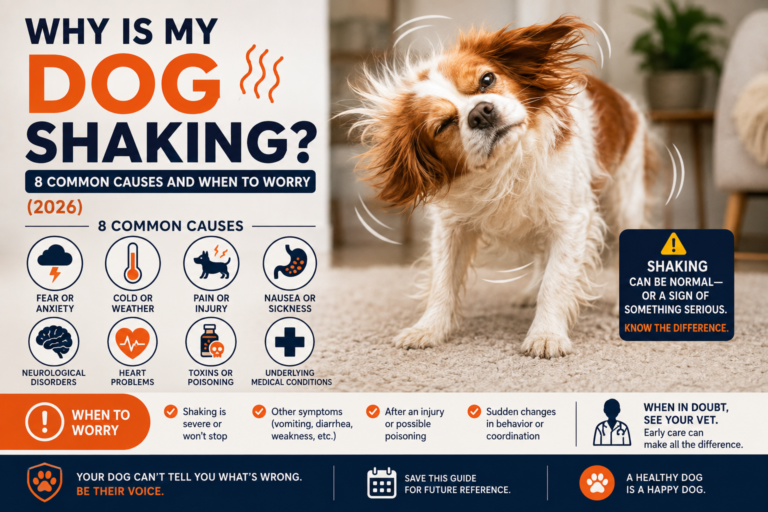
Each of these is covered in more depth in our diagnostic guide, why is my dog shaking. Note also that shivering and heavy panting together is an unusual and concerning combination if you are seeing both, read why is my dog panting so much and call your vet.
Winter Care That Prevents Shivering
- A well-fitted coat for small, thin-coated, senior, or clipped dogs waterproof matters more than thickness in wet climates.
- Paw protection. Rinse paws after walks to remove grit and de-icing salt, which irritates skin and is harmful if licked. Balm helps with cracking.
- A raised, draught-free bed, away from doors and cold floors.
- Adjust walks, not exercise. Shorter, more frequent outings; use indoor games and scent work on harsh days.
- Feed appropriately. Working dogs outdoors in winter may need more calories; the average pet dog does not. Keep a complete and balanced diet and adjust portions to body condition, not the calendar.
- Never leave a dog in a parked car in winter. Cars lose heat quickly and become dangerously cold.
Frequently Asked Questions
Is it normal for my dog to shiver after a bath? Yes. Wet fur loses heat rapidly. It should stop within 10–20 minutes of being thoroughly dried and warmed.
How cold is too cold for a dog? Below roughly 7°C / 45°F, vulnerable dogs need protection. Below freezing, most dogs should have shortened outdoor time. Wind and rain make any temperature feel considerably colder.
Do dogs really need coats? Small breeds, thin-coated breeds, puppies, seniors, clipped dogs, and dogs with certain health conditions genuinely benefit. Thick double-coated northern breeds usually do not.
My dog is shivering but the house is warm why? Then it is unlikely to be temperature. Consider anxiety, pain, nausea, fever, or toxin exposure, and speak to your vet if it persists.
Why do small dogs shiver more? They have more surface area relative to body mass, so they lose heat faster, and many small breeds also carry less insulating fat.
Should I put a blanket on my shivering dog? Yes a dry blanket in a warm, draught-free spot is ideal. Avoid direct heat sources against the skin.
Can shivering mean my dog has a fever? It can. Shivering often accompanies a rising temperature. Look for lethargy, appetite loss, and warm ears, and contact your vet if you suspect it.
How long should shivering last? Cold-related shivering should stop within 20–30 minutes of warming and drying. Anything longer, or shivering with no cold explanation, deserves a veterinary opinion.
Final Thoughts
Most shivering has an unglamorous, entirely fixable explanation: your dog is wet, or the wind was sharper than you thought. Dry them, warm the room, and the problem solves itself.
The judgement call is knowing when the explanation runs out. A warm, dry dog that keeps trembling is not cold it is telling you something else, and that is the moment to stop reaching for the blanket and start asking better questions.
Related Reading
- Why Is My Dog Shaking? 8 Common Causes
- Why Is My Dog Panting So Much?
- Foods Toxic to Dogs: The Complete List
- Best Super Premium Dog Food
A Note on Pet Health
Serlig publishes researched pet care information for everyday owners. It is general guidance, not veterinary advice, and it does not replace an examination by a licensed veterinarian who knows your pet. If your pet is unwell, or anything in this guide does not match what you are seeing at home, contact your vet.
About the Author
The Serlig Pet Care Team creates researched, plain-language pet care guides for everyday owners. Our content is written from hands-on pet-care experience and cross-checked against established veterinary sources so you can make confident decisions for your dog.
One Comment