
Quick Answer
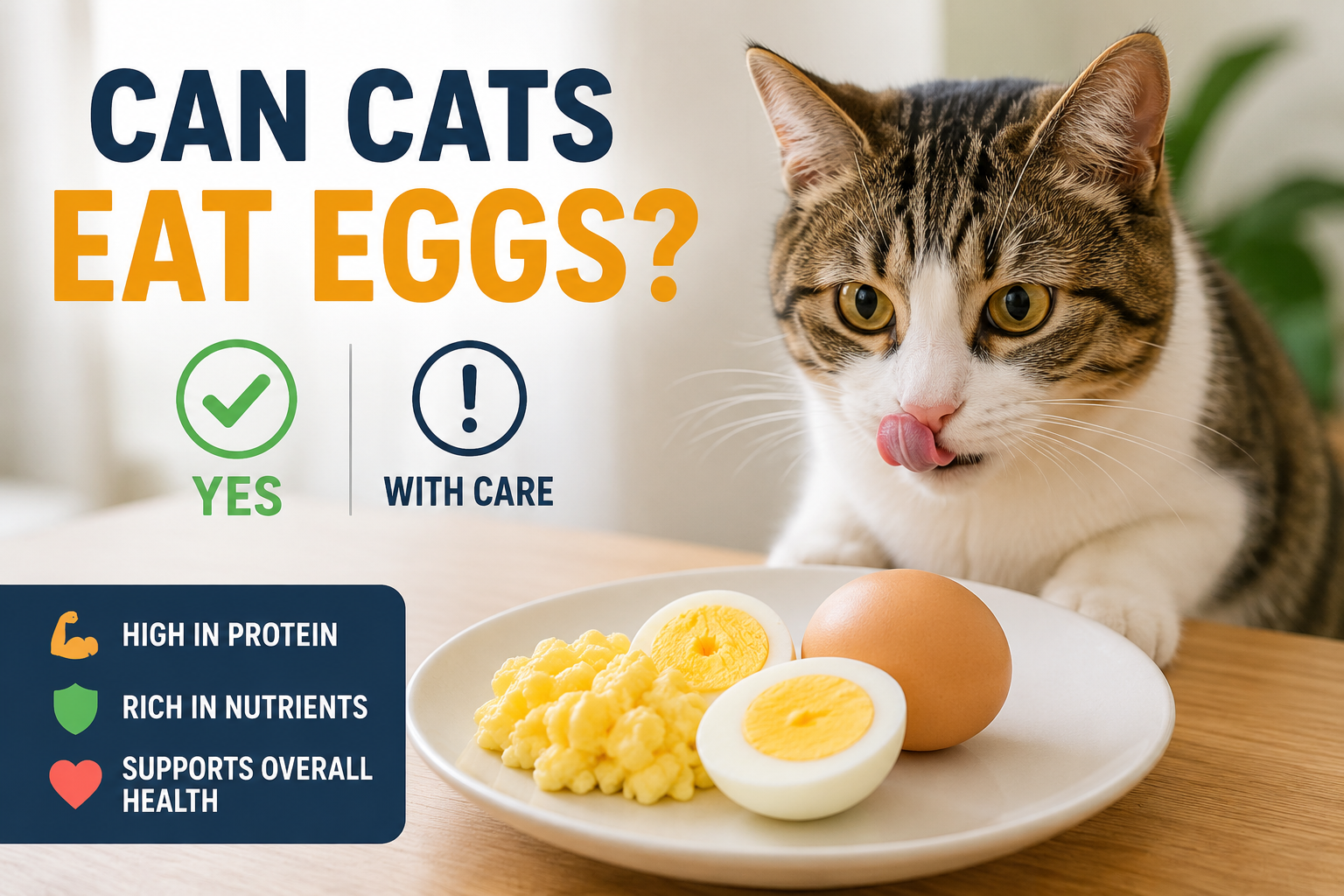
Yes, cats can eat eggs but only fully cooked and plain. Cats are obligate carnivores, so the high-quality protein in eggs suits them well as an occasional treat. Cooked eggs (scrambled, boiled, or poached with no butter, oil, salt, or seasoning) are safe in small amounts. Raw eggs should be avoided because of bacteria and a protein that blocks biotin. Keep egg to no more than 10% of your cat’s daily calories.
Key Takeaways
- Fully cooked, plain eggs are a safe, protein-rich treat for most cats in moderation.
- Cats are obligate carnivores, so egg protein fits their meat-based needs.
- Never feed raw eggs they risk salmonella, E. coli, and a biotin deficiency from avidin.
- Serve eggs plain: no butter, oil, salt, onion, or garlic (onion and garlic are toxic to cats).
- Eggs are a treat, not a meal they don’t replace complete, balanced cat food.
- A teaspoon or two of cooked egg, a couple of times a week, is plenty for most cats.
Can Cats Eat Eggs?
Yes as long as they are cooked. Because cats are obligate carnivores, animal protein is central to their diet, and cooked egg is a highly digestible protein source. Veterinary resources, including the Chewy and Hill’s Pet veterinary teams, agree that plain, fully cooked eggs are safe for most healthy cats in small amounts.
The essential rule is cooking. Cooking an egg removes the two problems that come with raw eggs: it kills harmful bacteria, and it neutralizes avidin, a protein in raw egg whites that blocks a vitamin called biotin.
Egg is a treat, not a diet. Your cat’s real nutrition including nutrients like taurine that cats can’t live without must come from a complete and balanced cat food. Egg is simply a tasty, protein-rich extra. If you like sharing safe human foods with your cat, you might also want to read our guide on whether cats can eat cheese (spoiler: it’s more complicated).
Are Eggs Good for Cats? The Benefits
In small, cooked amounts, eggs offer real nutritional value for a meat-loving cat:
| Nutrient | What it does for your cat |
|---|---|
| High-quality protein | Supports strong muscles and overall body function. |
| Essential amino acids | Building blocks that support growth and repair. |
| Fatty acids | Support a healthy, shiny coat and good skin. |
| Vitamin A & B-vitamins | Support vision, metabolism, and cell health. |
| Biotin (from cooked egg) | Supports healthy skin and coat. |
Because eggs are so digestible, a small amount of plain cooked egg can be a useful, protein-rich treat and some cats simply love it. Just remember that it complements a complete diet rather than replacing any part of it. For coat and skin support specifically, many owners also use products like a fish oil made for cats.
Why Raw Eggs Are Not Safe for Cats
It is tempting to think a “natural” raw egg is best for a carnivore, but veterinarians consistently advise against it. Raw eggs add real risk with no clear benefit over cooked:
- Bacteria: raw eggs can carry salmonella and E. coli, which can cause vomiting, diarrhea, and more serious illness. There is also a small risk linked to avian flu from raw poultry products.
- Biotin deficiency: raw egg whites contain avidin, which binds biotin. Fed regularly, this can lead to a deficiency that affects skin and coat health.
- Higher-risk cats: kittens, senior cats, and cats with conditions like FeLV, FIV, diabetes, or kidney disease are especially vulnerable to foodborne illness.
Cooking solves all of this. If your cat ate raw egg and then vomits or has diarrhea, contact your veterinarian.
Egg Risks to Keep in Mind
Even cooked eggs need a little care.
Fat, calories, and moderation
Eggs are calorie-dense and contain fat. Too much can contribute to weight gain, so eggs should be an occasional treat, not a daily habit and never a meal replacement.
Never add these
Serve eggs completely plain. Skip butter, oil, and salt, and never cook them with onion or garlic, both of which are toxic to cats. Also avoid adding cheese or milk, since most cats are lactose intolerant.
Digestive upset and allergies
Introduce egg slowly and watch for any stomach upset. If your cat vomits, has diarrhea, or shows itchy skin after eating egg, stop and check with your vet. If your cat has an upset stomach generally, our guide on why your cat may be vomiting may help you understand possible causes.
A note on eggshells
Eggshells contain calcium, but they should only be added to a cat’s food (baked and finely ground) under your veterinarian’s guidance, since your cat may not need extra calcium.
How Much Egg Can a Cat Eat? (Serving Guide)
Egg counts toward the 10% rule treats and extras together should make up no more than a tenth of your cat’s daily calories, with the rest from complete cat food. Cats are small, so portions are tiny.
A practical guide for most healthy adult cats:
| Cat | Suggested serving | Frequency |
|---|---|---|
| Average adult cat | About 1 teaspoon of cooked egg | 1–2× per week |
| Larger adult cat | Up to about 1 tablespoon of cooked egg | 1–2× per week |
Introduce egg gradually — start with a small bite and watch your cat for a day or two before offering more.
How to Safely Feed Eggs to Your Cat
Cooking is the key step:
- Cook it fully Scramble, boil, or poach the egg until it is cooked all the way through.
- Keep it plain No butter, oil, salt, seasoning, onion, garlic, cheese, or milk.
- Cool and chop Let it cool and cut it into small, bite-sized pieces; remove any shell.
- Serve a small amount Offer it on its own or mixed into your cat’s regular food.
- Watch the first time Introduce egg slowly and monitor for any reaction.
Cook the egg separately for your cat rather than sharing seasoned leftovers from your plate.
Can Kittens Eat Eggs?
Kittens can have tiny amounts of fully cooked, plain egg, but extra caution is wise. Kittens have developing immune systems that are more vulnerable to bacteria, so the egg must be thoroughly cooked never raw. Their main nutrition should come from a complete kitten food, so keep egg to an occasional tiny taste and check with your veterinarian first.
When to Check With Your Vet
Cooked egg suits most healthy cats, but check with your veterinarian first if your cat:
- Has a health condition such as diabetes, kidney disease, FeLV, or FIV.
- Is overweight or on a prescribed diet.
- Has a history of food sensitivities or digestive problems.
Contact your vet if your cat shows vomiting, diarrhea, or any concerning symptoms after eating egg especially raw egg.
Frequently Asked Questions
Can cats eat scrambled eggs?
Yes, if they are plain cooked with no butter, oil, salt, milk, or seasoning. Plain scrambled egg is a soft, cat-friendly option in small amounts.
Can cats eat raw eggs?
No. Raw eggs can carry salmonella and E. coli and contain avidin, which blocks biotin. Always cook eggs before offering them to your cat.
Can cats eat egg yolk or egg white?
Both are fine when fully cooked. Raw egg white is the bigger concern because of avidin, so cooking is essential.
How much egg can I give my cat?
Only a small amount about a teaspoon for most cats, up to a tablespoon for larger cats and no more than 10% of daily calories, a couple of times a week.
Can kittens eat eggs?
Only tiny amounts of fully cooked egg, and it’s not necessary. Kittens are more vulnerable to bacteria, so never give them raw egg, and check with your vet.
Are eggs a good source of protein for cats?
Yes. Eggs provide high-quality, digestible protein, which suits cats as obligate carnivores but as an occasional treat, not a replacement for balanced cat food.
Final Thoughts
Eggs can be a healthy, protein-rich treat for cats when they are fully cooked and served plain. Cooking removes the bacteria and biotin concerns that come with raw eggs, leaving a digestible snack that many cats enjoy.
Because every cat is different, introduce egg slowly, keep portions tiny, and check with your veterinarian if your cat has any health conditions. Offered as an occasional treat on top of a complete, balanced diet, a little cooked egg can be a wholesome addition to your cat’s routine.
Related Reading
- Can Cats Eat Cheese?
- Why Is My Cat Vomiting?
- Best Fish Oil for Cats
- Emergency Alert: 10 Human Foods Toxic to Cats
(Confirm the exact URLs of your existing cat posts in WordPress before publishing.)
About the Author
The Serlig Pet Care Team creates researched, plain-language pet care guides for everyday owners. Our content is written from hands-on pet-care experience and cross-checked against established veterinary sources so you can make confident decisions for your cat.
A Note on Pet Health
Serlig publishes researched pet care information for everyday owners. It is general guidance, not veterinary advice, and it does not replace an examination by a licensed veterinarian who knows your pet. If your pet is unwell, or anything in this guide does not match what you are seeing at home, contact your vet.




2 Comments