
Quick Answer
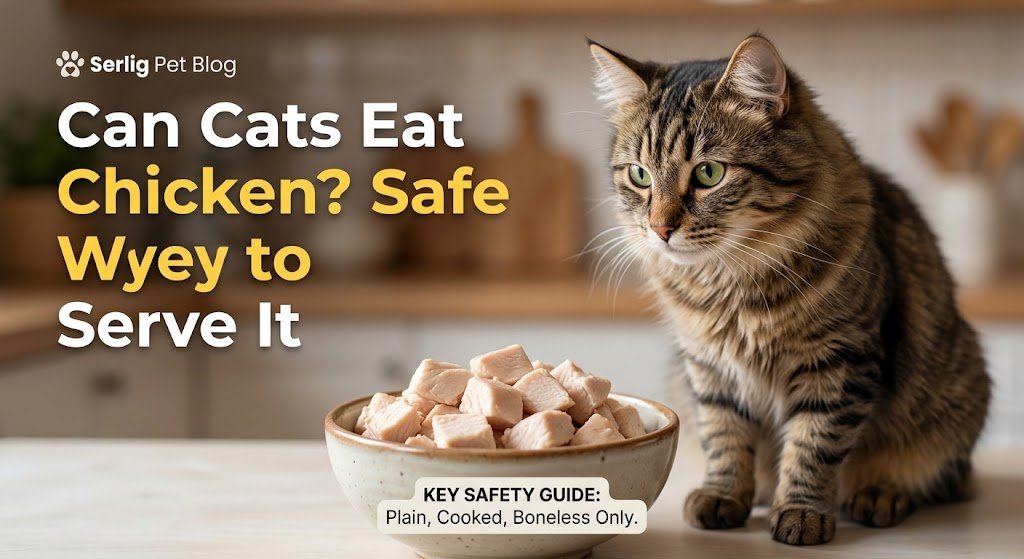
Can cats eat chicken? Yes. Plain cooked chicken with no bones, skin, salt or seasoning is one of the safest human foods you can offer a cat. Keep it under 10 percent of daily calories, which is roughly one to two teaspoons for an average adult cat. Never give cooked bones, never use rotisserie or seasoned chicken, and never feed chicken as a complete diet. Chicken is also one of the more common food allergens in cats.
Can Cats Eat Chicken?
Yes, and of all the human foods people ask about, chicken is the one with the clearest answer.
Plain cooked chicken is species appropriate, protein rich, easy to digest and enthusiastically accepted by most cats. If you want a single safe treat to give your cat, this is it.
The complications are all in the details rather than the food itself. Cooked bones are dangerous. Rotisserie chicken is usually unsuitable. Chicken alone causes a specific and serious nutritional problem if it becomes a diet rather than a topper. And chicken is one of the most frequently reported food allergens in cats, which surprises most owners.
This article covers the safe version properly, then works through each of those complications.
Why Chicken Suits Cats So Well
Cats are obligate carnivores, which means their metabolism is built around animal tissue rather than merely tolerant of it. Chicken fits that requirement closely.
It is high in complete protein, supplying the amino acids cats need, including taurine. It is relatively lean when the skin is removed. It is mild, so it rarely upsets a sensitive stomach. And it carries the savoury umami compounds that cats detect strongly, which is why acceptance is nearly universal.
Chicken is also the most common primary protein in commercial cat food, so most cats are already eating it daily in a balanced form. Offering a little cooked chicken as a treat is not introducing something foreign to their system.
That familiarity is genuinely useful. Chicken is often the first food recommended when a cat is recovering from a digestive upset, precisely because it is bland, digestible and readily eaten.
How Much Chicken Is Safe?
Veterinary nutrition guidance holds that treats and extras should stay under 10 percent of a cat’s daily calories. For most adult cats that means a budget of roughly 20 to 30 calories.
| Cat weight | Daily calories | Treat budget | Chicken portion |
| 3 kg (7 lb) | 160 to 200 kcal | 16 to 20 kcal | About one teaspoon |
| 4 kg (9 lb) | 200 to 240 kcal | 20 to 24 kcal | One to two teaspoons |
| 5 kg (11 lb) | 240 to 300 kcal | 24 to 30 kcal | Up to one tablespoon |
| 6 kg (13 lb) | 280 to 340 kcal | 28 to 34 kcal | Slightly over one tablespoon |
Chicken is more forgiving than most treats because it is lean protein rather than fat or sugar, but the arithmetic still applies. Subtract the chicken from the meal rather than adding it on top. A daily tablespoon given after a full dinner is how indoor cats gain weight without anyone noticing.
If you are managing your cat’s weight, our guide to low calorie treats and portion control explains how to fit extras into a plan properly.
Why Chicken Alone Is Not a Diet
This section matters more than any other here, because it describes the one way that a genuinely safe food becomes genuinely harmful.
Muscle meat is very high in phosphorus and very low in calcium. In a whole prey animal, the bones supply the calcium that balances it. Boneless chicken breast on its own does not, and the resulting ratio is close to the inverse of what a cat requires.
When a cat eats meat only for an extended period, the body responds by drawing calcium out of the skeleton to keep blood levels stable. This is nutritional secondary hyperparathyroidism, historically known as all meat syndrome. It produces weak bones, lameness, reluctance to jump, spontaneous fractures and, in growing kittens, permanent skeletal deformity.
Kittens are at highest risk because they are actively building bone. Adult cats develop it more slowly but still develop it.
The practical rule is simple and worth stating plainly: chicken is a topper, not a meal. A complete cat food supplies the calcium, taurine, vitamin A, vitamin E and trace minerals that plain chicken does not. No amount of good quality chicken substitutes for that.
If you want to feed a genuinely meat based diet, it needs professional formulation rather than good intentions. Our guide to transitioning safely to a raw food diet covers what that actually involves.
How to Cook Chicken for Your Cat
The method matters less than what you leave out.
Best methods: poaching, boiling, steaming or baking. All of these cook the meat through without adding fat.
Avoid: frying, roasting in oil, and anything cooked alongside seasoned food.
The rules that matter
- No salt, oil, butter or seasoning of any kind. None of it benefits your cat and much of it is harmful.
- No onion, garlic, leek or their powdered forms. These damage red blood cells in cats and are toxic even in small quantities. Powdered versions are more concentrated and therefore worse. Our guide to human foods toxic to cats covers the symptoms.
- Cook it thoroughly. No pink centre.
- Remove all bones. Every one, including small fragments.
- Remove the skin. It is where most of the fat sits.
- Cool it completely and cut into pea sized pieces.
Storage. Refrigerate cooked chicken in a sealed container and use it within two to three days, or freeze it in small portions. Do not leave cooked chicken at room temperature for more than two hours. Cats are more vulnerable to bacterial contamination than people assume, and a cat that eats spoiled meat may well develop the vomiting or diarrhoea you were trying to avoid.
Which Parts of the Chicken Are Safe?
| Part | Verdict | Notes |
| Breast, cooked and plain | Best choice | Lean, mild, easy to portion |
| Thigh, cooked and skinless | Good | Higher fat than breast. Fine in smaller portions |
| Skin | Avoid | High fat. Can trigger digestive upset and contributes heavily to weight gain |
| Liver, cooked | Occasional only | Nutritious but very high in vitamin A. Regular liver feeding can cause vitamin A toxicity, which affects bones and joints. Keep it rare and tiny |
| Heart and gizzard, cooked | Good | Genuinely nutrient dense. Heart is a natural taurine source |
| Cooked bones | Never | Splinter into sharp fragments. See below |
| Raw chicken | Not recommended | Bacterial and parasite risk. See below |
| Chicken broth or stock | Check carefully | Almost all shop bought stock and stock cubes contain onion or garlic. Only plain unsalted homemade broth is safe |
| Processed chicken, nuggets, deli slices | Avoid | Salt, oil, coatings and seasonings |
Chicken hearts deserve a specific mention. They are one of the better natural taurine sources and are usually well accepted, which makes them a more useful occasional treat than plain breast meat.
The Chicken Bone Question
Cooked bones and raw bones are two different conversations, and it is worth separating them honestly.
Cooked Bones: Never
There is no disagreement here. Cooking changes the structure of bone, making it brittle. Brittle bone splinters into sharp fragments that can cut the mouth, lodge in the throat, perforate the stomach or intestine, or cause an obstruction.
Poultry bones are among the worst offenders because they are thin and hollow. Never give a cat cooked chicken bones, and do not leave carcasses or plates within reach.
Raw Bones: A Genuine Disagreement
This is where sources conflict, and most articles pick a side without telling you that.
The case for. Raw bones do not splinter the way cooked bones do because the structure has not been altered by heat. Raw feeding advocates and some veterinary sources point out that raw bone is the natural calcium source in a whole prey diet, that chicken necks and wing tips are relatively soft, and that gnawing provides dental benefit.
The case against. Mainstream veterinary guidance, including from major pet food manufacturers and many clinicians, advises against raw bones for cats. Even unsplintered bone can cause choking, obstruction, dental fracture or constipation, and raw poultry carries salmonella and campylobacter risk for both the cat and everyone in the household.
An honest position. Raw bones are meaningfully safer than cooked bones, which is a real distinction rather than a technicality. They are not risk free. If you are feeding a properly formulated raw diet under veterinary supervision, raw bone has a defined role in it. If you are simply looking for a treat to give your cat, this is not the one to experiment with, and ground bone in a complete commercial food delivers the same calcium with none of the risk.
That last option is worth emphasising. Bone meal in commercial cat food is the safest way for a cat to get bone derived calcium, and it requires no judgement call from you at all.
My Cat Ate a Cooked Chicken Bone. What Now?
Act on this sequence.
- Do not induce vomiting. A sharp fragment travelling back up can cause more damage than it did going down. This applies regardless of what you may have read.
- Do not give bread or anything else to cushion it. This is common folk advice with no good evidence behind it, and it delays the call you should be making.
- Remove any remaining bones so your cat cannot swallow more.
- Call your vet straight away, even if your cat appears completely fine. Say what was eaten, roughly how much and when.
- Watch closely for several days while the fragment moves through the digestive tract. This is the window in which problems appear.
Signs that need immediate veterinary attention: repeated retching or gagging, drooling, pawing at the mouth, refusing food, vomiting, lethargy, a painful or bloated abdomen, straining to pass stool, or blood in the stool.
Cats hide discomfort exceptionally well, so a quiet cat is not necessarily a comfortable one. Our guide to recognising pain in cats covers the subtler signals, and our article on why cats vomit explains when vomiting becomes urgent.
Chicken for a Cat Recovering From an Upset Stomach
Plain chicken is often the first thing a vet suggests when a cat is coming back from vomiting or diarrhoea, and it is worth knowing how to do this properly.
The reasoning is that boiled chicken breast is bland, low in fat and highly digestible, which asks very little of an irritated digestive tract. It is also palatable enough that a cat with a reduced appetite will usually accept it.
How it is normally done. Small amounts of plain boiled chicken, offered in several tiny meals across the day rather than one larger one, often alongside a small amount of plain cooked rice or a prescription intestinal diet. Portions stay small deliberately, because a full bowl on a recovering stomach tends to come straight back up.
The important limits. This is a short term measure of a day or two, not a diet. Because plain chicken lacks calcium and other essentials, a longer recovery period needs a properly balanced recovery food rather than an extended run of chicken.
Speak to your vet first. Home care is appropriate for a mild, brief upset in an otherwise healthy adult cat. It is not appropriate if there is blood, repeated vomiting, lethargy, or if the cat is a kitten, elderly or has an existing condition. Cats also deteriorate faster than dogs when they stop eating, so a cat that has refused food for 24 hours needs a vet rather than another day of home care.
This is the most common real world mistake, and it rarely gets addressed.
The chicken most people have available is not plain chicken. Supermarket rotisserie birds are typically brined, rubbed with seasoning and cooked with the skin on. Those seasonings almost always include salt, and very frequently onion powder or garlic powder.
That combination is genuinely unsuitable for a cat. The sodium load alone is a problem, and onion and garlic powders are concentrated forms of compounds that are toxic to cats.
If rotisserie chicken is what you have, take a small piece of the inner breast meat, well away from the skin and surface seasoning. Do not use the skin, the outer layer or any juices from the tray. Better still, poach a plain chicken breast separately and freeze it in portions, which takes ten minutes and removes the guesswork entirely.
The same caution applies to leftover roast chicken from a family meal, which will usually have been seasoned, stuffed or basted.
Chicken Is a Common Feline Allergen
This surprises most owners and is almost absent from other guides on this topic.
Food allergies in cats develop against proteins the cat has eaten repeatedly over time, not against novel foods. Because chicken is the most common protein in commercial cat food, it is also one of the most frequently reported feline food allergens, alongside beef and fish.
Food allergy in cats usually presents through the skin rather than the gut. Watch for persistent itching, particularly around the head, face and neck, overgrooming, hair loss in patches, scabbing, and recurrent ear inflammation. Some cats also show chronic soft stools or intermittent vomiting.
This is not a reason to avoid chicken. Most cats eat it their entire lives without difficulty. It is a reason to consider diet if your cat has ongoing skin problems that nobody has explained, and our guide to hair loss in patches covers what else to rule out.
Diagnosis requires a properly conducted elimination diet supervised by a vet. Home testing kits and blood allergy panels are not reliable for feline food allergy.
Frequently Asked Questions
In small amounts within the treat budget, yes. It must remain a topper alongside a complete cat food, never the meal itself, because plain chicken lacks the calcium balance and other nutrients a cat needs.
It is not recommended. Raw poultry carries salmonella and campylobacter risk for your cat and your household. If you intend to feed raw, it should be a professionally formulated commercial raw diet rather than supermarket chicken.
Never cooked ones, which splinter. Raw bones are safer but still carry choking, obstruction and bacterial risks, and are best left to properly formulated raw diets rather than casual treats.
Generally no. It is usually brined and seasoned, often with onion or garlic powder. A small piece of inner breast meat away from the skin is the most you should consider.
Small amounts of plain cooked chicken are fine, but kittens have very little room for extras and are at higher risk of calcium imbalance. A complete kitten formula must remain the diet. Our kitten feeding schedule sets out the stages.
Best avoided. It is where most of the fat sits, and it commonly causes digestive upset as well as contributing to weight gain.
Chicken is the better routine choice. It carries none of the mercury or thiaminase concerns that come with fish.
Conclusion
Can cats eat chicken? Yes, and it is the most straightforward safe treat available. Poach or bake it plain, remove the skin and every bone, cool it, cut it into pea sized pieces, and keep the portion to a teaspoon or two subtracted from the meal.
The three things to keep in mind are all avoidable. Never cooked bones. Never rotisserie or seasoned chicken. And never chicken as the diet itself, because muscle meat alone lacks the calcium balance a cat’s skeleton depends on.
Chicken earns its reputation as the default safe food for cats. It just has to stay a topper on a complete diet rather than becoming a replacement for one.
For the full picture of what belongs in a cat’s bowl, see our complete guide to what cats can eat.
A Note on Pet Health
Serlig publishes researched pet care information for everyday owners. It is general guidance, not veterinary advice, and it does not replace an examination by a licensed veterinarian who knows your pet. If your pet is unwell, or anything in this guide does not match what you are seeing at home, contact your vet.



4 Comments