
Quick Answer
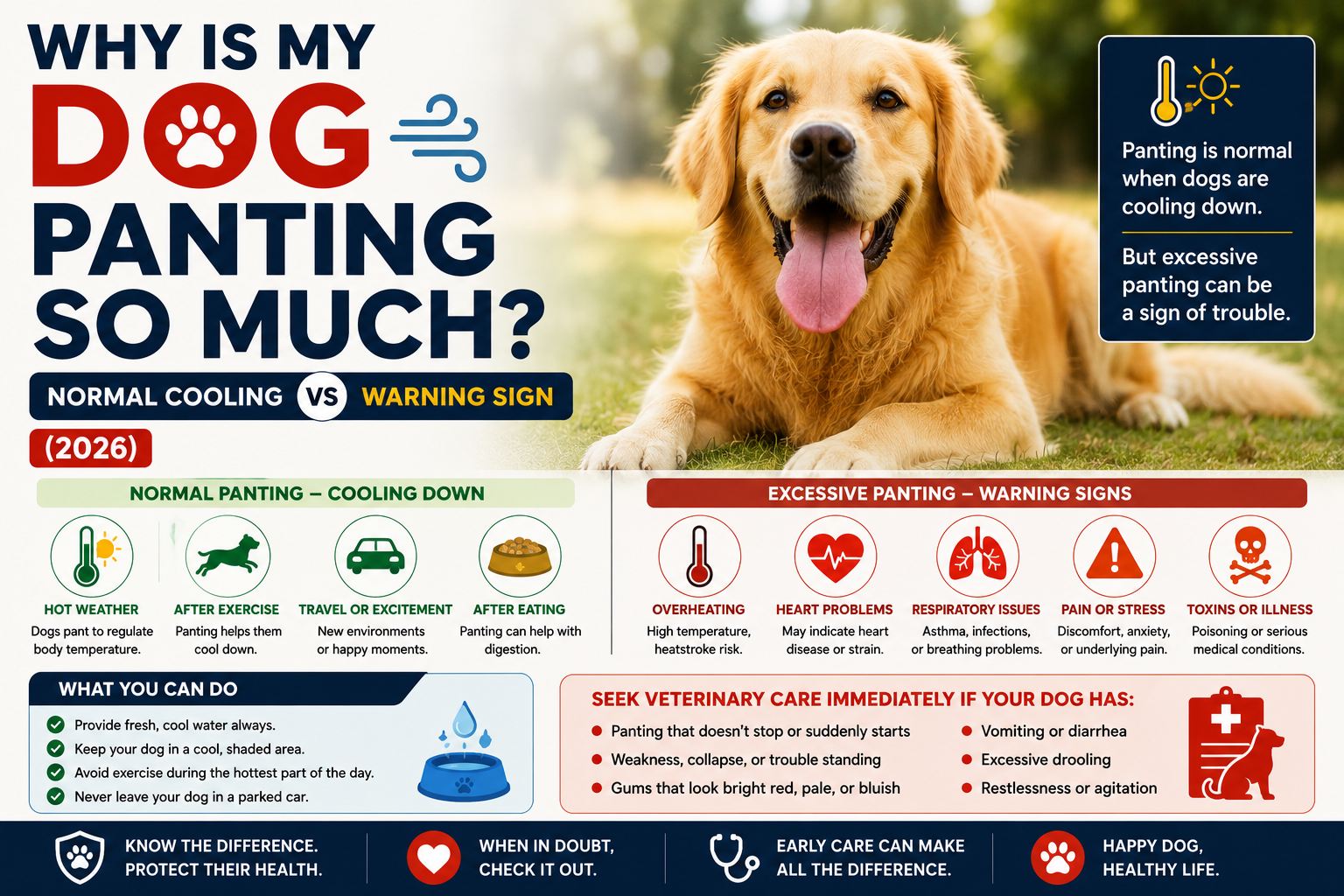
Panting is how dogs cool down but panting that happens without heat or exercise is a medical signal. Dogs cannot sweat effectively through the skin, so they evaporate moisture from the tongue and airways instead. Normal panting has an obvious cause and settles within 10–30 minutes of rest and shade. Panting that is sudden, severe, happens at rest, or comes with distress, pale gums, or collapse is an emergency.
Key Takeaways
- Panting is thermoregulation, not breathing difficulty the two look different.
- Heatstroke is the most urgent cause and can be fatal within an hour.
- Pain, anxiety, and heart or lung disease all cause panting with no heat involved.
- Cushing’s disease is a classic cause of unexplained panting in middle-aged and older dogs.
- Flat-faced breeds Bulldogs, Pugs, Frenchies, Boxers cool far less efficiently and are at higher risk.
- Panting at rest, at night, or with blue or pale gums needs immediate attention.
What Normal Panting Looks Like
Dogs have sweat glands only in their paw pads and around the nose, which contributes little to cooling. Instead they pant: rapid, shallow breaths that move air over the moist surfaces of the tongue, mouth, and upper airway, so evaporation carries heat away.
Normal panting:
- Follows exercise, warmth, excitement, or a car journey
- Comes with a relaxed, wide “smiling” mouth and a loose body
- Slows within 10–30 minutes of rest, shade, and water
- Occurs at roughly 200–400 breaths per minute during active cooling
- Leaves the dog otherwise bright and responsive
Resting respiratory rate, by contrast, should be 10–35 breaths per minute in a calm, sleeping dog. Counting this while your dog sleeps is one of the most useful home skills an owner can learn a resting rate consistently above 35–40 is a genuine red flag, particularly in dogs with known heart disease.
Heatstroke: The Emergency to Recognise First
Heatstroke kills dogs every summer, and the warning window is short.
Higher risk: flat-faced breeds, thick double-coated breeds, overweight dogs, puppies, seniors, dogs with heart or airway disease, and any dog exercised in the heat or left in a car or conservatory.
Progression:
| Stage | Signs |
| Early | Frantic, noisy panting; bright red gums and tongue; thick drool; restlessness |
| Worsening | Wobbliness, vomiting, diarrhoea (sometimes bloody), rapid heart rate, weakness |
| Severe | Collapse, seizures, pale or bluish gums, unresponsiveness |
What to do immediately:
- Move to shade or air conditioning.
- Pour or spray cool not ice-cold water over the body, especially the neck, armpits, groin, and paws.
- Keep air moving with a fan or open windows.
- Offer small amounts of cool water if your dog is conscious and willing. Do not force it.
- Go to a veterinary clinic now, even if your dog seems to improve. Heatstroke causes internal organ damage that develops over the following hours.
Do not immerse in ice water or cover with wet towels that trap heat.
The Other Causes of Excessive Panting
Pain
One of the most common non-heat reasons, and easy to miss. Panting from pain is often accompanied by restlessness, difficulty settling, a hunched posture, reluctance to move, or trembling. This overlaps heavily with the picture described in our guide to shaking in dogs pain frequently produces both at once.
Anxiety and stress
Fireworks, thunderstorms, travel, vet visits, and separation distress all trigger panting. The tell is context plus body language: tucked tail, pinned ears, whale eye, pacing, lip licking, yawning, hiding. It resolves once the trigger passes.
Cushing’s disease (hyperadrenocorticism)
A classic cause of unexplained panting in middle-aged and older dogs. The body overproduces cortisol, and panting is often the symptom owners notice first.
Look for the cluster: panting plus increased thirst and urination, increased appetite, a pot-bellied appearance, thinning coat, muscle wastage, and skin changes. If thirst and appetite changes are prominent, our guide on a dog not eating but drinking water covers the overlapping conditions.
Heart disease
A failing heart delivers less oxygen, and panting is one compensation. Watch for panting at rest, coughing (especially at night or after lying down), reduced exercise tolerance, a raised sleeping respiratory rate, and a swollen abdomen. This warrants prompt veterinary assessment.
Respiratory and airway disease
Pneumonia, bronchitis, collapsing trachea, lung tumours, and laryngeal paralysis all cause laboured breathing that owners often describe as panting. Laryngeal paralysis is common in older large breeds such as Labradors and typically produces a harsh, raspy inspiratory noise and a change in bark.
Brachycephalic Obstructive Airway Syndrome (BOAS)
Flat-faced breeds have narrowed nostrils, elongated soft palates, and compressed airways, so the same panting effort moves far less air. They overheat faster, tire sooner, and are at markedly higher heatstroke risk. Noisy breathing at rest, snoring, gagging, and exercise intolerance are not “normal for the breed” they are treatable and worth discussing with your vet.
Anaemia
Fewer red blood cells means less oxygen delivery, and panting follows. Check gum colour: healthy gums are bubblegum pink, and pale or white gums are urgent.
Medications and toxins
Steroids such as prednisolone very commonly cause panting and increased thirst. Some poisonings chocolate, caffeine, nicotine, and slug bait cause panting alongside agitation and tremors. If exposure is possible, check foods toxic to dogs and call a poison line.
Obesity
Excess weight adds insulation, increases the work of breathing, and reduces heat tolerance. Weight management is one of the highest-impact things you can change, alongside a suitable complete diet.
Fever
An elevated temperature drives panting, usually with lethargy and appetite loss.
Panting vs Laboured Breathing
These are different, and the distinction matters enormously.
| Panting (cooling) | Dyspnoea (breathing difficulty) |
| Open mouth, relaxed jaw, tongue out | Neck extended, elbows held away from the body |
| Body loose | Body tense, abdomen visibly heaving |
| Quiet | Noisy, raspy, wheezing, or gasping |
| Gums pink | Gums pale, grey, or bluish |
| Settles with rest | Does not settle; worsens |
| Dog is responsive | Dog is anxious, restless, or refuses to lie down |
Any dog with blue, grey, or white gums, or one refusing to lie down in order to breathe, is an emergency.
When to Call the Vet
Emergency go now:
- Suspected heatstroke, or panting after being in a hot car or exercised in heat
- Pale, grey, blue, or brick-red gums
- Collapse, extreme weakness, or seizures
- Panting with noisy, laboured, or open-mouth breathing at rest
- Refusing to lie down, or standing with the neck stretched out
Same-day appointment:
- Panting at rest with no heat, exercise, or stress
- New night-time panting
- Panting with coughing or reduced exercise tolerance
- Panting with a resting respiratory rate consistently over 40
- Panting alongside increased thirst, appetite change, or a pot belly
Routine appointment:
- Gradually increasing panting over weeks in an older dog
- Panting linked to a new medication
- Panting in an overweight dog you want a weight plan for
Before the appointment, count your dog’s sleeping respiratory rate over 30 seconds and double it. Do it on two or three nights and take the numbers with you it is objective data most owners never bring, and vets value it.
Frequently Asked Questions
Why is my dog panting at night? Night panting deserves attention because heat and exercise are usually ruled out. Common causes include pain, anxiety, Cushing’s disease, and heart disease. Book a same-day appointment if it is new.
Is heavy panting always heatstroke? No, but heatstroke must be excluded first because it is time-critical. If your dog has been in heat, in a car, or exercising, act on that assumption and cool immediately.
How much panting is too much? Panting that continues more than 30 minutes after rest and shade, occurs with no heat or exertion, or comes with distress or abnormal gum colour is too much.
Why is my dog panting but not hot? Consider pain, anxiety, fever, heart or lung disease, anaemia, medication side effects, or Cushing’s disease. Panting without a heat trigger is a medical question, not a comfort one.
Do older dogs pant more? Often yes, but it should not be dismissed as ageing. Arthritis pain, heart disease, laryngeal paralysis, and Cushing’s all become more common with age and all are manageable.
Can anxiety alone cause heavy panting? Yes. Anxiety panting is common and tracks with an identifiable trigger, settling once the trigger passes.
What is a normal breathing rate for a dog? Roughly 10–35 breaths per minute at rest. Consistently above 35–40 while sleeping warrants veterinary advice.
Why do Bulldogs and Pugs pant so much? Their airways are anatomically compressed, so panting moves far less air. They overheat faster and are at much higher heatstroke risk. Noisy breathing at rest is worth investigating rather than accepting.
Final Thoughts
Panting is one of the most informative things a dog does, precisely because it has both an entirely normal version and several serious ones. The question is never “is my dog panting?” but “why, and does the reason fit?”
If there is heat, exercise, or excitement to explain it, and it settles with rest that is a dog cooling down. If there is none of that, or it happens at rest, at night, or with pale gums and restlessness, your dog is telling you something. Learn to count a sleeping breathing rate, keep flat-faced and older dogs out of the heat entirely, and treat any suspicion of heatstroke as the emergency it is.
Related Reading
- Why Is My Dog Shaking? 8 Common Causes
- Why Is My Dog Shivering?
- Dog Not Eating but Drinking Water: What It Means
- Foods Toxic to Dogs: The Complete List
A Note on Pet Health
Serlig publishes researched pet care information for everyday owners. It is general guidance, not veterinary advice, and it does not replace an examination by a licensed veterinarian who knows your pet. If your pet is unwell, or anything in this guide does not match what you are seeing at home, contact your vet.
About the Author
The Serlig Pet Care Team creates researched, plain-language pet care guides for everyday owners. Our content is written from hands-on pet-care experience and cross-checked against established veterinary sources so you can make confident decisions for your dog.
3 Comments