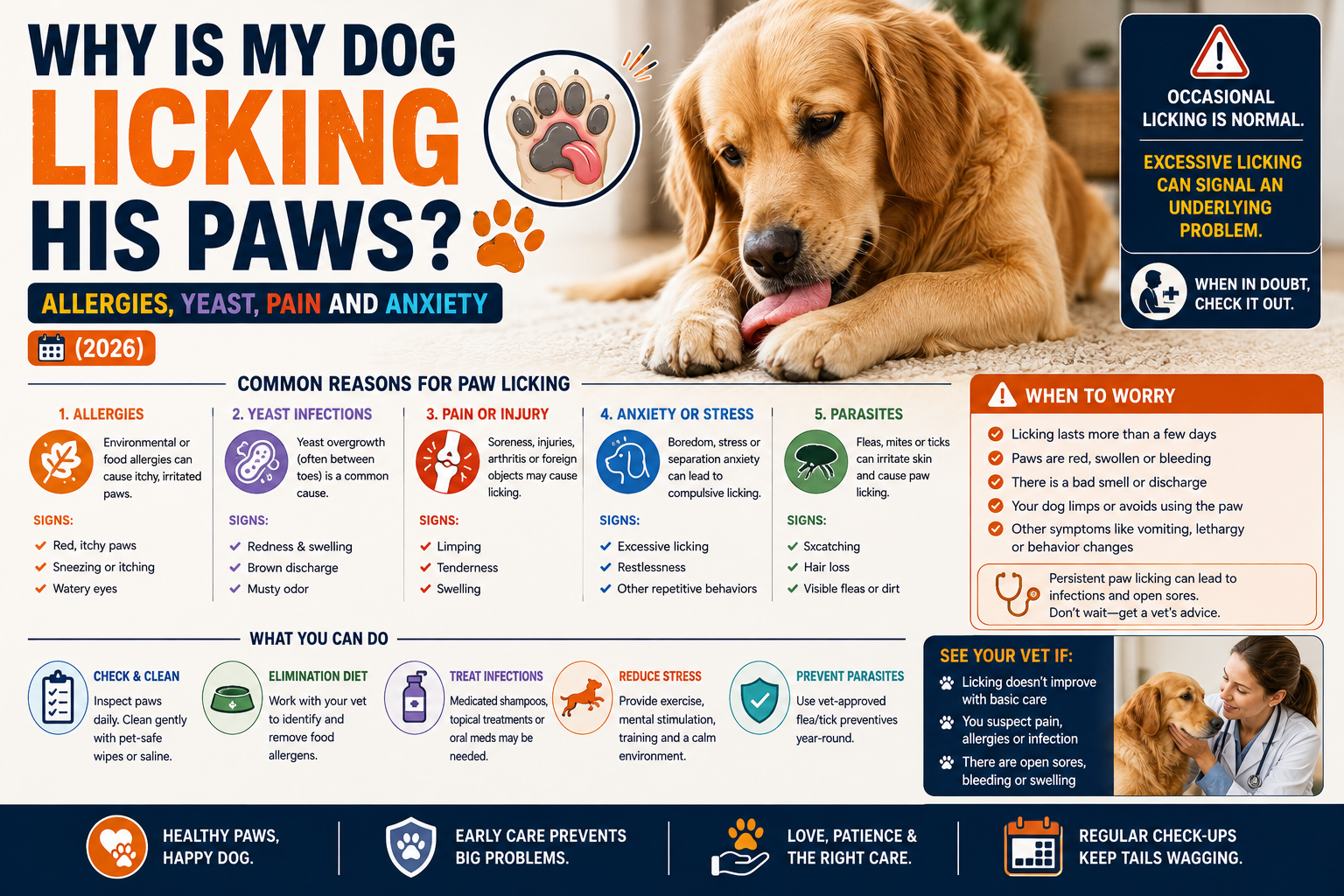
Quick Answer
Occasional paw licking is normal grooming. Constant licking is almost always itch, pain, or infection and allergies are the single most common cause. The classic pattern is a dog licking all four paws, worse in the evening, with the fur stained rust-brown by saliva. Because licking damages the skin and invites secondary yeast and bacterial infection, the problem tends to escalate rather than resolve. Get it looked at rather than waiting it out.
Key Takeaways
- Licking one paw suggests a local problem: injury, foreign body, or pain.
- Licking all four paws suggests a whole-body cause: allergy, or occasionally anxiety.
- The rust-brown stain is porphyrin in saliva a marker of how long licking has been going on.
- A yeasty, corn-chip or musty smell points to Malassezia overgrowth.
- Grass seeds lodged between the toes are a common summer cause and need removing.
- Boredom is real, but it is the least common cause rule out medical reasons first.
First Question: One Paw or All Four?
This single distinction narrows the diagnosis faster than anything else.
| Pattern | Most likely causes |
| One paw only | Cut, thorn, grass seed, broken nail, torn pad, insect sting, joint pain, tumour |
| Both front paws | Allergy (very common), elbow arthritis, anxiety |
| All four paws | Environmental or food allergy, contact irritant, systemic itch |
| Paws plus ears, belly, armpits | Strongly suggests atopic dermatitis (environmental allergy) |
| Worse at night or when resting | Allergy, or compulsive behaviour |
| Seasonal pattern | Pollen allergy, grass seeds, or de-icing salt in winter |
The 9 Causes
1. Environmental allergies (atopic dermatitis)
The most common reason by a wide margin. Dogs react to pollens, grasses, dust mites, moulds, and storage mites but unlike people, they show it through the skin rather than the nose. Paws are affected because they are in constant contact with allergens and are easy to reach.
Look for: licking all four paws, itchy ears and recurrent ear infections, rubbing the face, scratching the belly and armpits, and a seasonal pattern. Often begins between one and three years of age. Commonly affected breeds include West Highland White Terriers, Labradors, Golden Retrievers, French Bulldogs, Boxers, and Shar Peis.
2. Food allergy or intolerance
Less common than environmental allergy but very much real. Usually a reaction to a protein beef, chicken, dairy, wheat, or egg are the frequent culprits.
Look for: itch that is non-seasonal and continues year-round, often with digestive signs such as loose stool, gas, or frequent bowel movements. Diagnosis requires a strict 8–12 week elimination diet using a novel or hydrolysed protein, prescribed by your vet. Over-the-counter allergy tests and “sensitivity” kits are not reliable; a properly conducted diet trial is the only dependable method. Once identified, a suitable complete diet manages it well long-term.
3. Yeast infection (Malassezia)
Yeast lives normally on skin but overgrows in the warm, moist environment that constant licking creates. It is usually a consequence of another problem, not the root cause which is why treating the yeast alone leads to relapse.
Look for: a distinctive musty, yeasty, corn-chip smell; red or brown skin between the toes; greasy or thickened skin; and intense itch that has clearly worsened over time.
4. Bacterial infection (pyoderma)
Broken, saliva-soaked skin lets bacteria in. Look for pustules, crusting, redness, swelling, discharge, or a foul smell. Needs veterinary treatment often antibiotics plus medicated washes.
5. Foreign bodies especially grass seeds
A major summer cause and easy to miss. Grass awns are barbed and migrate into the skin, causing a painful swelling between the toes, often with a small weeping hole.
Look for: sudden intense licking of one paw, limping, and a soft lump between the toes. These need removing by a vet they migrate further with time and do not work their way out on their own.
Also check for thorns, glass, splinters, and gravel.
6. Injury and nail problems
A torn pad, a cracked or broken nail, an overgrown nail pressing into the pad, or a burn from hot pavement. Dogs lick injuries instinctively, but persistent licking prevents healing and introduces infection.
Pavement check: press the back of your hand to the surface for seven seconds. If you cannot hold it there, it is too hot for paws.
7. Parasites
- Demodex mites localised hair loss and redness, more common in young dogs
- Sarcoptes (scabies) intense, relentless itch, highly contagious
- Harvest mites / chiggers visible as tiny orange clusters between the toes in late summer
- Fleas even a few cause significant itch in flea-allergic dogs
Keep parasite prevention current year-round.
8. Pain and arthritis
Dogs frequently lick over a painful area, and referred pain from an arthritic elbow, wrist, or paw joint often shows up as licking rather than limping. This is especially worth considering in an older dog that has started licking the same front paw.
Look for: stiffness after rest, reluctance on stairs, slowing on walks, or licking that is worse after exercise. Trembling can accompany pain too see why is my dog shaking.
9. Anxiety and compulsive licking
Genuine, but the last thing to conclude rather than the first. Chronic stress, boredom, or separation distress can drive repetitive licking, which in severe cases forms an acral lick granuloma a thickened, ulcerated plaque that becomes self-sustaining.
Look for: licking mainly when alone or at rest, one favoured spot, and other stress signs such as pacing or destructive behaviour. Important: many “anxiety lickers” turn out to have an underlying allergy, and the anxiety label delays effective treatment for months. Insist on ruling out medical causes first.
What Does the Rust-Coloured Stain Mean?
That pink-brown discolouration on white fur is porphyrin, an iron-containing pigment present in saliva and tears. It stains fur on contact and does not wash out.
It tells you two useful things: that licking has been going on for a while, and where exactly your dog is focusing. It is not itself harmful, and it is not evidence of infection but it is a reliable sign that this is chronic rather than a one-off.
Contact Irritants Worth Checking
- De-icing salt and grit in winter irritating and harmful if licked
- Lawn treatments, weedkillers, and fertilisers
- Household floor cleaners residue on tiles and laminate
- New carpet or rug treatments
- Shampoo residue from incomplete rinsing
Rinsing paws with plain water after walks is a simple, high-value habit. If your dog may have licked a lawn chemical or antifreeze, treat it as urgent and check our toxic exposure guide.
What You Can Do at Home
- Examine the paws properly. In good light, spread each toe, check between them, inspect pads and nails, and look for swelling, redness, or a weeping point.
- Rinse after every walk. Plain lukewarm water removes pollen, salt, and chemicals. Dry thoroughly between the toes trapped moisture feeds yeast.
- Keep the fur between pads trimmed. Reduces moisture retention and debris.
- Keep nails short. Overgrown nails alter gait and press into pads.
- Note the pattern. Which paw, what time of day, which season, and what changed. This is the information that shortens a diagnosis.
- Consider omega-3 support. EPA and DHA help skin-barrier function a proper fish oil supplement, dosed for your dog’s weight, is a reasonable adjunct alongside veterinary treatment. (Our fish oil guide covers the cat version; the same quality principles apply.)
- Do not rely on a cone alone. A collar stops the licking but not the itch, and the underlying problem continues.
Never apply human creams such as hydrocortisone or antifungals without veterinary advice dogs lick them off, and some ingredients are harmful when ingested. Apple cider vinegar soaks on broken skin are painful and are not a treatment for yeast.
When to See a Vet
Book an appointment if:
- Licking has continued for more than a few days
- The skin is red, swollen, weeping, or smells
- Your dog is limping or the paw is painful to touch
- You can see a lump, hole, or embedded object
- The licking is disturbing sleep yours or theirs
- Ears are also affected, or there are recurrent ear infections
Go the same day if:
- There is a deep cut, heavy bleeding, or an exposed wound
- The paw is hot, very swollen, or your dog will not bear weight
- A grass seed is suspected
- Your dog seems systemically unwell
Expect your vet to: examine the paws and skin closely, take tape or cytology samples to identify yeast or bacteria, possibly perform skin scrapes for mites, and discuss allergy management. Treatment often combines a medicated wash, targeted anti-itch medication, and a plan for the underlying cause. Modern allergy medications are considerably better tolerated than long-term steroids.
Frequently Asked Questions
Why does my dog lick his paws at night? Allergy itch tends to intensify when a dog is resting and undistracted, and evenings are often when indoor allergens settle. Night-time licking also occurs with compulsive behaviour.
Is paw licking always allergies? No, but allergies are the most common cause of licking all four paws. Licking a single paw more often means injury, a foreign body, or pain.
Why are my dog’s paws stained brown? Porphyrin in saliva stains fur where it makes prolonged contact. It signals chronic licking rather than causing any harm itself.
Can I use apple cider vinegar on my dog’s paws? It is not recommended. On broken or inflamed skin it stings, and it is not an effective treatment for yeast or bacterial infection.
How do I stop my dog licking his paws? Address the cause rather than the behaviour. Rinse paws after walks, keep them dry, maintain parasite control, and get a veterinary diagnosis. A cone helps break the cycle short-term but does not fix anything.
Does food cause paw licking? It can. Food allergy typically causes year-round itch, often with digestive signs, and is confirmed by a strict 8–12 week elimination diet under veterinary guidance.
Is it boredom? Occasionally, but it is the least common cause and the easiest to over-diagnose. Rule out allergy, infection, parasites, and pain before concluding it is behavioural.
Should I put a cone on my dog? It can be useful to let damaged skin heal, especially with a lick granuloma. Treat it as one part of a plan, not the plan itself.
Final Thoughts
Paw licking is easy to normalise because it starts small and looks like grooming. By the time the fur is stained and the skin smells, the problem has usually been building for months, and a simple itch has become a layered problem of allergy plus yeast plus damaged skin.
Start with the most useful question: one paw, or all four? Check between the toes properly. Rinse and dry after walks. And when licking has gone on for more than a few days, get it seen the earlier you break the itch-lick-infect cycle, the simpler and cheaper it is to resolve.
Related Reading
- Why Is My Dog Shaking? 8 Common Causes
- Foods Toxic to Dogs: The Complete List
- Best Super Premium Dog Food
- What to Feed a Dog With Diarrhea
A Note on Pet Health
Serlig publishes researched pet care information for everyday owners. It is general guidance, not veterinary advice, and it does not replace an examination by a licensed veterinarian who knows your pet. If your pet is unwell, or anything in this guide does not match what you are seeing at home, contact your vet.
About the Author
The Serlig Pet Care Team creates researched, plain-language pet care guides for everyday owners. Our content is written from hands-on pet-care experience and cross-checked against established veterinary sources so you can make confident decisions for your dog.