
Quick Answer
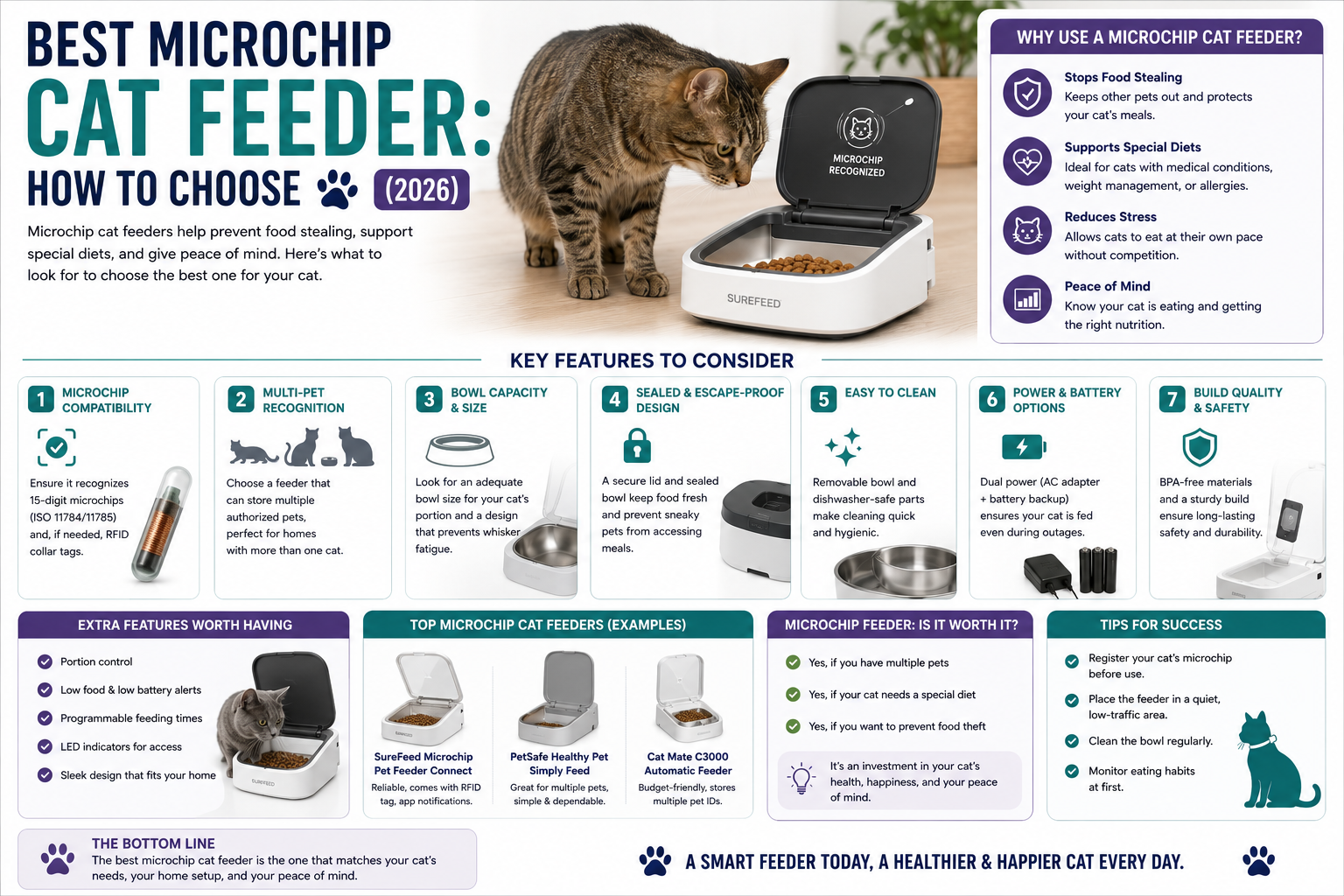
A microchip cat feeder opens only for the cat whose microchip or RFID tag is registered to it, keeping other pets out of that bowl. They solve a specific and surprisingly common set of problems: one cat stealing another’s food, a prescription or therapeutic diet being eaten by the wrong animal, a dog raiding the cat’s bowl, and any weight-management plan in a multi-pet home. They work with your cat’s existing implanted microchip no new implant required or with a supplied collar tag.
Key Takeaways
- Reads your cat’s existing microchip nothing new needs implanting.
- The main use cases are prescription diets, weight control, and multi-cat households.
- Also the reliable fix for a dog eating cat food, which is a genuine problem.
- Most models register multiple pets, so several cats can share one unit with the right settings.
- Introduction takes 1–3 weeks. Rushing it creates food aversion.
- A sealed-bowl version keeps wet food fresh and blocks flies.
What Problem Are You Actually Solving?
Buy the right feature set by starting here.
| Problem | What you need |
| One cat eats the other’s food | Standard microchip feeder for the victim’s food |
| Cat on a prescription or therapeutic diet | Microchip feeder this is the strongest use case |
| Overweight cat in a multi-cat home | Microchip feeder plus portion control |
| Underweight or senior cat outcompeted at meals | Feeder for the vulnerable cat |
| Dog eating the cat’s food | Microchip feeder, placed at height as a second barrier |
| Cat eating the dog’s food | Different problem see can cats eat dog food |
| Wet food drying out or attracting flies | Sealed-bowl model |
| Timed meals while you are out | Look for a timer function, or pair with a separate timed feeder |
The prescription-diet case deserves emphasis. Therapeutic diets for kidney disease, urinary conditions, diabetes, and food allergy only work if the right cat eats them and no other food. In a multi-cat household without separation, a prescribed diet trial frequently fails — not because the diet does not work, but because the cat kept eating from the other bowl. A microchip feeder is often what makes veterinary nutrition actually workable at home.
How They Work
The feeder houses an RFID reader in the housing. When a registered pet approaches, the reader detects either the implanted microchip (the same one your vet scans) or a supplied RFID collar tag, and a lid or shutter opens. Move away, and it closes.
Compatibility note: most models read the common microchip standards used worldwide, though a small number of older or unusual chip types are not supported. Manufacturers publish compatibility lists check yours before buying. If your cat’s chip is unreadable, every model ships with collar tags as a fallback.
What to Look For
Microchip compatibility. Confirm your cat’s chip type is supported, and check whether collar tags are included.
Number of pets supported. Most register several. If you have three cats on three different diets, check the limit before buying three feeders.
Sealed vs open bowl. Sealed models close fully between visits better for wet food, odour control, and keeping flies out. Open designs are cheaper and simpler to clean.
Bowl shape. Look for wide, shallow bowls. Deep narrow dishes press on whiskers and put many cats off eating entirely. Some models include half-bowls for split feeding.
Lid mechanism and noise. Motorised lids make a sound and move. Nervous cats find this genuinely off-putting, which is why the training mode below matters.
Training mode. Good feeders let you keep the lid open, then partly open, then fully automatic. Do not buy one without this.
Power. Most run on batteries lasting several months. Mains-powered options exist. Check whether low battery leaves the lid open or closed.
Cleaning. Removable, dishwasher-safe bowls and mats save a lot of daily irritation.
Capacity. Consider your cat’s size a large breed like a Maine Coon eats more per meal than an average cat.
Introducing It Properly
This is where most people fail. Cats are neophobic about food equipment, and a bad first experience can create a lasting aversion. Allow one to three weeks.
Stage 1 Furniture (2–3 days). Place the feeder, switched off with the lid removed or locked open, next to the existing bowl. Let your cat investigate on its own terms. Feed as normal in the old bowl.
Stage 2 Eating from it (3–5 days). Put your cat’s normal food in the feeder bowl, still open and switched off. The feeder becomes just another dish.
Stage 3 Training mode (3–7 days). Switch on with the lid held partly open. Your cat gets used to the presence of the mechanism without the movement.
Stage 4 Full automatic. Only when your cat is eating comfortably at stage 3.
Troubleshooting:
- Cat refuses to approach go back a stage and slow down.
- Startled by the lid extend the training-mode phase, and check the unit sits on a stable surface so it does not rattle.
- Another cat lurks nearby position the feeder in an open area where the eating cat is not cornered, with an escape route.
- Cat waits for the other cat to leave and then raids the lid should close on departure; check the timeout setting.
Critical safety note: monitor food intake carefully during the transition. A cat that stops eating is at risk of hepatic lipidosis within days see why is my cat not eating. If your cat is eating noticeably less, revert to the old bowl and restart more slowly.
Practical Setup Advice
- One feeder per cat if each needs its own food. Sharing one unit works only if they eat the same diet.
- Place feeders apart, in different rooms if possible. Cats prefer not to eat side by side.
- Water separately. Cats naturally drink away from where they eat, so put water bowls elsewhere entirely.
- Feed at height if a dog is the problem the microchip lid plus elevation is far more reliable than either alone.
- Weigh portions. The feeder controls who eats; it does not control how much unless you measure.
- Clean daily with wet food, every few days with dry.
- Keep spare batteries. A feeder that dies while you are away is a real problem.
Are They Worth It?
Yes, clearly, if: a cat is on a prescription diet, you are managing weight in a multi-pet home, a dog raids the cat’s food, or a timid cat is being outcompeted.
Probably not, if: you have a single cat with no dog, or your cats eat the same food and neither has a weight or health issue.
A cost frame: a microchip feeder typically costs less than a single veterinary consultation for a diet-related problem. If a prescription diet trial has already failed once because the wrong cat ate the food, the feeder pays for itself immediately.
Frequently Asked Questions
Do microchip cat feeders work with any microchip? They read the common international standards, but a small number of chip types are not supported. Check the manufacturer’s compatibility list and every model includes collar tags as a fallback.
Can I use one feeder for multiple cats? Yes, if they eat the same food most models register several pets. If each cat needs a different diet, you need one feeder each.
Will a microchip feeder stop my dog eating cat food? Yes, that is one of the most reliable uses. Placing it at height as well makes it near-foolproof.
How long does it take a cat to get used to one? Typically one to three weeks using a staged introduction. Rushing risks food refusal, which is dangerous in cats.
Can you use wet food in a microchip feeder? Yes. A sealed-bowl model is much better for wet food, keeping it fresh and blocking flies.
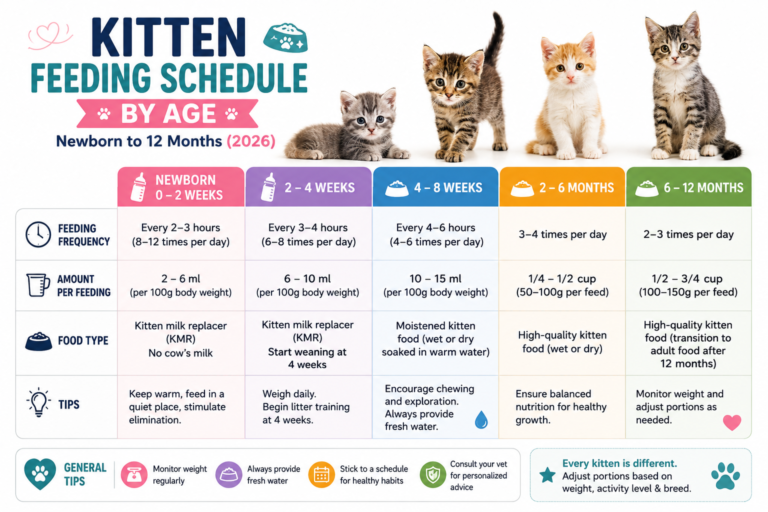
Do they work for kittens? Kittens can be microchipped and use them, but very young kittens need frequent feeding and monitoring see our kitten feeding schedule. Introduce gently.
What happens if the batteries die? It varies by model some fail open, some fail closed. Check this before buying, and keep spares.
My cat is scared of the lid what can I do? Return to training mode with the lid held open for longer, make sure the unit is stable and not rattling, and place it where your cat is not cornered while eating.
Final Thoughts
Microchip feeders are one of the few pet gadgets that solve a real, common, and otherwise very stubborn problem. Anyone who has tried to run a prescription diet trial across three cats in one kitchen knows exactly how impossible it is without one.
The technology is the easy part. The part that determines whether it works is the introduction four unhurried stages over two or three weeks, with a close eye on how much your cat is actually eating. Get that right and the feeder disappears into the routine. Rush it, and you will have an expensive plastic box your cat refuses to approach.
Related Reading
- Can Cats Eat Dog Food?
- Why Is My Cat Not Eating?
- Kitten Feeding Schedule by Age
- Maine Coon Size: How Big Do They Get?
A Note on Pet Health
Serlig publishes researched pet care information for everyday owners. It is general guidance, not veterinary advice, and it does not replace an examination by a licensed veterinarian who knows your pet. If your pet is unwell, or anything in this guide does not match what you are seeing at home, contact your vet.
About the Author
The Serlig Pet Care Team creates researched, plain-language pet care guides for everyday owners. We research pet products so you can decide what genuinely suits your cat.



One Comment