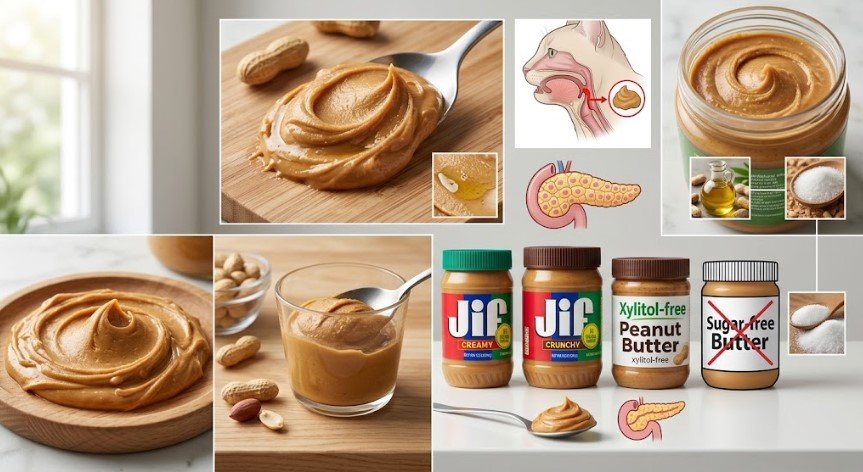
Can cats eat peanut butter? It is best avoided entirely. Plain peanut butter is not classed as toxic, but it offers a cat no nutritional benefit and carries several real risks: a serious choking and aspiration hazard from the sticky texture, a very high fat load that can trigger pancreatitis, and the possibility of xylitol in sugar free varieties. Never use peanut butter to hide a tablet. If your cat has eaten any product labelled sugar free, call your vet immediately.
Can Cats Eat Peanut Butter?
Technically yes, practically no.
Plain peanut butter contains no ingredient that poisons a cat. If yours has licked a smear off a knife, that is very unlikely to cause harm, assuming the jar was an ordinary sweetened one.
But this is one of the few foods in this series where the honest recommendation is to skip it completely rather than to portion it carefully. The reason is the ratio. Peanut butter delivers zero nutritional benefit to an obligate carnivore, and it carries three genuine risks in exchange for that nothing. When a food gives you no upside at all, even modest risks are not worth accepting.
The most important thing on this page concerns sugar free varieties, and it is covered immediately below.
Why This Is a Dog Habit Applied to Cats
It is worth naming where this question comes from, because that explains a lot.
Peanut butter is one of the most established treats in dog ownership. It goes inside enrichment toys, it hides tablets, it is smeared on lick mats to keep a dog occupied during grooming or nail trims. For dogs, in xylitol free form and reasonable quantities, it works well.
Almost none of that transfers to cats.
Cats have smaller mouths and throats, so a sticky mass is harder to clear. They are far less tolerant of sudden high fat meals. They are more likely to react badly to being handled while distressed. And they have no interest in sweetness at all, so the enthusiasm that makes peanut butter effective for dogs largely does not exist.
If you have kept dogs before, this is the habit to leave behind rather than adapt. Our guide to peanut butter and dogs covers where nut butters do and do not fit in canine feeding, and the difference is substantial.
The Xylitol Question
This is the part that matters most, and it deserves to be handled carefully rather than dramatically.
What Xylitol Does
Xylitol is a sugar alcohol used as a sweetener in sugar free products. In dogs, the effect is well documented and severe: it triggers a rapid, inappropriate release of insulin, causing blood sugar to crash within roughly 15 to 30 minutes, and higher doses can cause acute liver failure over the following one to three days. Seizures and death are possible outcomes.
What the Evidence Shows in Cats
Here is where several articles overstate what is actually known.
The evidence for xylitol toxicity in cats is considerably thinner than in dogs. Cats do not appear to show the same profound insulin response, documented cases are rare, and part of the reason is straightforward: cats cannot taste sweetness, so they rarely eat sugar free products voluntarily in the first place. You will find pages describing xylitol as rapidly fatal to cats with the same certainty applied to dogs, and that certainty is not supported by the current evidence base.
This is not a reason to relax. It is a reason to be accurate.
The correct position is precautionary. The evidence in cats is limited rather than reassuring, absence of documented cases is not proof of safety, the potential outcome is catastrophic, and the benefit of any xylitol containing food to a cat is exactly zero. Treat it as something to avoid completely, and treat any ingestion as a reason to call your vet promptly.
What Xylitol Is Called on a Label
Manufacturers do not always use the word. Check for:
- Xylitol
- Birch sugar or birch sap sugar
- Wood sugar
- E967
- “Sugar alcohol” in the nutrition panel without further detail
The practical rule: if a jar is labelled sugar free, no sugar added, keto, low carb, diabetic friendly or reduced sugar, read every ingredient before it goes anywhere near your cat. These are the products most likely to contain it, and the ones that give a lick of peanut butter a completely different risk profile.
If Your Cat Has Eaten Sugar Free Peanut Butter
- Call your vet or an animal poison service immediately. Do not wait for symptoms.
- Keep the jar. The brand, the ingredient list and the quantity all matter.
- Note the time and roughly how much was eaten.
- Do not induce vomiting unless a vet specifically instructs you to.
- Go in if advised, even if your cat seems entirely well.
Our guide to human foods toxic to cats covers the wider list of household items worth keeping out of reach.
The Choking and Aspiration Risk
This risk is specific to cats in a way that is easy to underestimate.
Peanut butter is adhesive. It sticks to the roof of the mouth, the back of the throat and the oesophagus, and a cat cannot simply chew and swallow its way out of the problem the way a person can. Cats also have smaller airways than dogs, so an obstruction that a larger animal would clear can become genuinely dangerous.
Aspiration is the more serious version. A cat struggling with a sticky mass may inhale sharply while panicking. Material drawn into the airway can cause aspiration pneumonia, which is a serious condition requiring veterinary treatment rather than something that resolves at home.
There is also a smaller welfare point worth mentioning. Sticky residue on the face and whiskers is genuinely unpleasant for a cat, whose whiskers are dense with sensory nerve endings. A cat frantically wiping its face after a treat has not enjoyed the experience.
Signs of a problem: pawing at the mouth, repeated gagging or retching, drooling, coughing, difficulty breathing, or distress immediately after eating. Any of these warrant a call to your vet.
The Fat Problem
Peanut butter is one of the most calorie dense foods in an ordinary kitchen.
A single tablespoon contains close to 100 calories and around 8 grams of fat. An average adult cat needs roughly 200 to 300 calories a day in total, and treats should stay under 10 percent of that, which is a budget of about 20 to 30 calories.
One tablespoon is therefore three to five times a cat’s entire daily treat allowance, and close to half of everything they should eat that day.
The immediate concern is not weight gain, though that follows with repetition. It is pancreatitis. A sudden high fat meal can trigger inflammation of the pancreas, which is painful, potentially serious, and something cats with any prior history are especially vulnerable to. Cats with existing digestive disease, liver disease or diabetes are also more susceptible to problems from a fatty treat.
Our guide to low calorie treats and portion control covers how quickly a small daily budget is used up.
Aflatoxins
This risk appears on almost no page discussing cats and peanut butter, and it is worth knowing about.
Peanuts are prone to contamination by Aspergillus moulds, which produce aflatoxins. These are potent liver toxins, and they survive processing, so they can be present in the finished butter. Reputable manufacturers test for them and commercial products are regulated, so the risk from a mainstream jar is low.
The risk rises with poorly stored, home ground or unregulated products, and with peanuts kept for a long time in warm or humid conditions. Cats are small, so any contamination represents a larger dose relative to body weight than it would for a person.
This is not a reason for alarm about a lick from a supermarket jar. It is one more entry on a list of risks that a food with no nutritional upside does not justify.
Never Use Peanut Butter to Hide a Pill
This is the single most common reason people give peanut butter to a cat, and it is a poor method for several reasons at once.
The choking risk is highest precisely when a cat is being handled and medicated, which is already a stressful situation. Cats also frequently detect the tablet, bite into it, taste the bitterness and then foam at the mouth, at which point the medication is on the floor and your cat has learned to distrust anything you offer by hand. That lesson is difficult to undo, and it makes every subsequent dose harder.
What works better
- Meat based pill pockets designed for cats
- A small amount of wet food shaped around the tablet
- A lickable puree treat, which most cats accept readily
- A small dab of plain yogurt if your cat tolerates dairy, covered in our guide to yogurt and cats
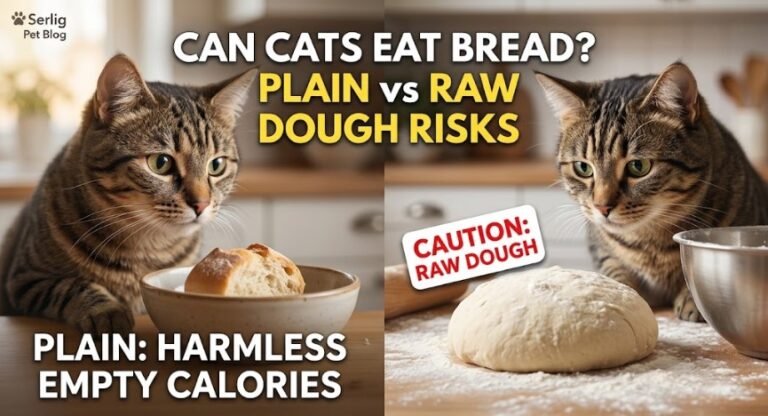
Bread is another common improvisation and is no better, for related reasons covered in our guide to bread and cats.
If your cat consistently refuses medication, ask your vet whether the drug comes as a liquid, a transdermal gel applied to the ear, or a long acting injection. This is a routine problem with established solutions, and struggling with sticky foods at home is unnecessary.
Why Cats Want It Anyway
Some cats do show real interest in peanut butter, which seems odd given they cannot taste sweetness.
They are responding to fat and salt, not sugar. Fat carries aroma, and a concentrated fatty food reads to a carnivore as something worth investigating. Salted varieties add a second attractant.
That interest is not evidence of a nutritional need. It is the same instinct that draws a cat to butter or cooking oil, neither of which anyone would call a treat.
Many cats show no interest at all, and a few are actively put off by the texture. Both are perfectly normal.
If Your Cat Already Ate Some
A small lick of ordinary sweetened peanut butter: Not an emergency. Check the label to confirm there is no xylitol, then watch for 24 hours. Mild vomiting or loose stools are the likely outcome and usually resolve without intervention. Make sure water is available.
A larger amount of ordinary peanut butter: Watch more closely, particularly for signs of pancreatitis: repeated vomiting, abdominal pain, hunching, lethargy or refusing food. Contact your vet if any appear. Cats with a history of pancreatitis or digestive disease should be reported to the vet straight away rather than monitored at home.
Any amount of sugar free peanut butter: Call your vet now. Follow the steps in the xylitol section above.
Signs of choking at any point: Pawing at the mouth, gagging, coughing or breathing difficulty. This is urgent.
Persistent vomiting always warrants attention rather than observation, and our article on why cats vomit explains where the line sits.
What About Whole Peanuts?
Plain unsalted peanuts are not toxic to cats, but they are a worse option than the butter in one respect and better in another.
Worse: a whole peanut is hard, requires chewing that cats are not built for, and can be swallowed intact. That makes it a genuine choking and obstruction risk, especially if any shell is present.
Better: it is less adhesive, so it does not stick in the throat the way butter does.
Salted, flavoured, honey roasted or chocolate coated peanuts are all unsafe for different reasons, and chocolate coated peanuts combine two problems at once.
Peanut allergy in cats is uncommon but does occur, presenting as itching, skin irritation, vomiting or digestive upset. As with any new food, a reaction can happen on first exposure.
The overall verdict is the same. There is no reason to give a cat peanuts in any form.
Safer Alternatives
If the goal is a treat, an enrichment filling or a way to give medication, all of these work better.
- Plain cooked chicken: Shredded small. Our guide to chicken and cats covers portions and preparation.
- A lickable puree treat: Which is the closest genuine equivalent to peanut butter for cats and works well on a lick mat.
- A commercial treat with a stated calorie count: Which makes portion control possible.
- Meat based pill pockets for medication.
- Plain cooked fish: Boneless and unseasoned, as an occasional treat.
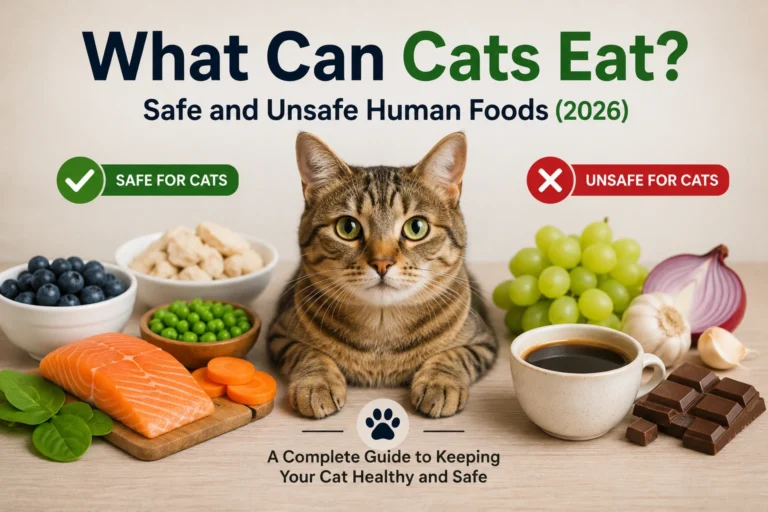
For the full picture of what belongs in a cat’s diet, see our complete guide to what cats can eat.
Frequently Asked Questions
Plain peanut butter is not classed as toxic, but it carries choking, aspiration and pancreatitis risks and provides no nutritional benefit. Sugar free varieties may contain xylitol and should be avoided entirely.
There is no amount that provides a benefit, so the practical answer is none. If your cat has already had a lick of an ordinary sweetened variety, that is very unlikely to cause harm.
The evidence in cats is much thinner than in dogs, and some sources state the danger with more certainty than the research supports. That is not reassurance. Avoid it completely and call your vet if your cat eats any, because the potential outcome is severe and there is no upside.
No. It is a choking risk during an already stressful moment, and cats that bite into the tablet often refuse hand fed treats afterwards. Use pill pockets, wet food or a lickable puree instead.
They carry the same texture and fat problems. Macadamia in particular is considered unsafe for cats, so nut butters are best avoided as a category.
Check the jar for xylitol first. If it is an ordinary sweetened variety, watch for 24 hours and expect nothing worse than possible mild stomach upset. If it is sugar free, call your vet.
No. The choking risk is greater in a smaller mouth, and kittens have no room in their diet for calories that carry no nutrition.
Conclusion:
Can cats eat peanut butter? They can, and they should not. This is one of the few foods in this series where careful portioning is not the answer, because there is no portion that does anything useful for a cat.
The risks are real without being dramatic. Sticky texture in a small throat is a genuine choking and aspiration hazard. One tablespoon carries several days of a cat’s treat allowance in fat, with pancreatitis as the serious end of that. Sugar free jars may contain xylitol, and while the evidence in cats is thinner than the internet suggests, the sensible response to genuine uncertainty about a severe outcome is avoidance rather than reassurance.
Peanut butter is a dog treat. If you have brought the habit across from dog ownership, this is one to leave behind.
A Note on Pet Health
Serlig publishes researched pet care information for everyday owners. It is general guidance, not veterinary advice, and it does not replace an examination by a licensed veterinarian who knows your pet. If your pet is unwell, or anything in this guide does not match what you are seeing at home, contact your vet.