

Yes, dogs can eat figs in small amounts. A little ripe, fresh fig is safe and non-toxic for most healthy dogs as an occasional treat. Figs are not poisonous like grapes. However, figs are high in fiber and natural sugar, so too much can cause stomach upset. The fig plant and its leaves are a different story, those are toxic to dogs.
If you have ever caught your dog eyeing your fruit bowl, you have probably asked the same question many pet owners do: can dogs eat figs? The short version is that a small piece of fresh, ripe fig is fine for most dogs, but the amount and the type matter a lot. Figs are just one of many fruits owners wonder about, if you are building a dog-safe treat list, start with our complete guide to what fruits dogs can eat, then use this article for the details on figs specifically.
Below, we break down the real benefits, the hidden risks, exactly how much fig is safe, and the warning signs that mean it is time to call your vet.
Can Dogs Eat Figs Safely?
Dogs can eat figs safely when the fruit is fresh, ripe, and served in moderation. One or two small pieces of fig flesh work as an occasional treat for most healthy adult dogs. The fruit itself contains no compounds that are toxic to dogs in small quantities.
The safety really depends on three things: the amount, the type of fig, and your individual dog. A tiny amount of fresh fig is low-risk. A large serving, dried figs, or fig-based sweets are where problems begin. Puppies, senior dogs, and dogs with diabetes or a sensitive stomach should be given figs with extra caution, or skipped entirely.
Think of figs the way you would think of dessert for yourself: a small amount now and then is fine, but it should never become a daily habit or replace balanced meals.
Are Figs Good for Dogs? Nutritional Benefits
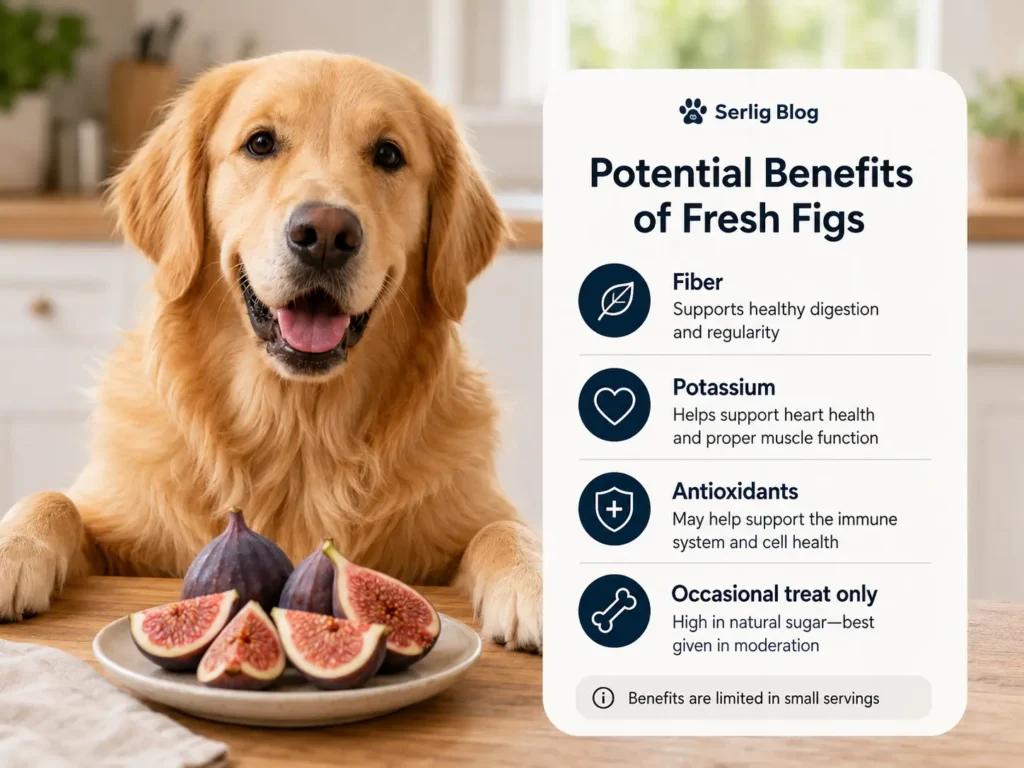
In small amounts, fresh figs do offer a few genuine nutritional perks for dogs. Here is what a ripe fig brings to the bowl:
- Dietary fiber supports healthy digestion and can help firm up loose stools and encourage regular bowel movements.
- Potassium helps support nerve function, muscle health, and healthy blood pressure.
- Natural antioxidants may help protect your dog’s cells from everyday oxidative damage.
- Vitamins A, B6, and K contribute in trace amounts to vision, metabolism, and healthy blood clotting.
- Natural sugars give a quick, small energy boost, which is why many dogs love the taste.
That said, figs are a treat, not a necessity. A complete, balanced dog food already provides everything your dog needs to stay healthy. Fruit should only ever be a small extra. If you want other nutrient-rich options to rotate in, gentler picks like papaya or fibre-friendly vegetables such as okra are worth reading up on too.
Are Figs Bad for Dogs? Risks and Side Effects
Figs carry real risks when they are given in the wrong amount or the wrong form. Understanding these risks is what separates a safe treat from a trip to the vet.
Too Much Fiber and Sugar
Figs are high in both fiber and natural sugar. A little fiber aids digestion, but too much can cause diarrhea, gas, bloating, and an upset stomach. If your dog already struggles with loose stools, read our guide on what to feed a dog with diarrhea before offering any new fruit.
The sugar content is the other concern. Figs contain more natural sugar than many fruits, which adds unnecessary calories. Over time, that can contribute to weight gain, dental problems, and blood-sugar spikes. Dogs with diabetes should avoid figs completely.
The Fig Plant Is Toxic to Dogs
This is the part most owners miss. While the fruit is safe in small amounts, the fig plant, tree, leaves, and sap are toxic to dogs. They contain natural compounds called ficin and ficusin (psoralen), which can irritate a dog’s mouth, skin, and digestive tract.
Common houseplants like the fiddle-leaf fig and weeping fig (Ficus) fall into this category. If your dog chews the leaves or gets sap on their skin, it can cause drooling, mouth irritation, vomiting, or skin redness. Keep these plants well out of reach, especially for curious puppies.
Fig Allergies and Sensitivities
Some dogs are simply sensitive or allergic to figs. Signs of a fig allergy can include itchy skin, red patches, watery eyes, coughing, wheezing, or excessive drooling. If your dog often deals with itchy or flaky skin, our article on dog dandruff and skin care may help you spot the difference between a food reaction and a grooming issue. Always introduce figs in a very small amount the first time and watch closely.

Fresh Figs vs Dried Figs: What’s the Difference for Dogs?
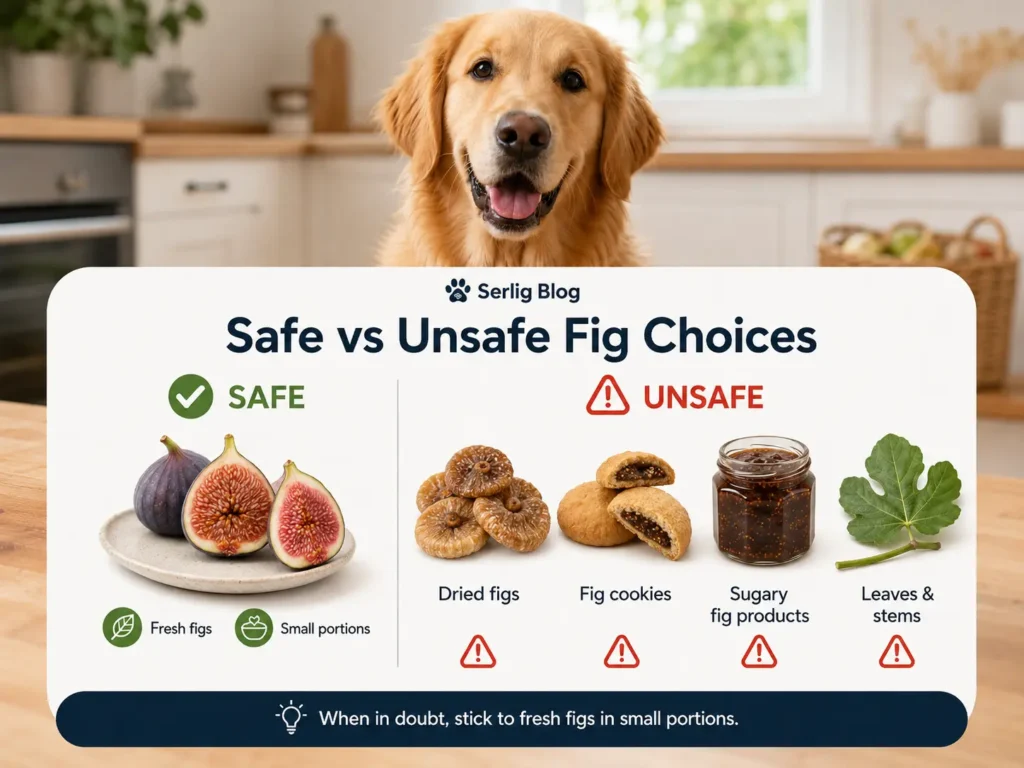
Not all figs are equal when it comes to your dog. The table below shows why fresh is the safer choice.
| Type | Safe for dogs? | Why |
|---|---|---|
| Fresh ripe fig | Yes, in small amounts | Lower sugar, higher water content, easier to digest |
| Dried fig | Best avoided | Sugar is far more concentrated; easy to overfeed |
| Fig Newtons / fig bars | No | Added sugar, preservatives, possible xylitol |
| Fig jam or preserves | No | Very high sugar, often other additives |
The takeaway is simple: if you are going to share a fig, make it a small piece of plain, fresh fruit.
How Many Figs Can a Dog Eat?
Follow the 10% rule: treats like figs should make up no more than 10% of your dog’s daily calories. For figs specifically, less is better because of the sugar and fiber.
A safe starting guide by size:
- Small dogs (under 20 lbs): half of one small fresh fig, occasionally
- Medium dogs (20–50 lbs): one small fresh fig, occasionally
- Large dogs (over 50 lbs): one to two small fresh figs, occasionally
Offer figs no more than once or twice a week. If it is your dog’s very first fig, start with a single tiny bite and wait a full 24 hours to check for any digestive or allergic reaction before giving more.
How to Safely Feed Figs to Your Dog
Serving figs the right way lowers the risk of stomach upset and choking. Follow these simple steps:
- Choose fresh, ripe figs only. Avoid unripe, moldy, or spoiled fruit.
- Wash the fig thoroughly to remove dirt and any pesticide residue.
- Remove the stem and any tough or woody parts.
- Cut the fig into small, bite-sized pieces to prevent choking, especially for small dogs.
- Start with a small amount and watch how your dog reacts over the next day.
- Skip the skin if your dog has a sensitive stomach, since it is harder to digest.
A Simple Frozen Fig Treat Idea
For a refreshing summer snack, mash a small piece of fresh fig, mix it with a spoonful of plain unsweetened yogurt or a dog-safe fruit like blueberries, and freeze it in a small mold. This turns a sugary fruit into a slow, cooling treat that is easier on the stomach. Keep the portion tiny and offer it only occasionally.

Which Dogs Should Avoid Figs?
Figs are not the right treat for every dog. It is safest to skip figs entirely if your dog:
- Has diabetes or blood-sugar issues, because of the sugar content
- Is overweight or on a calorie-controlled diet
- Has a sensitive stomach or a history of frequent diarrhea
- Is a young puppy with a still-developing digestive system
- Has a known food allergy or reacts to new foods easily
When in doubt, your veterinarian is the best person to tell you whether figs fit your individual dog’s diet.
Symptoms of Fig Sensitivity in Dogs: When to Call Your Vet
Stop feeding figs and contact your veterinarian if your dog shows any of these signs after eating figs:
- Vomiting or diarrhea (if your dog keeps throwing up, do not wait, call your vet)
- Excessive drooling
- Itchy skin, rashes, or hives
- Watery eyes or a runny nose
- Coughing, wheezing, or difficulty breathing
- Swelling around the face, muzzle, or mouth
Difficulty breathing or facial swelling can signal a serious allergic reaction and needs urgent veterinary care. When it comes to your dog’s health, it is always better to be cautious and make the call.
What to Do If Your Dog Eats Too Many Figs
If your dog sneaks a large number of figs, do not panic, figs are not acutely poisonous the way grapes are. In most cases, an overindulgent dog will get an upset stomach, gas, or diarrhea that passes within a day.
Offer plenty of fresh water, hold off on more treats, and keep meals bland and simple for the next 24 hours. Watch for the warning signs listed above. If vomiting or diarrhea is severe, continues for more than a day, or your dog seems weak or in pain, call your veterinarian right away.
It is best to wait. Puppies have sensitive, developing stomachs, so figs can easily cause an upset. Check with your vet before offering any new fruit to a puppy.
The fig fruit is not poisonous in small amounts. However, the fig plant, leaves, and sap are toxic to dogs because they contain ficin and ficusin.
Yes, the skin of a ripe fig is safe, but it can be harder to digest. Remove it for dogs with sensitive stomachs.
No more than once or twice a week, in small amounts, as an occasional treat.
It is better to avoid them. Dried figs are very high in sugar and more likely to cause digestive upset and weight gain.
No. Fig Newtons and similar cookies contain added sugar, preservatives, and sometimes xylitol, which is highly toxic to dogs.
A Note on Pet Health
Serlig publishes researched pet care information for everyday owners. It is general guidance, not veterinary advice, and it does not replace an examination by a licensed veterinarian who knows your pet. If your pet is unwell, or anything in this guide does not match what you are seeing at home, contact your vet.