
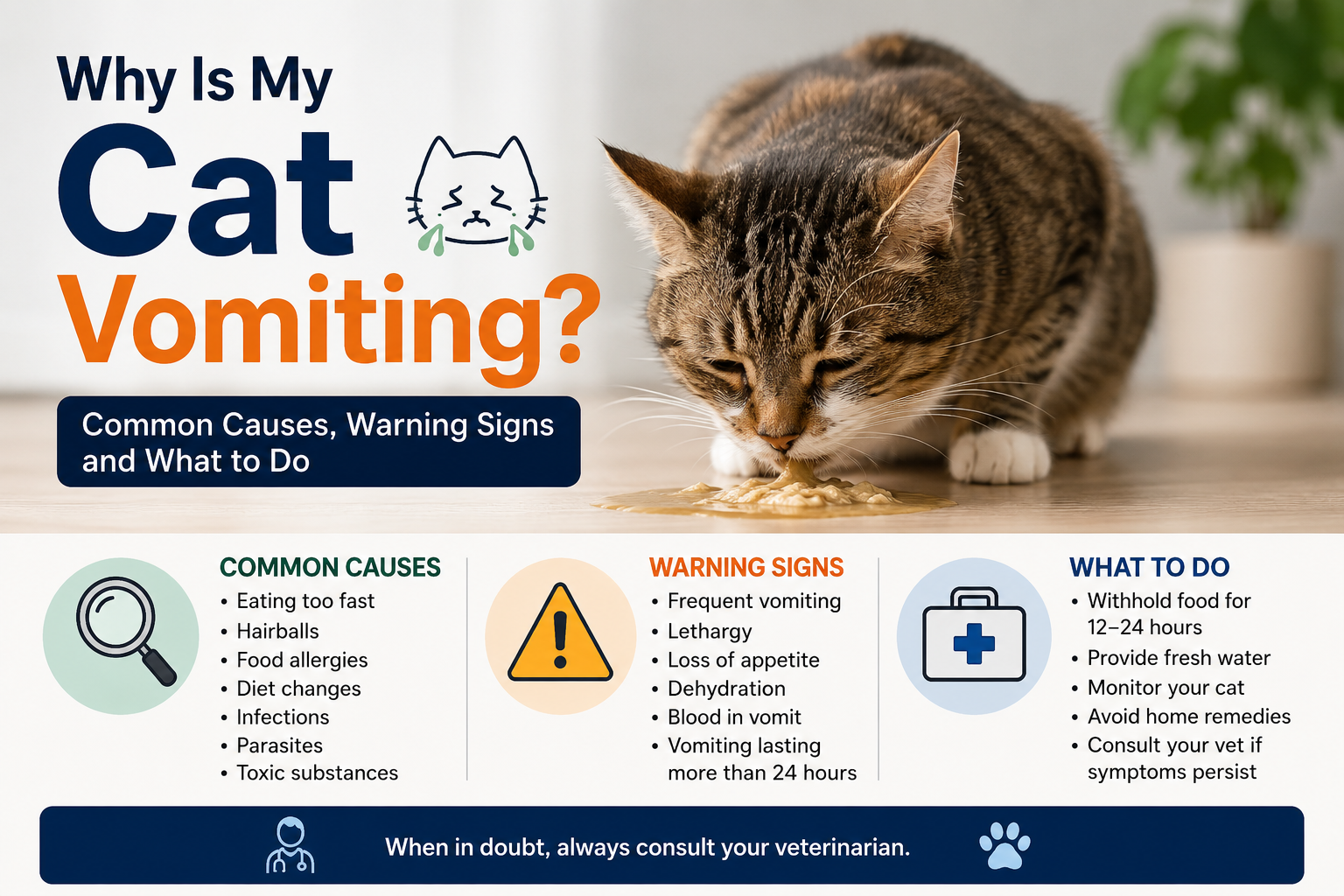
An isolated episode in a cat that remains active alert and interested in food may not always be an emergency. However frequent or repeated vomiting should never be dismissed as normal.Cats vomiting more than once per week or vomiting alongside weakness appetite loss diarrhea blood increased thirst or changes in urination should be examined promptly by a veterinarian.
This guide explains why your cat may be vomiting how to recognize urgent warning signs and what you can safely do while arranging appropriate veterinary care.
Is My Cat Vomiting or Regurgitating
Before considering the possible cause it helps to determine whether your cat is actually vomiting or regurgitating.
Vomiting
Vomiting is an active process. Your cat may drool lick their lips appear nauseated crouch close to the ground make retching sounds contract the abdominal muscles or bring up partially digested food liquid foam or bile.
Regurgitation
Regurgitation is usually more passive. Food or water may come back up suddenly without abdominal contractions or repeated retching. The material often looks undigested and may be shaped like a tube because it has come from the esophagus.
This distinction matters because vomiting and regurgitation can have different causes and may require different diagnostic tests. Taking a short video of the episode can help your veterinarian determine what is happening.
Why Is My Cat Vomiting
There is no single explanation for cat vomiting. Causes range from mild digestive irritation to serious medical emergencies involving the intestines kidneys liver pancreas or thyroid gland.
Eating Too Quickly
Some cats eat their meals so quickly that their stomach becomes irritated or overly full. They may bring up undigested food shortly after eating.
Fast eating is more common in multi cat households. It can also happen when a cat is worried that another pet will take their food or when the cat receives one or two large meals each day.
Feeding smaller portions more frequently may help. Puzzle bowls and timed feeders can also slow down eating. Read our guide about automatic cat feeders before choosing one for your cat.
Vomiting after nearly every meal requires veterinary assessment because it may be caused by more than eating too quickly.
Hairballs and Excessive Grooming
Cats naturally swallow some hair while grooming. Most hair passes through the digestive system but some may collect in the stomach and form a hairball.
An occasional hairball may occur especially in long haired cats or during seasonal shedding. Frequent hairballs repeated retching appetite loss constipation or vomiting without producing hair should not be ignored.
Regular brushing can reduce the amount of loose hair your cat swallows. Our guide explaining why cats shed so much covers seasonal shedding grooming nutrition stress and health related causes.
Sudden Food Changes
Changing cat food too quickly can upset the digestive system. This may result in vomiting soft stool diarrhea gas or reduced appetite.
When changing food transition gradually unless your veterinarian gives different instructions. Mix increasing amounts of the new food with decreasing amounts of the old food over several days.
Cats with vomiting chronic digestive sensitivity allergies or other medical conditions may require a veterinarian supervised diet rather than a standard food change.
For more information about balanced diets and feeding choices visit the Serlig Pet Nutrition guide.
Food Intolerance or Dietary Irritation
A cat may react poorly to a particular food ingredient treat table scrap spoiled food or supplement. Vomiting can also occur after overeating or consuming something unfamiliar.
Possible signs include vomiting after specific meals diarrhea excessive gas itchy skin ear problems poor coat condition or appetite changes.
Do not repeatedly switch foods in an attempt to identify the problem. Frequent diet changes can make symptoms harder to interpret. A veterinarian may recommend a carefully controlled dietary trial.
An Empty or Irritated Stomach
Some cats vomit yellow liquid or white foam when their stomach is empty or irritated. Yellow liquid often contains bile while white foam may be a mixture of stomach fluid saliva and air.
A single episode does not reveal the underlying cause. Repeated foam or bile vomiting can also occur with gastritis gastrointestinal disease pancreatitis parasites or systemic illness.
A consistent feeding schedule and smaller meals may help some cats but recurring episodes should be evaluated rather than managed only by changing meal timing.
Owners of Persian cats may also find our Persian cat feeding schedule helpful when planning regular meals.
Plants Toxins or Unsafe Substances
Cats may vomit after chewing plants licking cleaning products swallowing medication or eating unsafe human food.
Potential household hazards include lilies human pain medications cleaning chemicals essential oils rodent poison insecticides antifreeze onions garlic chocolate and alcohol.
Suspected poisoning is an emergency. Contact a veterinarian or animal poison service immediately. Do not try to make your cat vomit unless a veterinarian or poison specialist specifically instructs you to do so.
Bring the product packaging plant sample medication container or ingredient list with you when possible.
Foreign Object or Intestinal Blockage
Cats sometimes swallow string thread ribbon elastic bands plastic small toys or other objects. These materials may become trapped in the stomach or intestines.
Warning signs may include repeated vomiting refusing food abdominal pain hiding low energy straining drooling or repeated unproductive retching.
String and thread are particularly dangerous. Never pull string from your cat’s mouth or anus because it may be anchored inside and could damage the intestines.
A suspected obstruction requires urgent veterinary care and may need imaging endoscopy or surgery.
Parasites or Infection
Intestinal parasites bacterial infections viral infections and other gastrointestinal illnesses may cause vomiting. Diarrhea reduced appetite abdominal discomfort fever or lethargy may also occur.
Kittens outdoor cats recently adopted cats and cats with unknown preventive care histories may have a greater risk of certain infections or parasites.
Your veterinarian may recommend a fecal test bloodwork or additional diagnostic testing.
Inflammatory Bowel Disease or Pancreatitis
Chronic inflammation of the digestive tract can lead to repeated vomiting diarrhea appetite changes weight loss or poor coat quality.
Pancreatitis can cause vague signs in cats including vomiting reduced appetite lethargy dehydration abdominal discomfort and hiding more than usual.
These conditions cannot be diagnosed from symptoms alone. Blood tests ultrasound dietary trials or tissue samples may be needed.
Kidney Liver Thyroid or Other Disease
Vomiting is not always caused by the stomach. Kidney disease liver disease hyperthyroidism diabetes cancer urinary obstruction and other systemic illnesses can also cause nausea and vomiting.
This possibility becomes more concerning when vomiting occurs with weight loss increased thirst changes in urination appetite changes weakness bad breath poor coat condition or behavioral changes.
Older cats and cats with known medical conditions should be assessed promptly when new vomiting develops.
Persian cat owners can also review our guide to common health issues in Persian cats.
What Does Cat Vomit Look Like
The appearance of vomit may provide useful clues but it cannot confirm a diagnosis.
Undigested Food
Food coming up soon after eating may be associated with eating too quickly overeating regurgitation or an esophageal problem.
Partially Digested Food
This suggests that food reached the stomach before being expelled. Dietary irritation gastritis food intolerance or illness may be involved.
Yellow Liquid
Yellow vomit often contains bile. It may occur when the stomach is empty but repeated bile vomiting needs veterinary attention.
White or Clear Foam
Foam may occur with an empty or irritated stomach. It can also appear with gastrointestinal inflammation or other health conditions.
Hair and Fluid
A visible clump of hair may be a hairball. Frequent hairballs or repeated vomiting still deserve investigation.
Blood or Coffee Ground Material
Fresh red blood or dark material resembling coffee grounds may indicate bleeding in the digestive tract. Contact a veterinarian immediately.
When Is Cat Vomiting an Emergency
Seek urgent veterinary care when your cat shows any of the following signs.
- Vomits repeatedly within a short period
- Cannot keep water down
- Has blood in the vomit
- May have swallowed string or another object
- May have eaten a toxin medication or poisonous plant
- Has a swollen or painful abdomen
- Is weak collapsed disoriented or extremely lethargic
- Has pale blue grey or yellow gums
- Has trouble breathing
- Is repeatedly retching without producing anything
- Stops eating
- Has severe diarrhea
- Shows major changes in thirst or urination
Kittens senior cats and cats with diabetes kidney disease or other ongoing conditions may become unwell more quickly and should be assessed sooner.
What Should I Do After My Cat Vomits
If your cat vomits once but remains bright comfortable and otherwise normal observe them carefully.
Record What Happened
Note the time of the episode how many times your cat vomited what the vomit looked like when your cat last ate any new food or treats and possible access to plants string medication or chemicals.
Photographs or videos may help your veterinarian.
Provide Access to Fresh Water
Keep fresh water available but contact your veterinarian if drinking immediately triggers more vomiting or your cat cannot keep water down.
Do Not Give Human Medication
Do not give antacids pain medication anti nausea medication or any other human product unless prescribed specifically for your cat.
Do Not Fast Your Cat Without Veterinary Advice
Long fasting periods are no longer routinely recommended for pets with digestive upset. Cats need appropriate nutrition and prolonged food restriction can create additional risks.
If vomiting has stopped and your cat remains well your veterinarian may advise small portions of an appropriate diet.
Call Your Veterinarian if Vomiting Returns
Even when your cat appears normal between episodes recurring vomiting may indicate an underlying problem that requires testing.
How Will a Veterinarian Diagnose Cat Vomiting
Your veterinarian will ask about the frequency appearance timing and duration of vomiting. They may also ask about diet changes medications plants foreign objects thirst urination stool appetite and weight.
Possible Tests
- Physical examination
- Blood tests
- Urine testing
- Fecal testing
- X rays
- Abdominal ultrasound
- Pancreatic or thyroid testing
- Dietary trials
- Endoscopy or biopsy
Treatment depends on the cause. It may involve fluids anti nausea medication parasite treatment dietary management treatment of an underlying disease or surgery for an obstruction.
Can Cat Vomiting Be Prevented
Not every episode can be prevented but several habits may lower the risk.
- Feed a complete and balanced cat diet
- Introduce new food gradually
- Use smaller meals for fast eaters
- Brush your cat regularly
- Keep string ribbon and small objects out of reach
- Remove toxic plants
- Store medications and cleaning products securely
- Avoid feeding table scraps
- Maintain parasite prevention
- Schedule routine veterinary examinations
- Monitor changes in weight appetite thirst stool and behavior
The Serlig Cat Care hub provides additional guidance on cat nutrition grooming health and everyday care.
Frequently Asked Questions
Why Is My Cat Vomiting but Acting Normal
A cat may vomit once because of fast eating mild dietary irritation excess hair or a temporary stomach upset. Acting normal does not rule out an underlying condition. Contact your veterinarian when vomiting repeats becomes more frequent or occurs with another symptom.
Why Is My Cat Vomiting Undigested Food
Undigested food may appear when a cat eats too quickly or regurgitates shortly after a meal. Repeated episodes can also be associated with esophageal disease food intolerance obstruction or another digestive problem.
Why Is My Cat Vomiting Yellow Liquid
Yellow liquid often contains bile and may appear when the stomach is empty. Repeated yellow vomiting can also occur with gastrointestinal irritation pancreatitis liver disease or other health conditions.
Why Is My Cat Vomiting White Foam
White foam may consist of stomach fluid saliva and air. It can occur when the stomach is empty or irritated but recurring foam vomiting should be discussed with a veterinarian.
How Often Is It Normal for a Cat to Vomit
Occasional vomiting may occur but repeated vomiting should not be considered normal. Veterinary evaluation is important when vomiting becomes frequent or appears with other signs of illness.
Should I Feed My Cat After Vomiting
Do not force food immediately. Keep water available and contact your veterinarian if vomiting repeats or your cat seems unwell. Avoid prolonged fasting unless your veterinarian specifically instructs you.
A Note on Pet Health
Serlig publishes researched pet care information for everyday owners. It is general guidance, not veterinary advice, and it does not replace an examination by a licensed veterinarian who knows your pet. If your pet is unwell, or anything in this guide does not match what you are seeing at home, contact your vet.
6 Comments