
Quick Answer
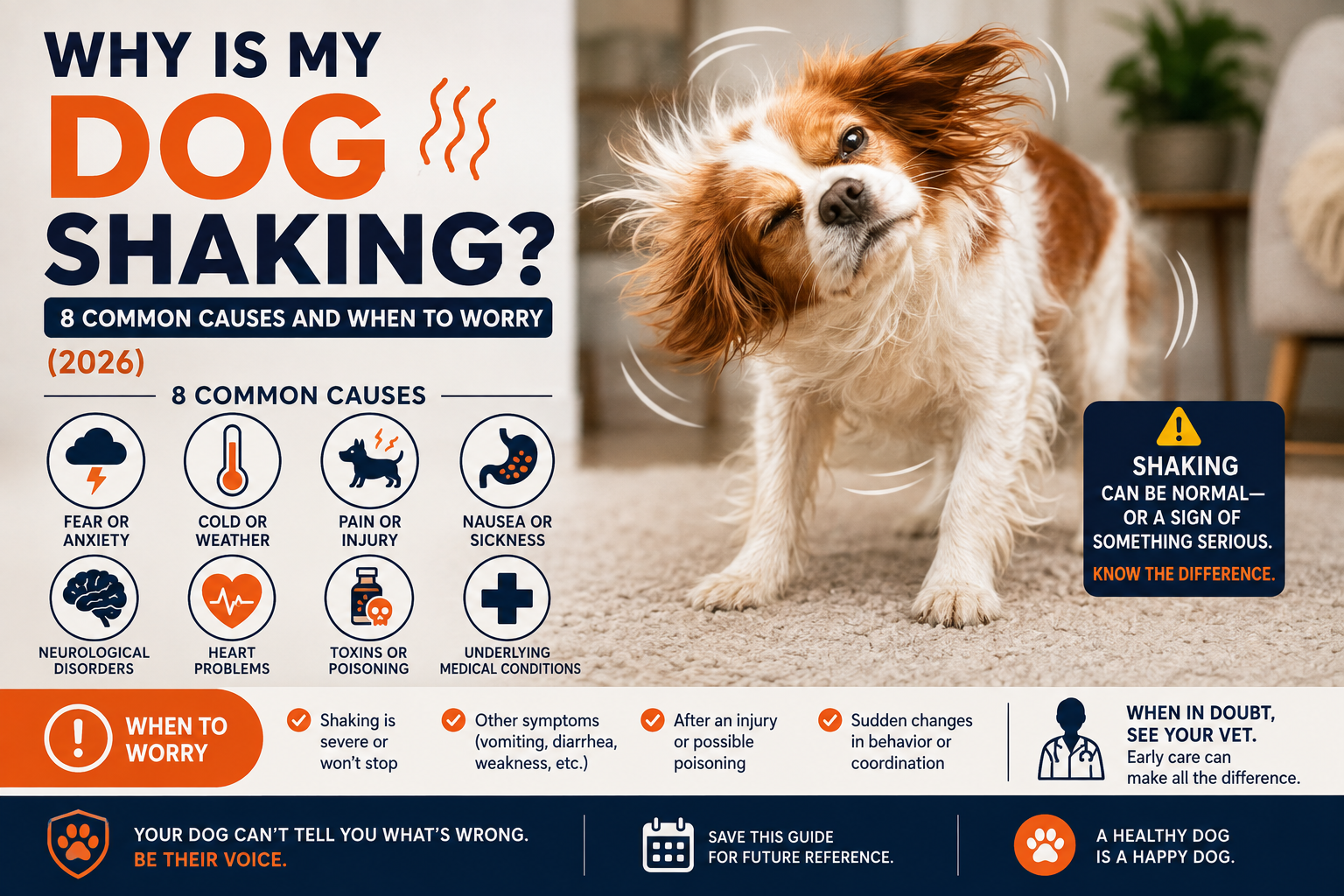
Most dog shaking is harmless caused by cold, excitement, or anxiety but shaking can also signal pain, poisoning, low blood sugar, or neurological disease. The deciding factor is context. A dog that trembles at the vet’s door and then bounds out happily is fine. A dog that starts shaking suddenly, seems unwell alongside it, or is unsteady on its feet needs a sameday veterinary assessment.
Key Takeaways
- Shaking is a symptom, not a diagnosis the surrounding behaviour tells you what it means.
- Emotional shaking (excitement, fear, stress) resolves when the trigger passes.
- Sudden shaking in a previously well dog is a red flag for toxin exposure.
- Pain is one of the most under-recognised causes, especially in older dogs.
- A tremor is rhythmic with the dog aware; a seizure usually involves loss of awareness.
- Shaking plus vomiting, wobbliness, collapse, or refusing food = call a vet now.
Shaking vs Trembling vs Seizure Getting the Language Right
Owners and vets often mean different things by the same word, and the distinction changes the urgency.
| Type | What it looks like | Is the dog aware? | Typical urgency |
| Shivering | Fine, rapid trembling, often whole body | Yes, fully | Usually cold or emotion see why is my dog shivering |
| Tremor | Rhythmic, involuntary, may affect head, legs, or whole body | Yes | Depends on cause; persistent tremors need investigating |
| Twitching | Small, localised muscle movements | Yes | Often benign, but note the pattern |
| Seizure | Stiffening, paddling, collapse, often drooling or loss of bladder control | No usually unresponsive | Emergency if longer than 5 minutes or repeated |
| Shaking off | A deliberate full-body shake, like after a bath | Yes | Normal often a stress-release behaviour |
If you are unsure which you are seeing, film it on your phone. A 20-second video is one of the most useful things you can bring to an appointment, because these episodes rarely happen in the consulting room.
The 8 Common Causes
1. Cold
The simplest explanation and often the right one. Shivering generates heat through muscle contraction. Small breeds, thin-coated breeds, puppies, seniors, and any dog that is wet are most affected. Our companion guide on shivering covers warming safely and recognising hypothermia.
2. Excitement and anticipation
Some dogs vibrate with happiness at the door, before a walk, at feeding time. This shaking is short-lived, accompanied by a loose wagging body, and stops once the exciting thing happens. No action needed.
3. Anxiety, fear, and stress
Fireworks, thunderstorms, car journeys, vet visits, and separation all commonly cause trembling. Look for the wider picture: tucked tail, flattened ears, lip licking, yawning, panting, hiding, or pacing.
What helps: a quiet den-like space, background sound, a snug body wrap, and steady routine. For severe noise phobia or separation distress, speak to your vet genuinely effective medication and behaviour plans exist, and it is unkind to leave a dog to cope alone.
4. Pain
An enormously under-recognised cause. Dogs conceal pain well, and trembling is often the only outward sign. Common sources include arthritis, dental disease, abdominal pain, back or neck problems, and pancreatitis.
Look for: reluctance to jump or climb stairs, stiffness after rest, a hunched or “praying” posture, sensitivity when touched in one area, licking a joint, or a sudden change in temperament.
5. Nausea and digestive upset
Dogs frequently tremble when they feel sick. Look for drooling, repeated lip licking, swallowing, grass eating, or restlessness. If it settles quickly and your dog is otherwise bright, our guide on what to feed a dog with diarrhoea covers the bland-diet approach. Persistent vomiting is a vet matter.
6. Poisoning and toxin exposure
This is the cause that turns shaking into an emergency. Tremors are a hallmark of several common poisonings: chocolate, xylitol, nicotine, caffeine, mouldy food containing tremorgenic mycotoxins, slug pellets, permethrin flea treatments intended for cats, and certain plants.
Suspect this if shaking begins suddenly in a previously well dog, especially with drooling, vomiting, agitation, wobbliness, or a raised temperature. Call a vet or poison line immediately and check our list of foods toxic to dogs.
7. Low blood sugar (hypoglycaemia)
Most likely in toy breeds, very young puppies, and diabetic dogs on insulin. Signs include trembling, weakness, disorientation, glazed eyes, and collapse. This is urgent a small amount of honey or glucose syrup rubbed on the gums can buy time on the way to the clinic, but only in a conscious dog, and only alongside a phone call to your vet.
8. Medical and neurological conditions
Several conditions present with tremor:
- Generalised Tremor Syndrome (historically “white shaker dog syndrome”) a wholebody tremor most often seen in young small-breed dogs. Highly treatable with immunosuppressive medication.
- Kidney disease toxin build-up causes tremors, alongside increased thirst and appetite loss. If those two appear together, read dog not eating but drinking water.
- Addison’s disease episodic weakness, trembling, vomiting, and collapse.
- Fever shivering as body temperature rises.
- Distemper rare in vaccinated dogs, but causes persistent tremors in survivors.
- Old dog vestibular disease head tremor, head tilt, wobbliness, and rapid eye movement.
- Muscle weakness and degenerative conditions in senior dogs.
Quick Triage: What Should I Do Right Now?
Watch and reassure if your dog:
- Is shaking in an obviously cold or exciting situation
- Stops shaking once the trigger ends
- Is eating, drinking, and moving normally
- Has no other symptoms
Book a routine appointment if your dog:
- Shakes intermittently over several days with no clear trigger
- Is older and has become stiffer or slower
- Is shaking alongside mild appetite changes
- Trembles when a specific body part is touched
Go now same-day or emergency if your dog:
- Started shaking suddenly with no explanation
- May have eaten something toxic
- Is also vomiting, wobbling, collapsing, or breathing oddly
- Has a swollen, hard, or painful abdomen
- Has pale or bluish gums
- Is unresponsive during the episode, or the episode lasts over five minutes
- Is a puppy or toy breed showing weakness with trembling
What Your Vet Will Likely Do
Expect a systematic approach: a full physical and neurological examination, temperature check, and a careful history which is where your video and timeline become valuable. From there, blood tests for organ function, blood glucose, and electrolytes, followed if needed by imaging, and referral for advanced neurological work-up in persistent cases.
Bring three things: when it started, what was happening around it, and how long each episode lasts.
Frequently Asked Questions
Why is my dog shaking but acting normal? Most often cold, excitement, or mild anxiety. If your dog is eating, drinking, and moving normally, monitor it. Persistent shaking with no trigger still deserves a check-up.
Is my dog shaking because he is in pain? Possibly. Pain-related trembling usually comes with other signs: reluctance to move, stiffness, a hunched posture, or sensitivity in one area. Dogs hide pain well, so do not rule it out just because your dog is not crying.
Should I be worried if my old dog is shaking? Senior shaking deserves investigation. Arthritis, kidney disease, muscle weakness, and vestibular disease all become more common with age, and several are very manageable once identified.
My dog is shaking and will not eat what does that mean? That combination raises concern for pain, nausea, poisoning, or systemic illness. Contact your vet the same day.
Can anxiety alone cause shaking? Yes, and it is common. The distinguishing feature is that it tracks with a trigger a storm, a car, a stranger and settles once the trigger passes.
How do I tell a tremor from a seizure? During a tremor a dog stays aware and can usually respond to you. During most seizures the dog loses awareness, may stiffen or paddle, and often drools or loses bladder control.
Do puppies shake more than adult dogs? Yes. Puppies regulate temperature less efficiently, are more easily overexcited, and toy-breed puppies are prone to low blood sugar. Sustained shaking with weakness in a puppy is urgent.
Can shaking be a sign of poisoning? Very much so. Tremors are a hallmark of chocolate, xylitol, nicotine, caffeine, and mouldy-food toxicity. Sudden onset in a well dog should always raise this possibility.
Final Thoughts
Shaking sits at the intersection of the completely ordinary and the genuinely urgent, which is what makes it unsettling. The way to resolve that is to stop asking “is shaking bad?” and start asking “what else is happening?”
A dog trembling with joy at the lead is telling you one thing. A dog trembling in a corner, refusing dinner, having been alone in the kitchen with an open bin is telling you something entirely different. Read the context, film the episode, and when the picture does not add up, make the call.
Related Reading
- Why Is My Dog Shivering?
- Why Is My Dog Panting So Much?
- Foods Toxic to Dogs: The Complete List
- Dog Not Eating but Drinking Water: What It Means
- What to Feed a Dog With Diarrhea
A Note on Pet Health
Serlig publishes researched pet care information for everyday owners. It is general guidance, not veterinary advice, and it does not replace an examination by a licensed veterinarian who knows your pet. If your pet is unwell, or anything in this guide does not match what you are seeing at home, contact your vet.
About the Author
The Serlig Pet Care Team creates researched, plain-language pet care guides for everyday owners. Our content is written from hands-on pet-care experience and cross-checked against established veterinary sources so you can make confident decisions for your dog.

3 Comments