
Quick Answer
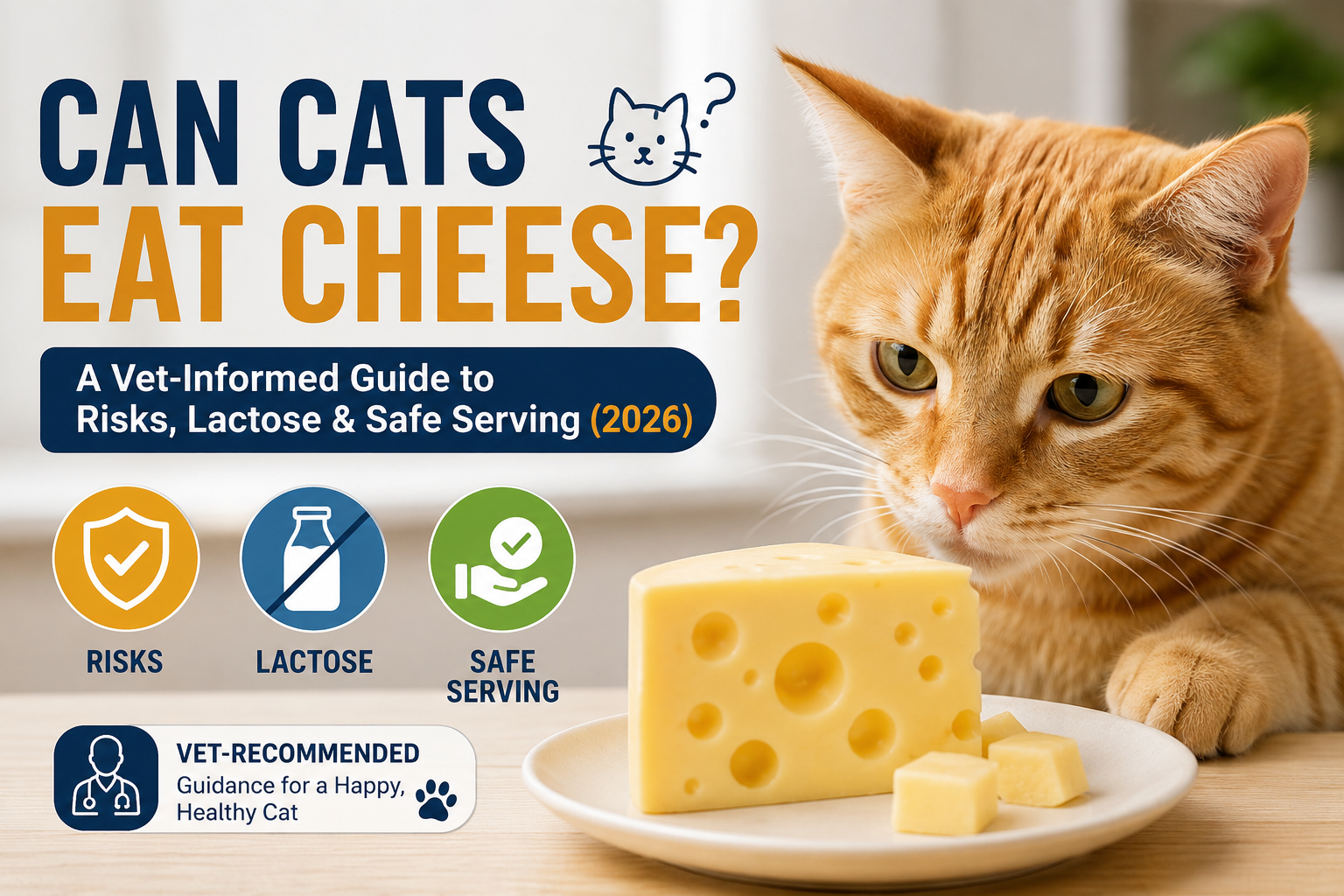
Technically yes, but cheese is not a good treat for cats. Cheese isn’t toxic, and a tiny nibble won’t usually harm a healthy cat — but most adult cats are lactose intolerant, and cheese is high in fat and salt. That combination can cause vomiting, diarrhea, and, over time, weight gain or pancreatitis. Cats don’t need dairy at all, so it’s best kept to a rare, tiny amount — or skipped in favor of meat-based treats.
Key Takeaways
- Cheese isn’t toxic, but it isn’t a good food for cats.
- Most adult cats are lactose intolerant and can’t digest dairy well.
- Cheese is high in fat and salt, which can cause obesity, pancreatitis, or salt-related problems.
- Cats are obligate carnivores — they get no essential nutrients from cheese.
- Avoid soft, high-lactose cheeses, blue cheese, and any with onion or garlic.
- If you offer cheese at all, give a tiny piece of plain, hard cheese, rarely.
- Meaty cat treats are a far better choice.
Can Cats Eat Cheese?
The honest answer is “technically yes, but you probably shouldn’t.” Cheese is not poisonous to cats, and most healthy cats can handle a tiny crumb without serious harm. But that’s very different from cheese being good for them.
Here’s the core issue: cats are obligate carnivores, and dairy simply isn’t part of their natural diet. On top of that, most adult cats are lactose intolerant. As the popular image of a cat lapping up a saucer of milk suggests, people assume cats and dairy go together — but that’s actually a myth for most cats.
So while a nibble now and then is unlikely to cause a crisis, cheese offers your cat nothing nutritionally. If you want to share a safe human food with your cat, a small amount of plain cooked egg is a better protein choice see our guide on whether cats can eat eggs. And your cat’s real nutrition should always come from a complete, balanced cat food.
Why Most Cats Shouldn’t Eat Cheese
Lactose intolerance
Kittens produce an enzyme called lactase to digest their mother’s milk. As they grow and are weaned, most cats produce far less of it. Without enough lactase, the lactose in cheese and milk passes through the gut undigested and ferments, causing:
- Vomiting
- Diarrhea
- Gas and bloating
- Stomach cramping
These signs often appear within about 8 to 12 hours of eating dairy. Some cats tolerate small amounts better than others, but many do not.
High fat and pancreatitis risk
Cheese is calorie-dense and high in fat. Regular cheese can contribute to weight gain and obesity, and a sudden fatty treat can trigger pancreatitis a painful, potentially serious inflammation of the pancreas in vulnerable cats.
High salt
Many cheeses are surprisingly salty, especially feta, parmesan, blue cheese, and processed cheeses. A cat’s small body handles excess sodium poorly, which can cause dehydration and, in large amounts, more serious salt-related problems.
Dairy allergy
Less common than lactose intolerance, a true dairy allergy is possible dairy is one of the more common feline food allergens. Signs include itchy skin and digestive upset.
Which Cheeses Are Safer and Which to Avoid
If you decide to offer cheese despite the drawbacks, the type matters.
Somewhat safer (still only tiny amounts):
- Hard, aged cheeses like plain cheddar lower in lactose.
Best avoided:
- Soft, high-lactose cheeses mozzarella, cottage cheese, cream cheese.
- Blue cheeses (Roquefort, Gorgonzola, Stilton) these can be toxic.
- Very salty cheeses feta, parmesan, processed cheese.
- Flavored cheeses anything with onion, garlic, or chives, which are toxic to cats.
- “Sugar-free” cheese spreads some contain xylitol, which is dangerous.
Even the “safer” options are a long way from ideal. Non-dairy or vegan cheese isn’t a fix either it skips the lactose but is still high in fat and salt.
Is There Any Good Reason to Give a Cat Cheese?
There’s really only one common one: hiding a pill. A tiny piece of soft cheese can help medication go down for a cat that tolerates dairy. Even then, use the smallest possible amount and watch for any digestive upset and know that commercial pill pockets made for cats usually work better and carry none of the dairy risk.
For everyday treating, skip cheese entirely. Cats are meat-lovers, so small meat-based treats (or a little plain cooked egg or fish) give the same “special treat” moment without the stomach upset.
How Much Cheese Can a Cat Eat?
If you offer cheese at all, keep it to a tiny amount about the size of a dice rarely, and always plain and hard. Like all treats, it should stay within the 10% rule (no more than a tenth of your cat’s daily calories), but with cheese, staying well under that is wise.
Because most cats gain nothing from cheese and many react badly to it, the honest recommendation from many veterinarians is simply to leave it off the menu.
What to Do If Your Cat Eats Cheese
A small piece of plain cheese is usually not an emergency for a healthy cat. Just watch for signs of digestive upset over the next several hours: nausea, drooling, vomiting, diarrhea, bloating, or excess gas.
Contact your veterinarian if:
- Your cat ate a large amount of cheese or dairy.
- Your cat has an existing health condition (like pancreatitis, obesity, or kidney disease).
- The cheese contained onion, garlic, blue cheese, or xylitol.
- The vomiting or diarrhea is severe or doesn’t settle.
Can Kittens Eat Cheese?
It’s best to avoid cheese for kittens. Although very young kittens can process some lactose, that ability drops off quickly as they’re weaned, and the high fat and salt in cheese are an even bigger concern for their small bodies. Focus on a complete, high-quality kitten food instead.
Frequently Asked Questions
Are cats lactose intolerant?
Most adult cats are. They lose much of their lactase enzyme after weaning, so dairy like cheese and milk often causes digestive upset.
Can cats eat cheddar cheese?
In tiny amounts, cheddar is lower in lactose than soft cheeses, so a healthy cat may tolerate a small piece but it’s still not recommended as a regular treat.
Is cheese toxic to cats?
Plain cheese isn’t toxic, but some kinds are dangerous blue cheese, and any cheese with onion, garlic, or xylitol. Even plain cheese can cause digestive upset.
Can I use cheese to give my cat a pill?
You can, for a cat that tolerates dairy, using the smallest piece possible. Commercial pill pockets made for cats are usually a better, safer option.
Why does my cat love cheese if it’s bad for them?
Cats are drawn to the fat and protein in cheese, and its strong smell. Enjoying it doesn’t mean it’s good for them.
Can kittens eat cheese?
It’s best avoided. The high fat and salt are risky for kittens, and their ability to digest lactose drops quickly after weaning.
Final Thoughts
Cheese sits in an awkward middle ground for cats: not toxic, but not good for them either. Most cats are lactose intolerant, cheese is high in fat and salt, and it offers a carnivore nothing nutritionally so the risks of regular feeding outweigh the small pleasure.
About the Author
The Serlig Pet Care Team creates researched, plain-language pet care guides for everyday owners. Our content is written from hands-on pet-care experience and cross-checked against established veterinary sources so you can make confident decisions for your cat.
A Note on Pet Health
Serlig publishes researched pet care information for everyday owners. It is general guidance, not veterinary advice, and it does not replace an examination by a licensed veterinarian who knows your pet. If your pet is unwell, or anything in this guide does not match what you are seeing at home, contact your vet.




3 Comments