
Quick Answer
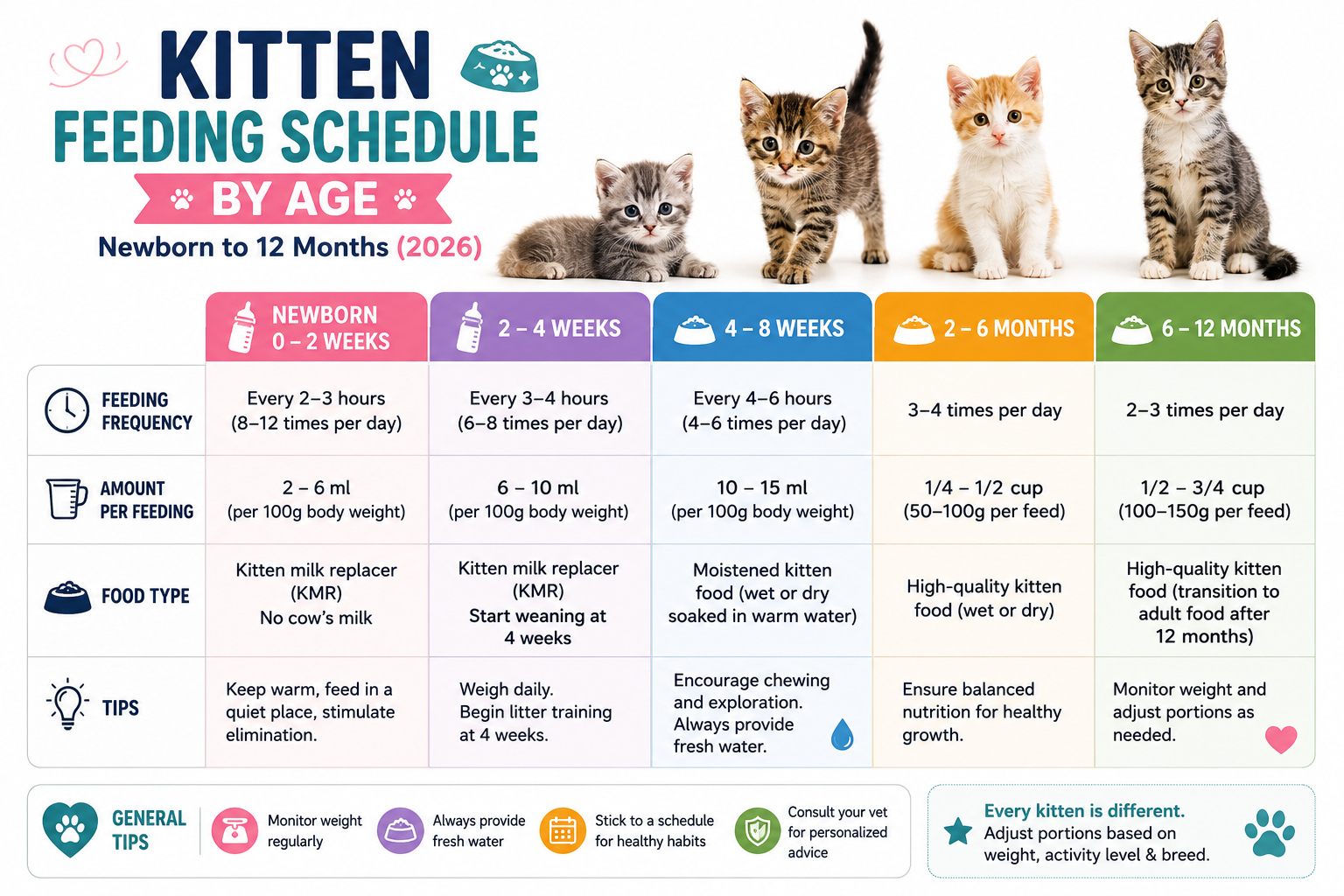
Kittens need frequent, calorie-dense meals of a complete kitten food, tapering from four meals a day at 8 weeks to two by their first birthday. They require roughly two to three times more calories per kilogram of body weight than an adult cat, because they are building tissue as well as fuelling activity. Newborns under four weeks need bottle-feeding with a kitten milk replacer every two to three hours never cow’s milk, which causes diarrhoea and lacks the protein and fat a kitten needs.
Key Takeaways
- Never give cow’s milk to a kitten. Use a proper kitten milk replacer (KMR).
- Weaning starts around 3–4 weeks and is usually complete by 8 weeks.
- Kittens need high protein, high fat, and taurine an amino acid they cannot make enough of.
- Feed a complete kitten food until around 12 months (18–24 months for large breeds like Maine Coons).
- Weigh weekly. Steady gain is the single best indicator that feeding is on track.
- A kitten that refuses food for 12 hours needs veterinary advice, not patience.
The Schedule at a Glance
| Age | What to feed | How often |
| 0–1 week | Queen’s milk or KMR | Every 2 hours, day and night |
| 1–2 weeks | Queen’s milk or KMR | Every 2–3 hours |
| 2–4 weeks | Queen’s milk or KMR | Every 3–4 hours |
| 3–4 weeks | Begin weaning — KMR gruel | 4–6 feeds, plus milk |
| 4–6 weeks | Wet kitten food, softened | 4–6 small meals |
| 6–8 weeks | Fully weaned onto kitten food | 4 meals |
| 2–4 months | Complete kitten food | 4 meals |
| 4–6 months | Complete kitten food | 3 meals |
| 6–12 months | Complete kitten food | 2–3 meals |
| 12 months + | Transition to adult cat food | 2 meals |
Hand-Rearing: Birth to 4 Weeks
If you are caring for orphaned kittens, this is intensive work and worth doing precisely.
What to use: a commercial kitten milk replacer from a vet or pet retailer, made up exactly to the label. Cow’s milk, goat’s milk, and human infant formula are all unsuitable they are too low in protein and fat and too high in lactose, and they cause diarrhoea, which is dangerous in a very young kitten. Our guide on cats and milk explains the lactose problem in full.
How to feed:
- Use a kitten bottle or syringe, never a saucer.
- Feed the kitten belly-down on a towel, with the head level never on its back like a human baby. Feeding on the back risks milk entering the lungs (aspiration pneumonia), which is frequently fatal.
- Warm the formula to roughly body temperature, and test it on your wrist.
- Let the kitten set the pace. Never squeeze formula into the mouth.
- Wind gently afterwards by supporting the kitten upright and rubbing the back.
Toileting: kittens under about three weeks cannot urinate or defecate on their own. After each feed, gently wipe the genital area with warm, damp cotton wool until they go. This is what the mother would do, and skipping it causes serious problems.
Warmth: newborn kittens cannot regulate their own temperature. Keep them at around 30–32°C (86–90°F) in the first week, reducing gradually. Never feed a cold kitten the digestive system shuts down when body temperature is low. Warm them first.
Get veterinary support early. Orphaned kittens need a weight check, a worming and flea plan appropriate for their age, and guidance. Do not attempt hand-rearing without a vet involved.
Weaning: 3 to 8 Weeks
Weaning is gradual and messier than owners expect. That is normal.
Week 3–4. Introduce a gruel: kitten milk replacer mixed with a small amount of wet kitten food to a thin porridge consistency. Offer it in a very shallow dish. Most kittens walk in it before they eat it.
Week 4–5. Thicken the gruel as they get the idea. Continue offering milk alongside.
Week 5–6. Reduce the liquid until they are eating wet kitten food with only a little moisture added. Introduce a shallow water bowl.
Week 6–8. Fully weaned onto complete kitten food, wet or a mix of wet and softened dry, eating four times daily.
Signs weaning is going well: steady weight gain, formed stool, interest in solid food, and kittens seeking the dish. Signs to slow down: diarrhoea, refusing food, or weight stalling.
What to Feed a Weaned Kitten
Kittens are not small adults, and a complete kitten or “growth” formulation matters.
| Nutrient | Why kittens need more |
| Protein | Building muscle and organ tissue, not just maintaining it |
| Fat | Energy density kittens have small stomachs and huge requirements |
| Taurine | Essential for heart, vision, and development; cats synthesise very little |
| Arachidonic acid | Cats cannot make it from plant oils |
| DHA | Supports brain and retinal development |
| Calcium & phosphorus | Skeletal growth, in a controlled ratio |
Wet, dry, or both? Both work if complete and balanced for growth. Wet food adds valuable moisture, which matters because cats have a low thirst drive and urinary problems are common later in life. Dry food is convenient and can be left out. A mixed approach suits most households just count the total calories.
Never feed a kitten dog food. It lacks taurine and other feline essentials, and the consequences over months are serious see can cats eat dog food for the full explanation.
How Much? Use Weight, Not Guesswork
As with puppies, there is no universal gram figure, because kitten foods vary widely in calorie density. Start from your food’s own feeding guide, which is calculated for that product.
As a rough cross-check, a growing kitten needs in the region of 200 kcal per kg of body weight per day at around 10 weeks old, declining steadily toward adult requirements (around 60–70 kcal/kg) by 12 months.
The better method is weekly weighing. Use kitchen scales for very small kittens and a pet scale later. Healthy kittens gain steadily roughly 50–100g per week in the early months, though this varies by breed and litter size. A kitten that stops gaining, or loses weight, needs a vet appointment rather than a bigger portion.
Body condition check: you should feel ribs easily under a thin layer, with a slight waist visible from above. Kittens are naturally lean and leggy in adolescence a pot-bellied kitten with a dull coat may have worms rather than too much food.
When to Switch to Adult Food
| Cat type | Switch at |
| Most domestic cats | 12 months |
| Large breeds (Maine Coon, Ragdoll, Norwegian Forest Cat) | 18–24 months |
| Kittens neutered early | 12 months, but reduce portions at neutering |
Transition over 7–10 days, mixing increasing proportions of adult food. Sudden switches commonly cause diarrhoea, and cats are notoriously resistant to abrupt food changes.
Neutering note: energy requirements typically drop by around 20–30% after neutering. This is the single most common point at which cats begin gaining excess weight, because portions are rarely adjusted. Reduce the amount and monitor body condition.
Feeding Habits That Set a Kitten Up Well
- Multiple small meals suit feline physiology cats evolved eating many small prey items daily.
- Wide, shallow bowls. Deep narrow dishes press on whiskers and put many cats off eating.
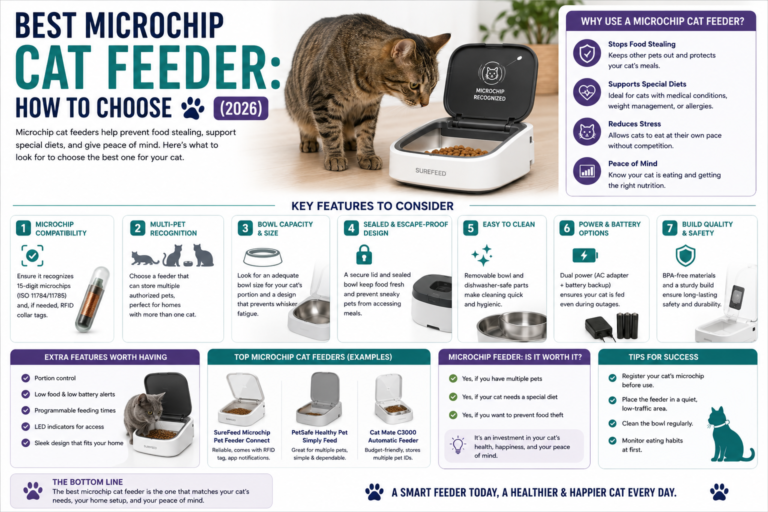
- Separate stations in multi-cat homes, plus separate water bowls placed away from food.
- Introduce variety early. Kittens exposed to different textures and flavours before around 6 months are much less likely to become fussy adults. This is genuinely worth doing.
- Fresh water always available. Consider a fountain many cats drink far more from moving water.
- Puzzle feeders from a few months old, for enrichment and to slow fast eaters.
- Keep treats under 10% of calories. A small piece of plain cooked chicken is a good choice.
- Know the danger list. Onion, garlic, chocolate, grapes, and lilies are all hazardous see our toxic substances guide.
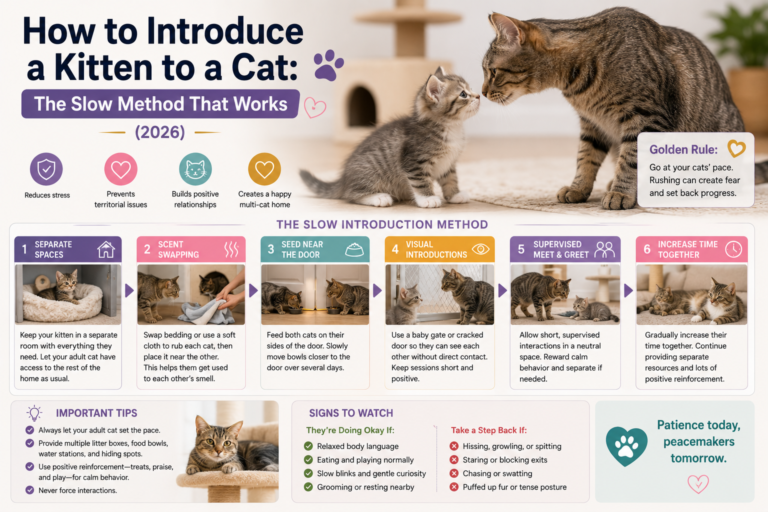
If you are bringing a kitten into a home that already has a cat, feeding setup matters enormously for a smooth introduction our guide on introducing a kitten to a cat covers the resource planning.
When to Call the Vet
Urgent:
- A kitten that has not eaten for 12 hours
- Diarrhoea in a kitten under 12 weeks dehydration develops fast
- Vomiting more than once
- A cold, floppy, or unresponsive kitten
- Weight loss, or no gain over a week
- A distended, hard belly
Kittens have very little reserve. The 24-hour rule that applies to adult cats — covered in why is my cat not eating is halved for kittens.
Frequently Asked Questions
How often should I feed my kitten? Four meals a day from 8 weeks to 4 months, three from 4–6 months, then two to three until 12 months.
Can kittens drink cow’s milk? No. It causes diarrhoea and lacks the protein and fat kittens need. Use a kitten milk replacer for unweaned kittens.
When do kittens start eating solid food? Weaning starts around 3–4 weeks with a gruel and is usually complete by 8 weeks.
How much should a kitten weigh? Weight varies by breed, but steady weekly gain matters more than any target figure. Roughly 50–100g per week in the early months is typical.
When should I switch to adult cat food? At 12 months for most cats, 18–24 months for large breeds like Maine Coons.
Should I free-feed my kitten? Leaving dry food available is common and works for many kittens, but measured meals give you better control and let you spot appetite changes early.
Can kittens eat adult cat food? Not as a main diet. Kitten food is higher in protein, fat, and specific nutrients needed for growth and brain development.
My kitten won’t eat what should I do? Warm the food to release aroma and try a strongly scented wet food. If a kitten has not eaten in 12 hours, contact your vet — kittens have very little reserve.
Final Thoughts
Feeding a kitten well is mostly about frequency and quality rather than complicated calculations. Small, regular meals of a proper growth formula, weighed rather than guessed, with weekly weight checks to confirm it is working.
Two things pay off for years afterwards. Introduce a variety of textures and flavours before six months, so you are not negotiating with a fussy adult later. And adjust the portion at neutering, because that quiet moment is where a great many cats begin the slide toward obesity.
Related Reading
- How to Introduce a Kitten to a Cat
- Can Cats Drink Milk?
- Can Cats Eat Dog Food?
- Why Is My Cat Not Eating?
- Emergency Alert: 10 Human Foods That Are Toxic to Cats
A Note on Pet Health
Serlig publishes researched pet care information for everyday owners. It is general guidance, not veterinary advice, and it does not replace an examination by a licensed veterinarian who knows your pet. If your pet is unwell, or anything in this guide does not match what you are seeing at home, contact your vet.
About the Author
The Serlig Pet Care Team creates researched, plain-language pet care guides for everyday owners. Our content is written from hands-on pet-care experience and cross-checked against established veterinary sources so you can make confident decisions for your cat.



3 Comments