Quick Answer
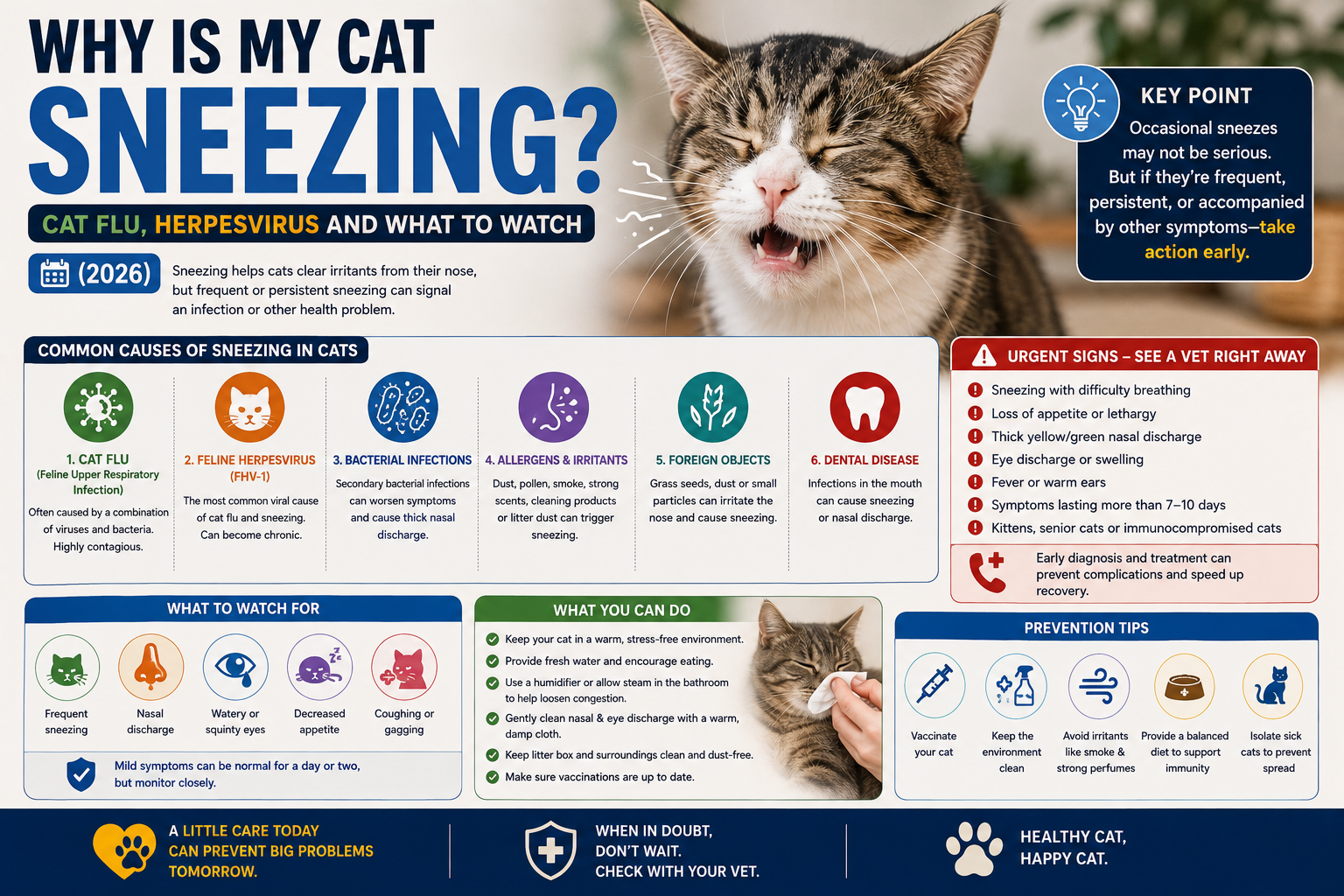
Unlike dogs, cats sneeze mostly because of infection. Feline upper respiratory infection commonly called cat flu is the leading cause, and around 80–90% of cases trace to feline herpesvirus (FHV-1) or feline calicivirus (FCV). Occasional sneezing from dust or litter is normal. But sneezing that comes with eye discharge, coloured nasal discharge, mouth ulcers, or most importantly appetite loss needs veterinary attention, because a blocked-up cat that cannot smell its food will often stop eating altogether.
Key Takeaways
- Cat flu is the most common cause; it is contagious between cats but not to people.
- Herpesvirus stays for life. Infected cats carry it latently and flare during stress.
- A cat that cannot smell will often refuse food and cats must not go without eating.
- Eye involvement is common and can progress to corneal ulcers, which threaten sight.
- One-sided discharge suggests a foreign body, dental disease, polyp, or tumour.
- Dusty litter, scented sprays, and candles are underrated everyday irritants.
Why Cat Sneezing Differs from Dog Sneezing
Worth stating plainly, because owners often apply dog logic to cats. In dogs, sneezing is usually mechanical or environmental dust, a grass seed, play behaviour. In cats, infection dominates, and the reason is population biology: FHV-1 and FCV are extremely widespread, spread easily in multi-cat environments, and herpesvirus in particular is never cleared from the body.
Our dog sneezing guide covers the canine picture; the causes below are the feline one.
Cat Flu: The Main Culprit
“Cat flu” describes the syndrome, not one organism.
| Agent | Typical picture |
| Feline herpesvirus (FHV-1) | Sneezing, conjunctivitis, eye discharge, corneal ulcers; lifelong latent carriage with stress-triggered flare-ups |
| Feline calicivirus (FCV) | Sneezing plus mouth and tongue ulcers, drooling, sometimes lameness and fever |
| Chlamydia felis | Predominantly conjunctivitis, often starting in one eye |
| Bordetella bronchiseptica | Coughing and sneezing, more common in shelters and multi-cat homes |
| Mycoplasma | Often a secondary complication |
Spread: direct contact, sneeze droplets, shared bowls, bedding, and human hands. Calicivirus in particular survives well in the environment.
Highest risk: kittens, unvaccinated cats, shelter and rescue cats, multi-cat households, outdoor cats, and cats with FIV or FeLV.
Vaccination against FHV-1 and FCV is part of the core vaccine schedule. It does not guarantee prevention, but it substantially reduces severity.
Living with a herpesvirus carrier
This is the part owners most need explained. Once a cat has FHV-1, the virus persists in nerve tissue for life. Most of the time it causes nothing. Then a stressor a house move, a new pet or baby, boarding, illness, or surgery allows it to reactivate, and the cat sneezes and weeps for a week or two before settling again.
Managing flare-ups is largely about managing stress: predictable routine, safe elevated hiding places, plenty of litter trays and feeding stations in multi-cat homes, and pheromone diffusers during known upheavals. Some vets recommend L-lysine supplementation, although the evidence is genuinely mixed and it is not universally advised worth discussing rather than assuming.
The Other Causes
Dental disease
Feline tooth roots sit close to the nasal cavity, and infection can break through. Tooth resorption and stomatitis are both common and painful in cats. Look for sneezing alongside drooling, bad breath, pawing at the mouth, dropping food, or eating on one side.
Foreign body
Less common than in dogs, but it happens a blade of grass is the classic, sometimes lodging at the back of the nose after a cat vomits or coughs. Presents as sudden, violent, one-sided sneezing with pawing at the face.
Nasal polyps
Benign growths seen especially in young cats. Cause chronic sneezing, noisy breathing, one-sided discharge, and sometimes head tilt or ear signs. Treatable, usually surgically.
Fungal infection
Cryptococcus is the notable one, producing chronic nasal discharge, sneezing, and sometimes a firm swelling over the bridge of the nose occasionally described as “Roman nose.” Needs specific diagnosis and prolonged treatment.
Nasal tumours
Uncommon, mostly in older cats. Lymphoma and adenocarcinoma are the main types. The pattern is progressive and one-sided: worsening sneezing over weeks, bloody discharge, facial swelling, and noisy breathing. Persistent one-sided signs in a senior cat should always be investigated.
Irritants the underrated everyday cause
Cats have sensitive airways and spend their lives close to floor level. Common culprits:
- Dusty clay or clumping litter switch to a low-dust or paper-based litter as a trial
- Scented litter and litter deodorisers
- Air fresheners, plug-ins, and scented candles
- Cleaning sprays and bleach
- Cigarette smoke a documented respiratory irritant for cats
- Perfume, hairspray, and aerosols
- Dust from building work or a new carpet
Never use essential oil diffusers around cats. Cats lack certain liver enzymes needed to metabolise many essential oil compounds, and tea tree, eucalyptus, citrus, peppermint, and pine are particularly hazardous.
Vaccine reaction
Mild sneezing and slight eye discharge for a few days after a live intranasal or injectable respiratory vaccine is recognised and self-limiting.
Allergies
Genuinely less common in cats than owners assume. Feline allergy more often shows as itchy skin or asthma than as sneezing. Persistent “allergic” sneezing usually turns out to be something else.
What to Watch For
Reassuring:
- Occasional sneezing with no discharge
- A brief burst after litter changing or dusting
- A cat that is eating, drinking, and behaving normally
Book an appointment:
- Sneezing for more than a few days
- Clear discharge from eyes or nose
- Mild squinting or watery eyes
- A previously infected cat flaring after a stressful event
Same-day or urgent:
- Not eating the most important sign on this page
- Thick yellow or green nasal discharge
- Squinting, a cloudy eye, or an eye held shut possible corneal ulcer
- Mouth ulcers or drooling
- Lethargy, hiding, or fever
- Open-mouth breathing or laboured breathing emergency
- Blood from the nose
- One-sided discharge in an older cat
The Appetite Connection: Why This Matters More in Cats
Cats rely heavily on smell to trigger appetite. A congested cat frequently stops eating simply because food no longer registers as food.
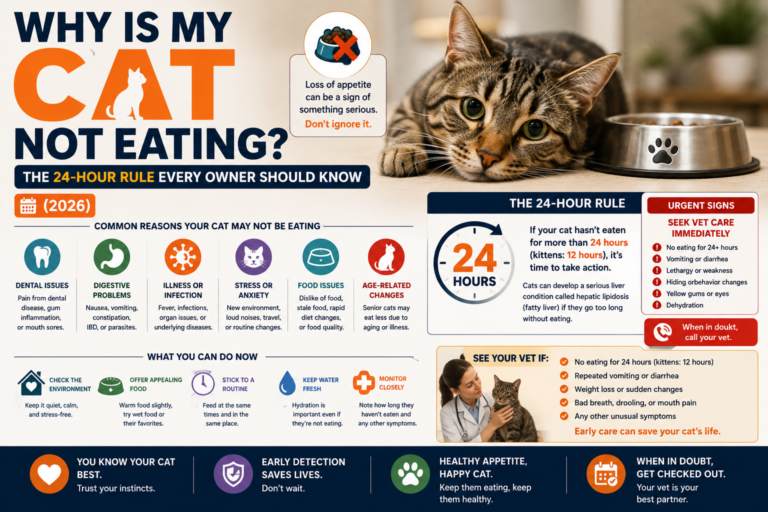
That is dangerous in a way it is not for dogs. Cats that go without eating for even two to three days especially overweight cats risk hepatic lipidosis, a serious liver condition. So “my cat is sneezing and off their food” is not two mild symptoms; it is one urgent situation.
What helps at home while you arrange a vet visit:
- Warm the food to release aroma
- Offer strongly scented options such as plain cooked chicken or a fish-based wet food
- Wipe discharge gently from the nose and eyes with warm water and cotton wool
- Sit your cat in a steamy bathroom for 10–15 minutes to loosen congestion
- Keep fresh water available at all times
Our guide on a cat not eating covers the timeline in full detail.
Managing a Sneezing Cat at Home
- Isolate a newly sneezing cat from other cats where possible; wash hands between them.
- Separate bowls, beds, and litter trays in multi-cat homes.
- Switch to low-dust litter as a simple diagnostic trial.
- Remove air fresheners, candles, and diffusers entirely.
- Reduce stress, particularly for known herpesvirus carriers.
- Keep vaccinations current.
- Do not give human decongestants or medications many are toxic to cats, and paracetamol is fatal even in small doses. See our toxic substances guide.
Frequently Asked Questions
Can I catch cat flu from my cat? No. Feline herpesvirus and calicivirus do not infect people. They spread readily between cats, including on your hands and clothing.
How long does cat flu last? Acute episodes typically run 7–14 days. Herpesvirus remains latent for life, so flare-ups can recur during stressful periods.
Why does my cat sneeze but seem fine? Often an environmental irritant dusty litter, an air freshener, or dust. If your cat is eating and behaving normally with no discharge, monitor for a few days.
Is cat sneezing an emergency? Not usually on its own. It becomes urgent with appetite loss, laboured or open-mouth breathing, a closed or cloudy eye, or thick coloured discharge.
Can kittens die from cat flu? Severe cat flu can be very serious in young kittens, particularly with dehydration and poor feeding. Kittens showing respiratory signs should be seen promptly.
Does L-lysine help feline herpesvirus? Evidence is mixed and it is no longer routinely recommended by all vets. Ask your own vet rather than assuming benefit.
Why does my cat sneeze after using the litter box? Almost always dust. Trying a low-dust, unscented litter is a simple and often effective change.
Can cats be allergic to things like people are? Cats do have allergies, but they more often show as skin problems or asthma than sneezing. Persistent sneezing usually has an infectious or structural cause.
Final Thoughts
A sneezing cat is a different problem from a sneezing dog, and treating it with dog logic is how owners get caught out. The odds strongly favour infection, herpesvirus in particular, which means recurrent episodes tied to stress are the norm rather than a treatment failure.
The number to watch is not how many times your cat sneezes it is whether they are still eating. A cat that sneezes and then tucks into dinner can usually be monitored. A cat that sneezes and turns away from food has moved into different territory, and that is the point to pick up the phone.
Related Reading
- Why Is My Cat Not Eating?
- Why Is My Cat Vomiting?
- Why Is My Dog Sneezing?
- Can Cats Eat Chicken?
- Emergency Alert: 10 Human Foods That Are Toxic to Cats
A Note on Pet Health
Serlig publishes researched pet care information for everyday owners. It is general guidance, not veterinary advice, and it does not replace an examination by a licensed veterinarian who knows your pet. If your pet is unwell, or anything in this guide does not match what you are seeing at home, contact your vet.
About the Author
The Serlig Pet Care Team creates researched, plain-language pet care guides for everyday owners. Our content is written from hands-on pet-care experience and cross-checked against established veterinary sources so you can make confident decisions for your cat.