Quick Answer
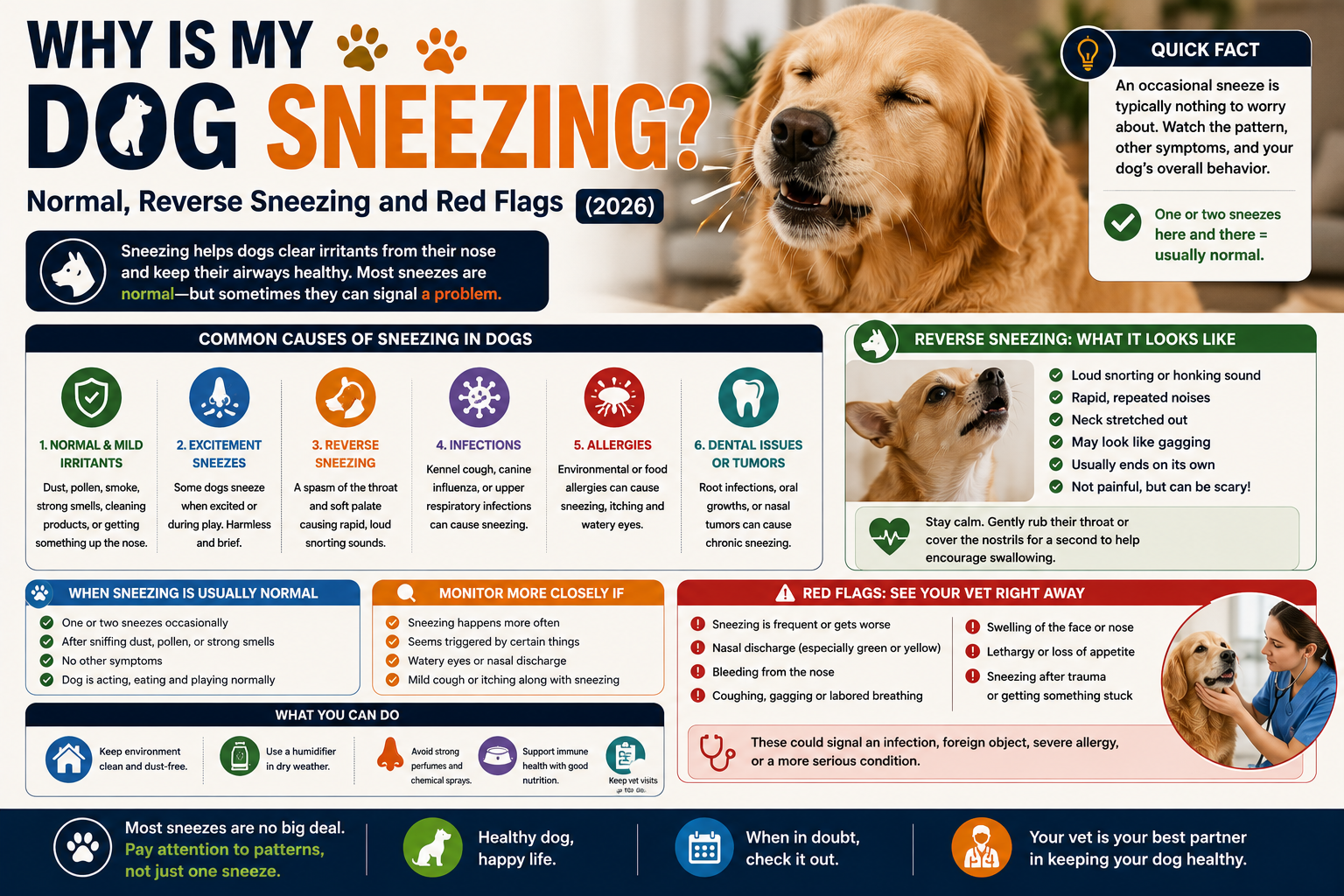
Occasional sneezing is completely normal it is how the nose clears dust and irritants. Two patterns matter. Sudden, violent, repeated sneezing with pawing at the nose usually means something is physically stuck up there, most often a grass seed, and needs same-day attention. One-sided discharge, especially bloody, points to a foreign body, a tooth root problem, or in older dogs a nasal tumour. Everything in between dust, pollen, excitement, play is generally harmless.
Key Takeaways
- Reverse sneezing looks alarming but is usually benign and it is not sneezing at all.
- One nostril vs both is the most useful diagnostic clue you can gather.
- Grass seeds are the classic summer cause: sudden, frantic, and one-sided.
- Play sneezing is deliberate canine communication, not a symptom.
- Bloody discharge from one nostril always warrants investigation.
- Upper tooth root infections can break through into the nasal cavity check the mouth too.
Sneezing vs Reverse Sneezing
This distinction resolves a great many worried late-night searches. They look and sound completely different once you know what to compare.
| Normal sneeze | Reverse sneeze | |
| Airflow | Forceful air out through the nose | Rapid air pulled in |
| Sound | Familiar sneeze | Loud snorting, honking, or gasping |
| Posture | Head down, brief | Neck extended, elbows braced, standing still |
| Duration | A second | 10–60 seconds, in a repeating spasm |
| Owner reaction | None | Often panic it sounds like choking |
| Cause | Nasal irritation | Spasm of the soft palate and throat |
| Urgency | Low | Usually low, unless very frequent |
Reverse sneezing (technically paroxysmal inspiration) is triggered by irritation of the soft palate excitement, pulling on a collar, drinking quickly, allergens, or a sudden temperature change. It is most common in small and brachycephalic breeds.
What helps during an episode: stay calm, gently stroke the throat, or briefly cover the nostrils for a second or two to encourage a swallow. Episodes end on their own.
When it stops being routine: if reverse sneezing becomes frequent, lasts longer over time, or comes with nasal discharge, that warrants a check for nasal mites, polyps, or an elongated soft palate.
The Common Causes of Genuine Sneezing
Irritants
The most frequent cause and rarely serious. Dust, pollen, aerosol sprays, perfume, cleaning products, smoke, scented candles, and freshly cut grass all trigger sneezing. It stops when the exposure does.
Play sneezing
Genuinely interesting behaviour: many dogs sneeze deliberately during rough play as a calming signal a way of saying “this is still a game.” It is loose, exaggerated, happens in a bouncy body posture, and stops the moment play does. No action needed.
Allergies
Dogs express allergy mainly through the skin rather than the nose, so allergic dogs sneeze less than allergic people. Where sneezing does occur, expect it alongside itchy paws, ears, and belly the pattern described in our guide to paw licking. Seasonal timing is a strong clue.
Foreign bodies especially grass seeds
The one to take seriously. Grass awns are barbed and travel one way only: further in.
The signature: sudden, violent, repeated sneezing that starts abruptly during or just after a walk, usually with frantic pawing at the nose, head shaking, and often discharge or a little blood from one nostril. The sneezing may then settle after an hour or two, which fools owners into thinking it resolved while the seed migrates deeper.
What to do: do not attempt to retrieve it. Go to a vet the same day. Removal usually requires sedation and rhinoscopy, and it becomes considerably harder the longer it is left.
Dental disease
The roots of the upper canine and carnassial teeth sit immediately beneath the nasal cavity. An abscess can erode through, creating an oronasal fistula a direct channel between mouth and nose.
Look for: sneezing with one-sided discharge, foul breath, swelling below one eye, and food or water coming back down the nose. Our guide on dog bad breath covers the dental picture in more detail.
Nasal mites
Pneumonyssoides caninum causes intense sneezing, reverse sneezing, nose rubbing, head shaking, and sometimes nosebleeds. Diagnosed by a vet and treated with specific antiparasitic medication.
Infections
Kennel cough produces mainly a harsh honking cough but can involve sneezing and nasal discharge; it is highly contagious. Fungal infection, particularly Aspergillus, causes chronic sneezing with thick discharge, nose pain, and sometimes depigmentation of the nose most common in long-nosed breeds.
Nasal tumours
Uncommon but important in dogs over seven, particularly long-nosed breeds. The pattern is progressive: sneezing that gradually worsens over weeks to months, one-sided discharge that often becomes bloody, facial swelling or deformity, and noisy breathing. Any older dog with worsening one-sided nasal signs should be investigated properly.
Brachycephalic anatomy
Flat-faced breeds Pugs, Bulldogs, French Bulldogs, Boxers have compressed nasal passages and narrowed nostrils, so snorting, snuffling, and sneezing are common. This is not something to accept as “just the breed.” Noisy breathing at rest, exercise intolerance, and gagging are signs of BOAS, which is treatable. See why is my dog panting so much for the airway picture.
One Nostril or Both? The Key Question
| Pattern | Points toward |
| Both nostrils, clear discharge | Irritants, allergies, mild viral infection |
| Both nostrils, thick coloured discharge | Infection, fungal disease |
| One nostril only | Foreign body, tooth root abscess, tumour, polyp |
| One nostril, bloody | Foreign body or tumour investigate promptly |
| Both nostrils, bloody | Possible clotting disorder or toxin urgent |
If you take one thing from this article, take this: one-sided nasal signs are a mechanical problem until proven otherwise. Both-sided signs are more often environmental.
What You Can Do at Home
- Note the pattern. When it started, one nostril or two, discharge colour, and whether it is getting worse.
- Audit the environment. New air freshener, candle, cleaning product, carpet powder, or bedding?
- Reduce dust. Vacuum regularly, avoid dusty litter or bedding, and ventilate well.
- Do not smoke around your dog. Second-hand smoke is a documented respiratory irritant for pets.
- Check after walks in long grass look at the nose, ears, and between the toes for seeds.
- Never poke anything into the nose, including tweezers, water, or saline flushes.
- Film an episode, particularly if you suspect reverse sneezing. It saves a great deal of guesswork.
If a poisoning or chemical exposure is possible, treat it as urgent and check our toxic exposure guide.
When to See a Vet
Same day:
- Sudden violent sneezing with pawing at the nose (suspected foreign body)
- Blood from the nose
- Difficulty breathing, or breathing through the mouth
- Facial swelling or deformity
- Thick green or yellow discharge with lethargy or fever
Book an appointment:
- Sneezing lasting more than a week
- Discharge from one nostril only
- Sneezing with bad breath or a swollen face
- Gradually worsening sneezing in a dog over seven
- Frequent or lengthening reverse sneezing episodes
- Nose rubbing, head shaking, or nasal depigmentation
Monitor at home:
- Occasional sneezing after dust exposure
- Play sneezing
- Brief seasonal sneezing in an otherwise well dog
Frequently Asked Questions
Is it normal for dogs to sneeze a lot? Occasional sneezing is normal. Frequent sneezing over days, or sneezing with discharge, is not.
What is reverse sneezing? A spasm of the soft palate causing rapid inward snorting. It sounds alarming but is usually harmless and self-limiting.
Why does my dog sneeze when playing? Play sneezing is a communication signal that keeps rough play friendly. It is deliberate and completely normal.
My dog is sneezing blood what should I do? See a vet promptly. Blood from one nostril suggests a foreign body or a mass; from both, it may indicate a clotting problem or toxin exposure.
Can dogs get colds? Dogs get their own respiratory infections, such as kennel cough and canine influenza, but they do not catch human colds.
Can a grass seed really go up a dog’s nose? Yes, and it is common in summer. The sneezing is sudden and frantic, and the seed migrates inward, so same-day removal matters.
Why does my Pug snort so much? Compressed nasal anatomy. Some noise is expected, but noisy breathing at rest, gagging, or exercise intolerance are signs of BOAS and worth investigating.
Can dental problems cause sneezing? Yes. Upper tooth roots sit right below the nasal cavity, and an abscess can break through, causing one-sided sneezing and discharge.
Final Thoughts
Most sneezing is your dog’s nose doing exactly what it should clearing dust, reacting to a candle, or telling a playmate to keep it friendly.
The cases worth acting on announce themselves clearly. Sudden and frantic after a walk in long grass means a seed. One nostril, especially with blood, means something mechanical. Gradually worsening in an older dog means investigate properly. Learn those three patterns and you will know when a sneeze is a sneeze and when it is a signal.
Related Reading
- Dog Bad Breath: Causes & How to Fix It
- Why Is My Dog Panting So Much?
- Why Is My Dog Licking His Paws?
- Why Is My Cat Sneezing?
A Note on Pet Health
Serlig publishes researched pet care information for everyday owners. It is general guidance, not veterinary advice, and it does not replace an examination by a licensed veterinarian who knows your pet. If your pet is unwell, or anything in this guide does not match what you are seeing at home, contact your vet.
About the Author
The Serlig Pet Care Team creates researched, plain-language pet care guides for everyday owners. Our content is written from hands-on pet-care experience and cross-checked against established veterinary sources so you can make confident decisions for your dog.