
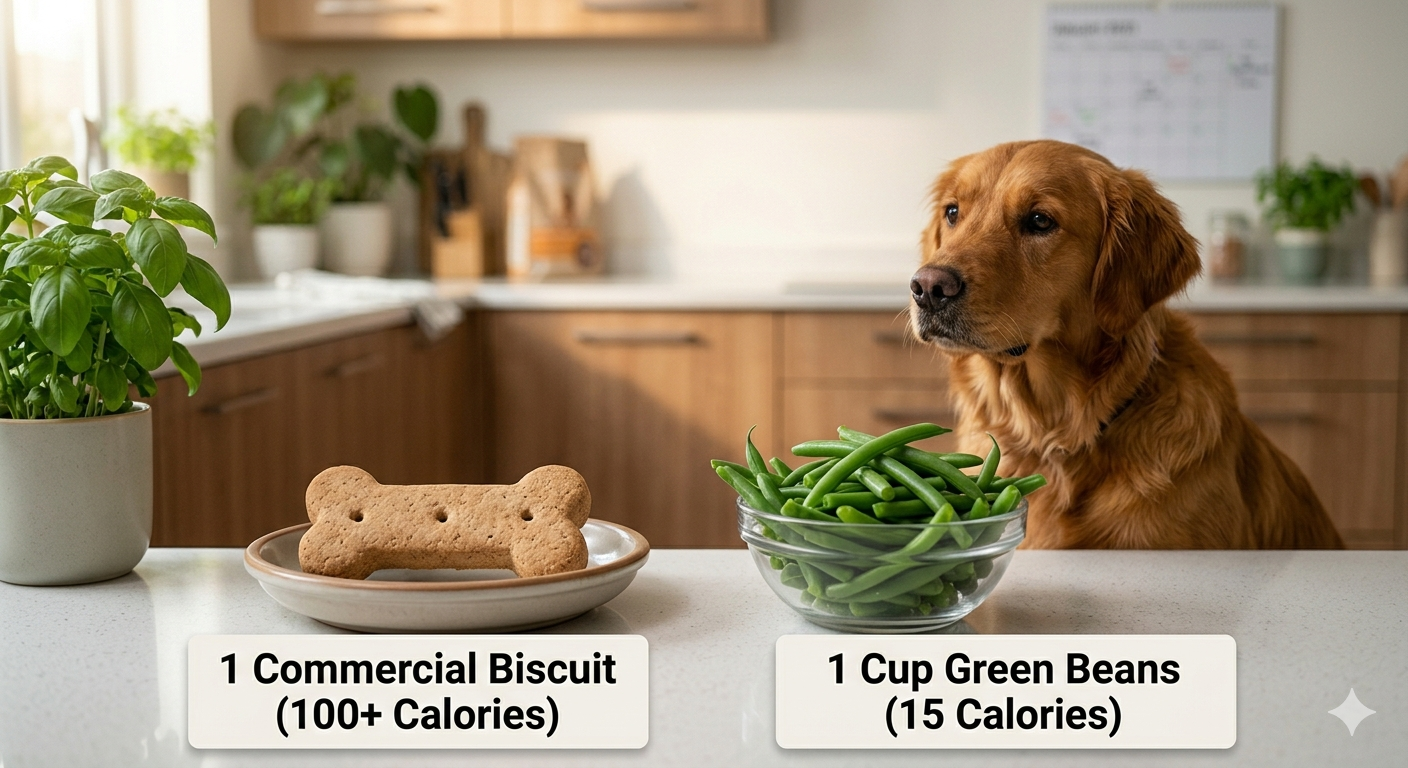
Treating your pet is one of the most joyful aspects of being an owner. But when the scale starts tipping into unhealthy territory, those extra biscuits and table scraps quickly become a significant health risk. Obesity in pets is a serious condition that can lead to joint issues, heart disease, and a decreased lifespan.
Many owners inadvertently contribute to their pet’s weight gain by overindulging them with treats, confusing food with affection. You don’t have to choose between keeping your pet healthy and making them happy. The secret lies in understanding how to reward them with nutrient-dense, low-calorie options that satisfy their cravings without padding their waistline.
This guide explores the best low-calorie treats for overweight pets, backed by veterinary guidelines, to help you reward your furry friend guilt-free. We will look at the science of satiety, the best natural swaps for dogs and cats, and the hidden calories in commercial pet snacks.
The 10% Rule: Treats vs. Meals
Treats should never exceed 10% of your pet’s daily caloric intake. Swapping high-calorie biscuits for green beans, cucumber, or freeze-dried protein can reduce calorie intake by up to 80% while keeping your pet satisfied.
The Psychology of Satiety and Volume Feeding
When a pet is on a weight loss journey—or engaging in adipose tissue reduction—managing their appetite is crucial. This is where the concept of volume feeding comes into play. Volume feeding involves offering foods that are high in water and dietary fiber but low in calories.
These foods take up physical space in the stomach, triggering stretch receptors that signal the brain the pet is full. This feeling of postprandial satiety helps keep your pet satisfied between meals while maintaining a caloric deficit. By choosing treats with a low glycemic index and high water content, you can provide the satisfaction of a large snack without the metabolic consequences.
[Image showing a comparison of calories in 1 commercial biscuit vs. a cup of green beans]
Top Low-Calorie Picks for Dogs
Finding healthy snacks for fat dogs often means looking no further than your refrigerator. Here are some of the best natural options:
Nature’s Best: Green Beans, Carrots, and Watermelon
Are carrots good for dogs to lose weight?
Yes, carrots are an excellent, low-calorie treat that provides a satisfying crunch. A medium carrot contains only about 25 calories and is rich in fiber and vitamins.
The “Gold Standard” for canine weight loss, however, is often green beans. They are incredibly low in calories, high in dietary fiber, and can be served raw, steamed, or frozen. Watermelon (seedless and rindless) is another fantastic option, offering great hydration and a touch of sweetness with minimal caloric impact.
The “Crunch” Factor
If your dog misses the texture of commercial biscuits, try air-popped popcorn (strictly without butter or salt) or small pieces of plain rice cakes. These provide the crunch they crave with a fraction of the calories.
Top Low-Calorie Picks for Cats
Finding low-calorie cat treats for weight loss can be trickier, as cats are obligate carnivores and generally less interested in vegetables.
Lean Proteins
The best approach for felines is focusing on lean, high-protein snacks. Freeze-dried shrimp are excellent; they are nutrient-dense and very low in calories. Small bits of plain, boiled chicken breast or a tiny amount of canned tuna (packed in water, not oil) also make fantastic, guilt-free pet rewards that support a healthy metabolic rate.
Treat Swap Table
| Common High-Calorie Treat | Low-Calorie Alternative |
| Large Commercial Dog Biscuit (100+ calories) | Handful of Green Beans (15 calories) |
| Cheese cubes (70 calories per oz) | Plain Air-Popped Popcorn (30 calories per cup) |
| Commercial Cat Treat (2-3 calories per piece) | Freeze-dried shrimp (0.15 calories per piece) |
| Hot dog slice (45 calories) | Small piece of boiled chicken (10 calories) |
Hidden Saboteurs: What to Avoid
Not all treats marketed as “healthy” or “weight support” are good choices. Many commercial treats are packed with hidden saboteurs that hinder your pet’s caloric deficit.
Always read the ingredient label. Avoid products containing honey, molasses, corn syrup, or glycerin. These ingredients significantly increase the glycemic index and overall calorie count of the treat, leading directly to weight gain. Sticking to single-ingredient, whole foods is the safest way to ensure your pet is getting a genuinely low-calorie reward.
Expert Guidelines on Weight Management
When managing your pet’s weight, it’s highly recommended to follow the dietary guidelines set by the World Small Animal Veterinary Association (WSAVA). They emphasize the importance of regular body condition scoring, strict portion control, and ensuring that any treats provided do not unbalance the pet’s primary, nutritionally complete diet.
Frequently Asked Questions
Can I give my overweight dog fruit?
While some fruits are safe, proceed with caution. Fruits are relatively high in sugar (fructose). While natural, these sugars still contribute to the daily calorie count. Stick to low-sugar options like berries or watermelon, and always give them in strict moderation.
How do I calculate 10% of my pet’s daily calories?
First, consult your veterinarian to determine your pet’s resting energy requirement (RER) and total daily caloric needs for weight loss. If your vet determines your dog needs 500 calories a day to lose weight, then no more than 50 calories (10%) should come from treats.
Are “Weight Support” commercial treats actually effective?
Not always. While they may be lower in calories than standard treats from the same brand, they can still be calorie-dense compared to natural alternatives like green beans or lean meats. Always check the specific calorie count per treat.
What is the lowest calorie treat for cats?
Freeze-dried single-ingredient proteins, such as freeze-dried shrimp or chicken breast, are among the lowest calorie options for cats. Catnip is another zero-calorie way to reward and stimulate your cat without feeding them at all.
A Healthier Approach to Treating
Managing your pet’s weight doesn’t mean the end of treats; it simply requires a smarter approach to what you offer. By utilizing the 10% rule, embracing volume feeding with high-fiber vegetables safe for overweight pets, and avoiding sugary commercial snacks, you can reward your pet while supporting their health. Consult your veterinarian for a tailored weight loss plan, and start substituting those high-calorie biscuits for crunchy carrots or lean proteins today.
A Note on Pet Health
Serlig publishes researched pet care information for everyday owners. It is general guidance, not veterinary advice, and it does not replace an examination by a licensed veterinarian who knows your pet. If your pet is unwell, or anything in this guide does not match what you are seeing at home, contact your vet.
17 Comments