Shedding is a normal part of life with a cat. You expect to find some hair on your clothes, your sofa, and that one favorite chair. But when the hair seems to be everywhere all at once, or you notice bald patches, itchy skin, or dandruff, it is natural to feel concerned.
If you have found yourself asking, Why Is My Cat Shedding So Much?, you are not alone. Many cat owners worry about it. Indoor cats may shed throughout the year, while others shed more during seasonal changes. The good news is that most shedding is normal and manageable. This guide explains what is typical, what is not, how to manage shedding at home, and when it is time to call your veterinarian. Why Is My Cat Shedding So Much?
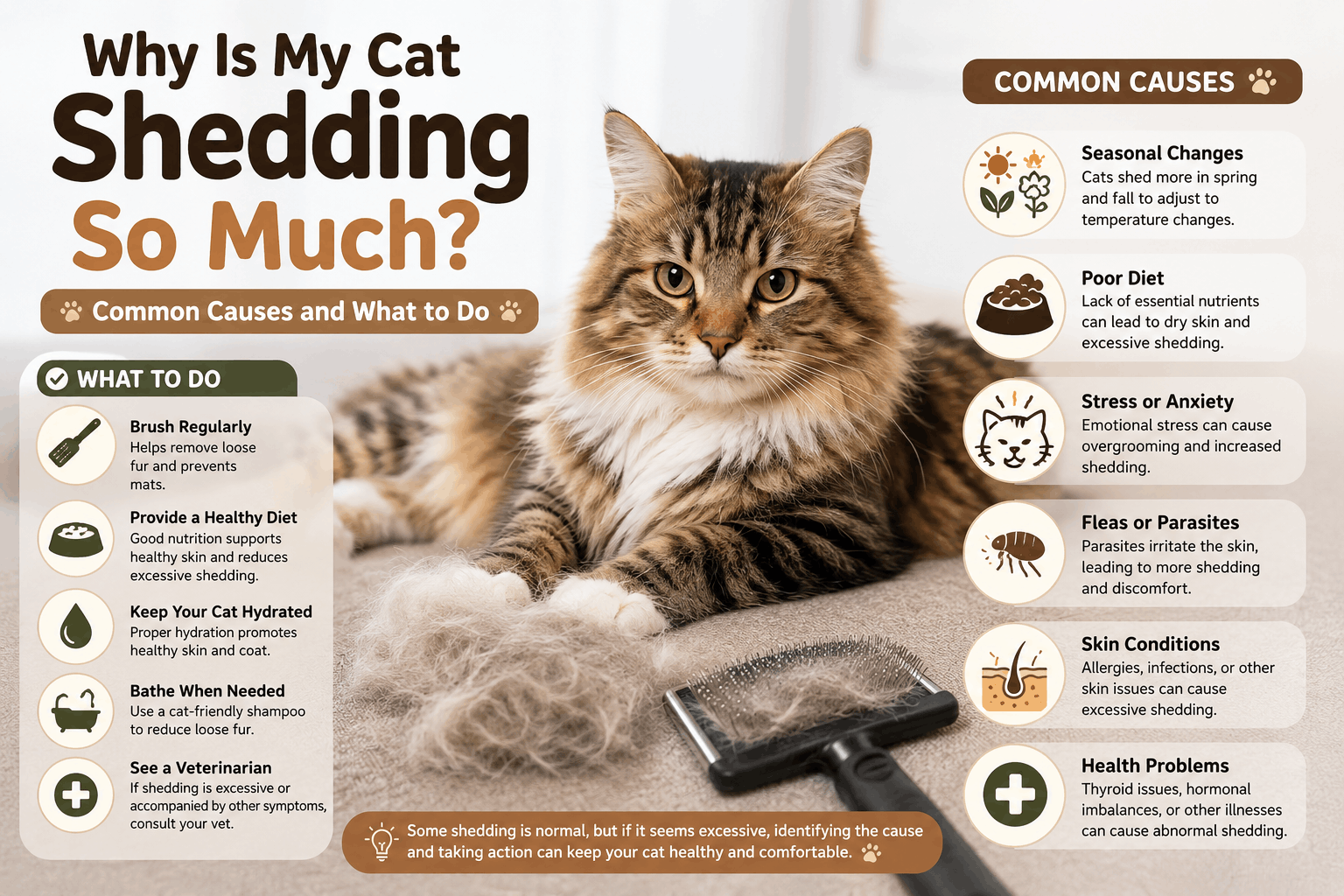
Short Answer: Your cat may be shedding so much because of normal seasonal shedding, indoor living, coat type, stress, poor grooming, diet changes, allergies, fleas, skin irritation, or overgrooming. Mild shedding is normal, but bald spots, red skin, scabs, itching, or sudden heavy hair loss should be checked by a veterinarian.
Is Cat Shedding Normal?
Yes, shedding is completely normal. Cats naturally lose old or dead hair to make room for new growth. The amount varies a lot from cat to cat, so what looks like a lot of hair for one cat may be perfectly normal for another.
Here is what is generally true about why cats shed:
- Shedding is normal and healthy
- Long-haired cats may need more grooming
- Indoor cats can shed all year round
- Seasonal changes can increase shedding
- Sudden or patchy hair loss is not normal
The amount your cat sheds depends on breed, coat type, age, season, indoor temperature, and grooming routine. A little extra fur during a coat change is usually nothing to worry about.
Common Reasons Cats Shed More Than Usual
If your cat is shedding a lot, several common factors could be behind it.
Seasonal Shedding
Some cats shed more during weather or light changes. As the seasons shift, their coat adjusts, which can mean a burst of extra hair for a few weeks. Seasonal cat shedding is a common and natural pattern.
Indoor Living
Indoor cats may shed throughout the year rather than in clear seasons. Artificial lighting and steady indoor temperatures can affect their natural shedding cycle, so indoor cat shedding often feels constant rather than seasonal.
Poor Grooming Routine
Cats groom themselves well, but brushing still helps remove loose hair before it ends up on your furniture. Without a regular cat brushing routine, loose fur builds up. Long-haired cats especially need consistent brushing to reduce mats and hairballs.
Diet and Coat Health
A balanced diet supports healthy skin and a healthy cat coat. That said, no single food or supplement will simply “cure” shedding, and diet is not always the main cause. If you are thinking about changing your cat’s food or adding supplements, ask your vet first rather than guessing.
Stress or Anxiety
Stress can affect both grooming and coat condition. Moving homes, a new pet, loud noises, changes in routine, or a lack of enrichment can all lead to increased grooming or shedding. Cat shedding and stress are more closely linked than many owners realize.
Fleas, Parasites, or Skin Irritation
Fleas, mites, allergies, fungal infections, or general skin irritation can cause itching, licking, scratching, and hair loss. If you spot signs of fleas or your cat seems unusually itchy, this is worth a vet visit.
Allergies
Cats can have allergies linked to food, their environment, fleas, or other triggers. Cat allergies and shedding sometimes go together, but only a veterinarian can properly diagnose an allergy and suggest a safe way forward.
Overgrooming
Cat overgrooming happens when a cat licks or chews itself too much, sometimes creating thin or bald areas. It may be linked to itching, pain, stress, anxiety, or a skin condition. Because the causes vary, overgrooming is best assessed by a vet.
Normal Shedding vs Abnormal Shedding
It helps to know the difference between everyday shedding and shedding that needs attention. This table makes it easy to compare.
| Normal Shedding | Abnormal Shedding |
| Loose hair on furniture | Bald patches |
| More hair during seasonal changes | Red, inflamed, or scabby skin |
| No change in behavior | Excessive licking or chewing |
| Healthy-looking coat | Dull, greasy, or patchy coat |
| Cat eats and acts normally | Weight loss, low energy, or appetite changes |
| No visible skin irritation | Dandruff, sores, or strong itching |
If what you are seeing lines up with the right-hand column, it is time to involve your veterinarian.
Warning Signs You Should Not Ignore
Keep an eye out for these signs of abnormal cat shedding:
- Bald patches
- Sudden heavy shedding
- Red or irritated skin
- Scabs or sores
- Constant scratching
- Excessive licking or chewing
- Dandruff or flaky skin
- Hair loss around the belly, legs, or tail
- Weight loss
- Low energy
- Change in appetite
- Vomiting hairballs often
- Signs of fleas or parasites
If your cat shows any of these signs, do not wait it out. These should be checked by a veterinarian, who can look at the whole picture and advise you safely.
How to Reduce Cat Shedding at Home
For normal, healthy shedding, these safe and practical steps can help you keep it under control:
- Brush your cat regularly
- Use the right brush for your cat’s coat type
- Keep your cat hydrated with fresh water
- Feed a balanced cat diet
- Keep bedding clean
- Vacuum regularly
- Reduce stress at home
- Give plenty of playtime and enrichment
- Keep up with routine vet checkups
- Use flea prevention only as recommended by your vet
These habits are the simplest way to learn how to reduce cat shedding without resorting to anything risky. Brushing is often the single most effective step, since it removes loose hair before it spreads.
Best Grooming Tips for Shedding Cats
The right grooming approach depends on your cat’s coat and age. Here are some simple cat grooming tips.
Short-Haired Cats
Brushing once or twice a week, or as needed, is usually enough to manage loose hair and keep the coat looking neat.
Long-Haired Cats
Long-haired cat shedding can look dramatic because the hair is longer. Brush more often to prevent mats and tangles, which can be uncomfortable if left to build up.
Senior Cats
Older cats sometimes groom themselves less than they used to. They may need gentle help with brushing to keep their coat clean and comfortable.
Cats That Hate Brushing
Not every cat enjoys grooming. If yours resists, try these tips:
- Start slowly and keep it positive
- Use short sessions
- Reward with treats
- Use a soft brush
- Stop before your cat gets stressed
Patience pays off. Over time, many cats learn to tolerate or even enjoy brushing.
Can Diet Help With Cat Shedding?
A healthy diet can support good skin and coat condition, but it is not always the main cause of shedding. Diet is one piece of the puzzle, not a guaranteed fix. If your cat has sudden shedding along with a dull coat, weight loss, vomiting, diarrhea, or appetite changes, that is a sign to speak with your vet rather than simply switching food.
When it comes to cat nutrition for a healthy coat, owners often hear about:
- Protein quality
- Omega fatty acids
- Hydration
- Balanced cat food
- Vet-approved supplements only
The key phrase there is “vet-approved.” Supplements are not a cure for shedding, and the right choice depends on your individual cat, so always confirm with your veterinarian before adding anything new.
Cat Shedding and Hairballs
More shedding often means more hair swallowed during grooming, which can lead to more hairballs. The occasional hairball is common in cats and usually not a cause for alarm.
However, frequent vomiting, repeated gagging, appetite loss, or constipation are different. If your cat is bringing up hairballs often or seems uncomfortable, have your vet take a look to rule out other issues.
When Should You See a Vet?
Veterinary care is the right step whenever shedding is sudden, severe, patchy, or comes with skin or behavior changes. In particular, contact your vet if you notice:
- Bald spots
- Red skin
- Scabs
- Excessive grooming
- Fleas
- Signs of pain
- Low energy
- Weight loss
- Appetite changes
- Repeated hairball vomiting
When in doubt, it is always safer to ask. A quick check can give you peace of mind or catch something early.
AI Overview Optimization: What Should I Do If My Cat Is Shedding Too Much?
What should I do if my cat is shedding too much?
If your cat is shedding too much but has a healthy coat and normal behavior, start with regular brushing, a balanced diet, clean bedding, stress reduction, and routine vet care. If shedding is sudden, patchy, itchy, or comes with bald spots, skin irritation, or behavior changes, contact a veterinarian.
FAQs
FAQ 1: Why is my indoor cat shedding so much? Indoor cats often shed year-round because steady indoor temperatures and artificial lighting affect their natural coat cycle. This is usually normal. Regular brushing helps manage loose hair. If the shedding comes with bald spots, irritated skin, or behavior changes, check with your veterinarian to be safe.
FAQ 2: Is excessive cat shedding a sign of illness? It can be normal, especially during seasonal coat changes or with certain breeds. But sudden or patchy shedding may be linked to skin problems, allergies, parasites, stress, or other health issues. If the shedding seems abnormal or comes with other symptoms, a veterinarian should check your cat.
FAQ 3: How can I reduce cat shedding naturally? Regular brushing is the most effective step, paired with a balanced diet, good hydration, and clean bedding. Reducing stress at home and keeping up with routine vet checkups also help. These simple habits support a healthy coat and keep loose hair from building up around your home.
FAQ 4: Should I worry if my cat has bald spots? Yes. Bald spots are not normal and should be checked by a veterinarian. They can be caused by overgrooming, parasites, allergies, skin irritation, or other health issues. Rather than guessing the cause, have your vet examine your cat so the problem can be properly identified and addressed.
FAQ 5: Do long-haired cats shed more? Long-haired cats may appear to shed more because their hair is longer and more noticeable on furniture and clothing. They also need more regular grooming to prevent mats and tangles. With consistent brushing, you can manage the loose hair and keep their coat healthy and comfortable.
Conclusion
Cat shedding is usually normal, and a little extra fur around the house is often just part of cat ownership. But sudden heavy shedding, bald patches, skin irritation, or excessive grooming should not be ignored.
With regular brushing, good nutrition, stress control, and vet guidance, you can manage normal shedding and help protect your cat’s skin and coat health. When something looks or feels off, trust your instincts and contact a licensed veterinarian. Your cat cannot tell you when something is wrong, so your careful attention makes all the difference.
A Note on Pet Health
Serlig publishes researched pet care information for everyday owners. It is general guidance, not veterinary advice, and it does not replace an examination by a licensed veterinarian who knows your pet. If your pet is unwell, or anything in this guide does not match what you are seeing at home, contact your vet.