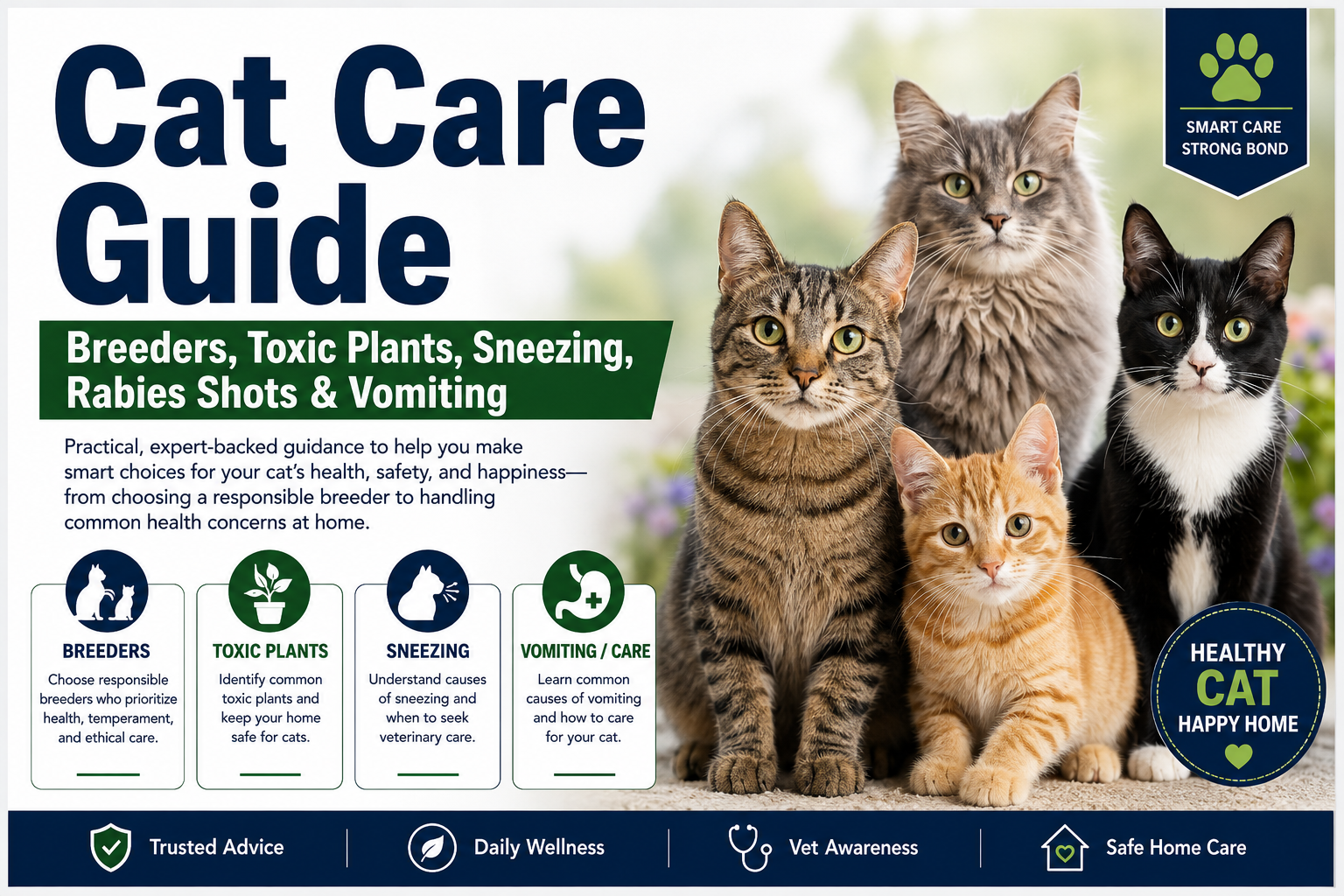
Care Guide: Breeders, Toxic Plants, Sneezing, Rabies S
Cats need proper care, safe environments, regular health checks, and responsible ownership. Whether you are searching for cat breeders scotland, wondering are roses toxic to cats, worried about cat sneezing a lot, learning about rabies injection for cats, or dealing with cat throwing up, this complete guide gives you practical information for cat owners.
Cat health issues such as sneezing, vomiting, and vaccine concerns should never be ignored if symptoms are severe, repeated, or unusual. For serious signs such as breathing problems, blood in vomit, weakness, dehydration, or suspected poisoning, contact a veterinarian immediately
Cat Breeders Scotland Guide
Finding trusted cat breeders scotland is important if you want a healthy kitten from a responsible source. A good breeder focuses on health, temperament, ethical breeding, proper socialization, and breed-specific care.
The GCCF describes itself as the UK’s premier cat registration body and provides information about choosing, owning, breeding, and showing cats, which makes registered breeder checks useful when searching for kittens in Scotland.
What to Look for in a Cat Breeder
- Registered breeder status
- Clean home or cattery environment
- Health-tested parent cats
- Vaccination records
- Kitten socialization
- Clear contract or paperwork
- No pressure to buy quickly
- Willingness to answer questions
Questions to Ask Before Buying a Kitten
- Are the kittens registered?
- Can I see the mother cat?
- Have the kittens been vet checked?
- Are vaccinations and worming up to date?
- What food are the kittens currently eating?
- Do you provide health documents?
- What support do you offer after purchase?
Red Flags to Avoid
- Breeder refuses home/cattery visit
- No health records
- Very cheap kittens with no paperwork
- Multiple breeds always available
- Pressure to pay deposit immediately
- Poor hygiene
- Kittens separated too early
Best Buyer Tips
- Always visit in person when possible
- Verify breeder registration
- Ask for vet records
- Avoid impulse buying
- Never pay full amount without proper proof
- Choose health and temperament over color or price
Are Roses Toxic to Cats?
Many cat owners ask, are roses toxic to cats? True roses from the Rosa species are generally considered non-toxic to cats. The ASPCA lists rose as non-toxic to cats, dogs, and horses.
However, roses can still cause problems if they have thorns, pesticides, fertilizers, or chemicals on the petals and leaves. Cats may also get mild stomach upset if they chew too much plant material.
Main Risks of Roses for Cats
- Thorn injuries
- Pesticide exposure
- Fertilizer chemicals
- Mild vomiting after chewing leaves
- Mouth irritation from sharp stems
What to Do If Your Cat Eats Roses
- Remove the roses from your cat’s reach
- Check your cat’s mouth for thorn injury
- Watch for vomiting or drooling
- Call your vet if symptoms appear
- Keep all treated flowers away from cats
Cat-Safe Flower Tips
- Choose untreated flowers
- Remove thorns
- Keep vases out of reach
- Avoid lilies completely
- Check plant safety before bringing flowers home
Cats Protection provides guidance on safe and unsafe plants for cats, which is useful because many common plants can be dangerous even when roses themselves are not the main concern.
Cat Sneezing a Lot
A cat sneezing a lot may have a simple irritation, but frequent sneezing can also be a sign of infection, allergies, dental disease, or nasal problems.
Common Causes of Cat Sneezing
- Dust or pollen
- Perfume or smoke
- Upper respiratory infection
- Allergies
- Dental disease
- Foreign object in the nose
- Fungal or bacterial infection
Symptoms to Watch
- Runny nose
- Watery eyes
- Coughing
- Loss of appetite
- Fever
- Low energy
- Noisy breathing
- Thick yellow or green discharge
Home Care Tips
- Keep the room dust-free
- Avoid smoke and strong scents
- Use a clean litter box
- Encourage water intake
- Keep your cat warm and comfortable
- Isolate from other cats if infection is possible
When to Call a Vet
Contact a vet if your cat has:
- Sneezing for more than a few days
- Blood from the nose
- Breathing difficulty
- Loss of appetite
- Fever or weakness
- Thick nasal discharge
- Eye swelling or ulcers
Rabies Injection for Cats
A rabies injection for cats is a vaccine used to protect cats from rabies, a serious viral disease. Rabies vaccination requirements depend on country, travel plans, and local rules. In the UK, rabies vaccination is especially important for cats travelling abroad.
PDSA advises owners to contact a vet well in advance if planning to travel abroad with a cat, because documents, vaccinations, blood tests, or other treatments may be needed.
Why Cats May Need Rabies Vaccination
- International travel
- Legal travel requirements
- Protection in rabies-risk areas
- Boarding or relocation requirements
- Exposure to wildlife in some countries
What Happens During the Injection?
PDSA explains that cat vaccines are usually given as an injection under the skin, and the vet may check the cat’s health before vaccination.
Possible Mild Side Effects
- Mild tiredness
- Slight swelling at injection site
- Temporary soreness
- Reduced appetite for a short time
When to Contact a Vet After Vaccination
Contact your vet immediately if your cat shows:
- Breathing difficulty
- Facial swelling
- Severe vomiting
- Collapse
- Extreme weakness
- Severe itching
- Ongoing diarrhea
Important Rabies Safety Note
Rabies is serious and can affect humans. If your cat is bitten, scratched by a suspicious animal, or exposed abroad, contact a vet urgently. PDSA recommends contacting a vet if your cat has been bitten or scratched by an animal abroad or if you are concerned about rabies signs.
Cat Throwing Up
Cat throwing up can happen for many reasons. Some vomiting is mild and occasional, but repeated vomiting can be a sign of a serious health problem.
Common Causes of Cat Vomiting
- Hairballs
- Eating too fast
- Food intolerance
- Sudden diet change
- Parasites
- Plant ingestion
- Infection
- Kidney or liver disease
- Intestinal blockage
Vomiting vs Hairball
Hairballs usually contain fur and may happen occasionally. Vomiting food, bile, foam, blood, or repeated liquid is more concerning.
What You Can Do at Home
- Remove food for a short period only if your vet recommends it
- Provide fresh water
- Monitor frequency
- Check for plant chewing
- Avoid sudden food changes
- Feed smaller meals
- Use slow-feeder bowls
When Cat Vomiting Is an Emergency
Call a vet quickly if your cat has:
- Repeated vomiting
- Blood in vomit
- Vomiting with diarrhea
- Weakness or collapse
- Swollen belly
- Pain
- Not eating
- Signs of dehydration
- Possible toxin exposure
Best Cat Care Tips for Owners
Healthy cats need daily care, regular vet checks, and a safe home environment.
Daily Cat Care Checklist
- Fresh water every day
- Clean litter box
- Balanced cat food
- Safe indoor plants
- Regular grooming
- Play and exercise
- Parasite prevention
- Vet visits when symptoms appear
Safe Home Tips
- Keep toxic plants away
- Store cleaning chemicals safely
- Avoid human medicines
- Keep strings and small objects away
- Use cat-safe toys
- Secure windows and balconies
FAQs About Cat Health and Care
How do I find reliable cat breeders in Scotland?
Look for registered breeders, health-tested parent cats, clean environments, vaccination records, and transparent paperwork. Avoid breeders who rush payments or refuse visits.
Are roses toxic to cats?
True roses are generally non-toxic to cats, but thorns, pesticides, and fertilizers can still be harmful.
Why is my cat sneezing a lot?
Common causes include dust, allergies, respiratory infection, dental disease, or nasal irritation. If sneezing continues or your cat has discharge or breathing issues, contact a vet.
Is rabies injection necessary for cats?
Rabies vaccination may be required for international travel and depends on local rules. Speak with your vet before travelling with your cat.
Why is my cat throwing up?
Cats may vomit due to hairballs, fast eating, food intolerance, infection, parasites, toxins, or internal illness. Repeated vomiting needs veterinary attention.
A Note on Pet Health
Serlig publishes researched pet care information for everyday owners. It is general guidance, not veterinary advice, and it does not replace an examination by a licensed veterinarian who knows your pet. If your pet is unwell, or anything in this guide does not match what you are seeing at home, contact your vet.