Quick Answer
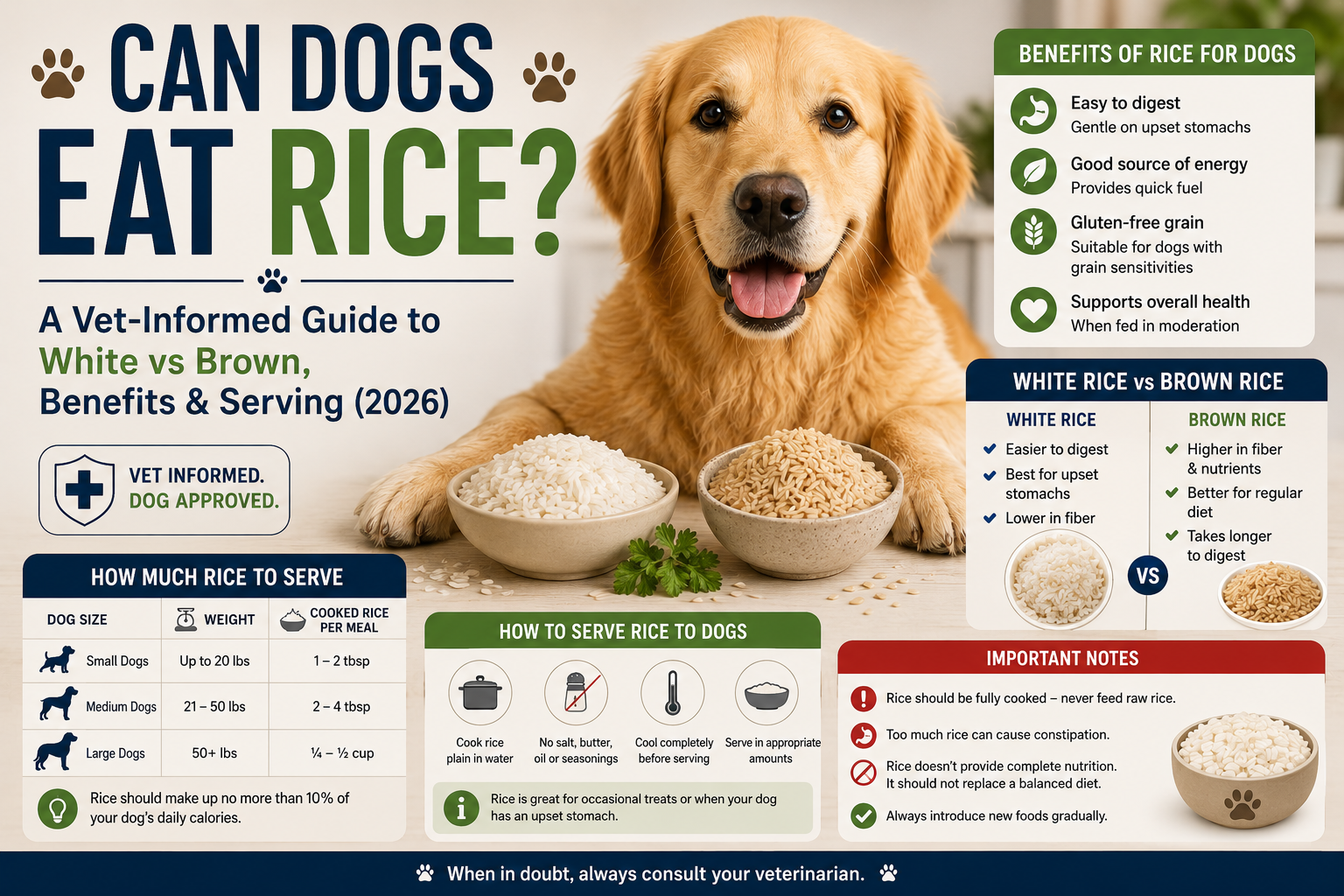
Yes, dogs can eat plain, cooked rice both white and brown. Rice is non-toxic, gentle on the stomach, and a common ingredient in many dog foods. Vets often recommend plain white rice with boiled chicken as a bland diet for dogs recovering from an upset stomach. Serve it fully cooked and plain no butter, salt, or seasoning and keep it in moderation.
Key Takeaways
- Plain, fully cooked rice (white or brown) is safe for dogs.
- White rice is bland, easy to digest, and often recommended for upset stomachs and diarrhea.
- Brown rice has more fiber and nutrients but is harder to digest not ideal for diarrhea.
- Always serve rice plain: no butter, salt, garlic, onion, or seasoning.
- White rice has a high glycemic index, so limit it for diabetic and overweight dogs.
- Rice is a source of energy, but dogs do not need carbohydrates to thrive.
- Keep rice to moderate amounts as part of a balanced diet.
Can Dogs Eat Rice?
Yes. Rice is one of the safest and most digestible grains you can give a dog, and it appears in countless commercial dog foods. Both the American Kennel Club (AKC) and PetMD confirm that plain, cooked rice is safe, and vets frequently use it as part of a bland diet for dogs with digestive trouble.
The two things that matter are keeping it plain and cooking it fully. Rice on its own is a simple carbohydrate, but the moment you add butter, salt, garlic, or onion, it becomes a mixed dish that can upset your dog’s stomach or worse, since onion and garlic are toxic to dogs.
Rice is usually served as a small addition to your dog’s meal rather than a standalone treat. It pairs well with plain proteins like cooked egg or boiled chicken. Whatever you add, the foundation of your dog’s nutrition should still be a complete and balanced dog food that meets AAFCO standards.
White Rice vs Brown Rice: Which Is Better for Dogs?
Both are safe, but they suit different situations.
| White Rice | Brown Rice | |
|---|---|---|
| Digestibility | Very easy to digest | Harder to digest |
| Fiber | Low | Higher |
| Nutrients | Fewer (refined) | More (B vitamins, iron, magnesium) |
| Glycemic index | Higher (raises blood sugar more) | Lower |
| Best for | Upset stomachs, diarrhea, sensitive dogs | Everyday fiber, dogs that tolerate it well |
Why vets recommend white rice for upset stomachs
When a dog has diarrhea or an upset stomach, many vets suggest a bland diet of plain white rice and a lean protein like boiled chicken. White rice is easy to digest, low in fiber, and its starch helps bind the stool. As one veterinary source explains, rice is used as a carb source in a bland diet after gastrointestinal upset because it helps firm things up. For a full plan, see our guide on what to feed a dog with diarrhea and always check with your vet for ongoing symptoms.
Importantly, brown rice is not the right choice for diarrhea. Its extra fiber, which is helpful day to day, can make loose stools worse.
When brown rice makes sense
For a healthy dog that tolerates it, brown rice offers more fiber, B vitamins, and minerals, plus a lower glycemic index. If your dog does well with it and your vet agrees, it can be a nutritious occasional addition to meals.
Is Rice Good for Dogs? The Benefits
Served correctly and in moderation, rice offers a few practical benefits:
| Benefit | Why it can help your dog |
|---|---|
| Quick energy | Carbohydrates provide a readily available energy source. |
| Easy digestion | Cooked white rice is gentle on sensitive stomachs. |
| Digestive support | White rice can help firm up stools during an upset stomach. |
| Some nutrients | Brown rice adds fiber, B vitamins, iron, and magnesium. |
| Low in fat | Rice is naturally low in fat. |
That said, it is worth remembering that dogs do not actually require carbohydrates like rice. Rice is a helpful tool and a fine occasional addition, but it is not a nutritional necessity the heavy lifting should come from complete dog food.
Rice Risks: What to Watch For
Rice is low-risk, but a few points are worth knowing.
Blood sugar and weight
White rice has a relatively high glycemic index, meaning it can raise blood sugar. For dogs with diabetes — or those who are overweight this matters, so rice should be limited or avoided in these dogs unless your vet advises otherwise. Too many carbohydrates can also contribute to weight gain in any dog.
Never add seasonings
Serve rice completely plain. Skip butter, oil, salt, and spices, and never add garlic or onion (including powders), which are toxic to dogs. Avoid restaurant or fried rice for the same reason you cannot be sure what is in it.
Nutritional balance
Rice fills the stomach but lacks the protein, fat, and full range of vitamins a dog needs. Feeding too much rice, too often, can crowd out balanced nutrition, so keep it as a modest part of the bowl.
How Much Rice Can a Dog Eat? (Serving Guide)
As a treat or meal topper, rice falls under the 10% rule — it and all other extras should stay under a tenth of your dog’s daily calories, with balanced food making up the rest.
As a rough guide for a food topper:
| Dog size | Body weight | Suggested amount (cooked rice) |
|---|---|---|
| Extra-small | Under 10 lb | 1–2 tablespoons |
| Small | 10–25 lb | 2–3 tablespoons |
| Medium | 25–50 lb | ¼ cup |
| Large | 50–90 lb | ⅓–½ cup |
| Giant | Over 90 lb | About ½ cup |
For a bland diet during an upset stomach, the ratio is different often around two-thirds rice to one-third lean protein and it is meant to be short-term. Always follow your veterinarian’s specific guidance for a sick dog.
How to Safely Feed Rice to Your Dog
Preparation is simple:
- Cook it fully Boil or steam the rice in plain water until soft and fully cooked.
- Keep it plain No butter, ghee, oil, salt, spices, garlic, or onion.
- Let it cool Serve at a comfortable temperature.
- Mix a small amount into your dog’s regular food, or pair with a plain lean protein.
- Watch the response Look for normal stools and a comfortable belly; stop and ask your vet if your dog seems gassy or off.
Can Puppies Eat Rice?
Yes, puppies can eat small amounts of plain, cooked white rice, and vets sometimes recommend a bland rice-and-lean-meat diet for a puppy with a temporary upset stomach. Keep portions small, introduce it gradually, and make sure a complete puppy food still provides the bulk of your puppy’s nutrition. Check with your vet before making rice a regular part of a puppy’s meals.
When to Check With Your Vet
Rice suits most dogs, but check with your veterinarian first if your dog:
- Has diabetes or is overweight (because of the carbohydrate load).
- Has ongoing digestive issues that a bland diet is not resolving.
- Is on a prescription diet.
Contact your vet if diarrhea or vomiting lasts more than a day or two, or if your dog seems lethargic, since a bland diet is only a short-term support, not a cure.
Frequently Asked Questions
It depends. White rice is easier to digest and better for upset stomachs, while brown rice has more fiber and nutrients for healthy dogs that tolerate it.
Yes. Plain white rice, often with boiled chicken, is a common bland diet that helps firm up stools. Brown rice is not recommended for diarrhea.
In small amounts as part of a balanced diet, occasional rice is fine, but it should not replace complete dog food, and diabetic or overweight dogs should limit it.
No. Fried and restaurant rice usually contain oil, salt, and seasonings like garlic and onion that can upset or harm your dog. Stick to plain home-cooked rice.
Keep it modest a spoonful to a fraction of a cup depending on size and within 10% of daily calories, unless your vet has prescribed a specific bland-diet amount.
Final Thoughts
Rice is a safe, gentle, and genuinely useful food for dogs especially plain white rice, which is a go-to for settling an upset stomach. Serve it fully cooked and completely plain, keep portions modest, and remember that rice supports a balanced diet rather than replacing it.
Because every dog is different, introduce rice gradually, watch how your dog responds, and check with your veterinarian if your dog has diabetes, is overweight, or has ongoing digestive problems. Used sensibly alongside a complete, balanced diet, rice can be a helpful part of your dog’s meals.
A Note on Pet Health
Serlig publishes researched pet care information for everyday owners. It is general guidance, not veterinary advice, and it does not replace an examination by a licensed veterinarian who knows your pet. If your pet is unwell, or anything in this guide does not match what you are seeing at home, contact your vet.