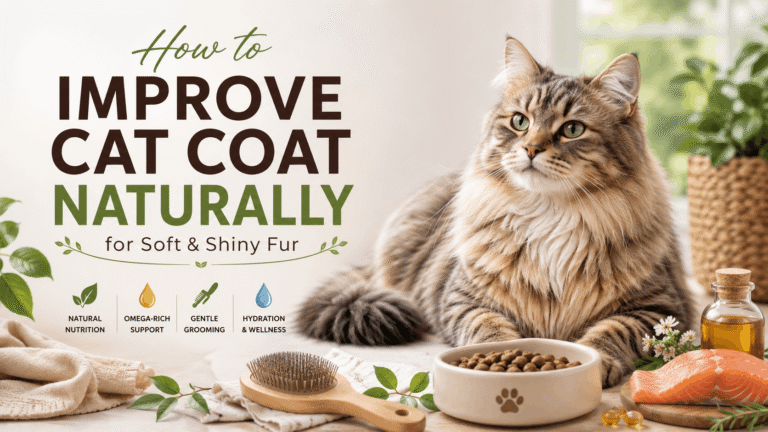
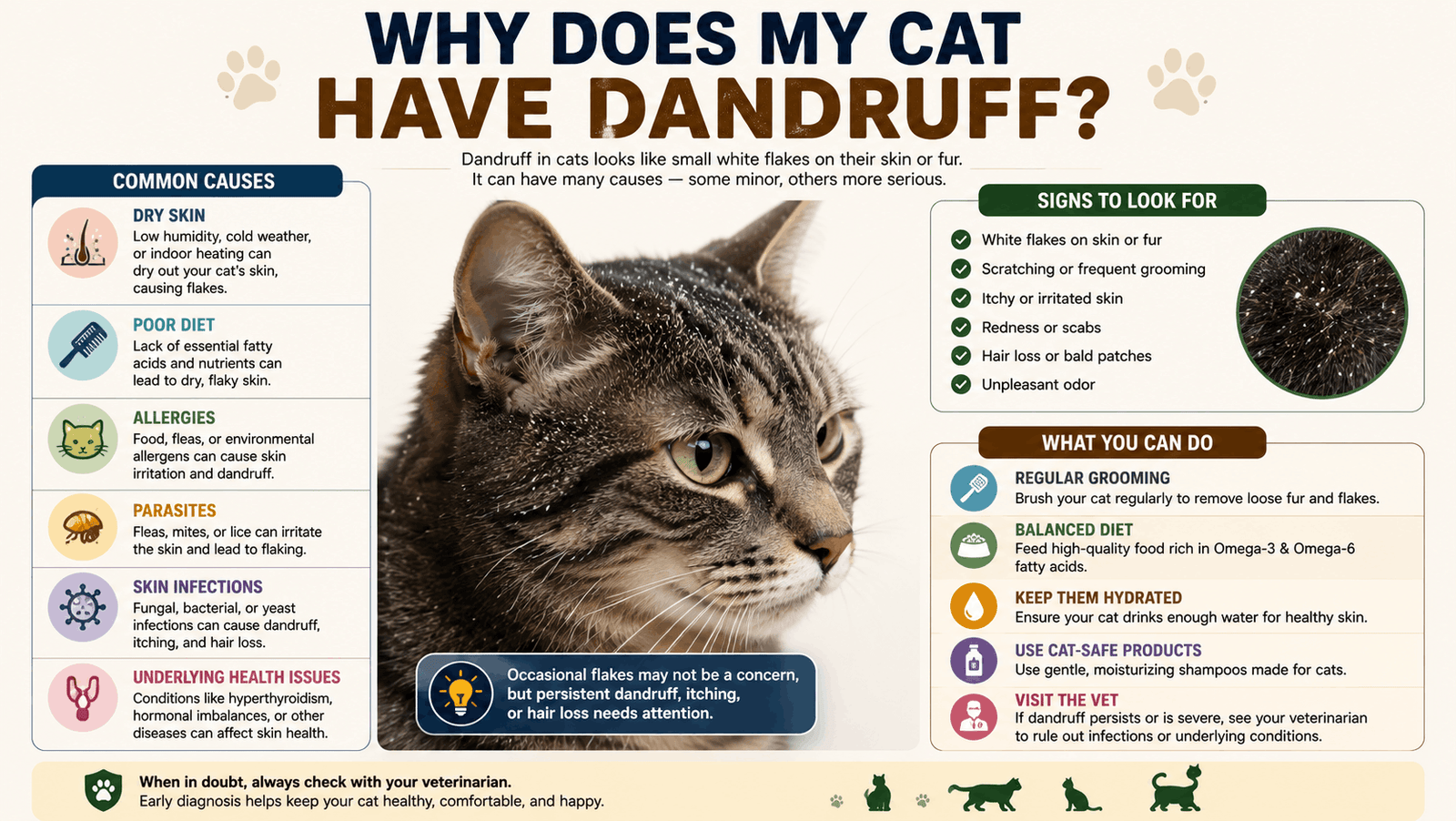
Spotting little white flakes in your cat’s fur can be confusing, cats are such clean, self-grooming animals that dandruff seems out of place. But it’s actually a common issue, and it usually has a simple, fixable cause. Plenty of cat owners first notice the flakes while petting their cat or brushing along the back near the tail. This guide explains why your cat has dandruff, what to look for, and how to clear it up naturally.
Cats usually get dandruff from dry skin, poor diet, dehydration, lack of grooming, or a skin condition. The flakes are dead skin cells that build up when the skin loses moisture or isn’t cared for properly. Improving diet, hydration, and grooming clears up most mild cases.
What Is Cat Dandruff?
Cat dandruff is the white or grayish flakes of dead skin that appear in the fur. Skin naturally renews itself by shedding old cells, but when this process speeds up or the skin dries out, those cells clump together into visible flakes.
It’s worth knowing the difference between dandruff and “walking dandruff.” True dandruff is dry, flaky skin. Walking dandruff is caused by a type of mite and the flakes seem to move, so that one needs a vet. For most cats, though, dandruff is simply a sign that the skin needs more moisture or better nutrition.
Common Causes of Cat Dandruff
Understanding the cause is the first step to fixing it. Here are the most frequent reasons behind flaky skin.
Dry skin
Dry skin is the number one cause. Low humidity, especially in winter or in air-conditioned homes, pulls moisture from the skin and leaves it flaky. A diet low in healthy fats can make dryness worse.
Poor diet
Skin needs fatty acids, protein, and key vitamins to stay healthy. A low-quality or unbalanced diet often leaves the skin dry and prone to flaking. Diet is one of the biggest factors in both dandruff and an unhealthy cat coat.
Lack of grooming
Cats normally groom themselves to spread natural oils and remove dead skin. But overweight, older, or arthritic cats often can’t reach every part of their body. Those hard-to-reach areas, usually the lower back and base of the tail, are where dandruff tends to gather.
Dehydration
When a cat doesn’t drink enough water, the skin is one of the first places to suffer. Dehydrated skin becomes dry and flaky. Since many cats are naturally light drinkers, this is a common and often overlooked cause.
Skin infections
Sometimes dandruff points to an underlying problem like a fungal or bacterial infection, parasites, or allergies. These cases usually come with extra signs such as redness, sores, or heavy itching, and need veterinary care.
Symptoms of Cat Dandruff
Dandruff rarely shows up alone. Watch for these signs together:
- White flakes in the fur, most often along the back and near the tail
- Itching scratching, licking, or biting at the skin more than usual
- Hair loss thinning fur or small bald spots in irritated areas
- Dull coat fur that looks dry and has lost its usual shine
If you notice cat dry skin and hair loss together, it’s a stronger sign that the skin needs attention and possibly a vet check.
How to Treat Cat Dandruff Naturally
Most mild dandruff clears up with a few natural changes. Here’s how to remove cat dandruff naturally at home.
Proper diet
Start with food. A complete, high-quality diet rich in animal protein gives the skin the building blocks it needs. Good nutrition is the foundation for healthy skin and a flake-free coat.
Omega-3 supplements
Omega-3 fatty acids are excellent for skin moisture and reducing flaking. Fish oil or salmon oil made for cats can noticeably improve dry, dandruff-prone skin within a few weeks. Always use a cat-specific product and the correct dose.
Regular grooming
Regular brushing helps a lot. It spreads natural skin oils, lifts away dead skin and loose flakes, and improves circulation to the skin. For cats that struggle to groom themselves, regular brushing does the job they can’t.
Hydration
Encourage your cat to drink more by keeping water fresh, trying a pet water fountain, and adding wet food to the diet. Better hydration helps the skin hold moisture and reduces flaking from the inside out.
Quick treatment overview
| Cause | Natural Fix |
|---|---|
| Dry skin | Omega-3s, better hydration |
| Poor diet | High-quality, protein-rich food |
| Lack of grooming | Regular brushing |
| Dehydration | More water, add wet food |
| Infection or mites | Vet visit required |
Best Foods for Healthy Cat Skin
Feeding the right foods supports moisture and a flake-free coat. Some of the best options include:
- Salmon: rich in Omega-3s for skin hydration and shine (cooked, plain, and boneless)
- Chicken: high-quality protein to build and repair skin (cooked, skinless, unseasoned)
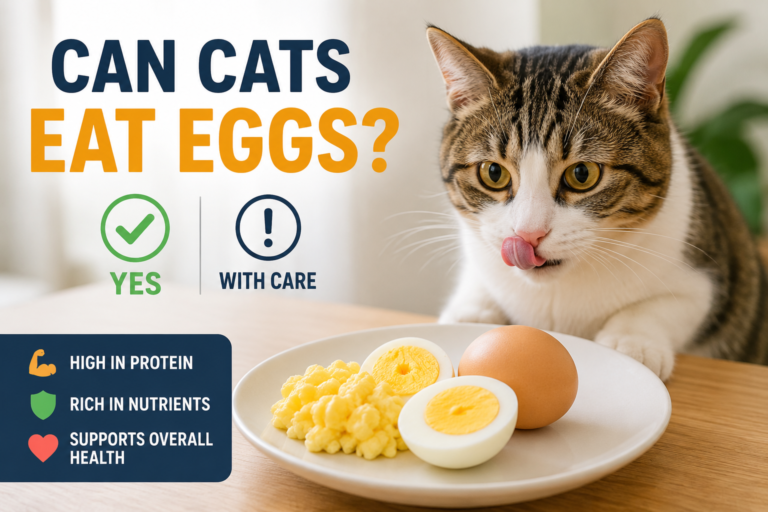
- Eggs: protein and biotin that support skin and coat strength (fully cooked, small amounts)
- Fish oil: a concentrated Omega-3 boost drizzled over food
- Wet food: adds moisture to the diet and supports overall skin hydration
These work best alongside a complete, balanced cat food rather than as replacements for it.
When to Visit a Vet
Natural care handles most everyday dandruff, but some cases need a professional. Contact your veterinarian if you notice:
- Dandruff that doesn’t improve after a few weeks of better care
- Severe itching, redness, sores, or scabs
- Significant hair loss or spreading bald patches
- Flakes that appear to move (a sign of walking dandruff mites)
- Dandruff alongside weight loss, low energy, or other illness signs
A vet can check for infections, parasites, allergies, or health conditions and recommend the right treatment.
FAQs
Is cat dandruff normal?
A few flakes now and then can be normal, especially in dry weather. But ongoing or heavy dandruff usually means the skin needs more moisture, better nutrition, or grooming help. Persistent dandruff is worth addressing rather than ignoring.
How do I treat dandruff in cats?
Start with diet, hydration, and regular grooming, and consider a cat-safe Omega-3 supplement. These steps fix most mild cases within a few weeks. If the dandruff persists or comes with itching and hair loss, see your vet.
Why is my cat scratching and flaking?
Scratching with flaking often points to dry, irritated skin from poor nutrition, dehydration, or allergies. It can also signal parasites or an infection. If scratching is frequent or intense, have your vet rule out a medical cause.
Can diet cause cat dandruff?
Yes. A diet low in healthy fats, protein, or key vitamins is one of the most common causes of dry, flaky skin. Switching to a high-quality, balanced diet and adding Omega-3s usually improves dandruff over time.
Final Thoughts
Cat dandruff is rarely a serious problem on its own, most of the time it’s the skin asking for more moisture, better food, or a little grooming help. Focus on a quality diet, good hydration, Omega-3s, and regular brushing, and the flakes usually fade within a few weeks.
Balanced nutrition and consistent skin care are the most reliable ways to prevent dandruff and keep your cat’s skin healthy. If the flakes stick around or come with other symptoms, a quick vet visit will get you a clear answer.
A Note on Pet Health
Serlig publishes researched pet care information for everyday owners. It is general guidance, not veterinary advice, and it does not replace an examination by a licensed veterinarian who knows your pet. If your pet is unwell, or anything in this guide does not match what you are seeing at home, contact your vet.