
Quick Answer
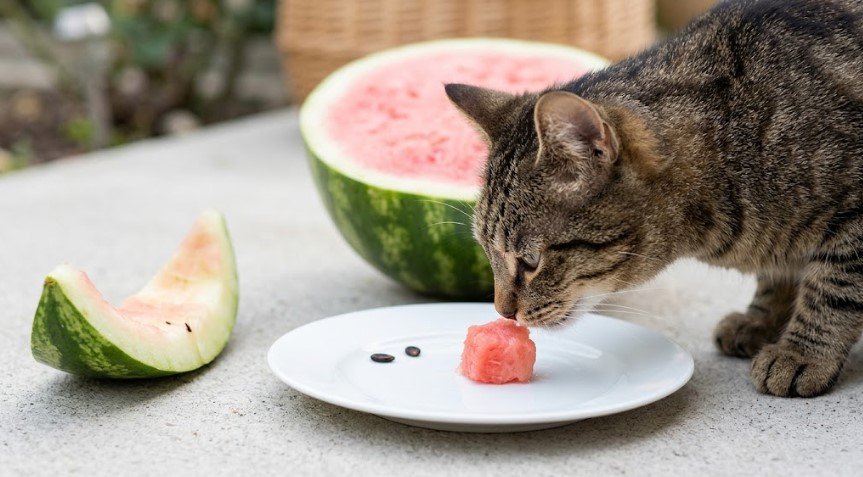
Can cats eat watermelon? Yes. Seedless watermelon flesh is safe for healthy adult cats in very small amounts, around one or two pea sized pieces. Always remove every seed and all of the rind. The seeds are mainly a choking and blockage risk rather than a poisoning risk, and the rind is the more likely cause of a serious obstruction. Watermelon is often described as a hydration treat, but a cat safe portion supplies very little water. Cats with diabetes or obesity should skip it.
Can Cats Eat Watermelon? The Short Answer
Yes, and for most healthy cats this is a low risk question.
Watermelon flesh contains nothing toxic. A small piece will not harm a healthy adult cat, and if yours has stolen a bite from your plate there is no reason for concern.
Two things in this article differ from what you will read elsewhere, and both are worth knowing.
First, the seeds: Almost every article describes watermelon seeds as toxic to cats because they contain cyanide compounds. That framing is misleading. The realistic risk from a few seeds is mechanical rather than chemical, and treating it as a poisoning question sends owners looking for the wrong symptoms.
Second, the hydration claim: Watermelon is 92 percent water, and this is universally presented as its one genuine benefit for cats. When you work out how much water a cat safe portion actually contains, that benefit turns out to be very small indeed.
Both are covered below with the arithmetic.
Why Your Cat Is Interested
Cats cannot taste sweetness. They lack a functional TAS1R2 gene, one of the two genes required to build a working sweet taste receptor, so sugar is simply not part of their flavour world.
This means a cat showing interest in watermelon is not enjoying it the way you do. What draws them is some combination of moisture, coolness, texture and curiosity about whatever you are holding. Many cats will investigate a piece, lick it once and walk away, which is the most common outcome.
That is worth knowing before you go to any trouble. There is no flavour your cat is missing out on, and a cat that refuses watermelon is not being difficult.
How Much Watermelon Is Safe?
Veterinary guidance holds that treats should stay under 10 percent of a cat’s daily calories. For an average adult cat that is roughly 20 to 30 calories.
Watermelon is low in calories, at around 30 calories per 100 grams, which makes it one of the gentler fruits on that budget. The limiting factor is sugar and digestive tolerance rather than calories.
| Cat weight | Daily calories | Treat budget | Watermelon portion |
| 3 kg (7 lb) | 160 to 200 kcal | 16 to 20 kcal | One pea sized piece, about 5 g |
| 4 kg (9 lb) | 200 to 240 kcal | 20 to 24 kcal | One or two pieces, about 10 g |
| 5 kg (11 lb) | 240 to 300 kcal | 24 to 30 kcal | Two pieces, about 15 g |
| 6 kg (13 lb) | 280 to 340 kcal | 28 to 34 kcal | Up to about 20 g |
Frequency matters more than portion. Once a week at most, and only if your cat shows genuine interest. Our guide to low calorie treats and portion control covers how quickly a small budget is used up.
The Seed Question: Choking or Cyanide?
Here is where most articles overstate the case, and getting it right changes what you should watch for.
What is true: Watermelon seeds contain amygdalin, a compound that can release cyanide when broken down. Mature black seeds contain more of it than the soft white seeds found in seedless varieties.
What is misleading: Describing the seeds as toxic implies that swallowing a few creates a poisoning risk. In practice, amygdalin has to be released by chewing and crushing the seed, and cats swallow small objects whole rather than grinding them. The amount present in a handful of seeds is very small relative to a cat’s body weight. Veterinary sources broadly agree that a cat accidentally swallowing a few seeds is unlikely to develop cyanide toxicity.
What the actual risk is: Seeds are a mechanical problem. A whole seed can lodge in a small throat, and several seeds can contribute to an intestinal blockage, particularly in a kitten or a small cat. That is the realistic concern, and it is why every seed should be removed.
Why the distinction matters: If you believe your cat has been poisoned, you will watch for the wrong things and possibly panic unnecessarily. If you know the risk is obstruction, you will watch for repeated retching, refusing food, a bloated or painful abdomen and straining to pass stool, which is what actually needs acting on.
None of this is a reason to allow seeds. Remove them all. It is a reason to respond proportionately if a few are swallowed.
The Rind Is the Bigger Risk
The rind receives less attention than the seeds and deserves more.
Watermelon rind is tough, fibrous and poorly digestible. A cat cannot break it down, and a swallowed chunk can sit in the stomach or intestine and cause a partial or complete obstruction. Unlike a single seed, a piece of rind is large enough to be a genuine problem on its own.
The rind also sits closest to the surface of the fruit, so it carries whatever pesticide residue and handling contamination the outside has picked up.
Practical points
- Remove the rind completely, including the pale green layer just under the pink flesh, which is firmer than it looks
- Do not leave rind in an open bin or on a plate where a cat can reach it
- Pickled watermelon rind is worse again, since it adds salt, sugar and vinegar
If your cat has swallowed rind, watch closely for the next 12 to 24 hours and call your vet if any obstruction signs appear.
Does Watermelon Actually Hydrate a Cat?
This is the claim every article makes, and nobody checks it.
Watermelon is about 92 percent water. That figure is correct and it sounds compelling. But the relevant question is how much water a cat safe portion actually delivers.
The arithmetic: A safe portion for a 4 kg cat is roughly 10 grams of flesh, which contains around 9 millilitres of water. A cat of that size needs somewhere in the region of 160 to 240 millilitres of water per day from all sources.
That portion therefore supplies under 5 percent of a cat’s daily water needs, and it brings sugar along with it.
For comparison, wet cat food is roughly 78 percent water, and a cat eating a typical daily amount of it takes in well over 100 millilitres from food alone. That is the intervention that actually moves the number.
The fair conclusion: Watermelon is not a hydration strategy. It is a novelty treat that happens to be wet. If a cat enjoys it on a hot day, there is no harm in that, but offering it because you are worried about your cat’s water intake will not solve the problem you are worried about.
If Hydration Is Your Real Concern
If you came to this article because your cat does not seem to drink much, these are the things that genuinely help.
- Switch some or all of the diet to wet food: This is by far the most effective change and the one vets suggest first.
- Add a water fountain: Many cats prefer moving water and will drink noticeably more from one.
- Place water away from the food bowl: Cats commonly avoid drinking directly beside where they eat.
- Offer multiple bowls in different rooms, particularly in a multi cat household.
- Use wide, shallow bowls: Deep narrow bowls press against the whiskers, which many cats dislike.
- Add a little water to wet food to increase intake without changing anything else.
One important caution: A noticeable increase or decrease in drinking is a genuine clinical sign in cats, and it is frequently the first indication of kidney disease, diabetes or hyperthyroidism. If your cat’s drinking habits have changed, that is a reason to see a vet rather than to adjust the water bowl. Cats conceal illness well, and our guide to recognising pain and illness in cats covers the quieter signals.
Cooling a Cat in Hot Weather
Most people reach for watermelon on a hot day, so it is worth saying what actually helps a cat in heat, since a few pieces of fruit will not.
Cats manage heat poorly compared with people. They cannot sweat except through their paw pads, and panting in a cat is not normal cooling behaviour the way it is in a dog. A panting cat in hot weather is a cat in trouble and needs a vet.
What genuinely helps:
- Shade and airflow: Keep curtains closed on sunny sides and let air move through the house.
- Several water sources, refreshed more often than usual.
- A cool surface to lie on, such as a tiled floor or a damp towel laid out for them to choose.
- Wet food, which raises fluid intake far more than any fruit.
- Gently damp hands stroked over the coat, which some cats tolerate well and which cools by evaporation.
- Avoid carriers, car journeys and travel during the hottest part of the day.
Signs of overheating include rapid breathing, open mouth panting, drooling, restlessness, lethargy, bright red gums and unsteadiness. Any of these warrant contacting a vet immediately rather than waiting to see whether your cat settles.
Our guide to keeping pets cool in summer covers the wider hot weather precautions, though cats need a gentler approach than the dog focused advice there.
| Form | Verdict | Why |
| Fresh seedless flesh, pea sized pieces | Safe occasionally | The only form worth offering |
| Fresh flesh with black seeds removed | Safe occasionally | Check carefully. Seeds hide in the flesh |
| Soft white seeds in seedless varieties | Usually harmless | Lower amygdalin than mature black seeds, and soft enough to pass. Still best removed |
| Rind | Never | Tough, indigestible, and the most likely cause of an obstruction |
| Pickled watermelon rind | Never | Salt, sugar and vinegar on top of an already unsuitable part |
| Frozen watermelon cubes | Avoid | Often suggested as a summer treat, but very cold food commonly causes cats to regurgitate, and hard frozen pieces risk dental damage |
| Watermelon juice | Never | Concentrated sugar with the fibre removed |
| Watermelon flavoured products | Never | Added sugar, and sugar free versions may contain xylitol |
| Watermelon with other fruit in a salad | Check carefully | Grapes are frequently included and are linked to kidney failure in cats |
That last row matters more than it looks. A fruit salad is a very common way for a cat to encounter grape, and our guide to human foods toxic to cats covers why that is treated so seriously.
Which Cats Should Skip It
Diabetic cats: Watermelon is high in natural sugar relative to its bulk, and unplanned carbohydrate interferes with glucose control.
Overweight cats: The treat budget shrinks on a weight plan, and empty calories are the first thing to cut.
Kittens: Small throats make the seed and rind risks proportionally greater, and kittens have no room in their diet for food that provides nothing. Our kitten feeding schedule sets out what they need.
Cats with a sensitive stomach or a history of digestive problems: Fruit is not part of a natural feline diet and may cause loose stools.
Cats that have reacted to fruit before: One clear reaction is enough information.
How to Serve It Safely
- Choose a seedless variety to reduce the work and the risk.
- Cut away all rind, including the firm pale layer beneath the pink.
- Check the flesh for seeds and remove every one, including soft white ones.
- Cut into pea sized pieces. A larger cube is a choking risk for an enthusiastic cat.
- Serve at room temperature, not straight from the fridge and never frozen.
- Offer one small piece first and nothing else new that day.
- Subtract it from the meal rather than adding it on top.
- Watch for 24 hours for vomiting, loose stools or reduced appetite.
If your cat ignores it, that is the normal response and there is nothing to fix.
If Your Cat Ate Seeds or Rind
A few seeds: Not a poisoning emergency. Watch for 24 hours for signs of obstruction rather than signs of toxicity. Ensure water is available and feed normally.
A large quantity of seeds, or seeds in a kitten or small cat: Call your vet for advice. The concern is blockage, and a smaller animal has less room for error.
Any amount of rind: Contact your vet, particularly if it was a sizeable piece. Do not induce vomiting. Watch closely for the next 12 to 24 hours.
Signs that need immediate attention: repeated retching or vomiting, refusing food, lethargy, a bloated or painful abdomen, straining to pass stool, or no stool passed at all.
Persistent vomiting always warrants attention rather than observation, and our article on why cats vomit explains when it becomes urgent.
Frequently Asked Questions
Not really. It is safe in small amounts but supplies nothing a complete cat food does not already provide, and cats cannot taste the sweetness that makes it appealing to people.
They contain amygdalin, which can release cyanide when crushed, but the realistic risk from a few swallowed seeds is choking or blockage rather than poisoning. Remove them all regardless.
No. It is tough, indigestible and the most likely part of the fruit to cause an intestinal obstruction.
Barely. A safe portion supplies under 5 percent of a cat’s daily water needs. Wet food and a water fountain are far more effective.
It is best avoided. Very cold food commonly causes regurgitation in cats, and hard frozen pieces carry a dental risk.
Best avoided. Their smaller throats make the seed and rind risks greater, and they have no room for calories that carry no nutrition.
No. Cats cannot taste sweetness, so most have no interest. Ignoring it is the expected response.
Conclusion:
Can cats eat watermelon? Yes, a pea sized piece of seedless flesh is safe for a healthy adult cat, served at room temperature with every seed and all of the rind removed.
Two things are worth carrying away. The seeds are a choking and blockage risk far more than a poisoning risk, so if a few are swallowed, watch for obstruction signs rather than searching for symptoms of cyanide toxicity. And the hydration benefit that every article promises does not survive the arithmetic. A safe portion is a few millilitres of water attached to some sugar.
If your cat enjoys a cool piece on a warm day, there is no harm in it. If you are actually worried about how much your cat is drinking, wet food and a fountain will do far more, and a genuine change in drinking habits is a reason to see a vet rather than to cut up fruit.
For the full picture of what belongs in a cat’s diet, see our complete guide to what cats can eat, and our companion article on bananas and cats covers the other fruit owners ask about most.
A Note on Pet Health
Serlig publishes researched pet care information for everyday owners. It is general guidance, not veterinary advice, and it does not replace an examination by a licensed veterinarian who knows your pet. If your pet is unwell, or anything in this guide does not match what you are seeing at home, contact your vet.