Quick Answer
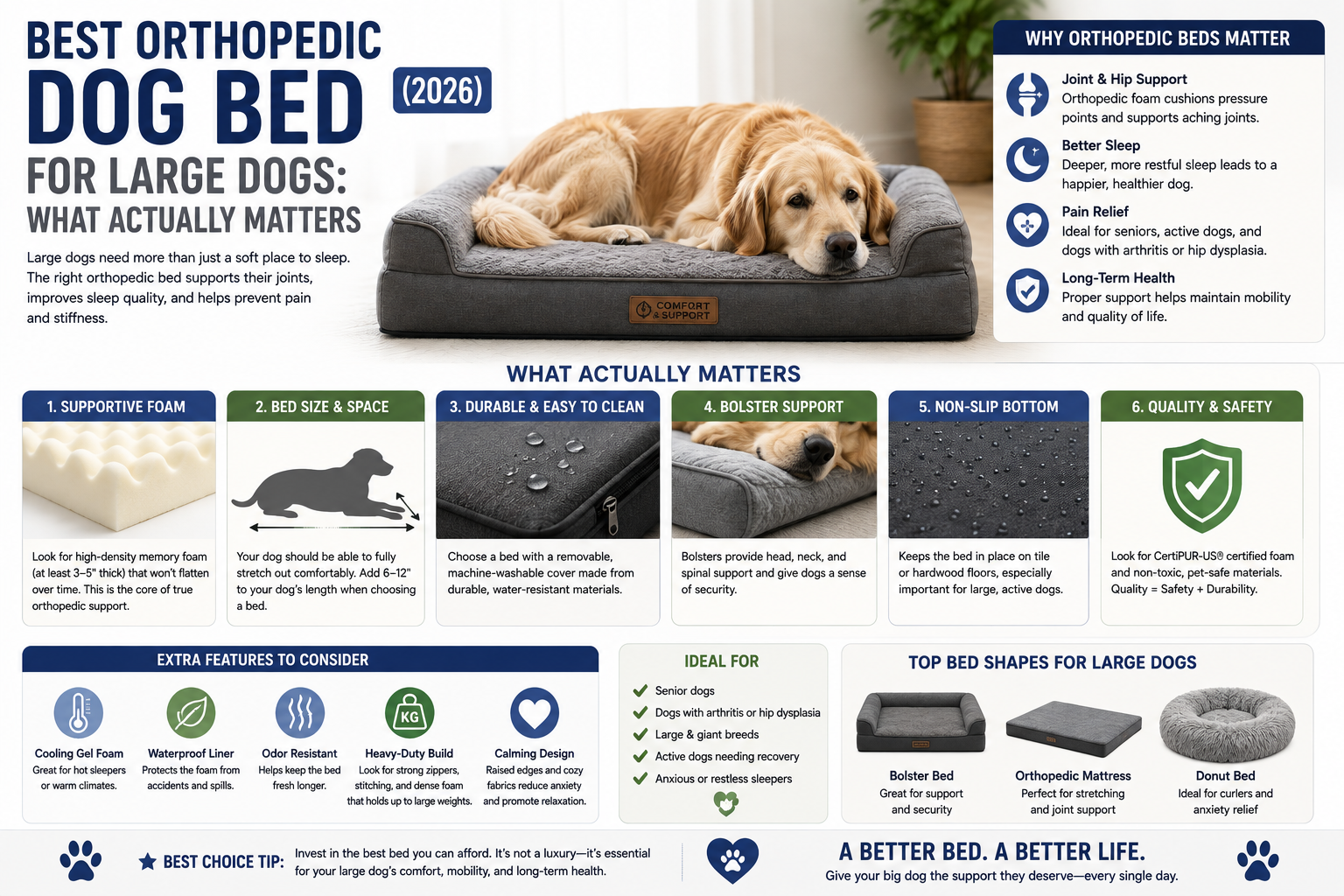
“Orthopedic” is not a regulated term, so the label tells you almost nothing the construction does. What genuinely matters for a large or arthritic dog is a solid slab of high-density memory foam at least 4 inches thick (not shredded foam, not polyester fill), sized so the dog can lie fully stretched out, with a waterproof inner liner and a washable, removable cover. Shredded-foam beds marketed as orthopedic compress under a heavy dog within weeks and provide no meaningful support.
Key Takeaways
- Solid slab beats shredded foam. Shredded fill shifts and flattens under weight.
- 4 inches minimum thickness for large dogs; 5–7 inches for giant breeds or severe arthritis.
- Foam density matters more than thickness low-density thick foam bottoms out just as fast.
- A waterproof inner liner is essential; incontinence is common in senior dogs.
- Measure your dog stretched out, then add 6–12 inches.
- Memory foam retains heat a real consideration for double-coated breeds.
What “Orthopedic” Actually Means (and Doesn’t)
There is no standard, no certification, and no minimum requirement. A polyester-stuffed pillow can legally be labelled orthopedic.
What genuinely provides orthopedic support:
- A solid slab of memory foam that distributes weight evenly and relieves pressure on joints and bony points
- Sufficient density so a heavy dog does not compress through to the floor
- Sufficient thickness for that density to work
- A firm, supportive base rather than a soft nest
What does not, despite the label:
- Shredded or chopped foam feels plush initially, then migrates to the edges leaving a hollow where the dog lies
- Polyester fibre fill compresses almost immediately
- Thin foam toppers over a fabric base
- Egg-crate foam alone it adds surface comfort and airflow, but is not a support layer
The Specification Checklist
Foam type and density
Solid memory foam (viscoelastic) is the standard for pressure relief. Look for stated density, not just thickness this is the number that determines whether it holds up.
High-density support foam as a base layer beneath a memory foam top is an excellent construction: the base carries the weight, the memory foam contours.
Look for CertiPUR-US certification or an equivalent, which indicates the foam has been tested for harmful substances and for durability. It is one of the few objective quality signals available in this category.
Thickness by dog size
| Dog weight | Minimum foam thickness |
| Under 25 lb / 11 kg | 3 inches |
| 25–60 lb / 11–27 kg | 4 inches |
| 60–100 lb / 27–45 kg | 4–5 inches |
| Over 100 lb / 45 kg | 5–7 inches |
The bottoming-out test: press down firmly with your palm. If you can feel the floor through the foam, so can your dog’s hips.
Size
Measure your dog lying fully stretched out on their side, nose to tail base, then add 6–12 inches. Most owners buy too small, because they measure a curled-up dog.
Large and arthritic dogs specifically need room to stretch a curled position is often adopted because the bed is too small, and it is exactly the position that stiffens sore joints.
Cover and liner
- Removable, machine-washable cover non-negotiable
- Waterproof inner liner around the foam itself. Senior dogs leak, and foam that absorbs urine is ruined
- Durable outer fabric canvas, denim, or a tight microfibre for dogs that scratch to nest
- Non-slip base, especially on hard floors, so the bed does not slide away as your dog lowers themselves onto it
Bolsters: yes or no?
Bolsters help dogs who like to rest their head, and provide a sense of security.
Bolsters hurt if they reduce the usable flat surface. A bolstered bed needs to be sized on its interior dimension, not its overall footprint.
Flat beds are usually better for very stiff dogs, dogs who sleep sprawled out, and dogs who struggle to step over a raised edge.
Height and access
Very arthritic dogs may struggle to climb onto a thick bed. Some models include a low-entry side or a small ramp. A thick bed your dog cannot get onto is worse than a thinner one they use.
Does Your Dog Need One?
Clear yes:
- Diagnosed arthritis, hip or elbow dysplasia
- Senior generally 7+ for large breeds, 10+ for small
- Large or giant breed at any age (preventive)
- Recovering from orthopaedic surgery
- Visible pressure calluses on elbows or hocks
- Sleeping on hard floors by preference (often heat-seeking, but the joints still suffer)
Signs to watch for:
- Stiffness on rising, easing after a few minutes
- Difficulty settling, or repeated repositioning
- Reluctance on stairs or jumping into the car
- Shifting sleeping spot to somewhere softer
- Trembling after rest see why is my dog shaking, where pain is a commonly missed cause
Important: a good bed supports a dog with arthritis. It does not treat it. If you are seeing stiffness, get a veterinary assessment modern pain management for canine arthritis is genuinely effective, and a bed is one part of a plan.
The Heat Problem Nobody Mentions
Memory foam is designed to respond to body heat, which means it retains heat. For a double-coated dog a Golden Retriever, a Husky, a German Shepherd this can make an otherwise excellent bed uncomfortable in summer.
Solutions:
- Gel-infused memory foam, which dissipates heat better
- A breathable cover in mesh or cotton rather than heavy fleece
- An elevated cot bed as a summer alternative, with the orthopedic bed used in cooler months
- Position away from radiators and direct sun
This connects to a broader seasonal point covered in our guide on keeping dogs cool in summer.
Getting Value for Money
Orthopedic beds are expensive, and the price range is wide.
Worth paying for: solid slab construction, stated foam density, certification, a waterproof liner, and a genuinely washable cover.
Not worth paying for: designer fabrics, “cooling technology” with no specification behind it, branded aesthetics, and heated features (a separate mat is safer and cheaper).
A durability note: even a good memory foam bed compresses over time. Expect to replace it every two to four years for a large dog. Beds that allow the cover to be replaced separately extend usable life considerably.
Budget option: a high-density foam mattress topper cut to size and placed inside a washable, waterproof duvet cover gives a genuinely orthopedic result for a fraction of the price. It is less elegant, and it works.
Frequently Asked Questions
What makes a dog bed orthopedic? A solid slab of high-density memory foam thick enough to distribute weight without bottoming out. The label itself is unregulated and means nothing on its own.
Is memory foam or egg crate foam better? Solid memory foam provides support; egg crate adds surface comfort and airflow but is not a support layer. The best beds use memory foam over a firm base.
How thick should an orthopedic dog bed be? At least 4 inches for large dogs, 5–7 for giant breeds or dogs with significant arthritis.
What size bed does my dog need? Measure your dog stretched out on their side and add 6–12 inches. For bolstered beds, measure the interior sleeping area.
Do orthopedic beds actually help arthritis? They relieve pressure on joints and improve comfort, which genuinely helps. They support treatment rather than replacing it arthritis needs veterinary management.
Are shredded memory foam beds orthopedic? No, despite the marketing. Shredded fill shifts and compresses under weight, leaving hollows where support is most needed.
How often should I replace an orthopedic dog bed? Every two to four years for a large dog, sooner if the foam no longer springs back or you can feel the floor through it.
Do orthopedic beds get too hot? Memory foam retains heat, which can be uncomfortable for double-coated breeds. Gel-infused foam and breathable covers help, and an elevated bed makes a good summer alternative.
Final Thoughts
The orthopedic dog bed market runs on a word that means nothing, which is why so many owners spend a lot and end up with a flattened pillow after four months.
Ignore the label and check three things: is it a solid slab rather than shredded fill, is it thick and dense enough that you cannot feel the floor through it, and is the cover both removable and waterproof underneath. Get those right and you have a bed that will genuinely help an ageing dog rest properly and if the budget is tight, a high-density foam topper in a waterproof cover does the same job for far less.
Related Reading
- Why Is My Dog Shaking? 8 Common Causes
- How to Keep Dogs Cool in Summer
- Do Golden Retrievers Shed a Lot?
- Best Super Premium Dog Food
A Note on Pet Health
Serlig publishes researched pet care information for everyday owners. It is general guidance, not veterinary advice, and it does not replace an examination by a licensed veterinarian who knows your pet. If your pet is unwell, or anything in this guide does not match what you are seeing at home, contact your vet.
About the Author
The Serlig Pet Care Team creates researched, plain-language pet care guides for everyday owners. We research pet products so you can decide what genuinely suits your dog.