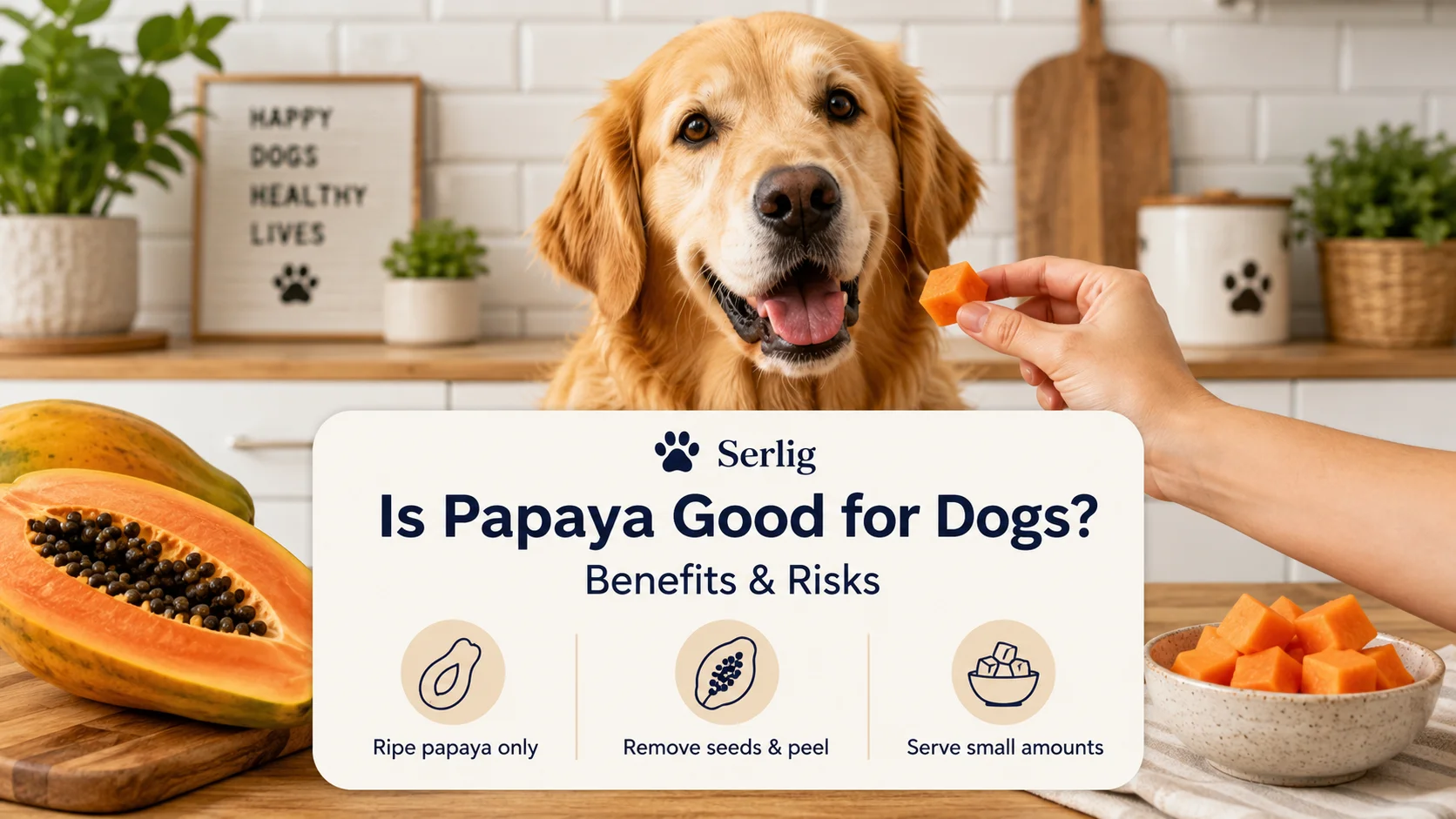
Yes, papaya is good for dogs in moderation. Ripe papaya flesh is safe, non-toxic, and packed with fiber, vitamins, and a natural digestive enzyme called papain. The one firm rule is that you must remove the seeds and skin first, and serve only small amounts of the ripe fruit.
Papaya is a soft, sweet tropical fruit that many owners enjoy, so it is natural to wonder whether your dog can share a bite. Is papaya good for dogs? For most healthy dogs, the answer is a clear yes, as long as it is prepared correctly. This fruit is not just safe; it brings some real digestive and immune benefits to the bowl. The important details are in the preparation and the portion size.
Papaya is one of several dog-friendly fruits worth knowing about. For the full picture, our main guide on what fruits dogs can eat lists the safe and unsafe options side by side, and this article covers papaya in depth.
Is Papaya Good for Dogs? What the Nutrition Says
Papaya is good for dogs because it is rich in nutrients that support digestion, immunity, and overall wellness, all while being low in fat. A few small cubes of ripe papaya make a healthy, natural treat for most dogs. The fruit contains no compounds that are toxic to dogs when the seeds and skin are removed.
What sets papaya apart from many other fruits is papain, a natural enzyme that helps break down proteins and can gently support digestion. Combined with a good dose of fiber and vitamins, this makes papaya one of the more functional fruit treats you can offer. As always, though, the benefits only hold when papaya is fed in small, controlled amounts.
Health Benefits of Papaya for Dogs
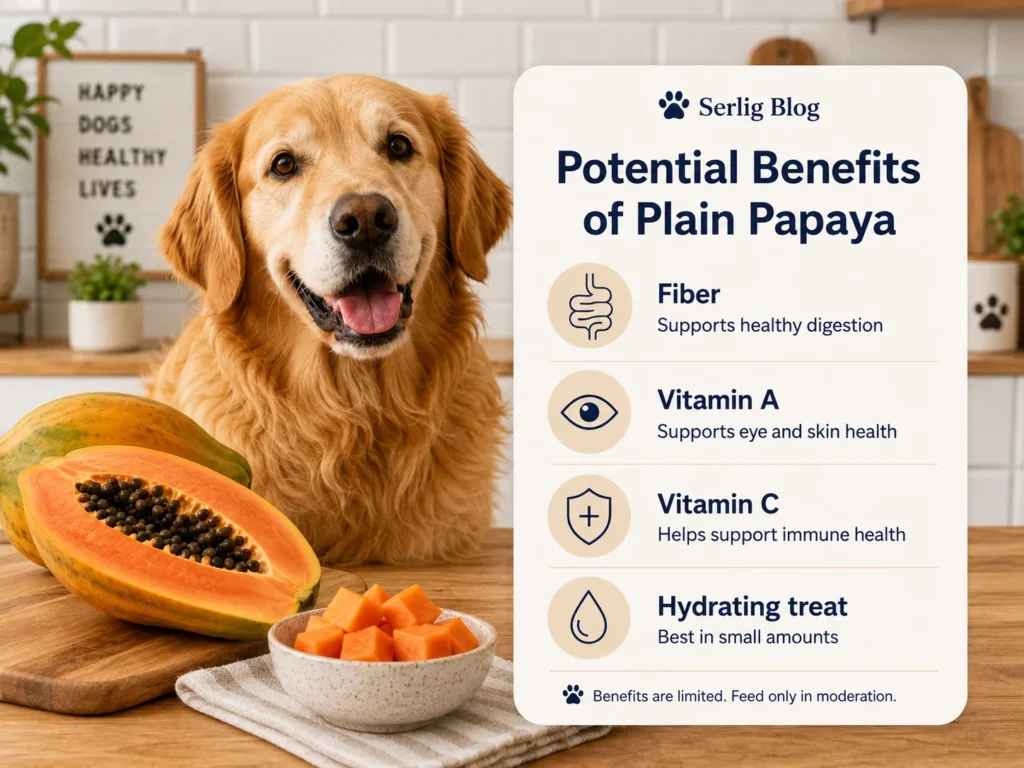
Ripe papaya delivers a surprising amount of nutrition for a sweet treat. Here is what your dog gains from a small serving:
- Papain enzyme supports the breakdown of proteins and can aid digestion.
- Dietary fiber promotes healthy bowel movements and gut health.
- Vitamin C supports the immune system and acts as an antioxidant.
- Vitamin A contributes to healthy vision, skin, and coat.
- Vitamin E helps protect cells and supports skin health.
- Potassium and folate support nerve function, muscles, and cell health.
The skin and coat benefits are worth highlighting. The vitamins A and E in papaya support a healthy coat from the inside, which pairs well with good grooming habits. If your dog struggles with a dull or flaky coat, our guide on dog dandruff and skin care covers the outside part of that equation. Even so, papaya is a supplement to a balanced diet, never a replacement for complete dog food.
Why You Must Remove Papaya Seeds and Skin
This is the most important safety step, so it deserves its own section. Always remove the seeds and skin before giving papaya to your dog.
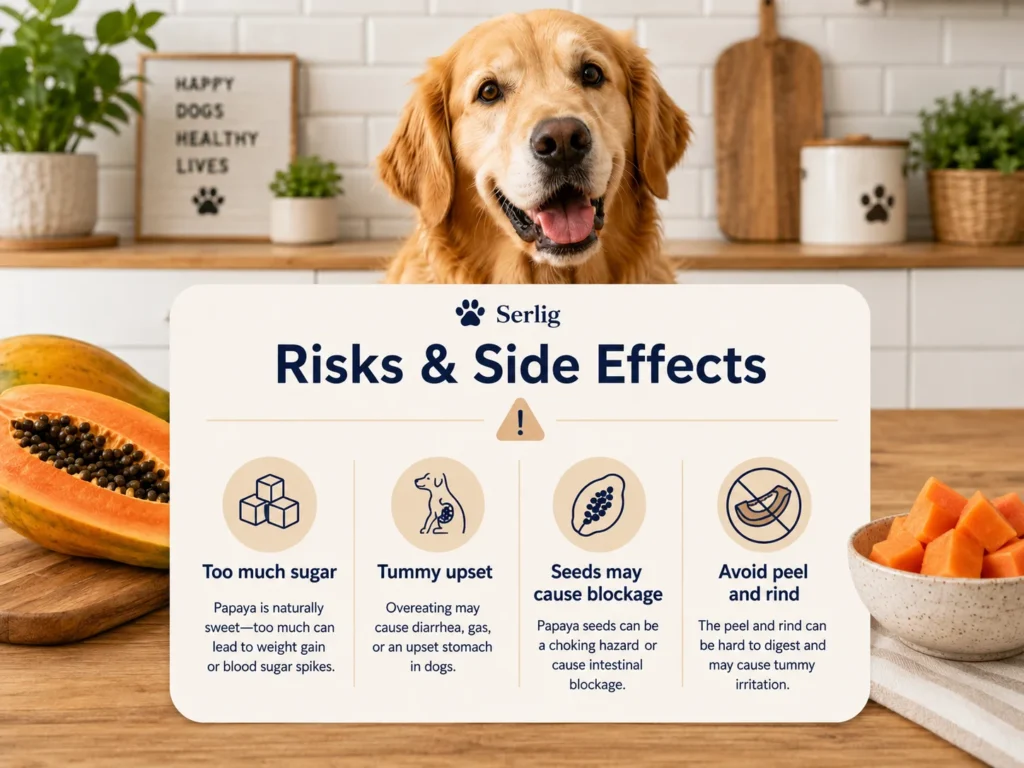
Papaya seeds carry two problems. First, they contain trace amounts of compounds that can release small quantities of cyanide, which is not something you want your dog eating regularly. Second, and more immediately, the seeds can pose a choking hazard and may cause an intestinal blockage, especially in small dogs.
The skin, or rind, is tough and difficult for dogs to digest. It can lead to stomach upset or, in the worst case, contribute to a blockage. To keep papaya safe, scoop out every seed and peel away the skin, then offer only the soft, ripe flesh.
When Papaya Is Bad for Dogs
Papaya is healthy in its fresh, ripe form, but a few versions and habits turn it into a risk.
Dried Papaya
Dried papaya is best avoided. Drying concentrates the natural sugar, and many packaged dried fruits also have added sugar. That combination can cause weight gain, dental issues, and stomach upset. This is the same reason we advise caution with dried figs in our post on whether dogs can eat figs. Stick to fresh papaya instead.
Too Much Papaya
Even fresh papaya can cause problems in large amounts. The natural sugar and fiber can lead to diarrhea, gas, and an upset stomach. If a treat ever leaves your dog with loose stools, our guide on what to feed a dog with diarrhea will help you settle their system.
Unripe or Green Papaya
Unripe papaya is firmer, more bitter, and harder to digest. It is safest to offer only fully ripe, soft papaya to your dog.
Papaya With Added Ingredients
Papaya served in syrup, in fruit salads, or with sweeteners is not suitable for dogs. Plain, fresh fruit is always the right choice.
Fresh vs Dried Papaya for Dogs
The form of papaya matters just as much as the amount. This table makes the difference clear.
| Type | Safe for dogs? | Why |
|---|---|---|
| Fresh ripe papaya (seeds and skin removed) | Yes, in small amounts | Nutrient-rich, high water content, easy to digest |
| Papaya seeds | No | Choking and blockage risk; trace harmful compounds |
| Papaya skin/rind | No | Tough and hard to digest |
| Dried papaya | Best avoided | Concentrated and often added sugar |
| Papaya in syrup | No | Excess sugar and additives |
The safest and healthiest option is always a few cubes of plain, ripe, deseeded papaya flesh.
How Much Papaya Can a Dog Eat?
Follow the 10% rule: treats like papaya should make up no more than 10% of your dog’s daily calories. Because papaya contains natural sugar, moderation matters.
A safe starting guide by size:
- Small dogs (under 20 lbs): one small cube, occasionally
- Medium dogs (20–50 lbs): one or two small cubes, occasionally
- Large dogs (over 50 lbs): two or three small cubes, occasionally
Offer papaya no more than a couple of times a week. For a first taste, give a single small cube and wait 24 hours to make sure your dog has no digestive or allergic reaction.
How to Safely Feed Papaya to Your Dog
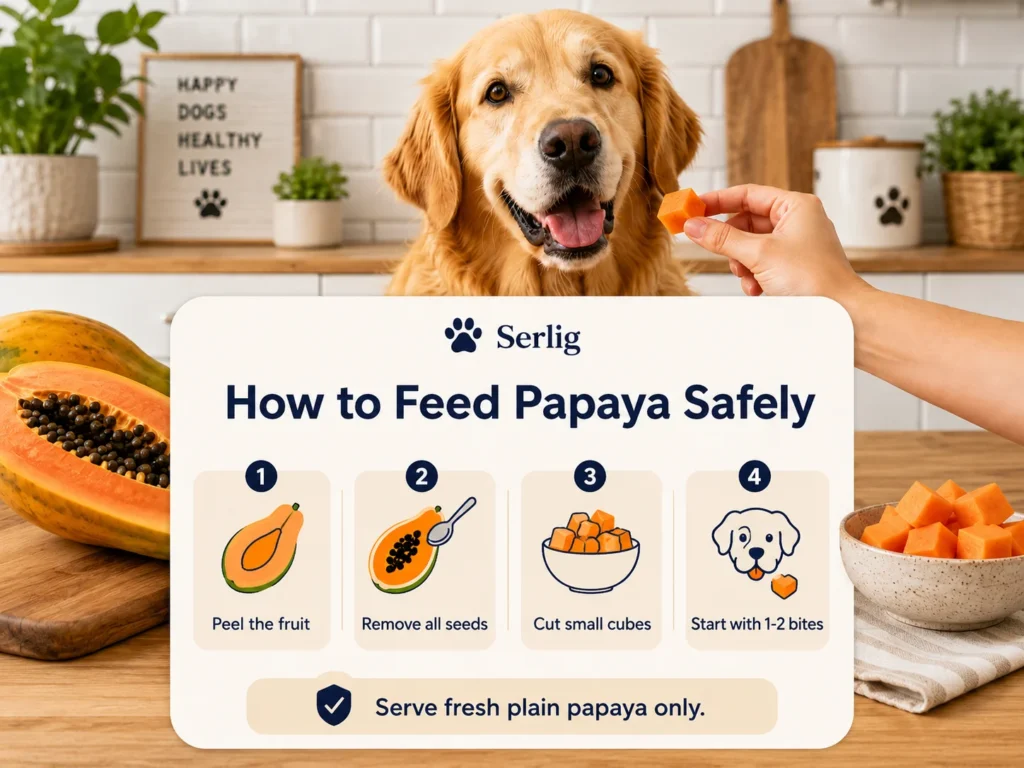
Preparing papaya properly takes just a minute and removes almost all the risk:
- Choose a ripe papaya. It should feel slightly soft and smell sweet.
- Wash the outside before cutting to avoid transferring dirt to the flesh.
- Cut it open and scoop out all the seeds. Leave none behind.
- Peel away the skin completely.
- Cut the flesh into small, bite-sized cubes to prevent choking.
- Start with a small amount and watch how your dog reacts.
Fun Ways to Serve Papaya
Papaya’s soft texture makes it easy to work into treats. Mash a small amount and mix it with plain unsweetened yogurt, then freeze it in a mold for a cooling summer snack. You can also blend a cube into a homemade smoothie topper for your dog’s kibble, or freeze small cubes on their own for a chewy, refreshing treat. Keep every portion small.
Which Dogs Should Avoid Papaya?
Papaya suits most dogs, but some should eat it with extra care or skip it:
- Dogs with diabetes or blood-sugar concerns, because of the natural sugar
- Dogs that are overweight or on a calorie-controlled diet
- Dogs with a sensitive stomach or frequent loose stools
- Young puppies, whose digestive systems are still maturing
- Dogs with a known food allergy
If your dog falls into any of these groups, ask your veterinarian before adding papaya to their diet.
Signs of a Problem: When to Call Your Vet
Stop feeding papaya and contact your veterinarian if your dog shows any of these signs:
- Vomiting or ongoing diarrhea (if your dog keeps throwing up, call your vet rather than waiting)
- Straining, discomfort, or signs of a blockage after eating seeds
- A bloated, tender belly
- Itchy skin, swelling, or other allergy signs
- Loss of appetite that lasts more than a day
Signs of a possible blockage, such as repeated vomiting and an inability to pass stool, are an emergency and need immediate veterinary care. When your dog’s health is uncertain, it is always safer to make the call.
What to Do If Your Dog Eats Papaya Seeds
If your dog swallows a few papaya seeds, try not to panic. A small number will often pass without trouble. The bigger concern is a larger amount, which can cause a blockage, particularly in small dogs.
Watch your dog closely for the next day or two for vomiting, straining, loss of appetite, or a swollen belly. Offer plenty of fresh water. If you notice any of these signs, or if your dog ate a large quantity of seeds, contact your veterinarian right away.
Yes, ripe papaya flesh is safe for dogs in small amounts. You must remove the seeds and skin first.
No. Papaya seeds pose a choking and blockage risk and contain trace harmful compounds, so always remove them.
It is best avoided. Dried papaya is high in concentrated and often added sugar, which can upset the stomach and add unwanted calories.
Just a few small cubes, no more than a couple of times a week, following the 10% treat rule.
It is best to wait and check with your vet, since puppies have sensitive, developing stomachs.
A Note on Pet Health
Serlig publishes researched pet care information for everyday owners. It is general guidance, not veterinary advice, and it does not replace an examination by a licensed veterinarian who knows your pet. If your pet is unwell, or anything in this guide does not match what you are seeing at home, contact your vet.