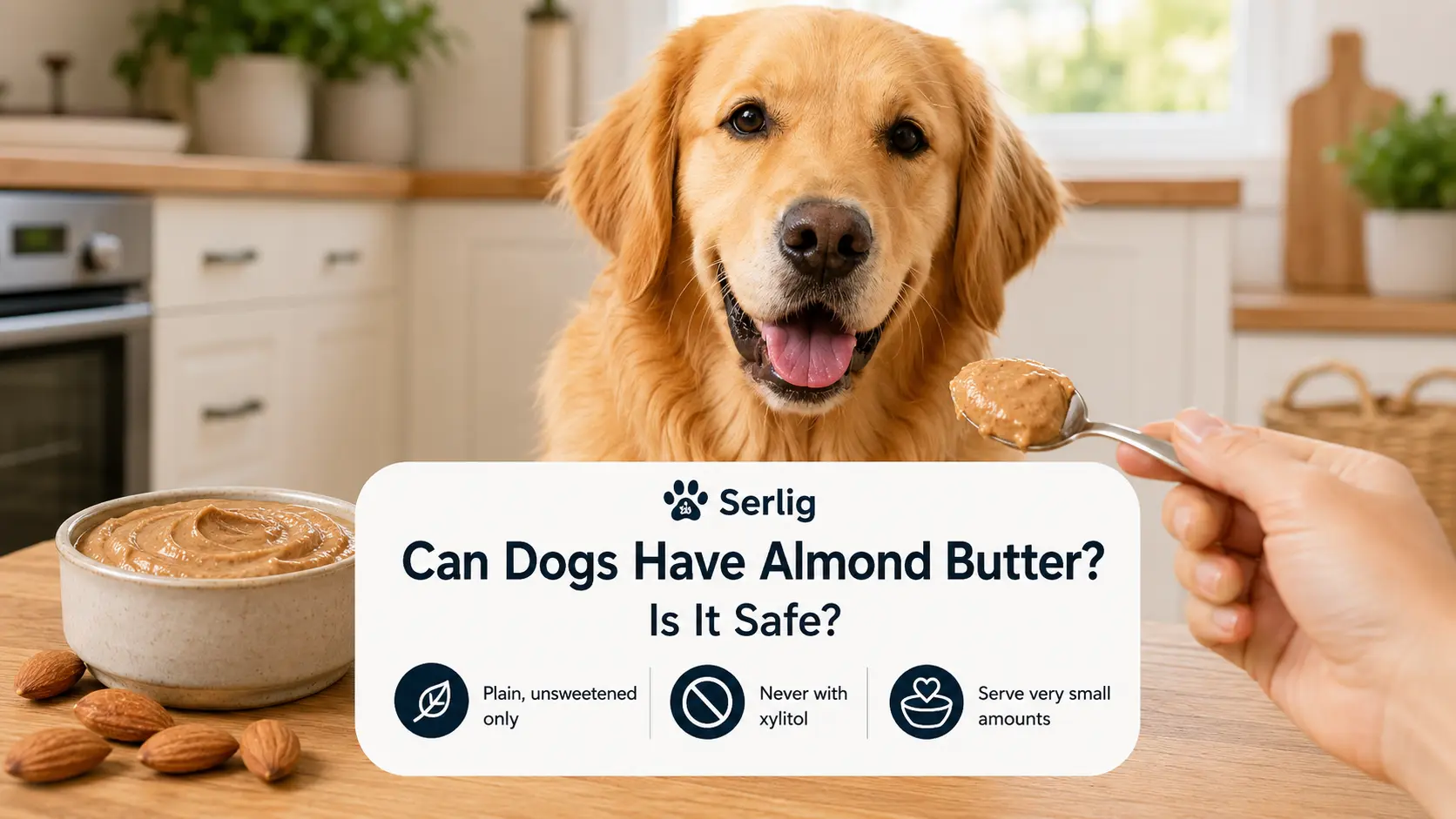
Yes, dogs can have almond butter in small amounts, as long as it is plain, unsalted, and completely free of xylitol. Almond butter is not toxic to dogs, but it is high in fat and can cause stomach upset or pancreatitis if given too often. The single most important rule is to check the label for xylitol, an artificial sweetener that is deadly to dogs.
Nut butters have become a go-to treat for hiding pills and filling puzzle toys, so it is no surprise that owners ask: can dogs have almond butter? The good news is that almond butter is usually a safe occasional treat. The catch is that “safe” depends almost entirely on the ingredients on the jar and how much you give. This guide walks you through exactly what to look for, how much is safe, and when almond butter becomes a problem.
If you are working through a list of human foods to test on your dog, it also helps to read our main guide on what fruits dogs can eat so you know which everyday snacks are safe and which are off-limits.
Can Dogs Have Almond Butter Safely?
Dogs can have almond butter safely when it is plain, xylitol-free, low in salt, and served in a small amount. A lick or two off a spoon is a reasonable treat for most healthy adult dogs. Almond butter contains no ingredients that are naturally poisonous to dogs the way grapes or onions are.
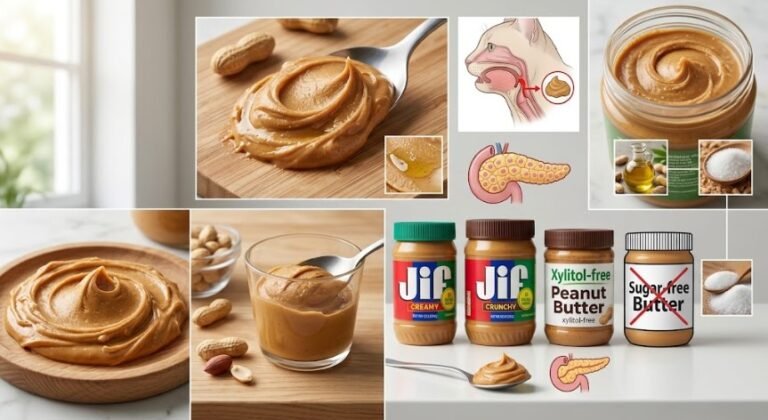
The real question is not whether almond butter is toxic, but whether the specific jar in your kitchen is dog-friendly. Many commercial nut butters contain added sugar, salt, oils, or sweeteners that turn a harmless treat into a health risk. Read the label every single time, because a brand can change its recipe without warning.
Is Almond Butter Good for Dogs? Nutritional Value
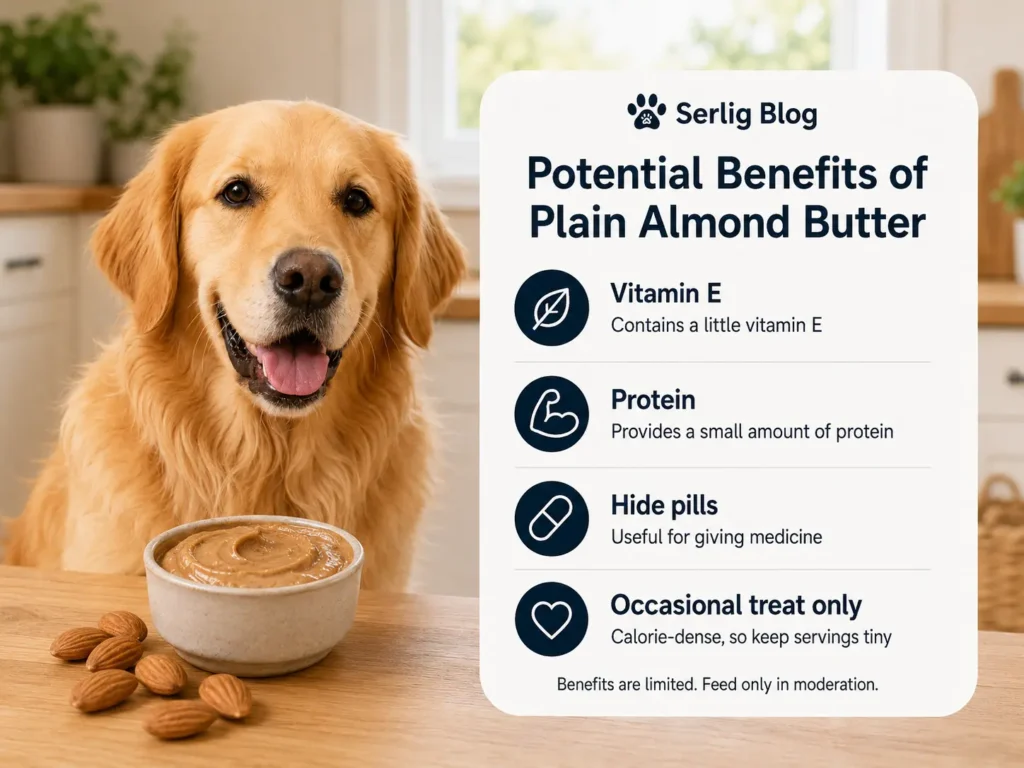
In moderation, plain almond butter does offer a few nutrients that can support your dog’s health:
- Healthy fats provide energy and support a shiny coat and healthy skin.
- Vitamin E acts as an antioxidant that helps protect cells.
- Magnesium supports muscle and nerve function.
- Plant-based protein adds a small protein boost to a treat.
- Fiber in trace amounts can aid digestion.
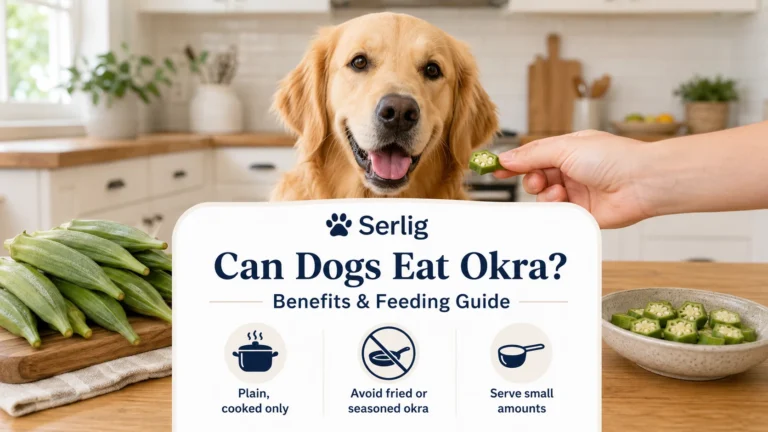
Even so, almond butter is best thought of as an occasional indulgence rather than a health food. Your dog gets all of these nutrients in better, more balanced forms from a complete dog food. For lighter, lower-fat treat options, gentler foods such as papaya or okra are worth adding to your rotation.
The Biggest Danger: Xylitol in Almond Butter
If you remember only one thing from this article, make it this: never give your dog any almond butter that contains xylitol.
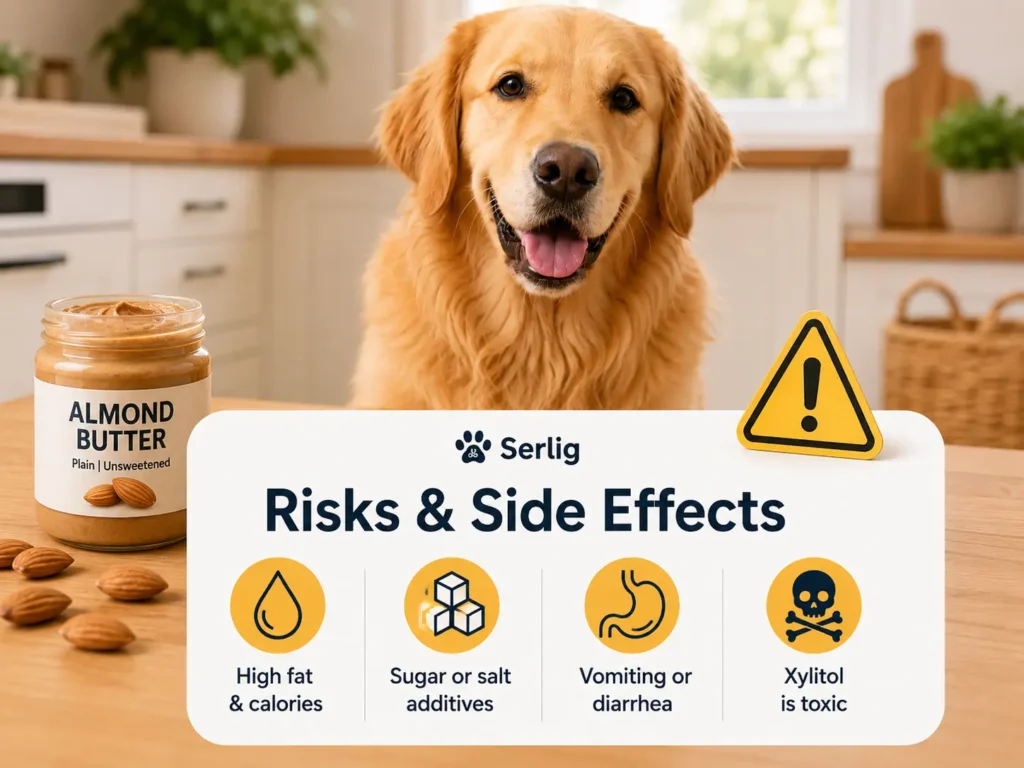
Xylitol is a sugar substitute used in many “sugar-free,” “no sugar added,” and diet nut butters. It is completely harmless to humans but extremely toxic to dogs. Even a tiny amount can trigger a rapid, dangerous drop in blood sugar and, in larger amounts, liver failure.
Signs of xylitol poisoning can appear within 15 to 30 minutes and include:
- Sudden weakness or collapse
- Vomiting
- Loss of coordination or staggering
- Tremors or seizures
- Lethargy
Xylitol poisoning is a medical emergency. If your dog eats any product containing xylitol, contact your veterinarian or an emergency animal poison line immediately. On the label, xylitol may also be listed as “birch sugar,” so read ingredients carefully before sharing anything sweetened.
Other Risks of Almond Butter for Dogs
Beyond xylitol, a few other issues can turn almond butter from a treat into a trouble spot.
High Fat and Pancreatitis Risk
Almond butter is very high in fat. A small amount is fine, but too much fat can cause an upset stomach and, in some dogs, a serious and painful condition called pancreatitis. Overweight dogs and breeds prone to pancreatitis should have almond butter rarely, if at all. If your dog reacts to a fatty treat with vomiting, our guide on what to feed a dog with diarrhea explains how to settle their stomach.
Too Much Salt
Salted almond butter contains far more sodium than a dog should have. Excess salt can lead to increased thirst, dehydration, and in extreme cases sodium poisoning. Always choose an unsalted variety.
Added Sugar and Oils
Many spreads include added sugar, palm oil, or hydrogenated oils to improve taste and texture. These add empty calories and can upset digestion. The best choice is a butter made from just one ingredient: almonds.
Nut Allergies
Although uncommon, some dogs are allergic to nuts. Watch for itchy skin, swelling, or digestive upset the first time you offer almond butter. If your dog frequently deals with itchy or flaky skin, our article on dog dandruff and skin care can help you tell a food reaction apart from a grooming issue.
Almond Butter vs Whole Almonds vs Peanut Butter
Not all “almond” treats are equal, and the form matters more than owners expect. This is where almond butter actually has an advantage.
| Treat | Dog-friendly? | Key point |
|---|---|---|
| Plain almond butter | Yes, in small amounts | Smooth texture lowers choking risk; check for xylitol |
| Whole almonds | Not recommended | Choking and blockage risk; hard to digest |
| Plain peanut butter | Yes, in small amounts | Popular choice; must also be xylitol-free |
| Flavored or sugar-free nut butter | No | Often contains xylitol, sugar, or heavy salt |
Whole almonds are the real hazard here. They are difficult for dogs to chew fully and can cause choking or an intestinal blockage, especially in small breeds. Almond butter avoids that problem because it is smooth, which is one reason it is a safer way to let your dog enjoy the almond flavor.
How Much Almond Butter Can a Dog Eat?
Stick to the 10% rule: treats should make up no more than 10% of your dog’s daily calories. Because almond butter is calorie-dense and fatty, keep portions small.
A safe starting guide by size:
- Small dogs (under 20 lbs): about a quarter teaspoon, occasionally
- Medium dogs (20–50 lbs): about half a teaspoon, occasionally
- Large dogs (over 50 lbs): about one teaspoon, occasionally
Offer almond butter no more than once or twice a week. For a first taste, give a tiny amount and wait 24 hours to make sure your dog has no digestive or allergic reaction.
How to Safely Give Almond Butter to Your Dog
A few simple habits make almond butter a low-risk treat:
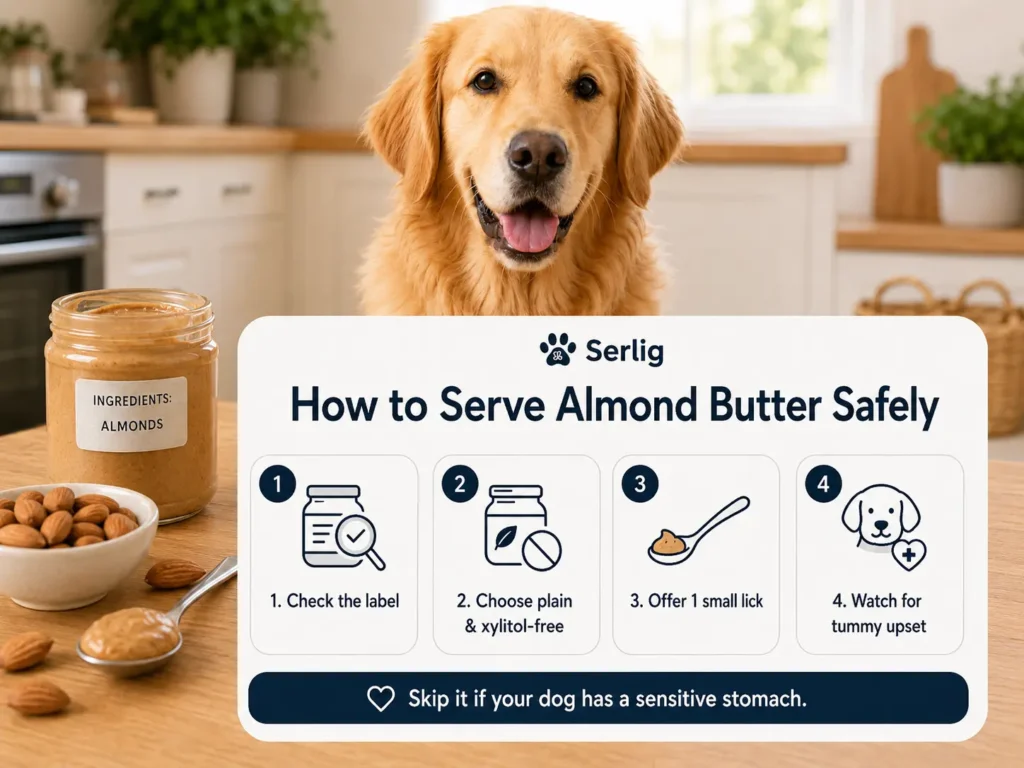
- Read the label first. Confirm there is no xylitol, birch sugar, or added sweeteners.
- Choose plain and unsalted. Ideally the only ingredient is almonds.
- Measure a small amount. Use the size guide above instead of eyeballing it.
- Watch the first serving. Look for any signs of stomach upset or allergy.
- Never leave the jar out. A dog that eats a whole jar can get very sick from the fat and salt.
Fun Ways to Serve It
Almond butter shines as a slow-feed treat rather than a spoonful of pure fat. Spread a thin layer inside a rubber puzzle toy or Kong and freeze it for a long-lasting boredom-buster. A small dab on a lick mat can calm an anxious dog during grooming or nail trims. It also works as a classic trick for hiding medication, though you should always confirm the amount with your vet first.
Which Dogs Should Avoid Almond Butter?
Almond butter is not the right treat for every dog. It is safest to skip it entirely if your dog:
- Is overweight or on a weight-management diet
- Has a history of pancreatitis or sensitivity to fatty foods
- Has a sensitive stomach or frequent digestive upset
- Is a young puppy with a developing digestive system
- Has a known nut allergy
When you are unsure, your veterinarian can tell you whether almond butter fits your individual dog’s diet and weight.
Signs of a Problem: When to Call Your Vet
Stop offering almond butter and contact your veterinarian if your dog shows any of these signs:
- Repeated vomiting or ongoing diarrhea (if your dog keeps throwing up, do not wait to call)
- A hunched posture, bloated belly, or clear stomach pain
- Weakness, collapse, or trouble standing
- Tremors or seizures
- Loss of appetite that lasts more than a day
Weakness, tremors, or seizures after eating a sweetened product can point to xylitol poisoning, which is a life-threatening emergency. When your dog’s health is on the line, it is always safer to make the call early.
What to Do If Your Dog Eats Too Much Almond Butter
If your dog gets into a jar of plain, xylitol-free almond butter, try not to panic. Most dogs will simply get an upset stomach from the fat, with symptoms like gas, loose stools, or mild vomiting that pass within a day.
Offer fresh water, skip other treats, and keep the next day’s meals plain and light. Watch closely for the warning signs above. If the almond butter contained xylitol, or if vomiting and pain are severe, treat it as an emergency and call your veterinarian right away.
Plain almond butter is not toxic to dogs. The danger comes from added xylitol, excess salt, or too much fat, not the almonds themselves.
Yes, as long as both are plain and free of xylitol. Keep the combined portion small because both are high in fat.
More than a teaspoon for a large dog, or a full jar for any dog, is too much and can cause stomach upset or pancreatitis.
It is best to wait. Puppies have delicate stomachs, so check with your vet before offering any nut butter.
Plain, unsalted, xylitol-free peanut butter or almond butter are both fine in small amounts. Always read the label first.
A Note on Pet Health
Serlig publishes researched pet care information for everyday owners. It is general guidance, not veterinary advice, and it does not replace an examination by a licensed veterinarian who knows your pet. If your pet is unwell, or anything in this guide does not match what you are seeing at home, contact your vet.