
Quick Answer
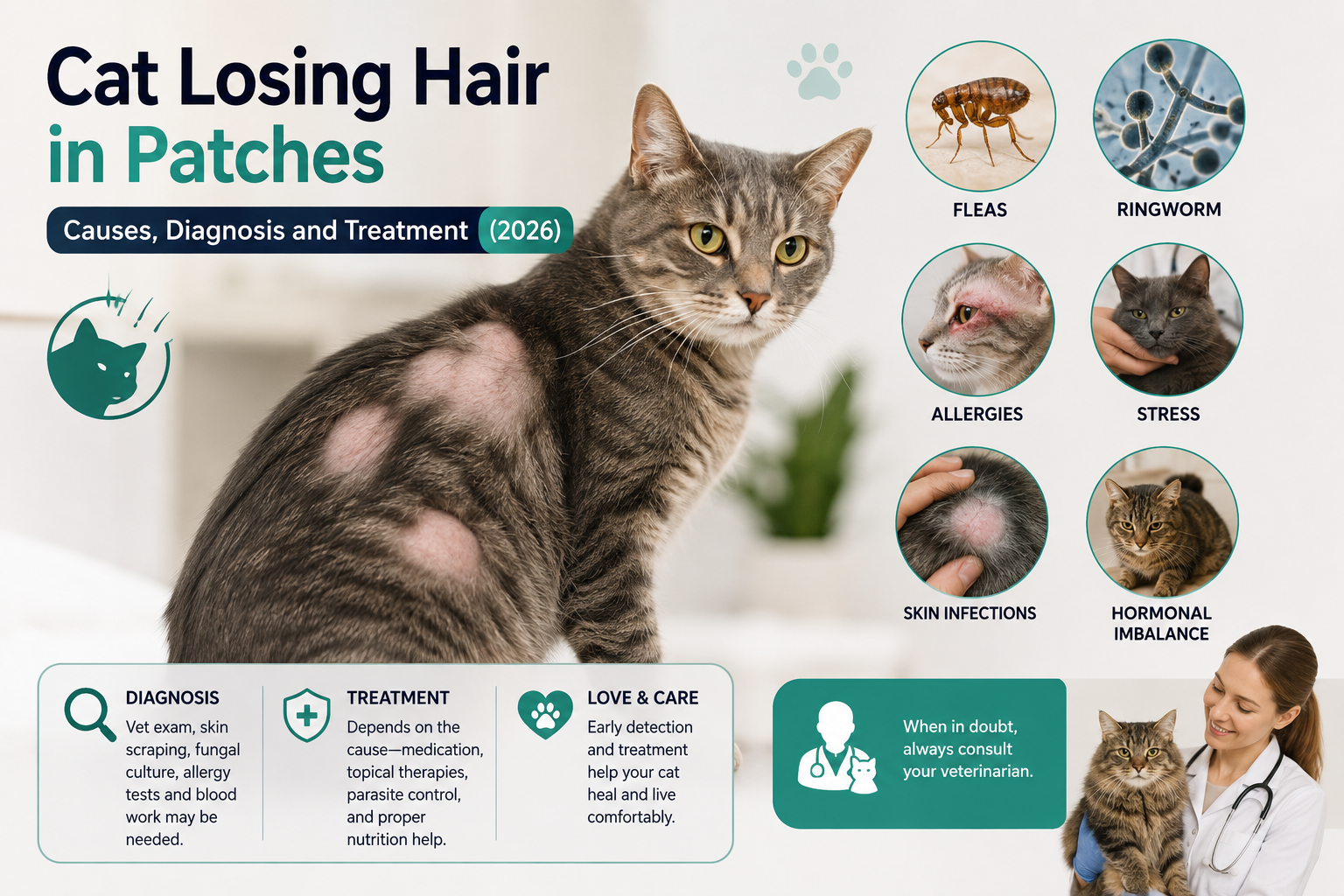
Patchy hair loss is a symptom, not a grooming phase and in most cats the fur is not falling out, it is being licked off. Overgrooming caused by itch or pain is the single most common explanation, with fleas the leading trigger. Ringworm, mites, allergies, and hormonal disease account for most of the rest. There is a simple test that separates the two main categories: run your fingers over the bald area and feel whether the skin is completely smooth or has short, stubbly broken hairs.
Key Takeaways
- Shedding is diffuse; alopecia is focal. If you can see skin, this is not shedding.
- Stubbly regrowth = overgrooming. Completely smooth skin = the hair is failing at the follicle.
- Fleas remain the number one cause, even in strictly indoor cats.
- Ringworm is contagious to humans particularly children and immunocompromised adults.
- “Stress alopecia” is over-diagnosed; most cats labelled psychogenic have an underlying itch or pain.
- Symmetrical loss on the belly and inner thighs is a classic overgrooming pattern.
Shedding or Alopecia? Start Here
Owners often arrive at this question after months of assuming their cat is “just shedding a lot.” The distinction is straightforward.
| Normal shedding | Patchy alopecia | |
| Pattern | Diffuse, all over the body | Focal patches, or symmetrical areas |
| Skin visible? | No coat stays full | Yes |
| Timing | Often seasonal (spring/autumn) | Any time, usually progressive |
| Hair everywhere? | Yes furniture, clothes | Often not, if the cat is swallowing it |
| Cat’s behaviour | Normal | Often licking, scratching, or chewing |
| What to read | Your shedding guide | This article |
If your cat’s coat is thick but you are finding fur everywhere, that is shedding. If you can see bare skin, keep reading.
The Test That Narrows It Immediately
This is the most useful thing you can do before an appointment, and vets do a version of it themselves.
Feel the bald area with your fingertips.
- Stubbly, prickly, like a shaved patch growing back the hair shafts have been broken off at skin level. Something is removing them: licking, chewing, or scratching. Cats are meticulous and often groom in private, so owners frequently never witness it.
- Completely smooth, like bare skin the hair has come out at the follicle. This points to hormonal disease, follicular disease, or in rare cases a paraneoplastic condition.
The first category is far more common. It also reframes the question usefully: instead of “why is my cat’s fur falling out,” ask “why is my cat licking that spot?”
Category 1: Overgrooming (Broken Hairs)
Fleas and flea allergy dermatitis
Still the number one cause, and routinely dismissed by owners of indoor cats. Fleas arrive on shoes, on other pets, and from visiting animals. In a flea-allergic cat, a single bite can trigger days of intense itch.
The signature pattern: hair loss over the lower back, base of the tail, and hind legs, often with small scabs a presentation called miliary dermatitis. You may never see a flea, because an efficiently grooming cat eats them.
What to do: treat every pet in the household with a veterinary-grade product, monthly, year-round, and treat the environment (95% of the flea population lives in carpets and bedding, not on the cat). Supermarket products are frequently less effective and some older formulations are unsafe for cats.
Allergies
Environmental allergy (feline atopy) typically causes itch around the head, neck, and ears, plus the belly. Food allergy produces year-round itch, often concentrated on the head and neck, sometimes with digestive signs. Diagnosing food allergy requires a strict 8–12 week elimination diet prescribed by a vet commercial “sensitivity tests” are not reliable.
Mites
- Demodex gatoi unusually, this one is contagious between cats and intensely itchy
- Notoedres cati (feline scabies) severe itch starting on the ears and face
- Cheyletiella (“walking dandruff”) scaly skin along the back
Pain — the cause most often missed
Cats groom over a painful area. Persistent licking of the lower belly can indicate bladder inflammation (FIC). Licking over one hip or the lower back frequently signals arthritis, which is far more common in cats than owners realise. If your cat is also less willing to jump or has become quieter, read our guide to signs your cat is in pain.
Stress and psychogenic alopecia
Real, but over-diagnosed. Chronic stress can drive compulsive grooming, usually on the belly, flanks, or inner thighs. Triggers include a house move, a new pet or baby, building work, or tension with another cat.
The important caveat: most cats initially labelled “stress groomers” turn out to have an underlying medical itch or pain source. Behavioural diagnosis should come after fleas, allergy, mites, and pain have been ruled out not instead of that work.
Category 2: True Hair Loss (Smooth Skin)
Ringworm (dermatophytosis)
Despite the name, a fungal infection rather than a worm. Classic presentation is circular, scaly, crusty patches, often on the head, ears, and paws, with the hair breaking easily at the edges.
It is contagious to people, particularly children and immunocompromised adults, and it survives in the environment for months. Kittens, long-haired cats, and cats from multi-cat environments are most affected.
Diagnosis: a Wood’s lamp gives a quick screen but misses many strains fungal culture or PCR is the reliable method. Treatment usually combines oral antifungals, medicated washes, and thorough environmental decontamination, over several weeks.
Hyperthyroidism
Common in cats over ten. Excess thyroid hormone produces a thin, unkempt, patchy coat, often with weight loss despite a strong appetite, restlessness, increased vocalisation, and increased thirst. Very treatable once diagnosed.
Other endocrine and systemic causes
- Diabetes fragile skin and poor coat quality
- Hyperadrenocorticism (Cushing’s) rare in cats but causes thin, fragile skin
- Telogen effluvium a wave of hair loss several weeks after a stressful event, illness, surgery, or pregnancy; usually self-resolving
- Injection-site alopecia a localised bald patch at a previous injection site
- Paraneoplastic alopecia rare and serious. Distinctive appearance: hair falls out easily leaving shiny, glistening skin, usually on the belly and legs, in an older cat. Associated with pancreatic or liver carcinoma and requires urgent investigation.
Reading the Pattern
Where the hair is missing narrows the list considerably.
| Location | Suggests |
| Lower back and base of tail | Fleas / flea allergy dermatitis |
| Belly and inner thighs, symmetrical | Overgrooming allergy, stress, or pain |
| Head, neck, and ears | Food allergy, mites, ringworm |
| Circular patches with scale | Ringworm |
| One hip, flank, or leg | Pain-driven grooming arthritis, injury |
| Lower belly, midline | Bladder pain (FIC) |
| Generalised thinning, older cat | Hyperthyroidism |
| Shiny bald skin, older cat | Urgent investigate for paraneoplastic disease |
What to Do Before the Appointment
- Photograph the area weekly in the same lighting. Progression over time is genuinely useful evidence.
- Do the stubble test and note the result.
- Comb over white paper with a flea comb flea dirt looks like black specks that turn rust-red on damp tissue.
- Note the timeline: when it started, whether it is spreading, and what changed around then (new pet, new litter, house move, diet change).
- Check yourself and family members for itchy red circular patches, which would raise suspicion of ringworm.
- Do not apply human creams cats groom them off and many ingredients are toxic. Never use anything containing tea tree oil.
- Consider omega-3 support as an adjunct once you have a diagnosis; a properly dosed fish oil supplement supports skin barrier function but treats nothing on its own.
Expect your vet to: examine the coat and skin, run a flea comb, take tape and hair samples (trichogram this shows directly whether hair tips are broken or tapered), possibly do skin scrapes for mites and a fungal culture, and run bloodwork if hormonal disease is suspected.
When It Is Urgent
Same-day or urgent appointment if:
- The skin is red, ulcerated, weeping, or infected
- Hair loss is spreading rapidly
- Your cat is also lethargic, losing weight, or off food see why is my cat not eating
- The skin looks shiny and glistening beneath the loss
- Anyone in the household has developed itchy circular skin lesions
- Your cat is grooming so intensely that it disrupts sleeping or eating
Frequently Asked Questions
Is my cat shedding or losing hair? If the coat stays full and fur appears on furniture, that is shedding. If you can see bare skin in patches, it is alopecia and needs investigating.
Why is my cat licking her fur off? Because something itches or hurts. Fleas are the most common trigger, followed by allergies, mites, and pain. Stress is a genuine cause but should be diagnosed last.
Can stress cause a cat to lose hair? Yes, but it is over-diagnosed. Most cats initially assumed to be stress-grooming turn out to have a medical trigger, so insist on ruling those out first.
Is ringworm dangerous to humans? It is contagious and causes itchy circular lesions, particularly in children and immunocompromised people. It is treatable but needs prompt attention and thorough cleaning.
My indoor cat has bald patches can it still be fleas? Absolutely. Fleas travel indoors on shoes, clothing, and other pets. Indoor status does not rule them out.
Will the hair grow back? Usually, once the underlying cause is treated. Regrowth typically takes several weeks to a few months. Chronic scarring or long-standing inflammation can occasionally prevent full recovery.
Why is my cat losing hair on her belly? Symmetrical belly loss is the classic overgrooming pattern — usually allergy, bladder discomfort, or stress. Check the stubble test.
Should I put a cone on my cat? It may protect damaged skin short-term, but it does not address the itch or pain driving the behaviour. Treat it as part of a plan, not the plan.
Final Thoughts
The most useful shift in thinking here is small but changes everything: bald patches usually mean your cat is removing hair, not losing it. Once you frame it that way, the question becomes “what is bothering that spot and that question has answers.
Start with the stubble test and the flea comb, because between them they cover a large share of cases. Photograph the area so you can show progression rather than describe it. And be sceptical of the “it’s just stress” conclusion until fleas, allergy, mites, and pain have genuinely been excluded that shortcut delays effective treatment more than anything else in feline dermatology.
Related Reading
- Signs Your Cat Is in Pain: How to Tell
- Why Is My Cat Sleeping So Much?
- Why Is My Cat Not Eating?
- Best Fish Oil for Cats
A Note on Pet Health
Serlig publishes researched pet care information for everyday owners. It is general guidance, not veterinary advice, and it does not replace an examination by a licensed veterinarian who knows your pet. If your pet is unwell, or anything in this guide does not match what you are seeing at home, contact your vet.
About the Author
The Serlig Pet Care Team creates researched, plain-language pet care guides for everyday owners. Our content is written from hands-on pet-care experience and cross-checked against established veterinary sources so you can make confident decisions for your cat.
2 Comments