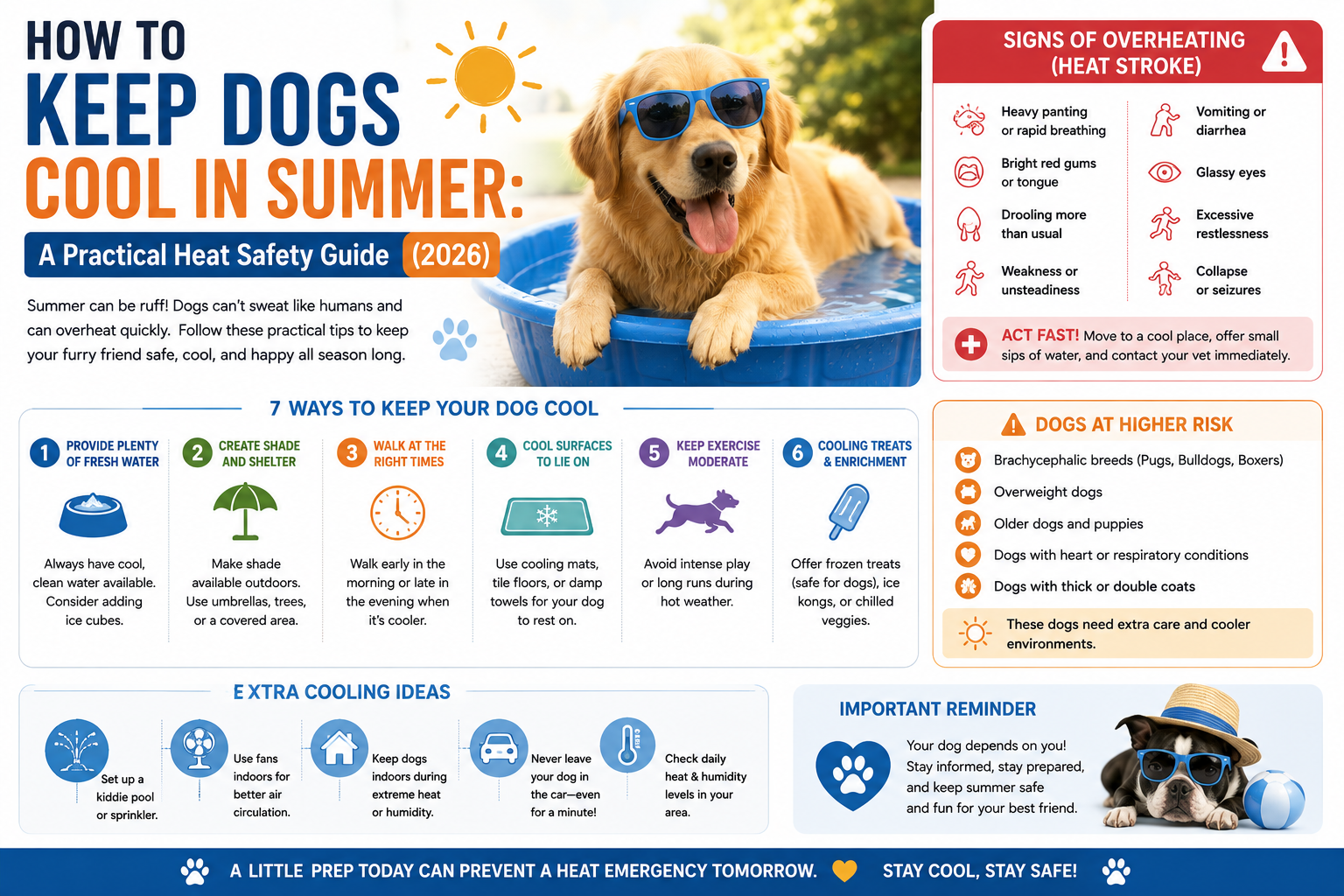
Quick Answer
Dogs cool themselves almost entirely by panting, which is far less efficient than sweating so they overheat quickly and can die from it. The essentials are simple: never leave a dog in a parked car, walk early morning and late evening rather than midday, always provide shade and fresh water, and use the 7-second pavement test before every walk. Flat-faced breeds, overweight dogs, thick-coated breeds, seniors, and puppies are at substantially higher risk and need stricter limits.
Key Takeaways
- Dogs sweat only through their paw pads panting does nearly all the cooling.
- Never leave a dog in a parked car, even briefly, even with windows cracked.
- 7-second test: if you cannot hold the back of your hand on the pavement for 7 seconds, it is too hot for paws.
- Never shave a double-coated breed the coat keeps heat out as well as in.
- Heatstroke can be fatal within an hour; recognising early signs matters enormously.
- Cool with cool water, not ice water and go to a vet even if your dog improves.
Why Dogs Overheat So Easily
Humans cool through millions of sweat glands across the skin. Dogs have sweat glands only in the paw pads and around the nose, contributing very little.
Their main cooling mechanism is panting rapid, shallow breaths that evaporate moisture from the tongue, mouth, and upper airway. It works, but it is far less efficient than sweating, and it becomes rapidly less effective in high humidity, because evaporation slows when the air is already saturated. A humid 28°C day can be more dangerous than a dry 32°C one.
A dog’s normal body temperature is 38.3–39.2°C (101–102.5°F). Heatstroke is generally defined above 40°C (104°F), and organ damage begins soon after.
Which Dogs Are at Highest Risk
| Higher risk | Why |
| Flat-faced breeds Bulldogs, French Bulldogs, Pugs, Boxers, Shih Tzus | Compressed airways make panting far less effective. The highest-risk group by a wide margin |
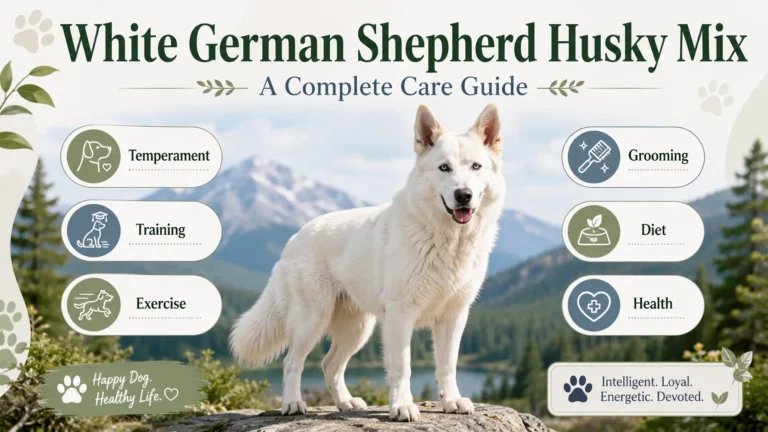
| Thick double-coated breeds Huskies, Malamutes, Chow Chows, Newfoundlands | Built for cold climates |
| Overweight dogs | Fat insulates and increases the work of breathing |
| Puppies and senior dogs | Less efficient temperature regulation |
| Dogs with heart or airway disease | Reduced reserve |
| Black or dark-coated dogs | Absorb more radiant heat |
| Very active or working dogs | Will not self-limit they keep going |
If you own a brachycephalic breed, heat safety is not a seasonal tip but core knowledge our guides on French Bulldogs and abnormal panting both cover the airway limitations in detail.
Walking in Hot Weather
Time it right. Before 8am and after 8pm in a heatwave. Midday walks are the single most common route to heatstroke.
The 7-second pavement test. Press the back of your hand flat on the ground for seven seconds. If you cannot hold it there, it is too hot for paws. Tarmac can reach 50°C+ when the air is only 25°C, and paw pad burns are painful and slow to heal. Artificial grass and sand get similarly hot.
Where to walk. Grass, shaded woodland, and earth paths over tarmac and concrete. Walk on the shaded side of the street.
Adjust the walk itself. Shorter and slower. Skip ball throwing and hard running dogs will chase until they collapse. Sniffing walks tire a dog mentally without generating heat.
Carry water and offer it regularly.
Never muzzle with a restrictive muzzle in heat a dog must be able to open its mouth fully to pant. Use a basket muzzle that allows this.
Keeping Cool at Home
- Shade and airflow. Fans, open windows on opposite sides, blinds closed on the sunny side.
- Fresh cool water everywhere, in several bowls, changed often. Adding a few ice cubes is fine the “ice water is dangerous” claim is a myth.
- Cooling mats, which work by pressure activation and need no electricity.
- A damp towel to lie on as effective and free. Do not drape it over a hot dog, which traps heat; let them lie on it by choice.
- A paddling pool in the shade, filled shallow. Supervise always.
- Frozen enrichment: a stuffable rubber toy filled with wet food and frozen, or frozen plain broth cubes. Avoid anything on the toxic foods list, and check spreads for xylitol.
- Tiled floors and cool rooms many dogs seek out bathroom tiles, which is sensible behaviour.
- Elevated cot beds in summer, since memory foam retains heat see our orthopedic bed guide.
- Cooling vests and bandanas, which work by evaporation. They need re-wetting and work best in dry conditions rather than high humidity.
On essential oils: do not use them to “freshen” a hot room where your dog rests. Several common oils are toxic to dogs see are essential oils safe for dogs.
Grooming for Summer
Do not shave a double-coated dog. The undercoat insulates in both directions, and removing it exposes skin to sunburn while often making the dog hotter. Regrowth is frequently permanently altered.
Do:
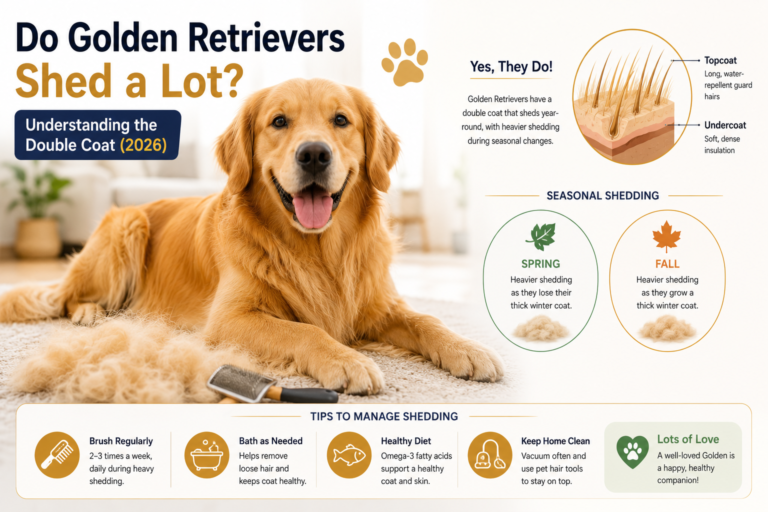
- Brush out the dead undercoat thoroughly a de-shedded coat breathes far better. Our Golden Retriever shedding guide covers the technique.
- Trim feathering, paw fur, and sanitary areas.
- Apply pet-safe sunscreen to pink noses, ear tips, and thinly coated bellies particularly in white and pale dogs. Never use human sunscreen containing zinc oxide, which is toxic if licked.
- Keep on top of parasite prevention; fleas and ticks peak in summer.
The Car: One Absolute Rule
Never leave a dog in a parked car, for any length of time, in any weather that is warm.
A car interior can rise dangerously within minutes, and cracking the windows makes very little difference. Dogs have died in cars on days that felt merely pleasant to people.
For necessary journeys: run air conditioning, use window shades, take water, avoid the boot of a hatchback where airflow is poorest, and never leave a dog even for “just five minutes.” If you see a dog in distress in a locked car, call the police or emergency services rather than intervening yourself.
Recognising and Treating Heatstroke
Early signs:
- Frantic, noisy panting
- Bright red gums and tongue
- Thick, ropey drool
- Restlessness, or lagging behind on a walk
Progressing:
- Wobbliness, disorientation
- Vomiting or diarrhoea, sometimes bloody
- Rapid heart rate, weakness
Severe — emergency:
- Collapse
- Seizures
- Pale, grey, or bluish gums
- Unresponsiveness
What to do immediately:
- Move to shade or air conditioning.
- Pour or spray cool not ice-cold water over the body, concentrating on the neck, armpits, groin, and paws. Ice-cold water constricts surface blood vessels and can slow cooling.
- Keep air moving with a fan or open windows.
- Offer small amounts of cool water if conscious and willing. Never force it.
- Go to a veterinary clinic immediately, cooling on the way if you can.
Go even if your dog appears to recover. Heatstroke causes internal organ damage, clotting problems, and kidney injury that develop over the following hours and are not visible at the roadside.
Frequently Asked Questions
How hot is too hot to walk a dog? Above roughly 20°C / 68°F, take care with high-risk dogs; above 24°C / 75°F, walk only early or late. Humidity makes any temperature more dangerous. Always use the 7-second pavement test.
Can I give my dog ice water? Yes. The claim that ice water causes bloat is a myth. What matters is not immersing an overheated dog in ice-cold water, which can slow cooling.
Should I shave my dog in summer? Not if they are double-coated. The coat provides insulation and sun protection, and regrowth is often permanently damaged. Brush out the undercoat instead.
How do I know if my dog is too hot? Frantic panting, bright red gums, thick drool, restlessness, and lagging behind. Wobbliness or vomiting means act immediately.
Do cooling vests work? Yes, through evaporation best in dry heat, less effective in high humidity, and they need re-wetting regularly.
Can dogs get sunburn? Yes, particularly on pink noses, ear tips, and thinly coated bellies. Use pet-safe sunscreen; never one containing zinc oxide.
Is it safe to leave a dog in the car with windows cracked? No. Cracked windows make very little difference, and dogs have died in cars on days that felt mild to people.
What temperature is dangerous for a French Bulldog? Flat-faced breeds are at risk at considerably lower temperatures than other dogs. Many owners restrict outdoor exercise above 20°C / 68°F and rely on indoor enrichment.
Final Thoughts
Heatstroke in dogs is almost entirely preventable, and almost every case follows a small number of avoidable decisions: a midday walk, a car park, a ball thrown once too often on a hot afternoon.
Build the habits now rather than mid-heatwave. Walk at the edges of the day. Do the 7-second test every time until it becomes automatic. Keep water in more places than seems necessary. And if you own a flat-faced breed, accept that summer means a different routine entirely indoor enrichment instead of long walks is not depriving your dog, it is keeping them alive.
Related Reading
- Why Is My Dog Panting So Much?
- Are Essential Oils Safe for Dogs?
- Do Golden Retrievers Shed a Lot?
- Best Orthopedic Dog Bed for Large Dogs
- Foods Toxic to Dogs: The Complete List
A Note on Pet Health
Serlig publishes researched pet care information for everyday owners. It is general guidance, not veterinary advice, and it does not replace an examination by a licensed veterinarian who knows your pet. If your pet is unwell, or anything in this guide does not match what you are seeing at home, contact your vet.
About the Author
The Serlig Pet Care Team creates researched, plain-language pet care guides for everyday owners. Our content is written from hands-on pet-care experience and cross-checked against established veterinary sources so you can make confident decisions for your dog.