Quick Answer
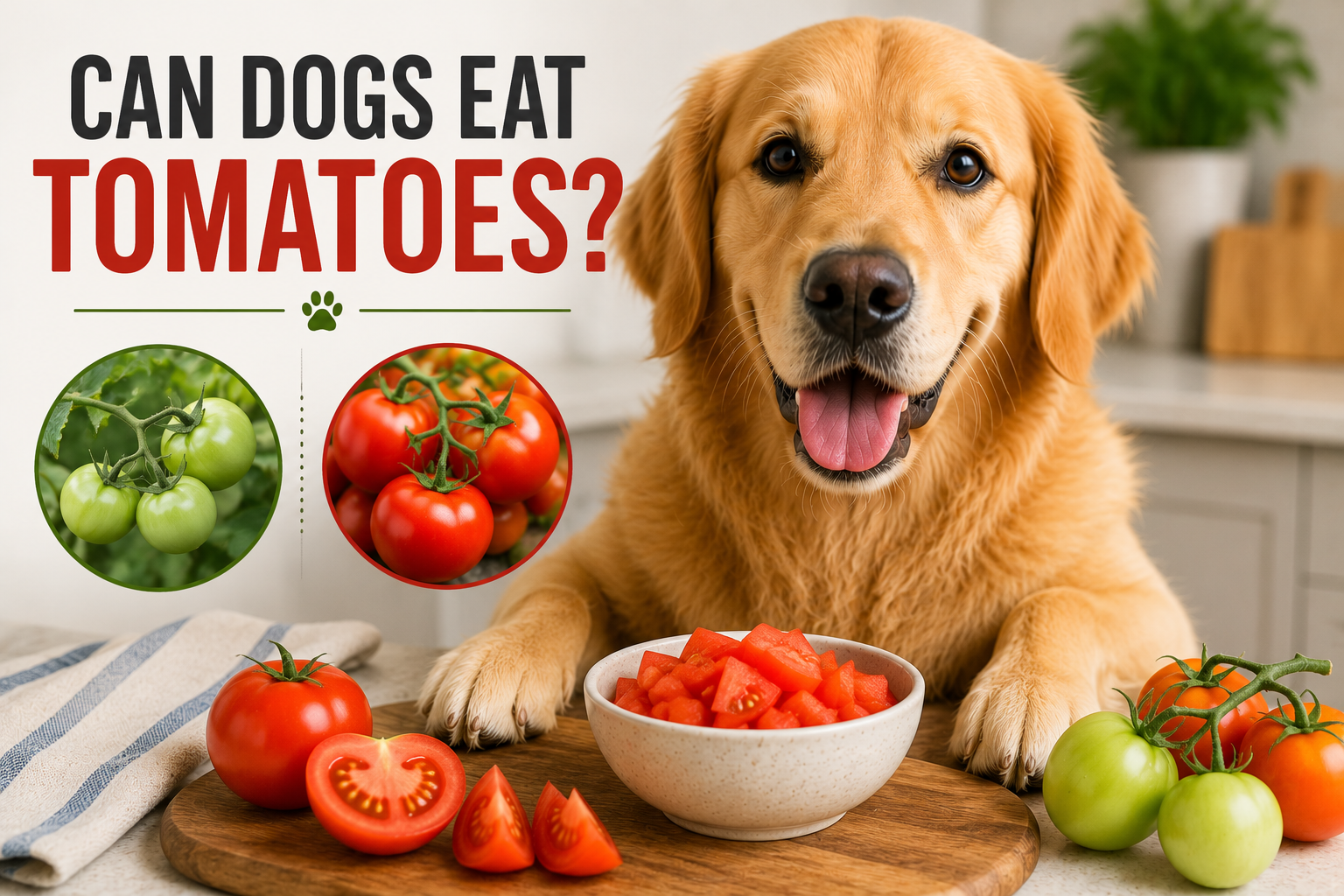
Yes, dogs can eat ripe, red tomatoes in small amounts the ripe flesh is non-toxic and provides useful antioxidants. But there is a crucial catch green (unripe) tomatoes and all the green parts of the plant stems, leaves, and vines are toxic to dogs. They contain compounds called solanine and tomatine. Only ever offer plain, ripe tomato with the stem and leaves removed, and always avoid tomato sauces and ketchup.
Key Takeaways
- Ripe, red tomatoes are safe for dogs in small amounts.
- Green (unripe) tomatoes and the plant’s stems, leaves, and vines are toxic they contain solanine and tomatine.
- Ripe tomatoes offer lycopene, vitamins A, C, and K, potassium, and fiber.
- Always remove stems and leaves, and choose fully ripe fruit.
- Cut cherry tomatoes in half whole ones are a choking hazard for small dogs.
- Never feed tomato sauce, ketchup, salsa, or soup they often contain garlic, onion, salt, or sugar.
- Keep a garden tomato plant fenced off from your dog.
Can Dogs Eat Tomatoes?
The honest answer is “yes and no” it depends entirely on which part of the tomato your dog eats. Ripe, red tomato flesh is considered non-toxic and is safe for dogs in moderation, according to the American Kennel Club (AKC) and PetMD. The green parts are a different story.
Tomatoes belong to the nightshade family, and the plant produces natural toxins
solanine and tomatine to protect itself. These are concentrated in the green parts: the stems, leaves, vines, and unripe green fruit. As a tomato ripens and turns red, those toxin levels drop to minimal amounts, which is why the ripe flesh is safe.
So a bit of ripe tomato is fine, but the plant itself is not. If you want a reliably safe, easy vegetable treat instead, carrots are a great option, and apple slices are a good fruit choice. As always, the core of your dog’s diet should be a complete and balanced dog food that meets AAFCO standards.
The Green Tomato Warning: Read This First
This is the most important part of the article.
Green (unripe) tomatoes and every green part of the tomato plant are toxic to dogs. They contain glycoalkaloids solanine and tomatine that can make a dog sick if eaten in enough quantity. Signs of tomato-plant poisoning include:
- Drooling
- Vomiting and diarrhea
- Loss of appetite
- Weakness or lethargy
- Tremors and, in severe cases, an abnormal heart rate or seizures
The biggest real-world risk is the garden. A dog with access to a tomato plant might chew the vines or eat unripe fruit, and a single green tomato can be enough to upset a medium-sized dog’s stomach. If you grow tomatoes, fence off the plants so your dog cannot reach them.
If your dog eats green tomatoes or any part of the plant or shows the symptoms above call your veterinarian or a pet poison helpline right away.
Is Ripe Tomato Good for Dogs? The Benefits
Fed correctly, a little ripe tomato offers some real nutrition:
| Nutrient | What it does for your dog |
|---|---|
| Lycopene | An antioxidant (the pigment that makes tomatoes red) linked to heart health. |
| Vitamin A | Supports vision, immune function, and skin and coat. |
| Vitamin C | An antioxidant that supports the immune system. |
| Vitamin K | Supports blood clotting and bone health. |
| Potassium | Supports heart and muscle function. |
| Fiber | Supports healthy digestion. |
Tomatoes are also low in calories, so a small amount of ripe fruit can be a light, nutrient-rich treat. For other low-calorie options, see our guide on The 10% Rule: Best Low-Calorie Treats for Overweight Pets.
Tomato Risks Beyond the Green Parts
Even with ripe tomatoes, keep a few things in mind.
Acidity and sensitive stomachs
Ripe tomatoes are acidic, and some dogs get mild vomiting or diarrhea from them even when the fruit is fully ripe. Introduce tomato slowly and in small amounts, and watch how your dog reacts.
Choking, especially with cherry tomatoes
Whole cherry tomatoes can be a choking hazard for small dogs. Always cut them in half or into quarters before serving. Cherry tomatoes can also be a little more acidic, so sensitive dogs may do better with a small piece of regular sliced tomato.
Sauces, ketchup, and processed tomato products
This is a common trap. Never feed your dog tomato sauce, ketchup, salsa, or tomato soup. These are often high in salt and sugar and frequently contain garlic and onion, which are toxic to dogs. Some ketchups even contain xylitol. Canned tomatoes may also carry added sodium and preservatives. Stick to fresh, plain, ripe tomato only.
Allergies
Tomato allergies are uncommon but possible. Watch for itching, swelling, or difficulty breathing, and contact your vet if you notice any concerning signs.
How Much Tomato Can a Dog Eat? (Serving Size by Weight)
Ripe tomato falls under the 10% rule it and all other treats together should stay under a tenth of your dog’s daily calories. Because of the acidity, keep tomato portions small.
The amounts below are a cautious starting point; confirm with your vet:
| Dog size | Body weight | Suggested serving | Frequency |
|---|---|---|---|
| Small | 5–20 lb | 1–2 cherry tomatoes (halved) or ~1 tbsp diced | 1–2× per week |
| Medium | 20–40 lb | About ½ a small ripe tomato | 1–2× per week |
| Large | 40+ lb | About 1 small ripe tomato | 1–2× per week |
For larger servings, it can help to split them across the day rather than all at once. Introduce tomato gradually and watch for any upset.
How to Safely Feed Tomatoes to Your Dog
Follow these steps every time:
- Choose fully ripe, red tomatoes : These have the lowest toxin levels and are easiest to digest.
- Remove all stems and leaves : These green parts hold the most toxin.
- Wash thoroughly : Rinse to remove dirt and pesticides.
- Cut into small pieces : Halve or quarter cherry tomatoes to prevent choking.
- Serve plain : No salt, seasoning, sauce, oil, garlic, or onion.
- Start small : Offer a little the first time and watch for any reaction over the next day.
Can Puppies Eat Tomatoes?
Puppies can have a tiny amount of ripe, plain tomato, but it is not necessary, and their sensitive stomachs may react to the acidity. If you do offer it, use a very small piece of ripe fruit with no green parts, introduce it slowly, and make sure a complete puppy food provides the bulk of your puppy’s nutrition. When in doubt, ask your veterinarian.
When to Call Your Vet
Reach out to your veterinarian promptly if your dog:
- Eats green tomatoes or any green part of the plant (stems, leaves, vines).
- Shows drooling, vomiting, diarrhea, weakness, or tremors after eating tomato.
- Eats tomato sauce, ketchup, or another product containing garlic, onion, or xylitol.
- Has ongoing stomach upset after eating ripe tomato.
Frequently Asked Questions
Can dogs eat green tomatoes?
No. Green, unripe tomatoes contain higher levels of solanine and tomatine and are toxic to dogs. Only ripe, red tomatoes are safe.
Are tomato plants toxic to dogs?
Yes. The stems, leaves, and vines contain toxic compounds. Keep garden tomato plants fenced off, and call your vet if your dog eats any green parts.
Can dogs eat cherry tomatoes?
Yes, if they are ripe and cut in half or quarters. Whole cherry tomatoes are a choking hazard for small dogs.
Can dogs eat tomato sauce or ketchup?
No. These often contain garlic, onion, salt, sugar, or xylitol, which are unhealthy or toxic for dogs. Only feed plain, fresh, ripe tomato.
How much tomato can a dog eat?
Keep it small a couple of halved cherry tomatoes or a slice of ripe tomato and within 10% of daily calories, a couple of times a week.
Can puppies eat tomatoes?
Only a tiny amount of ripe, plain tomato, and it is not necessary. Their sensitive stomachs may react to the acidity, so introduce it cautiously.
Final Thoughts
Ripe, red tomatoes can be a healthy, antioxidant-rich treat for dogs in small amounts but tomatoes are one food where the details really matter. The ripe fruit is fine; the green tomatoes, stems, leaves, and vines are not, and neither are sauces and ketchup.
Choose fully ripe tomatoes, remove every green part, cut them small, and serve them plain. Keep any garden plants fenced off, introduce tomato slowly, and check with your veterinarian if your dog has a sensitive stomach. Handled this way, a little ripe tomato can be a safe and nutritious occasional treat.
A Note on Pet Health
Serlig publishes researched pet care information for everyday owners. It is general guidance, not veterinary advice, and it does not replace an examination by a licensed veterinarian who knows your pet. If your pet is unwell, or anything in this guide does not match what you are seeing at home, contact your vet.