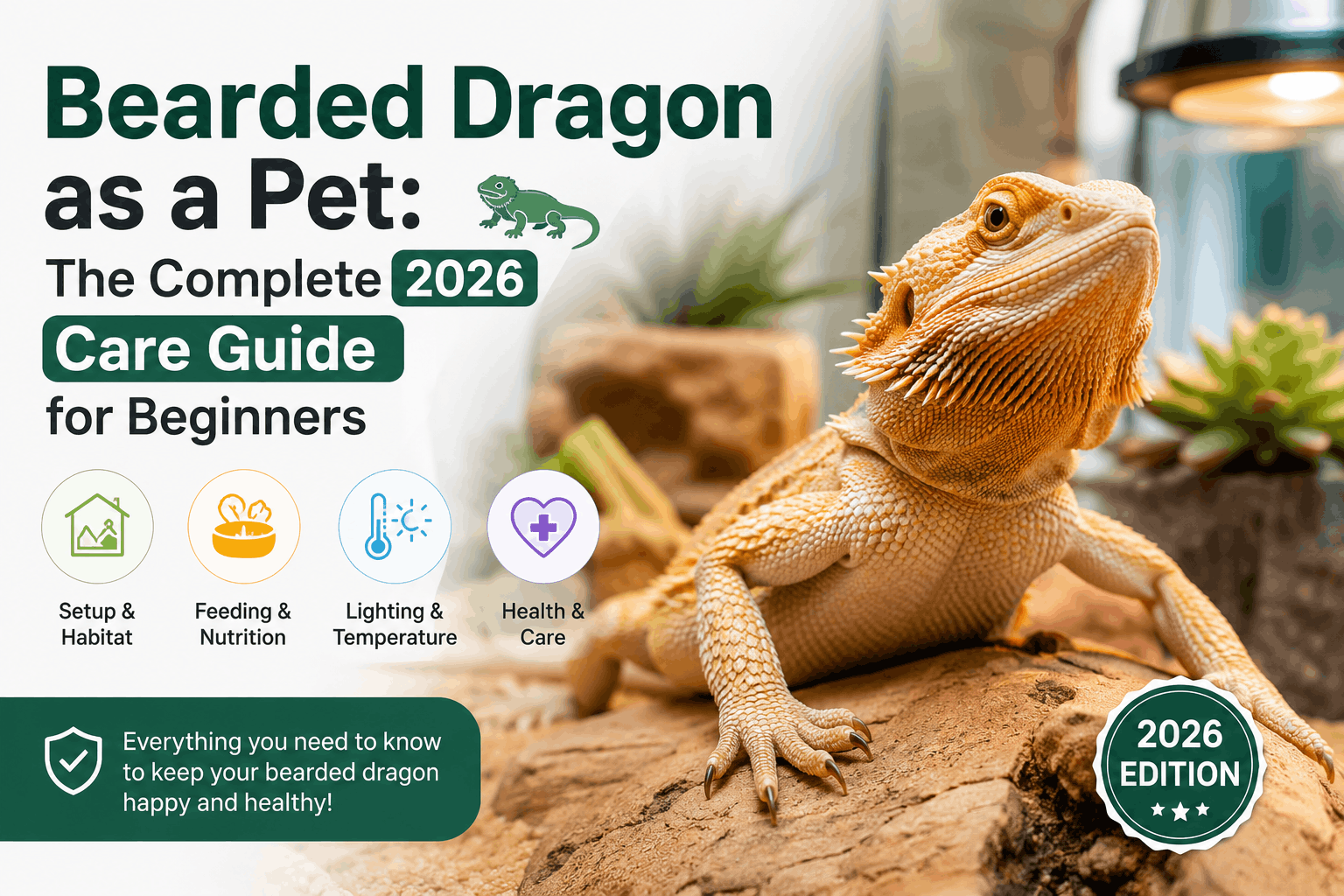
Thinking about keeping a bearded dragon as a pet? You are looking at one of the calmest, most beginner-friendly reptiles in the world. A bearded dragon (scientific name Pogona vitticeps) is a docile, day-active lizard from Australia that tolerates handling, recognizes its owner, and lives 10 to 15 years with proper care. This guide draws on years of hands-on beardie keeping and current veterinary and public-health guidance to walk you through habitat, lighting, diet, behavior, health, and real costs, so you can decide with confidence and set your dragon up to thrive.
Quick answer: A bearded dragon is a good pet for beginners because it is gentle, easy to handle, and hardy. Its core needs are simple but non-negotiable: a large enclosure, UVB lighting, a warm basking zone, a balanced insect-and-vegetable diet, and consistent hand-washing to prevent salmonella.
Bearded Dragon at a Glance
| Feature | Detail |
| Common name | Bearded dragon (“beardie”) |
| Scientific name | Pogona vitticeps (Central/Inland species) |
| Origin | Arid and semi-arid regions of Australia |
| Adult size | 18–24 inches (45–60 cm), including tail |
| Lifespan | 10–15 years (up to 20 with excellent care) |
| Temperament | Calm, docile, tolerant of handling |
| Diet | Omnivore (insects + vegetables) |
| Activity | Diurnal (active during the day) |
| Care level | Beginner-friendly |
Why a Bearded Dragon as a Pet Is a Great Choice
Keeping a bearded dragon as a pet appeals to both first-time and experienced reptile owners for several clear reasons.
They are calm and easy to handle. Bearded dragons are naturally passive rather than aggressive. In our experience, a well-socialized beardie will happily sit on a shoulder or lap within a few weeks of gentle daily handling, a trait that makes it one of the few reptiles suited to families.
They have real personality. A bearded dragon has full-color vision and a keen sense of smell, and it can learn to recognize its keeper. Many owners notice their dragon responding to routine, waving, or moving to the glass at feeding time.
They are hardy and low-drama. Once the enclosure is set up correctly, a healthy beardie is sturdy and forgiving. Daily care is genuinely simple: feed, hydrate, spot-clean, and provide the right light and heat.
They are a manageable size. An adult bearded dragon stays around 24 inches, so it needs space but never becomes unmanageable like larger monitor lizards.
The one honest catch: bearded dragons are a long-term commitment. A 10-to-15-year lifespan means you are planning for the next decade, not the next season.
Bearded Dragon Habitat and Tank Setup
The enclosure is the single most important part of caring for a bearded dragon as a pet. Get the habitat right and the rest of care becomes easy.
Tank size. An adult bearded dragon needs a 40-gallon tank as an absolute minimum, but 75–120 gallons is far better. More floor space lets your dragon exercise and thermoregulate properly. Juveniles can start in a 20-gallon tank but will quickly outgrow it.
Substrate (flooring). Safe options include reptile carpet, non-adhesive shelf liner, or tile. Avoid loose sand for young dragons, as it raises the risk of impaction, a dangerous gut blockage.
Décor and enrichment. Add a basking branch, a hide on the cool side, and a shallow water dish. A climbing surface near the heat lamp gives your dragon a natural spot to warm up.
Housing rule: House bearded dragons alone. They are territorial and solitary in the wild, and cohabiting adults often fight or compete for basking space.
Lighting, Heating, and Temperature Requirements
Bearded dragons are ectothermic (cold-blooded), so they rely entirely on external heat and light to stay healthy. This is where most beginner mistakes happen.
UVB lighting is non-negotiable. UVB light lets a bearded dragon produce vitamin D3 and absorb calcium. Without it, your dragon can develop metabolic bone disease. Use a strong, linear (tube-style) UVB bulb spanning most of the tank, and replace it every 6–12 months even if it still glows visibly.
Create a temperature gradient. Your enclosure needs a warm side and a cool side so your dragon can regulate its own temperature:
- Basking spot: 95–110°F (35-43°C) for adults; slightly warmer for babies
- Cool side: 75-85°F (24-29°C)
- Nighttime: can safely drop to around 65–75°F (18–24°C)
Measure, do not guess. Place a digital thermometer at both the basking zone and the cool end. Guessing the temperature is the most common cause of an unhealthy beardie.
Light cycle. Provide 10-12 hours of light per day to mimic natural daylight, and turn lights off at night.
What Do Bearded Dragons Eat?
Bearded dragons are omnivores, meaning they eat both insects and plants. The right balance changes as they grow.
Juveniles (under ~12 months): roughly 70% insects, 30% vegetables. Growing dragons need extra protein for rapid development.
Adults: roughly 70-80% vegetables, 20-30% insects. Adults need more greens and fewer bugs to avoid obesity.
Good insect (protein) options: crickets, dubia roaches, black soldier fly larvae, and the occasional mealworm as a treat.
Good vegetables and greens: collard greens, mustard greens, dandelion greens, squash, and bell pepper.
Supplements: dust insects with calcium powder several times a week and use a reptile multivitamin as directed. This works alongside UVB to build strong bones.
Foods to avoid: iceberg lettuce (little nutrition), avocado, rhubarb, and any wild-caught insects that may carry pesticides.
Always provide fresh water, and never overfeed, obesity is a common, preventable problem in pet beardies.
Bearded Dragon Behavior and Body Language
Understanding body language is part of enjoying a bearded dragon as a pet. These lizards communicate in clear, readable ways.
- Beard turning black: signals stress, temperature discomfort, illness, or a display of dominance.
- Head bobbing: usually a dominance or territorial display, most common in males.
- Arm waving: a slow, circular wave that often signals submission or awareness of another animal.
- Glass surfing (pacing the walls): a sign of stress, boredom, or an enclosure that is too small.
- Brumation: a hibernation-like slowdown where the dragon eats less and sleeps more, often in cooler months. Healthy brumation is normal, but confirm with a vet that the lethargy is not illness.
Learning these signals helps you spot problems early and build trust with your dragon.
Health, Safety, and the Salmonella Risk
Most health issues in a bearded dragon as a pet come from incorrect husbandry, which means they are largely preventable.
- Metabolic bone disease (MBD): caused by too little calcium or UVB; leads to weak, deformed bones. Prevent it with proper UVB and calcium supplementation.
- Impaction: a digestive blockage often caused by loose substrate or oversized prey. Feed appropriately sized insects and use safe flooring.
- Respiratory infection: signs include open-mouth breathing, mucus, and lethargy, usually linked to incorrect temperature or humidity.
- Parasites: more common in dragons from poor sources; a vet fecal test catches them early.
The salmonella risk is real and worth taking seriously. According to the U.S. Centers for Disease Control and Prevention (CDC), bearded dragons can carry Salmonella germs in their droppings even when they look perfectly healthy and clean. In a 2024 CDC investigation, about 60% of people sickened were children under 5 years old, and the CDC advises that children under 5, adults over 65, and people with weakened immune systems avoid contact with bearded dragons.
To stay safe, the CDC recommends simple habits: wash your hands thoroughly with soap and water after touching your dragon, its food, or anything in its enclosure; do not kiss or snuggle your dragon; and keep it out of kitchens and other food areas. These steps make a bearded dragon a safe pet for most households.
Vet tip: Schedule a check-up with an exotic-pet veterinarian when you first bring your dragon home, then book an annual exam with fecal and blood work to catch problems early.
How Much Does a Bearded Dragon Cost?
Budgeting realistically is part of responsible ownership.
- Initial setup (tank, lighting, heating, décor): roughly $200-$500.
- The dragon itself: typically $40-$100 for standard morphs; more for rare color morphs.
- Ongoing monthly costs: food, supplements, and electricity for lighting, usually modest but continuous.
- Vet care: budget for annual check-ups and occasional treatment.
The lighting and enclosure are the biggest upfront expenses, but they are one-time investments that directly protect your dragon’s long-term health.
Bearded Dragon Care Checklist
Daily
- Provide fresh water and feed the age-appropriate diet
- Check basking and cool-side temperatures
- Spot-clean waste and leftover food
Weekly
- Deep-clean food and water dishes
- Offer a variety of fresh greens
- Observe behavior, appetite, and beard color
Monthly / Periodic
- Fully clean and disinfect the enclosure
- Check UVB bulb age (replace every 6-12 months)
- Weigh your dragon to track healthy growth
Pros and Cons of Keeping a Bearded Dragon as a Pet
Pros
- Docile and easy to handle
- Beginner-friendly and hardy
- Interactive personality
- Manageable size
- Long lifespan (a lasting companion)
Cons
- Requires a proper (and initially pricey) setup
- Needs UVB and precise temperatures
- Can carry salmonella (needs hygiene precautions)
- 10–15 year commitment
- Must be housed alone
Frequently Asked Questions
Is a bearded dragon a good pet for beginners? Yes. Bearded dragons are calm, tolerant of handling, and hardy, which makes them one of the best starter reptiles. The main requirement is getting the enclosure, lighting, and heating correct from day one.
Do bearded dragons like to be held? Most bearded dragons tolerate and often seem to enjoy gentle handling once they trust their owner. Start with short sessions and support the whole body to keep your dragon comfortable.
How long do bearded dragons live? A pet bearded dragon typically lives 10 to 15 years, and some reach 20 years with excellent diet, lighting, and veterinary care.
Are bearded dragons safe for children? They can be, with supervision. However, the CDC recommends that children under 5 avoid direct contact because they are more likely to get seriously ill from salmonella, and everyone should wash their hands after handling the dragon.
Do bearded dragons smell? A bearded dragon itself has almost no odor. Smells usually come from an uncleaned enclosure, so regular spot-cleaning and monthly deep-cleaning keep things fresh.
Can two bearded dragons live together? No. Bearded dragons are territorial and should be housed alone. Cohabiting dragons often fight, stress each other, or compete for the basking spot.
How big does a bearded dragon get? An adult bearded dragon grows to about 18–24 inches (45–60 cm), including its tail.
What is the best tank size for a bearded dragon? A 40-gallon tank is the minimum for an adult, but 75–120 gallons is strongly recommended for space and proper temperature gradients.
Final Thoughts
A bearded dragon as a pet offers something rare: a reptile that is gentle, interactive, and genuinely beginner-friendly. The reward, a calm, curious companion that can live well over a decade, is well worth the effort of a correct setup. Nail the enclosure size, UVB lighting, temperature gradient, balanced diet, and basic hygiene, and daily care becomes simple. If you are ready for a long-term, low-drama scaly friend, the bearded dragon is one of the best reptiles you can choose.
A Note on Pet Health
Serlig publishes researched pet care information for everyday owners. It is general guidance, not veterinary advice, and it does not replace an examination by a licensed veterinarian who knows your pet. If your pet is unwell, or anything in this guide does not match what you are seeing at home, contact your vet.
About the Author
The Serlig Pet Care Team creates researched, plain-language pet care guides for everyday owners. Our content is written from hands-on pet-keeping experience and cross-checked against established veterinary and public-health guidance.