
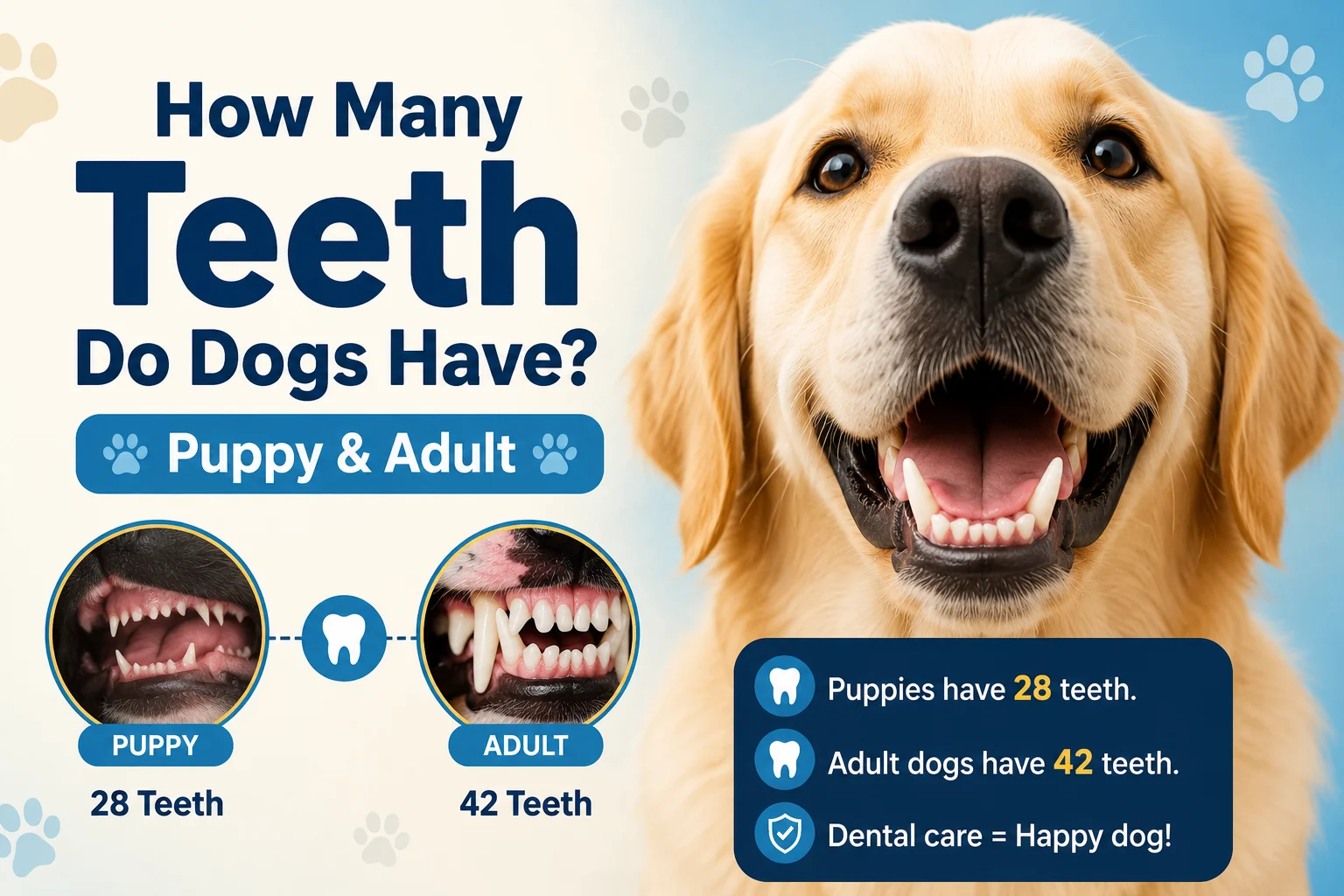
Adult dogs have 42 teeth, while puppies have 28 baby teeth. Puppies are born without any teeth, grow a set of 28 milk teeth, and then lose them as 42 permanent adult teeth come in by around six to seven months of age. These teeth include incisors, canines, premolars, and molars, each with its own job.
Whether you are watching a puppy chew everything in sight or wondering why your adult dog’s breath has changed, dental health is a big part of caring for a dog. So, how many teeth do dogs have? The answer depends on their age: puppies and adults have different numbers. This guide breaks down the exact counts, the four types of teeth, the puppy teething timeline, and how to keep your dog’s mouth healthy for life.
Curious about more canine trivia like this? Pair this article with our collection of fun facts about dogs for more surprising insights.
How Many Teeth Do Dogs Have? Puppy vs Adult
Adult dogs have 42 permanent teeth, and puppies have 28 baby teeth. This difference exists because puppies start with a smaller, temporary set designed for their tiny mouths, then replace them with a full adult set as they grow.
Here is the simple breakdown:
- Puppies: 28 baby teeth (also called milk or deciduous teeth)
- Adult dogs: 42 permanent teeth
Interestingly, adult dogs have more teeth than adult humans, who have 32. That extra count reflects a dog’s evolutionary role as a hunter and chewer, with teeth built for gripping, tearing, and grinding.
The 4 Types of Dog Teeth and Their Jobs
A dog’s 42 adult teeth are not all the same. They fall into four types, each shaped for a specific purpose. Understanding them explains why dogs chew the way they do.
| Tooth type | Adult count | Main job |
|---|---|---|
| Incisors | 12 | Nibbling, grooming, and scraping meat from bone |
| Canines | 4 | Gripping, tearing, and holding objects |
| Premolars | 16 | Shearing and chewing food |
| Molars | 10 | Grinding and crushing food |
Incisors
These are the small teeth at the front of the mouth, six on top and six on the bottom. Dogs use them for nibbling, grooming their coat, and picking at food.
Canines
The four long, pointed “fangs” sit at the corners of the mouth. They are built for grabbing, tearing, and holding, and they are among the strongest teeth in a dog’s mouth.
Premolars
Located behind the canines, these sharp-edged teeth shear and slice food. Dogs often use their premolars when chewing on toys or treats.
Molars
Found at the very back, the molars have flat surfaces for grinding and crushing. Dogs have more molars on the bottom jaw than the top, which helps with breaking down harder food.
Puppy Teeth: The Teething Timeline
Puppies go through a fast and fascinating dental journey in their first few months. Knowing the timeline helps you support them through teething.
- Birth: Puppies are born with no teeth at all.
- Around 3 to 4 weeks: The first baby teeth begin to erupt.
- Around 6 to 8 weeks: All 28 baby teeth are usually in place.
During this time, puppies explore the world with their mouths and chew constantly. Baby teeth are needle-sharp, which is why puppy nips can feel surprisingly painful.
When Do Puppies Lose Their Teeth?
Puppies typically start losing their baby teeth at around 12 to 16 weeks of age, and most have a full set of 42 adult teeth by six to seven months. As the permanent teeth push through, the baby teeth loosen and fall out, often without the owner even noticing.
Teething puppies feel discomfort and a strong urge to chew, which helps relieve sore gums. Offering safe, appropriate chew toys protects your belongings and soothes your puppy at the same time. If you want to reward good chewing habits, healthy treats help, and our guide on what fruits dogs can eat lists safe, low-calorie options.
Occasionally a baby tooth does not fall out on its own, a condition called a retained deciduous tooth. This can crowd the adult teeth and trap food, so it is worth having your vet check your puppy’s mouth during their teething months.
Do Dogs Get Cavities? Common Dog Dental Problems
Dogs can get cavities, but they are actually quite rare compared to humans. The far more common problem is periodontal (gum) disease, which affects a large share of dogs by the age of three.
Common canine dental problems include:
- Plaque and tartar buildup, which leads to gum irritation.
- Periodontal disease, an infection of the gums and tooth-supporting structures.
- Retained baby teeth, which crowd the mouth in young dogs.
- Broken or fractured teeth, often from chewing hard objects.
- Bad breath, which is frequently the first sign of dental trouble.
That last point matters. Persistent bad breath is not just unpleasant; it often signals an underlying dental issue. Our guide on dog bad breath explains the causes and when it points to something more serious.
How to Care for Your Dog’s Teeth
Good dental care keeps all 42 of your dog’s teeth healthy and can prevent painful problems down the line. A simple routine goes a long way.
- Brush regularly. Use a dog-specific toothbrush and toothpaste; never use human toothpaste.
- Offer dental chews and toys. These help scrape away plaque as your dog chews.
- Schedule professional cleanings. Your vet can perform deep cleanings and check for problems.
- Feed a quality diet. Good nutrition supports overall oral health.
- Check the mouth often. Look for redness, tartar, or broken teeth.
Building teeth-brushing into your dog’s grooming routine makes it feel normal rather than stressful. Pairing it with other care tasks, like the ear-cleaning steps in our guide on how to clean dog ears, helps you keep the whole routine consistent.
Signs of Dental Problems in Dogs: When to See a Vet
Contact your veterinarian if your dog shows any of these signs of dental trouble:
- Persistent bad breath
- Red, swollen, or bleeding gums
- Yellow or brown tartar buildup on the teeth
- Difficulty eating or chewing on one side
- Pawing at the mouth or drooling
- Loose, broken, or missing teeth
Dental disease can be painful and can affect a dog’s overall health if left untreated. If you notice these signs, a veterinary dental checkup is the safest next step.
Can You Tell a Dog’s Age by Their Teeth?
Veterinarians often use teeth to estimate a dog’s age, especially for rescue dogs with an unknown history. While it is not exact, teeth offer helpful clues.
In young dogs, the timeline of baby and adult teeth gives a fairly accurate age. A puppy with only baby teeth is under about four months, while a dog with a fresh, white set of adult teeth is likely under a year. As dogs get older, vets look at wear and tartar instead. Gradual staining, tartar buildup, and worn tooth surfaces suggest a middle-aged or senior dog. Heavy tartar and missing teeth often point to an older animal.
Because diet, chewing habits, and dental care all affect how teeth age, this method gives an estimate rather than an exact birthday. Still, it is one of the most useful tools for guessing the age of an adopted dog.
The Dog Dental Formula, Explained Simply
You may see a dog’s teeth written as a “dental formula,” which is just a shorthand vets use. For adult dogs, the formula counts the teeth on one side of the mouth, top and bottom, then doubles it.
On each side, an adult dog has three incisors, one canine, four premolars, and either two or three molars, top and bottom. Doubled across both sides, that adds up to the familiar total of 42 teeth. Puppies have a shorter formula because they have no molars at all, which is why their set totals 28. You do not need to memorize the formula, but it helps explain why the numbers land where they do.
What to Do During Puppy Teething
If your puppy is in the thick of teething, a few simple steps make the process easier for both of you. Provide a variety of safe, size-appropriate chew toys to satisfy the urge to gnaw. Some owners chill a rubber chew toy in the fridge, since the cool surface can soothe sore gums.
Redirect biting gently. When your puppy nips at hands, calmly swap in a chew toy so they learn what is acceptable to chew. Never punish teething behavior, as it is a normal, temporary stage. With patience and the right outlets, most puppies move through teething smoothly and emerge with a healthy set of adult teeth.
Adult dogs have 42 permanent teeth, including incisors, canines, premolars, and molars.
Puppies have 28 baby teeth, which they lose as their 42 adult teeth come in.
Yes. Adult dogs have 42 teeth, while adult humans have 32.
Most dogs have a full set of 42 adult teeth by six to seven months of age.
Dogs can get cavities, but they are rare. Gum (periodontal) disease is the far more common dental problem in dogs.
A Note on Pet Health
Serlig publishes researched pet care information for everyday owners. It is general guidance, not veterinary advice, and it does not replace an examination by a licensed veterinarian who knows your pet. If your pet is unwell, or anything in this guide does not match what you are seeing at home, contact your vet.



One Comment