
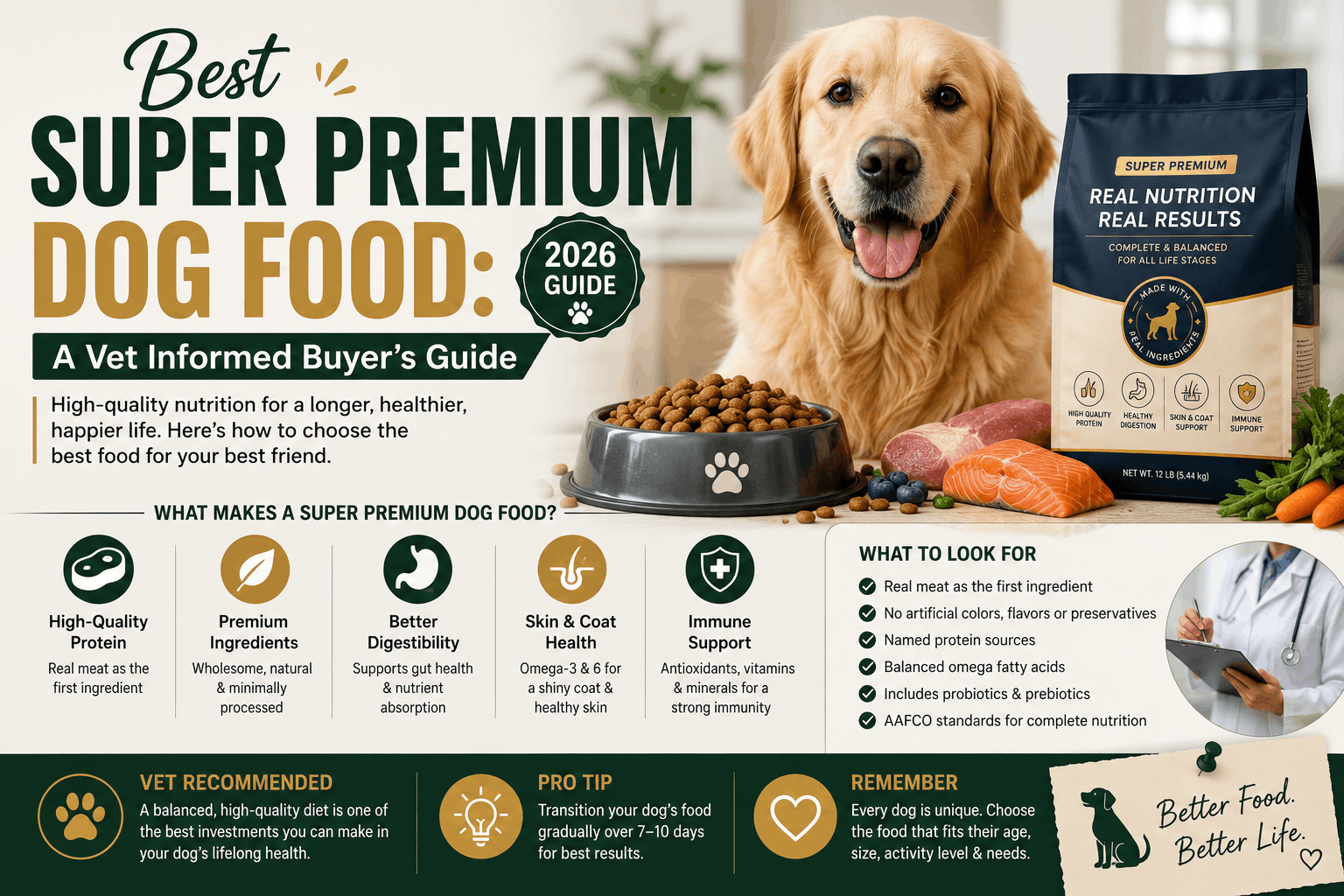
Searching for the best super premium dog food can feel overwhelming, because nearly every bag on the shelf claims to be “premium,” “holistic,” or “vet-recommended.” The truth is that “super premium” is a marketing phrase with no legal definition, so the real skill is learning to judge food by the standards that actually matter. This guide, grounded in AAFCO and WSAVA nutrition guidance, shows you exactly how to identify a genuinely high-quality food, how to read the label, and which markers separate a truly premium diet from clever packaging.
Quick answer: The best super premium dog food is one that carries an AAFCO “complete and balanced” statement for your dog’s life stage, is made by a company that follows WSAVA best practices (a board-certified veterinary nutritionist on staff, feeding trials, and quality control), lists a named animal protein first, and is transparent about its ingredients and testing. “Super premium” on the bag means nothing on its own, the standards behind it do.
What Does “Super Premium” Dog Food Actually Mean?
Here is the part most brands will not tell you: terms like “super premium,” “holistic,” “gourmet,” and “human-grade” are not regulated definitions. Any manufacturer can print them on a bag. They describe marketing tiers, not verified nutritional quality.
That does not mean premium foods are a scam. Many higher-priced diets genuinely use better-quality ingredients, more rigorous testing, and better manufacturing. But the word “premium” is not your proof of quality, the standards below are. Judge the food by what it can demonstrate, not by what the label calls itself.
How to Identify the Best Super Premium Dog Food
A truly premium diet meets several objective criteria. Use this as your checklist.
1. It Carries an AAFCO “Complete and Balanced” Statement
This is the single most important label to find. The Association of American Feed Control Officials (AAFCO) sets the minimum nutrient standards that dog food must meet to be legally called “complete and balanced” in the United States. A food earns this claim by either meeting an AAFCO nutrient profile (formulation) or passing an AAFCO feeding trial.
Two points matter here. First, AAFCO does not approve or certify individual dog foods, it sets the standards, and manufacturers self-verify. Second, the statement must specify the correct life stage: adult maintenance, or growth and reproduction (for puppies and pregnant or nursing dogs). If a bag has no AAFCO statement for your dog’s life stage, stop there and choose another food.
2. The Brand Follows WSAVA Best Practices
AAFCO tells you a food clears a baseline. The World Small Animal Veterinary Association (WSAVA) guidelines go further, they evaluate the company behind the food. WSAVA recommends choosing brands that:
- Employ a full-time qualified nutritionist, ideally a board-certified veterinary nutritionist (DACVN)
- Conduct feeding trials, considered the gold standard because they test how the food performs in real dogs, not just on paper
- Run rigorous quality-control testing on ingredients and finished products
- Publish peer-reviewed research and are transparent when asked
A brand that can answer these questions confidently is a stronger signal of quality than any “vet-approved” slogan.
3. A Named Animal Protein Leads the Ingredients
Look for a specific, named protein, such as chicken, lamb, salmon, or beef, at the top of the ingredient list, rather than a vague term like “meat by-product” or “animal meal.” Named proteins indicate a clearer, higher-quality protein source.
4. It Matches Your Dog’s Life Stage and Needs
The best food for your dog depends on their age, size, and health. Puppies, adults, and seniors have different nutrient requirements, and large breeds differ from small breeds. Premium quality means appropriate nutrition, not just expensive nutrition.
5. The Company Is Transparent
Trustworthy premium brands make it easy to learn who formulates their food, where it is made, and how it is tested. If a company hides this information, treat that as a warning sign.
How to Read a Premium Dog Food Label
Turn the bag over and check these four things in order:
- AAFCO statement: Confirm it exists and names the right life stage. This is non-negotiable.
- Feeding-trial wording: A phrase like “animal feeding tests using AAFCO procedures substantiate…” signals the higher, feeding-trial standard.
- Ingredient list: A named animal protein should appear first.
- Guaranteed analysis: Shows minimum protein and fat, and maximum fiber and moisture.
If the first two are missing, no amount of premium branding on the front makes up for it.
Brands That Meet the Highest Standards
Rather than chasing the “premium” label, look for brands that publicly meet the rigorous WSAVA criteria, a board-certified veterinary nutritionist on staff, feeding trials, and published research. The large, long-established, research-backed manufacturers most often cited by veterinarians as meeting these standards include Purina Pro Plan, Hill’s Science Diet, Royal Canin, and Eukanuba.
This does not mean smaller or newer brands are automatically inferior, but a newer brand should be able to demonstrate the same WSAVA best practices before you trust it with your dog’s long-term health. Ultimately, the best brand is the one that meets the objective standards and suits your individual dog. Always confirm the current formula still carries the correct AAFCO statement, since recipes change.
Marketing Terms and Red Flags to Watch
Be cautious of claims that sound impressive but mean little:
- “Holistic,” “human-grade,” “premium,” “super premium”: No standardized legal definition; treat them as marketing.
- “Vet-approved”: May only mean one veterinarian glanced at the copy. WSAVA alignment is far more meaningful.
- Ingredient splitting: The same ingredient listed under several names to push it lower on the list.
- Grain-free hype: The U.S. Food and Drug Administration (FDA) has investigated a possible association between some grain-free diets and a heart condition called dilated cardiomyopathy (DCM). The science is still evolving, so discuss grain-free choices with your veterinarian before switching.
A food that relies on buzzwords instead of standards is not proving anything about its quality.
How to Choose the Right Super Premium Food for Your Dog
Use this simple process:
- Confirm the AAFCO statement for your dog’s life stage.
- Check the manufacturer against WSAVA best practices.
- Read the ingredients for a named animal protein first.
- Match it to your dog: Age, size, activity level, and any health conditions.
- Ask your vet: Especially for puppies, seniors, or dogs with allergies, weight issues, or medical conditions.
Then transition gradually over 7-10 days, mixing increasing amounts of the new food with the old to avoid stomach upset.
Frequently Asked Questions
What does “super premium” dog food actually mean? Nothing official. “Super premium” is an unregulated marketing term. Judge a food by its AAFCO complete-and-balanced statement, WSAVA-aligned manufacturing, and ingredient quality instead of the label wording.
How do I know if dog food is high quality? Check for an AAFCO “complete and balanced” statement for the right life stage, a manufacturer that follows WSAVA guidelines (board-certified nutritionist, feeding trials, quality control), and a named animal protein listed first.
Is more expensive dog food always better? No. Price does not guarantee quality. A costly food without an AAFCO statement or WSAVA-aligned manufacturing is not premium in any meaningful sense. Standards matter more than price.
What is the difference between AAFCO and WSAVA? AAFCO sets the minimum U.S. nutrient standards a food must meet to be sold as “complete and balanced.” WSAVA evaluates the company’s best practices, who formulates the food, whether they run feeding trials, and how transparent they are.
Is grain-free dog food better? Not necessarily. The FDA has investigated a possible link between certain grain-free diets and heart disease (DCM). Grain-free is not automatically healthier, so consult your veterinarian before choosing it.
How do I switch my dog to a new premium food? Transition gradually over 7–10 days, slowly increasing the new food while decreasing the old, to reduce the risk of digestive upset.
Final Thoughts
The best super premium dog food is not the one with the fanciest bag, it is the one that proves its quality through objective standards. Look for an AAFCO complete-and-balanced statement for your dog’s life stage, a manufacturer that follows WSAVA best practices, a named animal protein first on the label, and clear transparency from the brand. Match all of that to your individual dog’s age, size, and health, involve your veterinarian for any special needs, and you will be choosing food on evidence rather than marketing. That is what “premium” should really mean.
A Note on Pet Health
Serlig publishes researched pet care information for everyday owners. It is general guidance, not veterinary advice, and it does not replace an examination by a licensed veterinarian who knows your pet. If your pet is unwell, or anything in this guide does not match what you are seeing at home, contact your vet.
About the Author
The Serlig Pet Care Team creates researched, plain-language pet care and nutrition guides for everyday owners. Our content is written from hands-on pet-care experience and cross-checked against established veterinary and nutrition standards.


5 Comments