Quick Answer
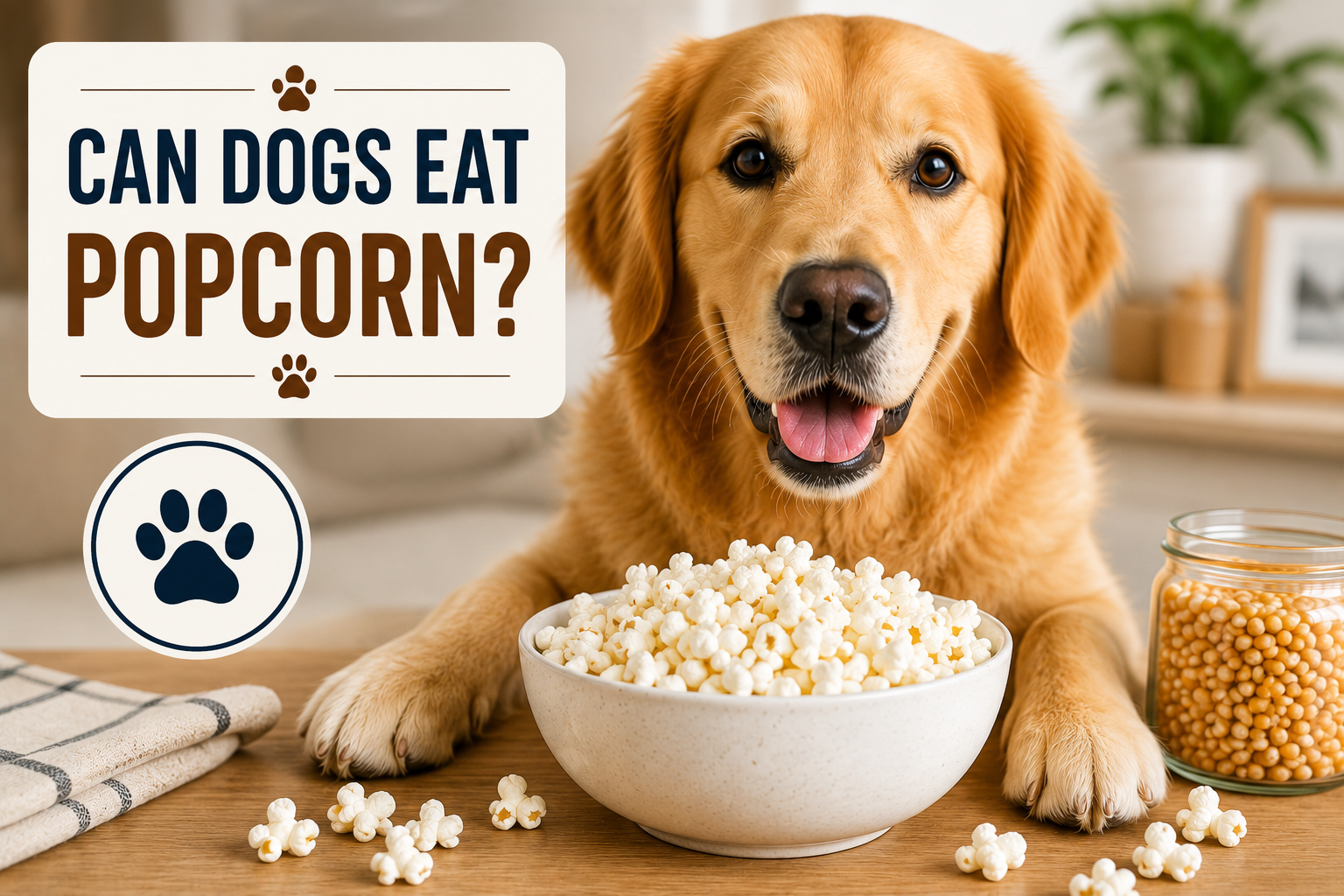
Yes, dogs can eat plain, air-popped popcorn in small amounts it is not toxic. The problem is almost never the popcorn itself but what we put on it. Butter, oil, salt, sugar, and cheese make popcorn unhealthy or even harmful for dogs. Unpopped or partly popped kernels are also a choking and dental hazard. Serve a few pieces of plain, fully popped popcorn by hand, and keep it under 10% of your dog’s daily calories.
Key Takeaways
- Plain, air-popped popcorn is safe for dogs in small amounts.
- Butter, oil, salt, sugar, and cheese make popcorn unhealthy or dangerous.
- Unpopped and half-popped kernels are a choking, dental, and blockage hazard remove them.
- Popcorn offers little nutrition, so it is a fun treat, not a healthy staple.
- Feed by hand, a few pieces at a time never a whole bowl.
- Kettle corn, caramel corn, and microwave/flavored popcorn are not safe for dogs.
Can Dogs Eat Popcorn?
Yes as long as it is plain and air-popped. Popcorn itself is not toxic to dogs, and both the American Kennel Club (AKC) and PetMD agree that a few pieces of plain, air-popped popcorn make a harmless occasional treat.
The catch is that the way most of us eat popcorn is exactly what makes it bad for dogs. Butter, oils, salt, sugar, and cheese all turn a light snack into something that can upset your dog’s stomach or worse. Strip all of that away, and popcorn becomes a low-calorie, crunchy novelty treat.
Popcorn is fun, but it is not nutritious for dogs. If you want a crunchy snack with real benefits, options like carrots or apple slices are far better choices. Whatever you offer, the bulk of your dog’s nutrition should come from a complete and balanced dog food that meets AAFCO standards.
The Kernel Problem: Popcorn’s Main Hazard
The biggest physical risk with popcorn is not the fluffy part it is the kernels.
Unpopped and partially popped kernels are hard, and they cause several problems:
- Choking: hard kernels can lodge in a dog’s throat, especially in small breeds.
- Dental damage: biting a hard kernel can crack a tooth, and kernels easily get stuck between teeth or in the gums, causing pain or infection.
- Blockage: in very small dogs, a swallowed kernel could contribute to an intestinal blockage.
Before you share any popcorn, pick through it and remove every unpopped or half-popped kernel. Better yet, only offer fully popped, fluffy pieces.
Is Popcorn Good for Dogs? The (Limited) Benefits
Plain popcorn does have a little to offer, though it is modest:
| Nutrient | What it does for your dog |
|---|---|
| Fiber | Supports normal digestion in small amounts. |
| B vitamins (riboflavin, thiamine) | Support metabolism, energy, and vision. |
| Magnesium, manganese, phosphorus, zinc | Trace minerals that support various body functions. |
| Polyphenols | Plant antioxidants linked to general health. |
| Low calorie (when plain) | A light treat that won’t pile on calories in small amounts. |
Be honest with yourself, though: your dog gains very little nutritionally from popcorn. It is best thought of as a fun, shareable snack rather than a health food. For genuinely low-calorie treats, see our guide on The 10% Rule: Best Low-Calorie Treats for Overweight Pets.
Popcorn Risks: Toppings & Overeating
Butter, oil, and salt
This is where most popcorn trouble comes from. Butter and oil add fat that can cause an upset stomach, contribute to obesity, and even trigger pancreatitis. Too much salt can lead to salt poisoning, with symptoms like excessive thirst, vomiting, and worse. Plain is the only safe way to serve popcorn.
Sweet and flavored popcorn
Kettle corn, caramel corn, and other sweet varieties are loaded with sugar. Flavored and microwave popcorns often contain heavy salt, artificial flavorings, and sometimes onion or garlic powder, which are toxic to dogs. Avoid all of these.
Eating too much, too fast
A big bowl of popcorn eaten quickly can cause an upset stomach vomiting, diarrhea, or gas and increases the choking risk. That is why popcorn should be fed by hand, a few pieces at a time, never left out in a bowl. A popcorn bag is also a suffocation hazard, so keep bags well out of reach.
How Much Popcorn Can a Dog Eat? (Serving Guide)
Popcorn counts toward the 10% rule treats and snacks together should stay under a tenth of your dog’s daily calories, and with popcorn it is wise to stay on the conservative side.
As a rough guide:
| Dog size | Body weight | Suggested serving | Frequency |
|---|---|---|---|
| Extra-small | Under 10 lb | 1–2 popped pieces | Occasionally |
| Small | 10–25 lb | 2–4 popped pieces | Occasionally |
| Medium | 25–50 lb | A small handful | Occasionally |
| Large | 50–90 lb | A small handful | Occasionally |
| Giant | Over 90 lb | A small handful | Occasionally |
If it is your dog’s first taste, offer one or two pieces and see how they react before giving any more.
How to Safely Feed Popcorn to Your Dog
Follow these steps:
- Air-pop it Skip the oil and butter air-popping is the only healthy method.
- Keep it completely plain : No salt, butter, oil, sugar, cheese, or seasonings.
- Remove all kernels : Pick out every unpopped or half-popped piece.
- Feed by hand : Offer a few pieces at a time rather than a bowl.
- Start small and watch : Give one or two pieces first and monitor for any reaction.
Can Puppies Eat Popcorn?
It is best to avoid popcorn for puppies. Their small size makes the choking and kernel risks more serious, and their developing stomachs are easily upset. If you want a safe, size-appropriate treat for a puppy, ask your veterinarian for a better option.
When to Skip Popcorn or Call Your Vet
Plain popcorn suits most adult dogs in small amounts, but skip it, or check with your vet, if your dog:
- Is prone to pancreatitis or is overweight (especially with any buttered or oily popcorn).
- Has dental issues that make kernels risky.
- Has a sensitive stomach.
Contact your vet if your dog chokes, shows signs of a dental injury, or eats a large amount of buttered, salted, or flavored popcorn and then vomits, has diarrhea, or seems unwell.
Frequently Asked Questions
Can dogs eat buttered popcorn?
It is best avoided. A stray piece won’t likely harm your dog, but butter adds fat that can cause stomach upset, weight gain, and pancreatitis. Plain, air-popped is the safe choice.
Can dogs eat popcorn kernels? No. Unpopped and half-popped kernels are hard and can cause choking, dental damage, or a blockage. Always remove them.
Is popcorn bad for dogs?
Plain popcorn is not bad in small amounts, but salted, buttered, or sweet popcorn is unhealthy, and kernels are a hazard.
How much popcorn can a dog have?
Only a small amount a few pieces for small dogs, a small handful for large dogs and no more than 10% of daily calories.
Can dogs eat caramel or kettle corn?
No. These are full of sugar and, in some cases, other additives that are unhealthy for dogs. Stick to plain, air-popped popcorn.
Can puppies eat popcorn?
It is best to skip it. Puppies are more at risk of choking and stomach upset. Ask your vet for a safer treat.
Final Thoughts
Popcorn can be a fun, harmless snack to share with your dog but only the plain, air-popped kind, and only in small amounts. The two rules that matter most are simple: skip every topping, and pick out every kernel.
Because popcorn offers so little nutrition, treat it as an occasional bit of movie-night fun rather than a regular reward, and reach for something like carrots or apple when you want a snack that actually benefits your dog. As always, check with your veterinarian if your dog has weight issues, dental problems, or a sensitive stomach.
A Note on Pet Health
Serlig publishes researched pet care information for everyday owners. It is general guidance, not veterinary advice, and it does not replace an examination by a licensed veterinarian who knows your pet. If your pet is unwell, or anything in this guide does not match what you are seeing at home, contact your vet.