
Quick Answer
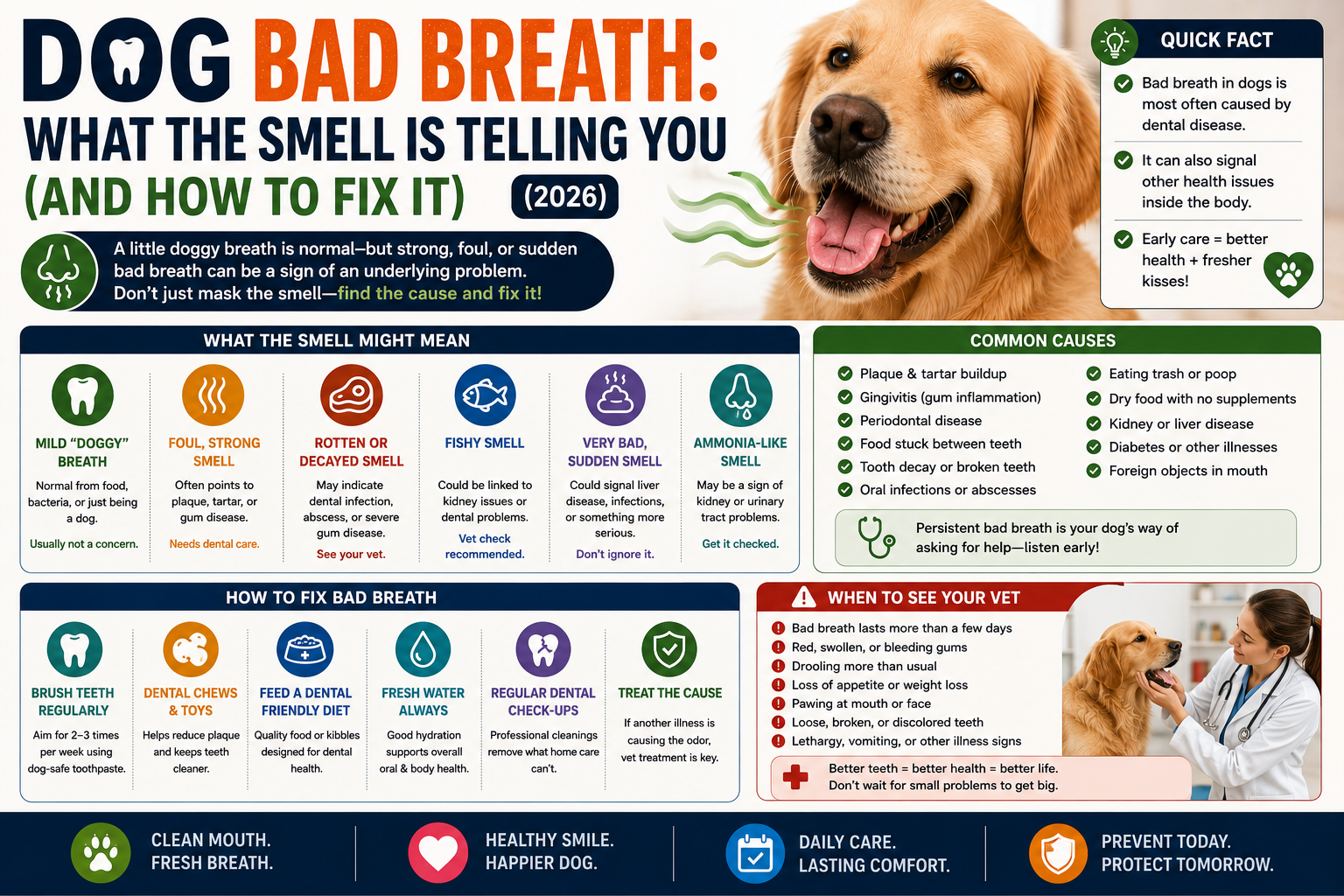
“Dog breath” is not normal it is a symptom, and in the great majority of cases it means dental disease. Studies consistently find that most dogs show evidence of periodontal disease by around three years of age. Plaque hardens into tartar, bacteria colonise below the gumline, and the smell is the by-product. Less commonly, bad breath signals kidney disease, diabetes, liver disease, or an oral tumour which is why a sudden or unusual odour deserves a vet’s attention rather than a breath-freshening treat.
Key Takeaways
- Persistent bad breath is nearly always periodontal disease, not diet.
- The type of smell narrows the cause usefully sweet, ammonia, and rotten mean different things.
- Damage happens below the gumline, where brushing and chews cannot reach once established.
- Daily brushing is the single most effective home measure; three times a week is the realistic minimum.
- Never use human toothpaste fluoride and xylitol are harmful to dogs.
- Anaesthesia-free “dental cleaning” is cosmetic and does not treat disease.
The Smell Test: What Different Odours Suggest
This is the fastest way to work out how worried to be.
| Smell | Likely meaning |
| Rotten, foul, decaying | Periodontal disease, tooth abscess, or oral infection the most common finding |
| Sweet or fruity, like nail polish remover | Possible diabetic ketoacidosis an emergency |
| Ammonia, urine-like | Possible kidney disease toxin build-up in the bloodstream |
| Musty, sweet, unusually offensive | Possible liver disease |
| Fishy | Often anal gland fluid transferred by licking see why is my dog scooting |
| Faecal | Coprophagia (stool eating), or occasionally an intestinal blockage |
| One-sided smell with nasal discharge | Tooth root abscess or nasal disease see why is my dog sneezing |
A sweet or ammonia-like smell in particular should prompt a call rather than a dental appointment.
Why Dental Disease Is the Usual Answer
The sequence is predictable:
- Plaque a soft bacterial film forms on teeth within hours of eating.
- Tartar within 24–72 hours, minerals in saliva harden plaque into calculus, which brushing can no longer remove.
- Gingivitis gums become red, swollen, and bleed easily. Still reversible at this point.
- Periodontitis infection spreads below the gumline, destroying the ligament and bone that hold teeth in place. Not reversible.
- Tooth loss, abscess, and pain.
Two things surprise owners. First, the visible tartar is not the problem the destruction is happening beneath the gum, out of sight. Second, dogs almost never stop eating because of dental pain. Their drive to eat overrides it, so owners assume everything is fine. Chronic dental disease also seeds bacteria into the bloodstream, with documented links to heart, liver, and kidney strain.
Higher-risk dogs: small and toy breeds (crowded teeth in small jaws), brachycephalic breeds (misaligned teeth), Greyhounds and Whippets (genetically prone), and any dog fed exclusively soft food.
Signs Beyond the Smell
- Yellow or brown build-up along the gumline
- Red, swollen, or bleeding gums
- Drooling, sometimes blood-tinged
- Chewing on one side, dropping food, or preferring soft food
- Pawing at the mouth or rubbing the face on furniture
- Facial swelling, especially below one eye a classic sign of a carnassial tooth root abscess
- Loose or missing teeth
- Reluctance to have the head touched
- A subtle change in temperament quieter, less playful, grumpier
That last one is the one most owners only recognise in hindsight, after a dental treatment reveals a dog who was quietly in pain for months.
The Non-Dental Causes
Kidney disease. Failing kidneys allow urea to accumulate, producing an ammonia-like breath. Look for it alongside increased thirst, weight loss, and reduced appetite a combination covered in our guide to a dog not eating but drinking water.
Diabetes. A sweet, acetone-like smell can indicate ketoacidosis, a serious complication. Increased thirst, urination, and weight loss despite a good appetite are the accompanying signs. This warrants urgent veterinary attention.
Liver disease. Produces a distinctive musty odour, often with vomiting, appetite loss, yellowing of the gums or eyes, and lethargy.
Oral tumours. More common in older dogs. Bad breath with drooling, bleeding from the mouth, a visible mass, or difficulty eating needs prompt assessment.
Foreign body. A stick fragment, bone splinter, or piece of fabric wedged between teeth or across the roof of the mouth causes sudden foul breath and drooling.
Dietary habits. Eating faeces, raiding bins, or scavenging outdoors produces temporary bad breath. It resolves once the habit does.
Puppy teething. Mild odour between roughly four and seven months as baby teeth loosen. Normal, and self-resolving but check for retained deciduous teeth, where a baby tooth sits alongside its adult replacement and traps food.
What Actually Works
Daily brushing the gold standard
Nothing else comes close. Plaque hardens within days, so frequency beats intensity.
- Use a dog-specific toothpaste in a flavour your dog likes (poultry and malt are usually well accepted).
- Never use human toothpaste. Fluoride is harmful if swallowed and many contain xylitol, which is dangerous to dogs.
- A finger brush, a soft child’s toothbrush, or a dog toothbrush all work.
- Focus on the outer surfaces, where tartar mainly forms. The tongue does much of the inner work.
- Build up gradually over one to two weeks: let your dog taste the paste, then touch the gums, then a few teeth, then more. Keep sessions short and positive.
Aim for daily. Three times a week is the practical minimum for real benefit.
Dental chews and diets
Choose products carrying the VOHC (Veterinary Oral Health Council) Accepted seal, which means they have demonstrated measurable plaque or tartar reduction rather than just claiming it. Prescription dental diets use larger kibble with a fibre matrix that scrubs the tooth as it is bitten.
Two practical cautions: chews add calories, so factor them into the 10% treat rule; and avoid hard items like antlers, hooves, bones, and hard nylon, which are a leading cause of fractured teeth.
Professional cleaning
A proper veterinary dental involves general anaesthesia, full-mouth dental radiographs (essential, since most disease is below the gumline), scaling above and below the gum, polishing, probing each tooth, and extraction of any that are non-viable.
On anaesthesia-free cleaning: it scrapes visible tartar from the crown, which improves appearance, but it cannot clean below the gumline, cannot take radiographs, and cannot address the disease that causes the smell. Veterinary dental organisations consider it cosmetic rather than therapeutic and it can leave owners falsely reassured while disease progresses.
On anaesthesia risk: it is the most common owner concern, and a fair one. Modern protocols with pre-anaesthetic bloodwork and monitoring make it low-risk for the great majority of dogs, including seniors. The risk of leaving painful infected teeth untreated is generally the greater one but discuss your individual dog’s situation with your vet.
Everyday support
- Fresh water always available; water additives can help as an adjunct, not a substitute.
- A good complete diet. Dry food does not clean teeth as much as commonly believed, but a well-formulated complete food supports overall health.
- Bin and access control to stop scavenging.
- A raw carrot as a low-calorie chew for dogs that enjoy it.
- Annual dental checks, or every six months for small and brachycephalic breeds.
Frequently Asked Questions
Is bad breath normal in dogs? No. Healthy dog breath is fairly neutral. Persistent bad breath means something is wrong — most often dental disease.
What does it mean if my dog’s breath smells like fish? Usually anal gland fluid transferred to the mouth by licking. Check the rear end as well as the mouth.
What if my dog’s breath smells like ammonia or urine? That can indicate kidney disease. Look for increased thirst and weight loss, and speak to your vet promptly.
Can I use human toothpaste on my dog? No. Fluoride is harmful when swallowed, and many human toothpastes contain xylitol, which is toxic to dogs. Use a dog-specific product.
How often should I brush my dog’s teeth? Daily is ideal, because plaque hardens within 24–72 hours. Three times weekly is the realistic minimum for benefit.
Do dental chews really work? VOHC-accepted chews have demonstrated measurable plaque or tartar reduction. They support brushing rather than replacing it, and they add calories.
Is anaesthesia-free dental cleaning safe? It is generally low-risk physically, but it is cosmetic. It cannot clean below the gumline or diagnose disease, and it may delay treatment your dog actually needs.
My dog is old is dental anaesthesia too risky? Age alone is not a disease. With pre-anaesthetic bloodwork and modern monitoring, most senior dogs handle dental procedures well, and leaving infected teeth in place carries its own significant risk. Discuss the specifics with your vet.
Final Thoughts
Bad breath became a punchline, and that is precisely why so many dogs live with untreated dental pain for years. A dog will keep eating, keep wagging, and keep greeting you at the door with a mouth that genuinely hurts.
Start with the smell a rotten odour points to teeth, while sweet or ammonia notes point somewhere more urgent. Then build the habit that actually changes outcomes: a dog toothbrush, a poultry-flavoured paste, and two minutes most evenings. It is unglamorous, and it does more for your dog’s long-term health than almost anything else you can do at home.
Related Reading
- Why Is My Dog Scooting on the Floor?
- Dog Not Eating but Drinking Water: What It Means
- Why Is My Dog Sneezing?
- Best Super Premium Dog Food
A Note on Pet Health
Serlig publishes researched pet care information for everyday owners. It is general guidance, not veterinary advice, and it does not replace an examination by a licensed veterinarian who knows your pet. If your pet is unwell, or anything in this guide does not match what you are seeing at home, contact your vet.
About the Author
The Serlig Pet Care Team creates researched, plain-language pet care guides for everyday owners. Our content is written from hands-on pet-care experience and cross-checked against established veterinary sources so you can make confident decisions for your dog.
2 Comments