Quick Answer
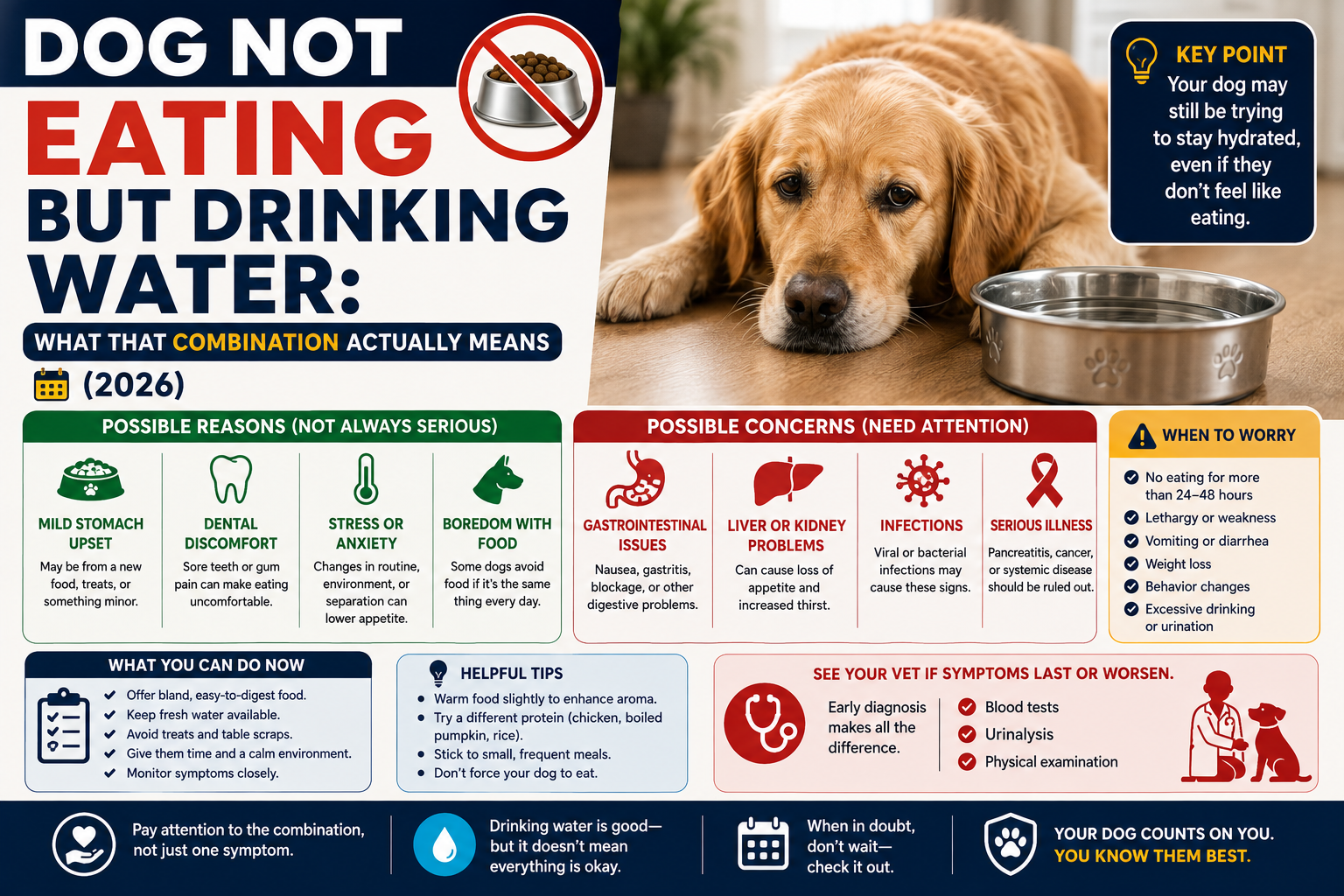
A dog that refuses food but keeps drinking is often mildly unwell rather than critically ill but the combination narrows the list in useful ways. Nausea, dental pain, and stress commonly cause it. So do kidney disease, liver disease, diabetes, and pancreatitis, all of which drive thirst up while appetite falls. The rule of thumb: 24 hours without food in a healthy adult dog warrants a call; 12 hours in a puppy, senior, diabetic, or small-breed dog warrants one sooner.
Key Takeaways
- Still drinking is reassuring for hydration but does not rule out serious illness.
- Increased thirst plus appetite loss together is a classic organ-disease pattern.
- Dental pain is one of the most common and most missed causes.
- Diabetic dogs on insulin who stop eating need veterinary advice the same day.
- Puppies and toy breeds risk low blood sugar quickly do not wait 24 hours.
- Any dog refusing food with vomiting, a painful belly, or lethargy needs urgent care.
Why This Combination Is Diagnostically Useful
Appetite and thirst are controlled separately. When one drops and the other rises or stays normal, it tells you something.
- Not eating + drinking normally often nausea, mild illness, dental pain, stress, or fussiness.
- Not eating + drinking noticeably more (polydipsia) suspicious for kidney disease, liver disease, diabetes, Cushing’s disease, pyometra, or certain medications.
- Not eating + not drinking more serious; dehydration risk rises quickly. Seek care sooner.
- Eating normally + drinking a lot points toward diabetes, Cushing’s, or kidney disease.
Roughly, a dog drinks about 50–60 ml per kg of body weight per day. Consistently above 100 ml per kg per day is clinically significant. Measuring what goes into the bowl over 24 hours is simple, free, and genuinely useful information to bring to an appointment.
The Common Causes
Dental and mouth pain
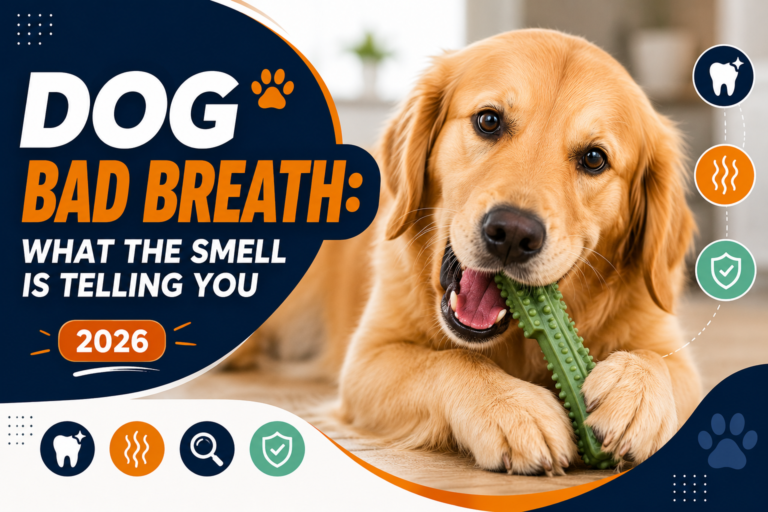
Frequently the answer, and frequently missed. A fractured tooth, an abscess, severe gum disease, or a foreign object wedged in the mouth makes chewing painful but drinking stays easy.
Look for: approaching the bowl then walking away, dropping food, chewing on one side, pawing at the mouth, drooling, bad breath, or facial swelling. A dog that eats soft food but refuses kibble is showing you a mouth problem.
Nausea and digestive upset
Dietary indiscretion, a sudden food change, mild gastritis, or parasites. Signs include drooling, lip licking, swallowing repeatedly, grass eating, and restlessness. If your dog is otherwise bright and this settles within a day, our guide on what to feed a dog with diarrhoea covers the bland-diet approach.
Kidney disease
One of the most important causes of this exact pattern, particularly in older dogs. Failing kidneys concentrate urine poorly, so the dog drinks more to compensate, while toxin build-up causes nausea and appetite loss.
Look for: increased thirst and urination, weight loss, vomiting, lethargy, bad “ammonia” breath, and sometimes mouth ulcers. Early diagnosis meaningfully changes outcomes this is worth a blood and urine test rather than watchful waiting.
Liver disease
Causes nausea, appetite loss, and sometimes increased thirst. Watch for yellowing of the gums, eyes, or skin, a swollen abdomen, or pale grey stool.
Diabetes mellitus
Increased thirst and urination are hallmark signs. A diabetic dog on insulin that stops eating is a same-day veterinary matter, because giving a normal insulin dose without food risks dangerous hypoglycaemia. Never simply skip or guess the dose call for advice.
Pancreatitis
Often triggered by a fatty meal. The picture is distinctive: refusing food, repeated vomiting, a hunched or “praying” posture with the front end down and rear up, abdominal pain, and lethargy. This needs prompt veterinary care.
Pyometra
In any unspayed female dog, this is a genuine emergency. A pus-filled uterine infection typically appears a few weeks after a season and produces increased thirst, appetite loss, lethargy, vomiting, and sometimes a foul vaginal discharge though in a “closed” pyometra there is no discharge at all. Untreated, it is life-threatening.
Foreign body or obstruction
A swallowed toy, sock, corn cob, or bone. Signs include repeated vomiting (especially unproductive retching), refusing food, no stool, a painful abdomen, and lethargy. Surgical urgency.
Pain elsewhere
Arthritis, back pain, an injury, or an ear infection can all suppress appetite. Pain often produces trembling too see why is my dog shaking and panting, covered in why is my dog panting so much.
Toxin exposure
Many poisonings begin with appetite loss and increased thirst. If your dog may have accessed anything on our toxic foods list, call a poison line rather than monitoring.
Medication and vaccination
Antibiotics, non-steroidal anti-inflammatories, and chemotherapy commonly reduce appetite. Mild appetite loss for 24–48 hours after vaccination is normal and self-limiting.
Stress and environmental change
Moving house, a new pet or baby, kennels, building work, a bereavement, or a change of routine. Dogs also refuse food when a bowl is moved somewhere noisy, when a bowl is metal and clangs, or when another pet guards the feeding area.
Genuine fussiness
The least worrying and most common in dogs who have learned that refusing dinner produces something better. The tell: your dog is bright, energetic, and will happily eat treats or human food while ignoring their own bowl. If that is your dog, our guide on low-calorie treats and the 10% rule explains how treat habits quietly displace meals.
The Timeline: When Does It Become Urgent?
| Dog | Call your vet after |
| Healthy adult dog, otherwise bright | 24 hours |
| Puppy under 6 months | 12 hours |
| Toy breed | 12 hours hypoglycaemia risk |
| Senior dog | 12–24 hours |
| Diabetic dog on insulin | Immediately |
| Any dog with vomiting, lethargy, or pain | Immediately |
| Unspayed female | Immediately rule out pyometra |
| Pregnant or nursing dog | Immediately |
Go now, regardless of timing, if there is: repeated vomiting, a swollen or painful abdomen, pale or yellow gums, collapse or extreme weakness, unproductive retching, blood in vomit or stool, or laboured breathing.
What You Can Try at Home (Healthy Adult Dog, First 24 Hours)
Only if your dog is bright, alert, and has no red-flag signs.
- Warm the food slightly. Heat releases aroma, and appetite in dogs is driven largely by smell.
- Try a small amount of plain boiled chicken and white rice. Bland, digestible, and tempting.
- Hand-feed a few pieces. This distinguishes “cannot eat” from “will not eat.”
- Remove uneaten food after 20 minutes. Leaving it down all day teaches your dog to hold out.
- Check the food itself. Smell it. Check the best-before date and whether the bag has been open a long time fats go rancid and dogs notice before we do.
- Move the bowl. Somewhere quiet, away from other pets, off a slippery floor.
- Stop all treats and table scraps. A dog filling up on treats has no reason to eat dinner.
Do not: withhold water, give human painkillers such as paracetamol or ibuprofen (both are toxic to dogs), force-feed, or persist with home care past 24 hours.
Frequently Asked Questions
How long can a dog go without eating? A healthy adult dog can tolerate 24–48 hours, but you should not wait that long to seek advice. Puppies, toy breeds, diabetics, and unwell dogs need attention far sooner.
Is it a good sign that my dog is still drinking? It is reassuring for hydration, but it does not rule out serious illness. Several important conditions cause appetite loss with increased thirst.
My dog won’t eat but is acting normal should I worry? A bright, playful dog that skips one meal is usually fine to monitor. If it continues past 24 hours, or your dog is drinking noticeably more, book an appointment.
Why is my dog drinking so much water? Increased thirst is a hallmark of kidney disease, diabetes, Cushing’s disease, liver disease, and pyometra, and can also be a medication side effect. Measure the daily intake and speak to your vet.
Should I force-feed my dog? No. Force-feeding risks aspiration and creates lasting food aversion. If your dog will not eat, that is information for your vet, not a problem to overpower.
Can stress stop a dog eating? Yes, and it is common. Moving house, new pets, kennels, or routine changes all suppress appetite, usually resolving within a day or two.
My dog eats treats but not dog food what does that mean? Usually behavioural rather than medical, especially if your dog is otherwise well. Stop the treats, offer meals on a schedule, and remove uneaten food after 20 minutes. If your dog also refuses treats, take it more seriously.
Should I change my dog’s food? Not while they are unwell a sudden switch adds digestive upset to whatever is already happening. Establish the cause first, then transition gradually to a complete and balanced diet over 7–10 days.
Final Thoughts
Appetite is one of the most sensitive indicators of canine health, which is exactly why a dog turning away from dinner unsettles owners. Most of the time the explanation is small: a sore tooth, an upset stomach, a stressful week, or a dog who has worked out that holding out gets results.
But the same symptom is how kidney disease, pancreatitis, and pyometra announce themselves. So use the timeline, watch the thirst, and pay attention to what else is happening. If your dog is bright and drinking normally, twenty-four hours of sensible home care is reasonable. If your dog is flat, drinking more than usual, or an unspayed female, that window closes and picking up the phone is the right call.
Related Reading
- Why Is My Dog Shaking? 8 Common Causes
- Why Is My Dog Panting So Much?
- What to Feed a Dog With Diarrhea
- Foods Toxic to Dogs: The Complete List
- The 10% Rule: Best Low-Calorie Treats for Overweight Pets
A Note on Pet Health
Serlig publishes researched pet care information for everyday owners. It is general guidance, not veterinary advice, and it does not replace an examination by a licensed veterinarian who knows your pet. If your pet is unwell, or anything in this guide does not match what you are seeing at home, contact your vet.
About the Author
The Serlig Pet Care Team creates researched, plain-language pet care guides for everyday owners. Our content is written from hands-on pet-care experience and cross-checked against established veterinary sources so you can make confident decisions for your dog.