
Quick Answer
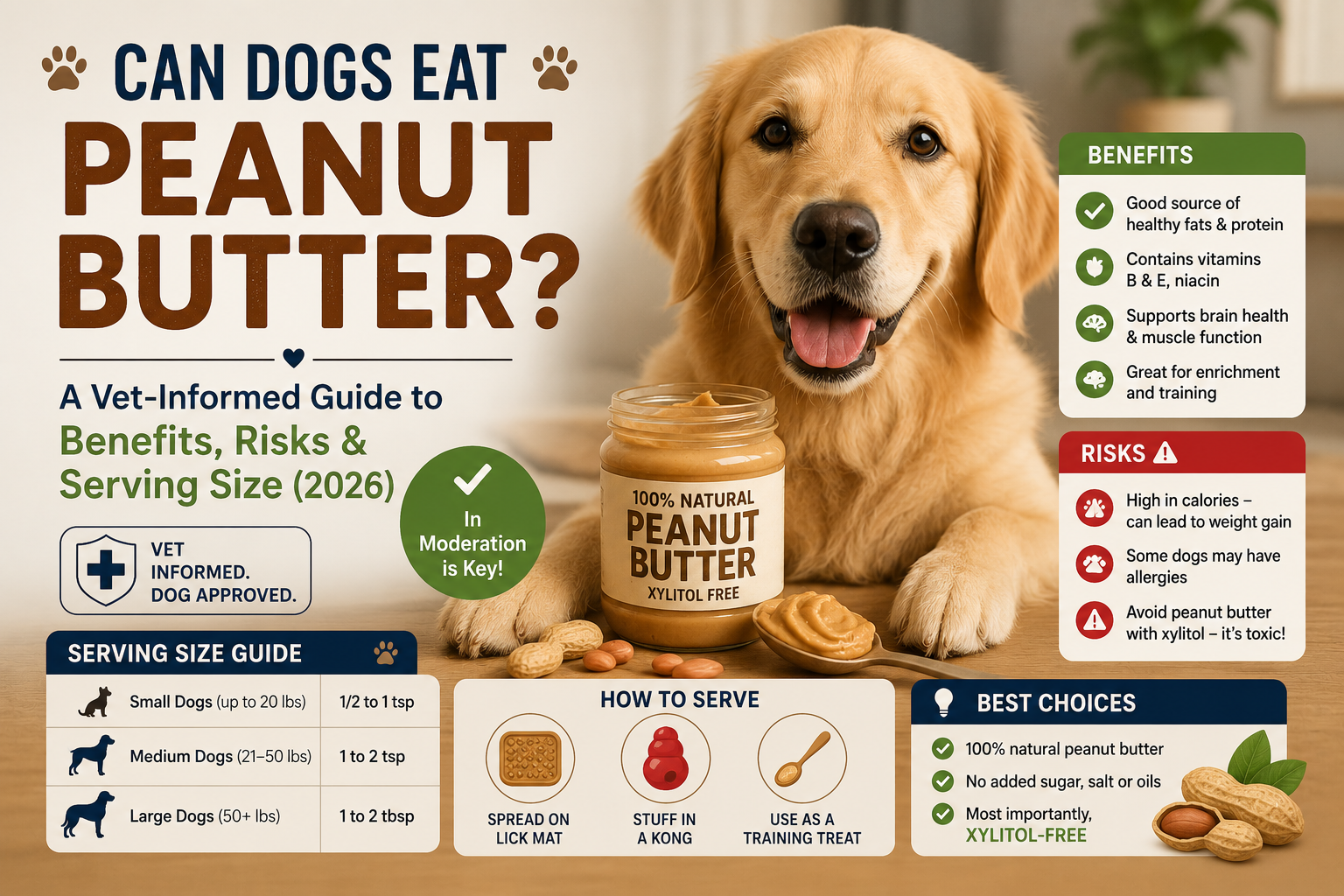
Yes, dogs can eat peanut butter but only if it is xylitol-free. Plain, unsalted peanut butter with no added sweeteners is a safe, high-value treat for most dogs in moderation. The single most important rule is to check the label for xylitol (sometimes listed as “birch sugar”), an artificial sweetener that is deadly to dogs. Because peanut butter is high in fat, keep it to small amounts and under 10% of your dog’s daily calories.
Key Takeaways
- Peanut butter is safe for most dogs only if it does not contain xylitol.
- Xylitol (also called “birch sugar”) is highly toxic and can be fatal always read the label.
- Choose plain, unsalted, natural peanut butter with no added sugar or oils.
- It is high in fat and calories, so it is an occasional treat, not a daily food.
- Peanut butter is excellent for stuffing toys, lick mats, and hiding pills.
- Too much can cause weight gain or trigger pancreatitis in sensitive dogs.
- Dogs with pancreatitis or on low-fat diets should avoid it unless a vet approves.
Can Dogs Eat Peanut Butter?
Yes with one crucial condition. Plain peanut butter is not toxic to dogs, and both the American Kennel Club (AKC) and PetMD confirm it is safe in moderation. But this is one treat where the wrong product can be life-threatening, so the label matters more than almost any other food on this list.
The danger is xylitol, an artificial sweetener that some manufacturers add to “sugar-free,” “keto,” or “low-calorie” peanut butters. Xylitol is harmless to people but extremely toxic to dogs. Before you share peanut butter with your dog, read the ingredients every single time.
Once you have confirmed a safe, xylitol-free jar, peanut butter becomes one of the most useful treats you can own. It pairs beautifully with other dog-safe foods a little peanut butter with slices of banana is a classic frozen-toy filling. As with any treat, though, the core of your dog’s diet should be a complete and balanced dog food that meets AAFCO standards.
The Xylitol Warning: Read This First
This is the most important part of the article, so it comes before the benefits.
Xylitol is a sugar substitute that is highly toxic to dogs. When a dog eats it, xylitol triggers a rapid, massive release of insulin, which causes blood sugar to crash to dangerous levels (hypoglycemia). It can also cause liver failure. Symptoms can appear within 10 to 60 minutes and include:
- Weakness and lethargy
- Staggering or loss of coordination
- Vomiting
- Tremors
- Collapse or seizures
If you suspect your dog has eaten anything with xylitol, treat it as an emergency. Contact your veterinarian or a pet poison helpline immediately minutes matter.
To stay safe:
- Read every label. Look for “xylitol” and its other name, “birch sugar.”
- Avoid “sugar-free” and diet peanut butters, which are the most likely to contain it.
- When in doubt, don’t feed it. If you are unsure whether a product is xylitol-free, do not give it to your dog.
Is Peanut Butter Good for Dogs? The Benefits
Once you have a safe jar, peanut butter does offer some nutrition and a lot of practical value:
| Benefit | Why it can help your dog |
|---|---|
| Protein | Supports muscle maintenance and repair. |
| Healthy fats | Provide energy and support skin and coat. |
| Vitamins B & E | Support metabolism, skin health, and immune function. |
| Niacin | Supports healthy digestion and energy use. |
| High-value enrichment | Its stickiness and flavor make it perfect for toys and lick mats. |
A brilliant enrichment and training tool
Peanut butter’s real strength is how much dogs love it. Smeared on a lick mat, stuffed into a rubber toy, or frozen inside a KONG, it can keep a dog happily occupied for a long time. It is also one of the easiest ways to hide a pill. Used this way small amounts, occasionally it earns its spot in the treat drawer.
Best kept occasional
Because peanut butter is calorie-dense, it works best as a now-and-then reward rather than a daily food. Try alternating it with lighter options like carrots or the ideas in our guide on The 10% Rule: Best Low-Calorie Treats for Overweight Pets.
Peanut Butter Risks (Besides Xylitol)
Even xylitol-free peanut butter has a few drawbacks to manage.
High fat and calories
Peanut butter is rich in fat and calories. Fed in large amounts, it can contribute to weight gain and obesity, and a sudden fatty treat can trigger pancreatitis in dogs prone to it. Portion control is essential.
Added sugar, salt, and oils
Many commercial peanut butters add sugar, salt, or hydrogenated oils (trans fats) that your dog does not need. The best choice is natural peanut butter the kind where the oil separates and you stir it because it usually contains just peanuts, and sometimes a little salt.
Health conditions
Dogs with pancreatitis, obesity, or those on a prescribed low-fat diet should avoid peanut butter unless your veterinarian approves it.
Choose reputable brands
Peanuts can occasionally carry aflatoxins (a natural mold byproduct). Buying from established, reputable brands which test for this and storing the jar properly is a sensible precaution.
How Much Peanut Butter Can a Dog Eat? (Serving Size by Weight)
Peanut butter falls under the 10% rule: it, plus all other treats, should stay under a tenth of your dog’s daily calories. Because it is so calorie-dense, portions are small.
Use this general guide and confirm with your vet:
| Dog size | Body weight | Suggested serving | Frequency |
|---|---|---|---|
| Extra-small | Under 10 lb | Up to ½ teaspoon | A few times per week |
| Small | 10–25 lb | ½–1 teaspoon | A few times per week |
| Medium | 25–50 lb | About 1 teaspoon | A few times per week |
| Large | 50–90 lb | Up to 1 tablespoon | A few times per week |
| Giant | Over 90 lb | Up to 1 tablespoon | A few times per week |
If it is your dog’s first taste, offer a small amount and watch for any digestive upset over the next day.
How to Safely Feed Peanut Butter to Your Dog
Follow these steps every time:
- Check the label for xylitol / birch sugar. If it is there, do not use it.
- Choose plain, natural, unsalted peanut butter with no added sugar or oils.
- Measure a small amount appropriate to your dog’s size.
- Start small. For a first taste, offer a little and watch for any reaction.
Fun, safe ways to serve peanut butter
- Stuffed toy or KONG fill and freeze for long-lasting enrichment.
- Lick mat spread a thin layer to slow down fast eaters and ease stress.
- Pill pocket hide medication inside a small dab.
- Homemade treats bake it into simple dog treats. For ideas, see our 5 Homemade Organic Dog Treat Recipes.
Can Puppies Eat Peanut Butter?
Yes, puppies can have small amounts of xylitol-free peanut butter, and it can be a great tool for training and enrichment. Because puppies are small, keep the portion tiny, introduce only one new food at a time, and watch for any tummy upset.
As always, make sure a balanced puppy food provides almost all of your puppy’s nutrition, and check with your veterinarian if you are unsure.
When to Skip Peanut Butter or Call Your Vet
Peanut butter is not the right treat for every dog. Avoid it, or check with your vet first, if your dog:
- Has a history of pancreatitis or fat sensitivity.
- Is overweight or on a low-fat or prescription diet.
- Has diabetes or a known food allergy.
Call your vet or a pet poison helpline immediately if your dog eats peanut butter (or anything) containing xylitol, or shows weakness, staggering, tremors, or seizures.
Frequently Asked Questions
What peanut butter is safe for dogs? Plain, unsalted, natural peanut butter with no xylitol and no added sugar or oils. The “stir it yourself” natural type is usually the safest choice.
Why is xylitol dangerous for dogs? Xylitol causes a rapid insulin release that crashes a dog’s blood sugar and can also cause liver failure. Even small amounts can be life-threatening.
How much peanut butter can I give my dog? Keep it small and occasional — from about ½ teaspoon for tiny dogs up to 1 tablespoon for large dogs — and within 10% of daily calories.
Can peanut butter hurt my dog’s stomach? Too much can cause an upset stomach or, because of the fat, contribute to pancreatitis in sensitive dogs. Keep portions small.
Can puppies have peanut butter? Yes, tiny amounts of xylitol-free peanut butter are fine for most puppies as an occasional treat. Watch for any digestive upset.
Is natural peanut butter better for dogs? Yes. Natural peanut butter usually contains only peanuts (and sometimes salt), with no added sugar, sweeteners, or hydrogenated oils.
Final Thoughts
Peanut butter can be one of the most useful treats in your home a training reward, a pill hider, and a boredom-buster all in one. The golden rule is simple but non-negotiable: check the label for xylitol every time, and choose a plain, natural, xylitol-free jar.
Because peanut butter is rich and fatty, keep portions small, offer it occasionally, and check with your veterinarian if your dog is overweight or has a history of pancreatitis. Used sparingly on top of a complete, balanced diet, a little peanut butter can be a safe and genuinely fun treat for your dog.
A Note on Pet Health
Serlig publishes researched pet care information for everyday owners. It is general guidance, not veterinary advice, and it does not replace an examination by a licensed veterinarian who knows your pet. If your pet is unwell, or anything in this guide does not match what you are seeing at home, contact your vet.

One Comment