Quick Answer
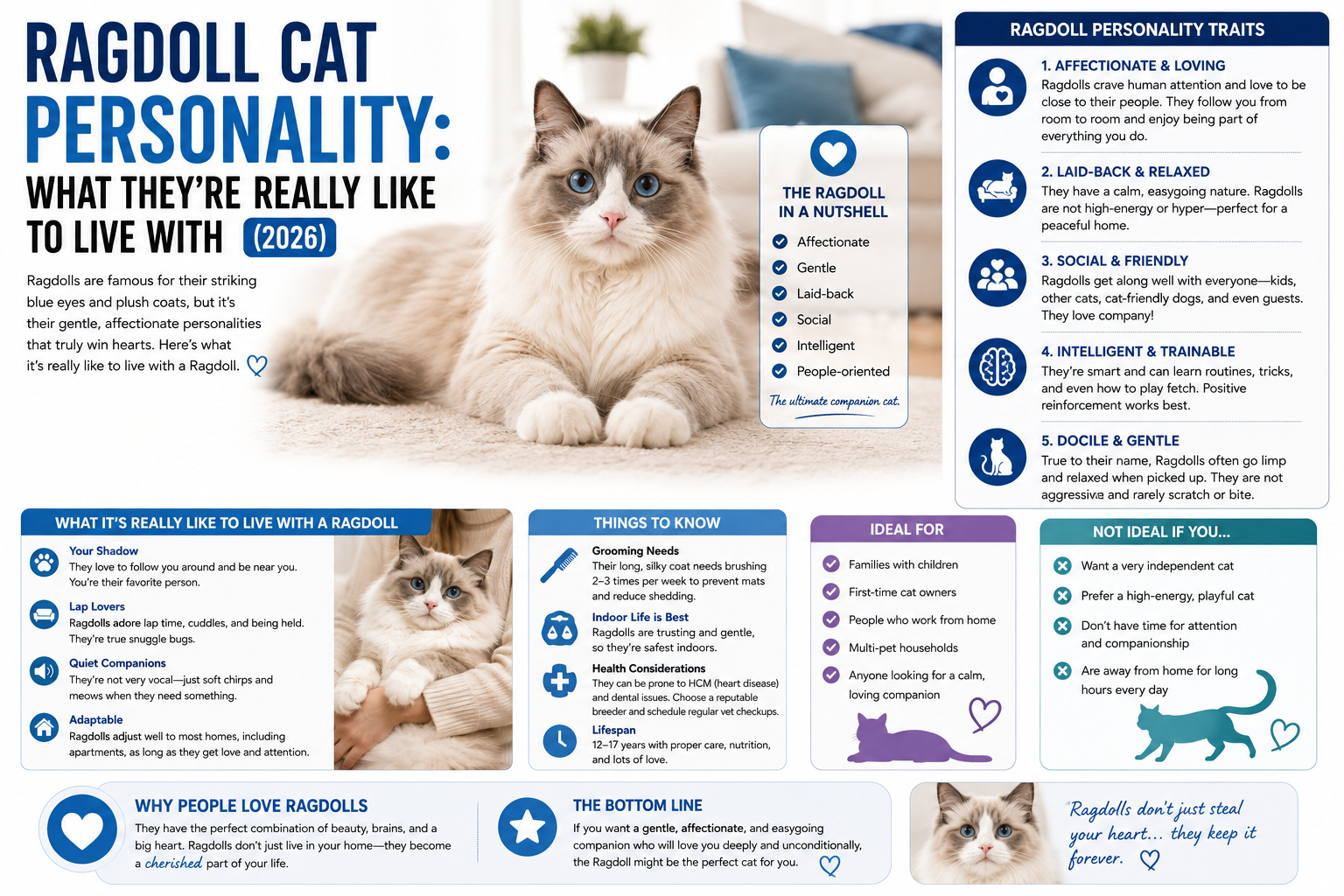
Ragdolls are among the most docile, people-oriented cat breeds often described as “puppy cats” because they follow their owners from room to room and greet visitors at the door. The name comes from a tendency to go limp and relaxed when picked up. They are quiet, tolerant of handling, good with children and dogs, and unusually low on the aggression scale. The flip side of that gentleness is that Ragdolls have poor self-preservation instincts and should be kept indoors a trusting cat is an easy target for traffic, dogs, and theft.
Key Takeaways
- Exceptionally people-oriented they seek company rather than solitude.
- Go floppy when held, which is where the breed name comes from.
- Quiet voices; they are not demanding vocalisers.
- Indoor-only is strongly recommended docility is a safety liability outdoors.
- Slow to mature: full size and coat at 3–4 years.
- Myth to correct: Ragdolls do feel pain normally. This misconception is dangerous.
The Personality in Detail
Affectionate and human-focused
This is the defining trait. Ragdolls tend to follow their people around the house, settle on laps, sleep on beds, and appear whenever a door opens. They are not aloof cats, and they generally do not enjoy long periods alone. If your household is empty ten hours a day, a Ragdoll is a questionable choice or at minimum, one that needs a companion.
The “floppy” response
Many Ragdolls relax completely when picked up, going limp in a way that is genuinely unusual among cats. Not every individual does it, and it is a temperament trait rather than a physiological quirk.
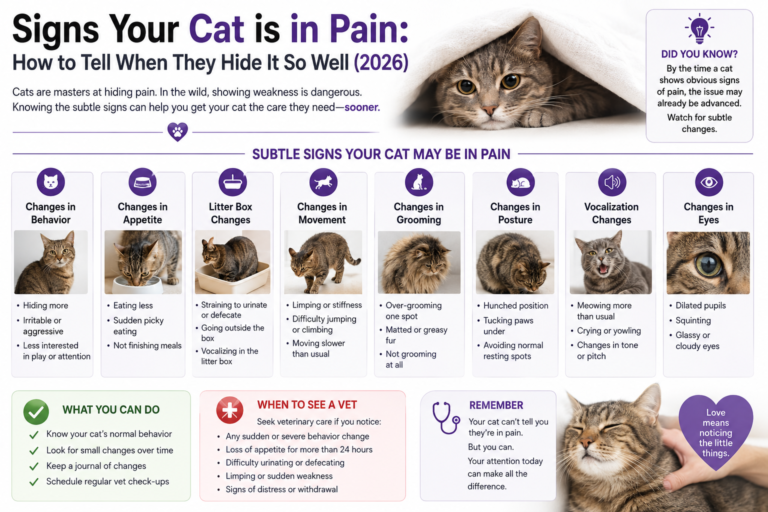
An important correction: a persistent myth holds that Ragdolls do not feel pain, or feel it less. This is false, and believing it is dangerous it leads owners to miss signs of injury or illness. Ragdolls feel pain exactly as any cat does, and like all cats they hide it well. Our guide on recognising pain in cats applies to this breed as much as any other, and arguably more, because their calm demeanour masks discomfort.
Gentle and tolerant
Ragdolls are generally excellent with children who have been taught to handle a cat respectfully, and they typically get along well with dogs and other cats. They are not usually scratchers or biters, and they tend to remove themselves rather than escalate.
Quiet
Soft, chirpy voices used sparingly. If you want a conversational cat, a Siamese or Oriental will suit better.
Ground-dwelling, not climbers
Ragdolls are notably less inclined to scale bookcases and curtains than most breeds. They still appreciate a cat tree, but they tend to favour the lower and middle levels. This makes them easier to live with in a house full of breakables.
Playful but not frantic
They enjoy wand toys and gentle games well into adulthood, without the relentless energy of a Bengal or Abyssinian. Expect a lot of sleepingwhich is normal, and covered in why is my cat sleeping so much.
Why Ragdolls Should Live Indoors
This deserves its own section because it follows directly from the personality.
A cat that trusts strangers, does not flee readily, and does not resist being picked up is at serious risk outdoors. Ragdolls are:
- Vulnerable to traffic they do not startle and run the way a wary cat does
- Vulnerable to dogs and predators limited fight-or-flight response
- Frequently stolen a striking, valuable, friendly cat that will walk up to anyone
- Poorly camouflaged pale colourpoint coats stand out
Enrichment for an indoor Ragdoll: a secure catio or enclosed garden if possible, window perches with a view, daily interactive play, puzzle feeders, a scratching post per room, and rotating toys. Harness training works better with this breed than most.
Physical Traits and Growth
| Feature | Detail |
| Weight (male) | 15–20 lb / 6.8–9 kg |
| Weight (female) | 10–15 lb / 4.5–6.8 kg |
| Coat | Semi-long, silky, with minimal undercoat |
| Eyes | Blue — a breed standard requirement |
| Pattern | Colourpoint, mitted, or bicolour |
| Maturity | 3–4 years for full size and coat |
| Lifespan | 12–17 years |
Kittens are born white and develop their points over weeks to months, with colour continuing to deepen for up to two years.
Ragdolls are large second only to Maine Coons among common breeds. If you are weighing the two, our Maine Coon size guide covers the comparison; the practical difference is temperament and coat maintenance more than bulk.
Grooming: Easier Than It Looks
The silky, low-undercoat coat mats considerably less than a Persian’s, but “less” is not “never.”
- Brush 2–3 times weekly with a steel comb, more during seasonal moults.
- Watch the friction zones: behind the ears, armpits, the ruff, and the britches.
- Bathe rarely only when genuinely needed.
- Trim nails every 2–3 weeks, since indoor cats wear them down less.
- Brush teeth regularly. Dental disease is common in all cats and largely preventable.
- Never shave unless veterinary necessity requires it.
Health Considerations
| Condition | What to know |
| Hypertrophic cardiomyopathy (HCM) | The main breed concern. A DNA test exists for the Ragdoll-associated mutation, and echocardiogram screening is used alongside it |
| Bladder stones | Ragdolls appear over-represented. Encourage water intake wet food, fountains, multiple bowls |
| Obesity | A calm, indoor cat gains weight easily. Portion control matters |
| FIP | Young pedigree cats from multi-cat environments carry elevated risk generally |
Ask any breeder for HCM DNA test results and echo screening on both parents. This is the single most important question to ask.
Feeding: keep Ragdolls on a growth formula until around 18–24 months given their slow maturity see our kitten feeding schedule then adjust portions carefully after neutering, when energy requirements drop sharply.
Is a Ragdoll Right for You?
They suit families with children, households with dogs or other cats, people who want an affectionate lap cat, first-time cat owners, and homes where someone is around much of the day.
They suit less well people who are out ten hours a day with no second pet, anyone wanting a cat with outdoor freedom, households where nobody will commit to twice-weekly grooming, and people who prefer an independent, low-contact cat.
If you are introducing a Ragdoll kitten to an existing cat, the gradual method matters as much as with any breed see how to introduce a kitten to a cat.
Frequently Asked Questions
Are Ragdoll cats good pets? For most households, yes. They are affectionate, tolerant, quiet, and good with children and other animals.
Do Ragdoll cats really go limp when you pick them up? Many do. It is a temperament trait rather than a physical mechanism, and not every individual shows it.
Do Ragdolls feel pain? Yes completely normally. The idea that they do not is a persistent myth and a dangerous one, because it leads owners to overlook injury or illness.
Can Ragdolls go outside? It is strongly discouraged. Their trusting nature makes them vulnerable to traffic, dogs, and theft. A catio or harness training is the safer route.
Do Ragdoll cats shed a lot? Moderately. The silky coat has little undercoat, so shedding is lighter than a Maine Coon’s, but seasonal moults are noticeable.
Are Ragdolls hypoallergenic? No. No cat breed is. All cats produce the Fel d 1 allergen regardless of coat type.
How long do Ragdolls live? Typically 12–17 years with good indoor care and weight management.
Ragdoll or Maine Coon which is better? Ragdolls are calmer, quieter, and more lap-oriented. Maine Coons are more playful, more independent, and need more coat maintenance. Both are large and sociable.
Final Thoughts
Ragdolls are one of the few breeds that genuinely live up to their reputation. The affection is real, the tolerance is real, and the floppy cuddle is real often enough to justify the name.
The trade-off is a cat that needs company and needs protecting. A Ragdoll left alone all day is not thriving, and a Ragdoll allowed to roam is at genuine risk. Build the indoor life properly — window perches, daily play, a catio if you can and you get one of the easiest, warmest cats to share a home with.
Related Reading
- Maine Coon Size: How Big Do They Get?
- How to Introduce a Kitten to a Cat
- Signs Your Cat Is in Pain
- Kitten Feeding Schedule by Age
A Note on Pet Health
Serlig publishes researched pet care information for everyday owners. It is general guidance, not veterinary advice, and it does not replace an examination by a licensed veterinarian who knows your pet. If your pet is unwell, or anything in this guide does not match what you are seeing at home, contact your vet.
About the Author
The Serlig Pet Care Team creates researched, plain-language pet care guides for everyday owners. Our content is written from hands-on pet-care experience and cross-checked against established veterinary sources so you can make confident decisions for your cat.