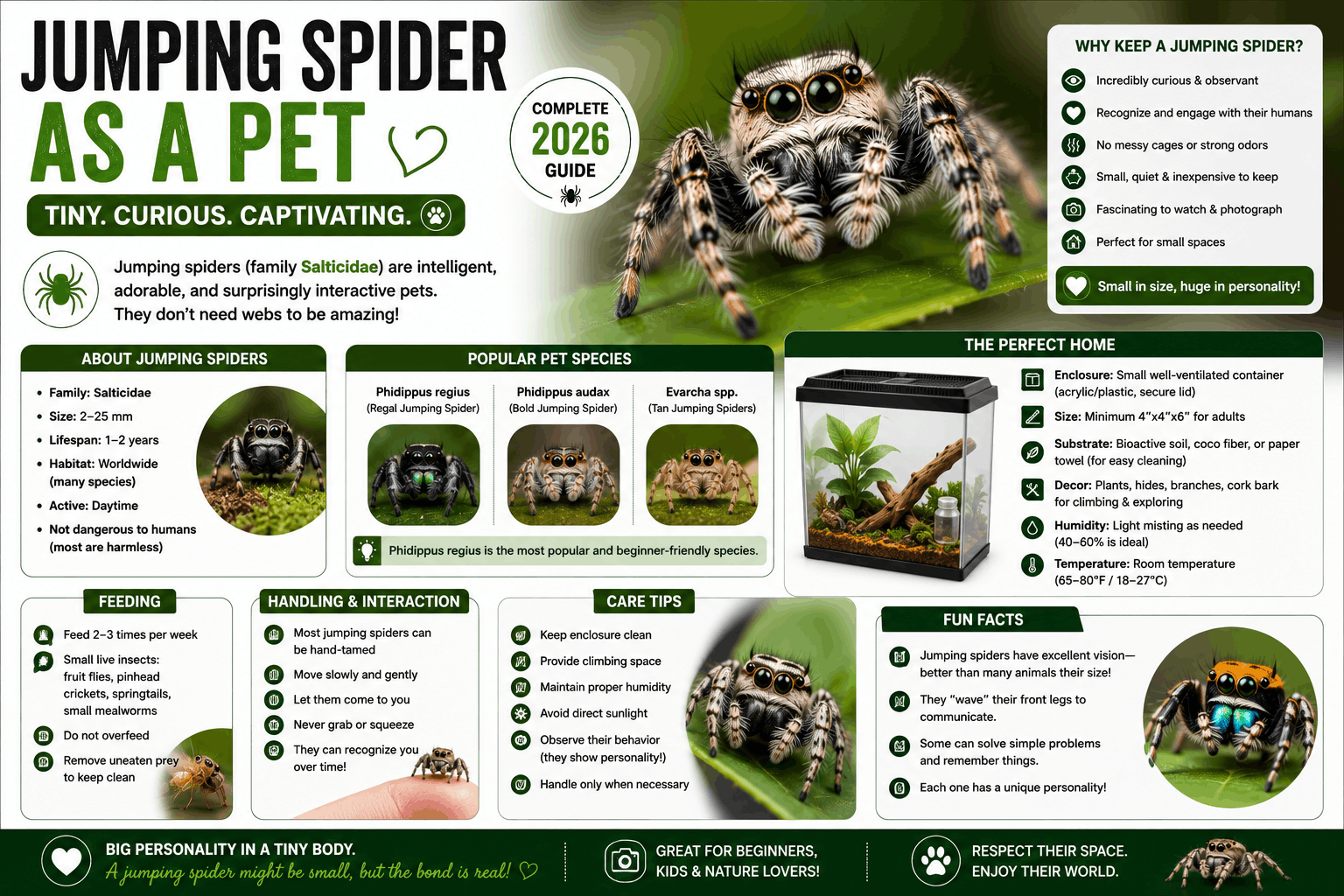
Keeping a jumping spider as a pet has become one of the most popular ways to enter the world of exotic invertebrates, and for good reason. Unlike most spiders, jumping spiders are active during the day, have big, expressive eyes, and show curious, almost personable behavior that makes them feel more like tiny interactive companions than simple display animals. The most popular pet species is the Regal Jumping Spider (Phidippus regius), prized for its bold colors and docile nature. This beginner’s guide covers everything you need: their appeal, whether they bite, enclosure setup, feeding, handling, lifespan, and cost.
Quick answer: A jumping spider makes an excellent low-maintenance exotic pet. The Regal Jumping Spider is small, generally harmless to humans, active during the day, and easy to care for in a small, tall, well-ventilated enclosure. It eats live feeder insects, needs light misting for water, and lives about 1-3 years. It is affordable and ideal for first-time invertebrate keepers.
Jumping Spider at a Glance
| Feature | Detail |
| Popular species | Regal Jumping Spider (Phidippus regius) |
| Family | Salticidae (jumping spiders) |
| Origin | Florida, southeastern U.S., Caribbean |
| Size | Females up to ~22 mm; males ~12 mm |
| Lifespan | ~1 year (up to 2–3 years with good care) |
| Activity | Diurnal (active during the day) |
| Temperament | Docile, curious, hesitant to bite |
| Diet | Live feeder insects |
| Care level | Beginner-friendly |
Why Keep a Jumping Spider as a Pet?
Jumping spiders stand out from other arachnids in ways that make them uniquely appealing:
- They’re active and visible: Being diurnal, they hunt, explore, and interact while you’re awake, unlike most nocturnal spiders and tarantulas.
- They have personality: With excellent eyesight, they constantly watch and assess their surroundings, seem to recognize their owner, and show curiosity about changes in their environment.
- They’re tiny and low-maintenance: A jumping spider needs only a small enclosure and minimal daily care, making it perfect for small homes and apartments.
- They’re beginner-friendly: The Regal Jumping Spider’s docile nature makes it a common first spider for new invertebrate keepers.
- They’re affordable: Both the spider and its setup are inexpensive compared to most exotic pets.
Do Jumping Spiders Bite? Are They Dangerous?
This is the top question for new keepers, and the answer is reassuring. Jumping spiders are generally harmless to humans and hesitant to bite. Their venom is highly effective at paralyzing insect prey, but it poses no serious danger to people.
On the rare occasion a jumping spider does bite, usually only if it feels threatened or trapped, the effect is mild, comparable to a mosquito bite, with minor redness, slight swelling, or itching. As with any bite, people with allergies should take extra care. For the vast majority of owners, a jumping spider is a safe, low-risk pet to keep and observe.
Jumping Spider Enclosure and Setup
Because jumping spiders are arboreal (tree-dwelling) and highly visual, their enclosure should prioritize height and airflow.
- Go tall, not wide. Jumping spiders need vertical space more than floor space, along with anchor points to climb and build their silk hammock near the top.
- Prioritize ventilation. Good cross-ventilation keeps the environment healthy and prevents excess moisture.
- Make it escape-proof. Small spiders can slip through tiny gaps, so ensure the enclosure closes securely.
- Add substrate and décor. Coconut fiber (coco fiber) is a popular substrate. Include cork bark, sticks, and live or artificial plants for cover, climbing, and enrichment, plus a hide.
- Keep them alone. Jumping spiders are solitary and should be housed singly to prevent cannibalism.
A simple, planted arboreal setup works beautifully and lets you enjoy watching your spider’s natural behavior.
Temperature, Humidity, and Water
Jumping spiders are easy to keep comfortable:
- Temperature: Room temperature suits most homes, so special heating is usually unnecessary.
- Humidity: Aim for a fluctuating humidity gradient rather than constant dampness, mist one side of the enclosure every few days and let it dry out between mistings.
- Water: Your spider drinks droplets off the enclosure walls and décor after misting, so a separate water dish isn’t needed. Avoid keeping the enclosure overly wet.
What Do Jumping Spiders Eat?
Jumping spiders are carnivores that hunt live prey. A varied diet of feeder insects keeps them healthy:
- Good feeders: small crickets, house flies, black soldier flies, fruit flies (for spiderlings and small juveniles), and mealworms.
- Treats: waxworms, offered only occasionally.
- Prey size rule: never feed prey larger than the spider’s abdomen.
Feeding frequency depends on age. Spiderlings and juveniles eat more often, roughly every 2-3 days, while adults typically eat about 1-3 times per week. A simple guide: a plump abdomen means your spider is full, while a small or skinny one means it’s hungry. Always remove uneaten prey, especially before and during molting, when a loose insect could injure your vulnerable spider.
Handling Your Jumping Spider
Jumping spiders can be gently interacted with, but they are delicate animals and shouldn’t be handled unnecessarily. The biggest danger during handling is not a bite to you, it is a fall for them, which can be fatal. If you do interact:
- Move slowly and let the spider walk onto your hand at its own pace.
- Always work low to the ground and over a soft surface, in case it jumps or falls.
- Keep sessions short and stress-free.
Many owners find that simply watching their spider hunt and explore is the most rewarding way to enjoy it.
Lifespan and Molting
Be prepared for a short but rewarding companionship. The average lifespan of a Regal Jumping Spider is about one year, though excellent care can extend it to two or even three years. Females generally live longer than males.
Throughout their lives, jumping spiders molt, shedding their exoskeleton to grow. During a molt, your spider becomes still and vulnerable, so do not feed it, remove any prey, and avoid disturbing it until it has fully recovered and hardened. Molting is a normal, healthy process that simply requires patience.
How Much Does a Jumping Spider Cost?
One of the biggest draws is affordability. A tiny spiderling often costs under $10, while adult males and females typically sell for around $20–$30, which frequently includes shipping and a live-arrival guarantee.
Whenever possible, buy from reputable captive breeders rather than collecting from the wild. Captive-bred spiders are healthier, ethically sourced, and better adjusted to life as a pet. Prices vary with age, color morph, and breeder reputation.
Frequently Asked Questions
Are jumping spiders good pets? Yes. Jumping spiders are docile, active during the day, small, low-maintenance, and affordable, making them one of the best exotic pets for beginners and a great first spider.
Do jumping spiders bite? Rarely. They are hesitant to bite and generally harmless to humans. On the uncommon occasion they do, the effect is mild, similar to a mosquito bite.
How long do pet jumping spiders live? About one year on average, though good care can extend their lifespan to two or three years. Females typically live longer than males.
What do jumping spiders eat? Live feeder insects such as small crickets, house flies, black soldier flies, fruit flies, and mealworms, with waxworms as an occasional treat. Never feed prey larger than the spider’s abdomen.
What kind of enclosure does a jumping spider need? A small but tall, well-ventilated, escape-proof enclosure with vertical climbing space, coco fiber substrate, plants, cork bark, and a hide. Jumping spiders should always be housed alone.
Can you hold a jumping spider? Yes, gently and briefly, but they are delicate. Handle low to the ground over a soft surface, since a fall is far more dangerous to them than a bite is to you.
How much does a jumping spider cost? A spiderling usually costs under $10, and adults typically sell for $20–$30, often including shipping and a live-arrival guarantee from captive breeders.
Final Thoughts
A jumping spider as a pet offers a surprising amount of charm in a tiny package: an alert, curious, day-active companion that’s affordable, easy to house, and safe to keep. Set up a tall, ventilated enclosure, feed appropriately sized live insects, mist for humidity, and handle only gently and rarely, and you’ll be rewarded with the fascinating behavior that has made these little arachnids so popular. Just remember their lifespan is short, so cherish the time, source your spider from an ethical captive breeder, and give it the thoughtful care it deserves.
A Note on Pet Health
Serlig publishes researched pet care information for everyday owners. It is general guidance, not veterinary advice, and it does not replace an examination by a licensed veterinarian who knows your pet. If your pet is unwell, or anything in this guide does not match what you are seeing at home, contact your vet.
About the Author
The Serlig Pet Care Team creates researched, plain-language pet care guides for everyday owners. Our care information is compiled from specialist arachnid-keeping resources and cross-checked for accuracy.