Choosing from the best reptile pets for beginners comes down to a few simple traits: a calm temperament, a manageable size, a straightforward diet, and a setup that forgives small first-time mistakes. Based on years of hands-on reptile keeping and current veterinary and public-health guidance, the six species below check all of those boxes. Each one stays a reasonable size, eats a simple diet, and tolerates gentle handling, making them ideal first reptiles for both kids (with supervision) and adults.
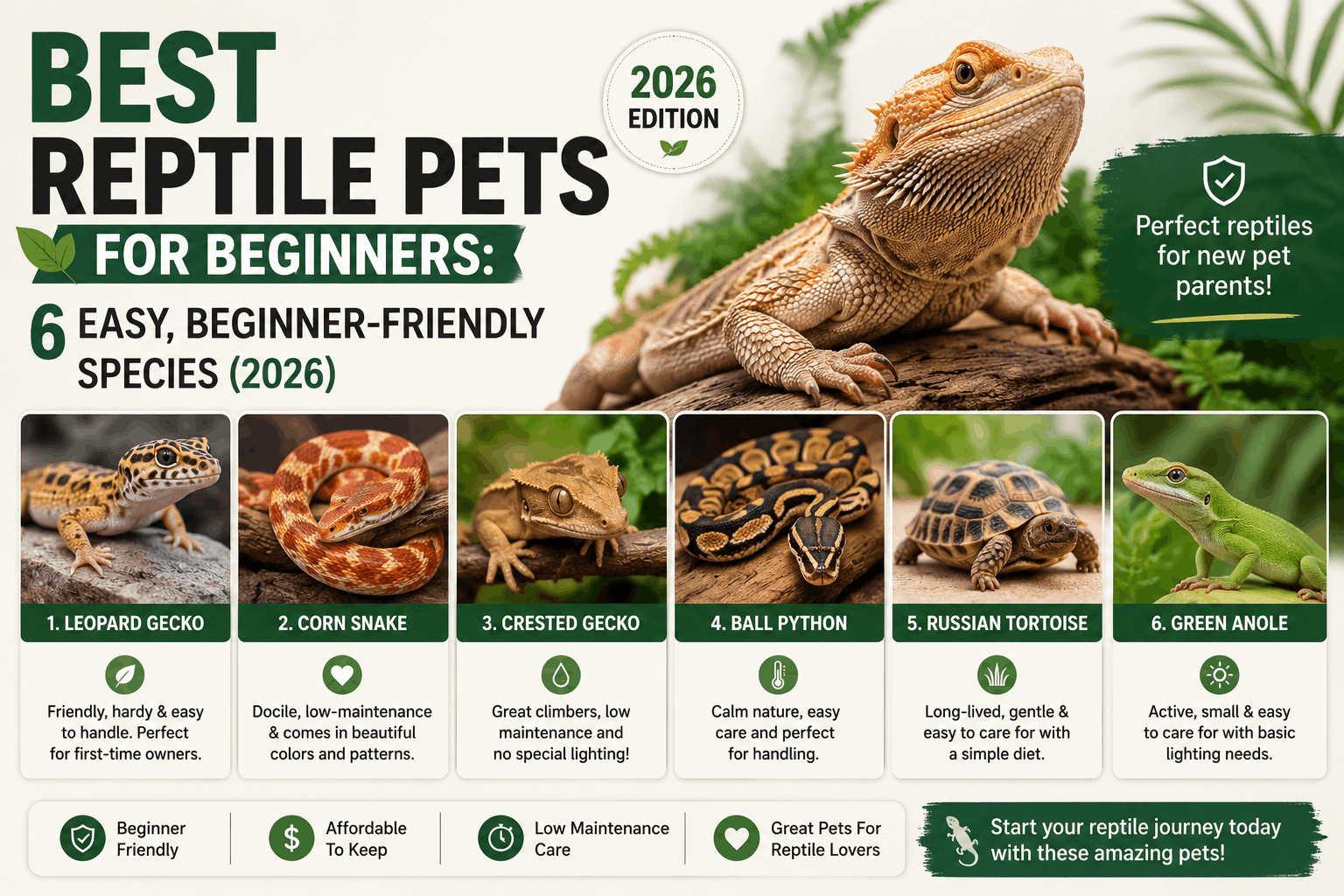
Quick answer: The best reptile pets for beginners are the leopard gecko, crested gecko, corn snake, bearded dragon, ball python, and blue-tongued skink. Leopard geckos and crested geckos are usually the easiest overall because they stay small, eat simple diets, and need minimal specialized lighting.
Beginner Reptiles Compared at a Glance
| Reptile | Adult Size | Lifespan | Min. Tank | Handling | Difficulty |
| Leopard Gecko | 7–10 in | 10–20 yrs | 20 gal | Easy | Easiest |
| Crested Gecko | 7–9 in | 15–20 yrs | 20 gal (tall) | Easy | Easiest |
| Corn Snake | 4–5 ft | 15–20 yrs | 20–40 gal | Easy | Easy |
| Bearded Dragon | 18–24 in | 10–15 yrs | 40 gal+ | Very easy | Moderate |
| Ball Python | 3–5 ft | 20–30 yrs | 40 gal | Easy | Moderate |
| Blue-Tongued Skink | 18–24 in | 15–20 yrs | 40 gal+ | Very easy | Moderate |
What Makes a Reptile Good for Beginners?
Not every reptile is a smart first pet. When we recommend the best reptile pets for beginners, we look for four things:
- Calm temperament: The animal tolerates handling without stress or biting.
- Manageable size: It stays small enough for a standard home enclosure.
- Simple diet: Feeding is predictable, without exotic or hard-to-source food.
- Forgiving care: The species stays healthy even if a new owner makes minor early mistakes.
The species below score well on all four. The ones we warn against later in this guide fail on at least one.
The 6 Best Reptile Pets for Beginners
1. Leopard Gecko The Easiest Overall
- Size: 7–10 inches · Lifespan: 10–20 years · Tank: 20 gallons · Diet: insects
The leopard gecko is widely considered the single best beginner reptile, and for good reason. It stays small, lives comfortably in a 20-gallon tank, and eats a simple insect diet of crickets and mealworms dusted with calcium. Leopard geckos are terrestrial (ground-dwelling) and do not require the elaborate UVB setups that many lizards need, though low-level UVB is now considered beneficial.
Why beginners love them: They are calm, rarely bite, and are a good size for older children to hold. Their tails even store fat, helping them tolerate short gaps between meals.
One consideration: They are nocturnal, so they are most active in the evening.
2. Crested Gecko Best Low-Maintenance Choice
- Size: 7–9 inches · Lifespan: 15–20 years · Tank: 20-gallon tall · Diet: powdered fruit diet + insects
The crested gecko may be the easiest reptile to feed. It thrives on a commercially prepared powdered fruit diet (CGD) that you simply mix with water, so live insects are optional rather than required. Cresties are arboreal (tree-dwelling), so they prefer a taller enclosure with branches to climb.
Why beginners love them: They tolerate handling, do not need UVB lighting, and thrive at normal room temperatures of 72–78°F (22–26°C).
One consideration: Unlike many geckos, a crested gecko cannot regrow its tail if it drops it so handle gently.
3. Corn Snake The Best First Snake
- Size: 4–5 feet · Lifespan: 15–20 years · Tank: 20–40 gallons · Diet: frozen/thawed rodents
If you want a snake, the corn snake is the classic first choice. It is docile, non-venomous, hardy, and stays at a manageable adult size. Corn snakes come in a huge range of color morphs and are typically active during the day, making them fun to watch.
Why beginners love them: Simple care once set up, a predictable feeding schedule (frozen/thawed mice), and a calm nature that builds handling confidence.
One consideration: Corn snakes are skilled escape artists, so a secure, well-fitted lid is essential.
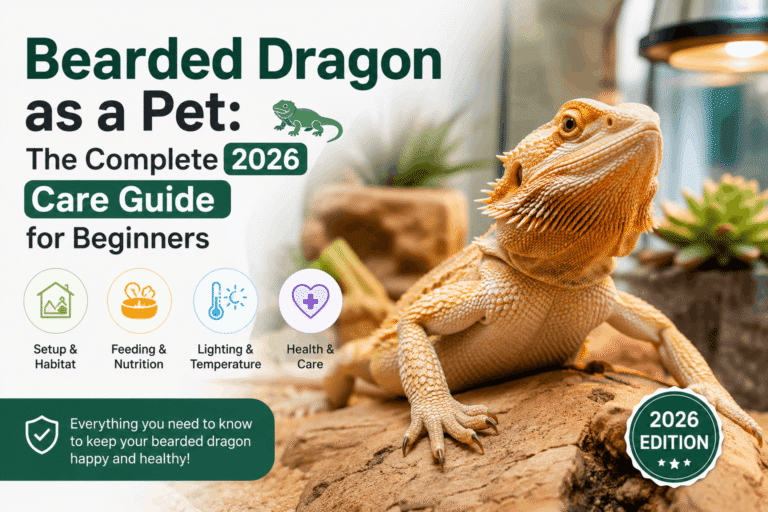
4. Bearded Dragon Best for Interaction
- Size: 18–24 inches · Lifespan: 10–15 years · Tank: 40 gallons+ · Diet: insects + vegetables
The bearded dragon is the most interactive reptile on this list. Beardies are calm, day-active, and genuinely seem to enjoy being handled, which makes them a favorite family pet. They are omnivores, eating insects when young and more vegetables as adults.
Why beginners love them: A responsive, personality-rich lizard that tolerates handling better than almost any other reptile.
One consideration: They require the most equipment on this list, a large tank, strong UVB, and a hot basking zone, so budget for a proper setup.
5. Ball Python Best Docile Snake
- Size: 3–5 feet · Lifespan: 20–30 years · Tank: 40 gallons · Diet: frozen/thawed rodents
The ball python is famously gentle. When stressed, it curls into a ball rather than acting defensively, and it moves slowly, which makes handling easy. Ball pythons stay a modest size and come in many morphs.
Why beginners love them: One of the calmest snakes available, with simple housing needs.
One consideration: Ball pythons can be picky eaters and may refuse food for weeks, especially during shedding or seasonal changes, this is usually normal but takes patience.
6. Blue-Tongued Skink Best “Dog-Like” Reptile
- Size: 18–24 inches · Lifespan: 15–20 years · Tank: 40 gallons+ · Diet: omnivore (insects, veg, protein)
The blue-tongued skink is a smart, curious lizard known for its calm, almost dog-like personality. It has a stocky body, short legs, and the striking blue tongue it uses to startle predators. Skinks are omnivores with a varied diet.
Why beginners love them: Docile, easy to handle, and highly interactive.
One consideration: They need floor space and a proper heat-and-UVB setup, similar to a bearded dragon.
Reptiles to Avoid as a First Pet
Part of good advice is knowing what not to start with. These popular-looking reptiles are poor first pets:
- Green iguana: Grows very large (5–6 feet), needs elaborate space, lighting, and diet.
- Chameleons: Fragile, stress easily, and have demanding humidity and hydration needs.
- Tegus and monitor lizards: Intelligent but large, powerful, and require advanced care.
Starting with a demanding species is the most common reason new keepers become overwhelmed. Begin with one of the six above, build confidence, then expand.
Health and Safety: The Salmonella Basics
Every reptile owner should understand one health point. According to the U.S. Centers for Disease Control and Prevention (CDC), reptiles, including geckos, snakes, and bearded dragons, can carry Salmonella germs in their droppings even when they look completely healthy and clean.
The precautions are simple and make reptiles safe for most households: wash your hands thoroughly with soap and water after handling your pet or anything in its enclosure, avoid kissing or snuggling your reptile, and keep it out of kitchens and food areas. The CDC advises that children under 5, adults over 65, and people with weakened immune systems take extra care or avoid direct contact.
Vet tip: Book an exotic-pet vet visit soon after bringing any new reptile home, and schedule annual check-ups to catch problems early.
How to Choose the Right Beginner Reptile for You
Match the reptile to your lifestyle:
- Want to hold your pet often: Choose a bearded dragon, blue-tongued skink, or ball python.
- Want the lowest maintenance: Choose a leopard gecko or crested gecko.
- Prefer a snake: Start with a corn snake or ball python.
- Have limited space: A leopard gecko or crested gecko fits a compact 20-gallon tank.
- On a tighter budget: Geckos and corn snakes have the cheapest setups; bearded dragons cost the most upfront due to lighting.
Whatever you choose, buy the full enclosure setup before bringing your reptile home.
Frequently Asked Questions
What is the easiest reptile to take care of for beginners? The leopard gecko and crested gecko are usually the easiest. Both stay small, eat simple diets, do not require complex UVB lighting, and tolerate gentle handling.
What is the best beginner pet snake? The corn snake is the best first snake. It is docile, non-venomous, hardy, stays a manageable size, and has simple care needs. The ball python is a close second for its exceptionally calm nature.
Which reptile is best for handling and interaction? The bearded dragon is the most interactive beginner reptile. It is calm, active during the day, and generally enjoys being handled, followed by the blue-tongued skink.
Do beginner reptiles need UVB lighting? It depends on the species. Bearded dragons and blue-tongued skinks require UVB, while crested geckos and (traditionally) leopard geckos can thrive without it, though low-level UVB benefits most reptiles.
Are reptiles safe pets for children? They can be, with adult supervision and good hygiene. Because reptiles can carry salmonella, the CDC recommends children under 5 avoid direct contact, and everyone should wash their hands after handling.
How long do beginner reptiles live? Most live a long time: leopard and crested geckos and corn snakes commonly reach 15–20 years, and ball pythons can live 20–30 years. A reptile is a long-term commitment.
Final Thoughts
The best reptile pets for beginners share the same winning combination: a calm nature, a manageable size, a simple diet, and forgiving care. For most first-time owners, a leopard gecko or crested gecko is the easiest starting point, a corn snake is the ideal first snake, and a bearded dragon is unbeatable if you want a pet you can interact with daily. Choose the species that fits your space, budget, and how hands-on you want to be, set up the enclosure fully before adoption, and your first reptile can become a fascinating companion for many years.
A Note on Pet Health
Serlig publishes researched pet care information for everyday owners. It is general guidance, not veterinary advice, and it does not replace an examination by a licensed veterinarian who knows your pet. If your pet is unwell, or anything in this guide does not match what you are seeing at home, contact your vet.
About the Author
The Serlig Pet Care Team creates researched, plain-language pet care guides for everyday owners. Our recommendations come from hands-on pet-keeping experience and are cross-checked against established veterinary and public-health guidance.