Quick Answer
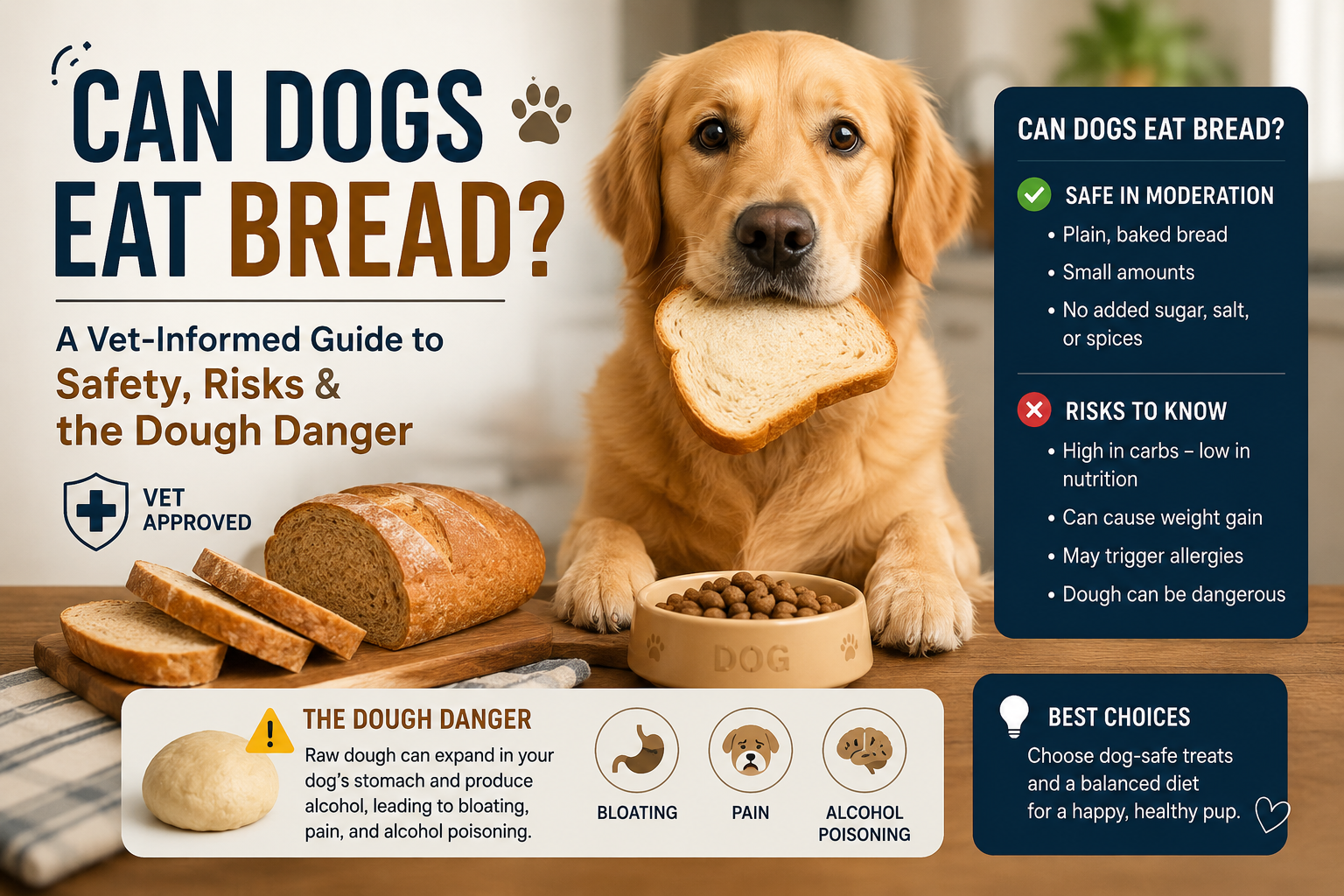
Yes, dogs can eat plain white or wheat bread in small amounts it is not toxic. But bread offers dogs almost no nutrition, and some breads are genuinely dangerous. The two things to remember: never let your dog eat raw bread dough (it can be a life-threatening emergency), and avoid breads containing raisins, xylitol, garlic, onion, chocolate, or nuts. A small piece of plain bread now and then is fine, but there is no real reason to feed it.
Key Takeaways
- Plain white or wheat bread is safe for dogs in small amounts, but has little nutritional value.
- Raw bread dough is dangerous the yeast expands and produces alcohol in the stomach.
- Never feed bread with raisins, xylitol, garlic, onion, chocolate, or macadamia nuts.
- Bread is high in carbs; eating it regularly can lead to weight gain or diabetes.
- Some dogs have wheat allergies and should avoid it entirely.
- Better snack options include plain carrots, apple slices, or cooked sweet potato.
Can Dogs Eat Bread?
Yes a little plain bread will not hurt most dogs. A typical piece of plain white or wheat bread is not toxic, and the American Kennel Club (AKC) and PetMD agree that a small amount here and there is harmless for dogs without a wheat allergy.
The honest truth, though, is that bread is essentially empty calories for dogs. It is high in carbohydrates and offers little of the protein, fat, and nutrients your dog actually needs. So while a bite is fine, there is no nutritional reason to make bread a habit and several good reasons to be careful about which bread you share.
If you want to give your dog a small food reward, more nutritious options like carrots or apple slices are better choices. Whatever you offer, the core of your dog’s diet should always be a complete and balanced dog food that meets AAFCO standards.
The Biggest Danger: Raw Bread Dough
Before the “safe” part, here is the part that sends dogs to the emergency vet.
Raw, yeast-based bread dough is genuinely dangerous for dogs. If a dog swallows raw dough, the warm, moist environment of the stomach makes the yeast keep working, and two serious problems follow:
- The dough expands. As it rises inside the stomach, it stretches the stomach and can cause a painful, dangerous bloat in some cases a life-threatening twisting of the stomach (GDV), especially in large breeds.
- Alcohol (ethanol) is produced. The fermenting yeast releases ethanol into the bloodstream, causing alcohol poisoning. Signs include disorientation, weakness, appearing “drunk,” vomiting, tremors, and in severe cases seizures or coma.
If your dog eats raw bread dough, treat it as an emergency and call your veterinarian right away. Do not wait for symptoms. This is a real risk for anyone who bakes bread or makes pizza or sourdough at home.
Breads That Are Toxic Never Feed These
Plain bread is safe, but many breads hide toxic ingredients. Never give your dog:
- Raisin bread (or any raisins/grapes) raisins and grapes are highly toxic and can cause kidney failure. Even a small amount is a reason to call your vet.
- Garlic or onion bread garlic, onion, and all their relatives (chives, leeks) damage red blood cells and are toxic; powders are even more potent than fresh.
- Anything with xylitol some sweet or “sugar-free” breads contain this artificial sweetener, which is deadly to dogs.
- Chocolate chip, banana bread, pumpkin bread, gingerbread — these often contain chocolate, raisins, macadamia nuts, nutmeg, or lots of sugar, all of which are harmful.
If your dog eats bread containing any of these, contact your veterinarian or a pet poison helpline immediately.
Is Bread Bad for Dogs? The Everyday Risks
Even plain bread has downsides if it becomes a regular thing.
Empty calories and weight gain
Bread is high in refined carbohydrates and calories but low in useful nutrition. Fed regularly, it can contribute to obesity, and over time that raises the risk of problems like joint strain, pancreatitis, and diabetes.
Wheat allergies
Some dogs are allergic or sensitive to wheat. In those dogs, bread can trigger itching, skin issues like hot spots, or digestive upset. If your dog reacts, skip bread entirely and talk to your vet.
Bloating and gas
Too much bread — or too much fiber from certain breads can cause gas and bloating. Keep portions small, especially the first time.
What About Specific Breads?
Plain versions of many breads are fine in small amounts, as long as they contain no toxic ingredients:
| Bread | Safe in small amounts? | Notes |
|---|---|---|
| Plain white / wheat | Yes | Fine occasionally; no real nutrition. |
| Plain rye / pumpernickel | Usually | Avoid versions with caraway seeds, raisins, onion, or garlic. |
| Plain pita | Usually | Only if plain — many are made with garlic or onion. |
| Banana / pumpkin / gingerbread | No | Often contain sugar, raisins, nuts, chocolate, or nutmeg. |
| Garlic bread | No | Garlic is toxic; also very high in fat. |
| Raw dough (any) | No dangerous | Emergency risk; see the section above. |
How Much Bread Can a Dog Eat?
Bread should be an occasional, tiny treat, and it counts toward the 10% rule treats and extras together should stay under a tenth of your dog’s daily calories.
As a rough guide, a small dog should have no more than a small bite, while a large dog can have a small piece and only now and then, not daily. Because bread adds calories without nutrition, less is genuinely better here.
Healthier Alternatives to Bread
If your dog loves a soft, chewable treat, these offer more nutrition for the calories:
- Plain carrots crunchy, low-calorie, and good for teeth. See our guide on carrots for dogs.
- Apple slices (no seeds or core) sweet, crunchy, and rich in fiber and vitamins.
- Plain cooked sweet potato or pumpkin fiber-rich and gentle on digestion.
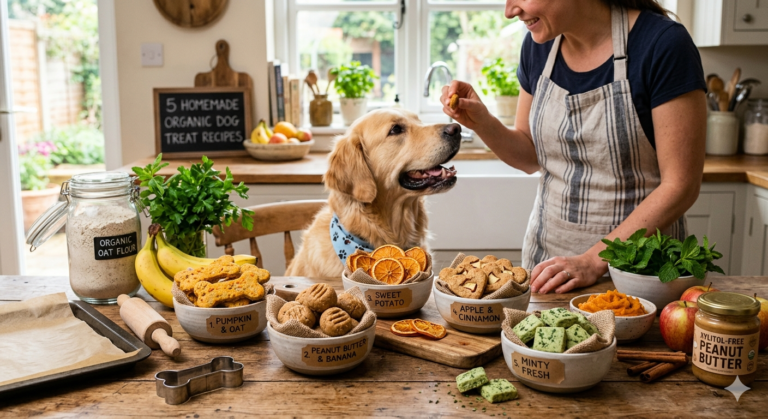
- Homemade treats you control the ingredients. For ideas, see our 5 Homemade Organic Dog Treat Recipes.
Can Puppies Eat Bread?
Puppies can have a tiny piece of plain bread, but it is best to focus on high-quality puppy food that meets their specific nutritional needs. Puppies have developing digestive systems, so introduce any new food gradually and in small amounts, and check with your veterinarian if you are unsure.
When to Call Your Vet
Reach out to your veterinarian right away if your dog:
- Eats raw bread dough do not wait for symptoms.
- Eats bread containing raisins, xylitol, garlic, onion, chocolate, or macadamia nuts.
- Shows signs of bloat (a swollen, hard belly, restlessness, unproductive retching) a medical emergency.
- Develops ongoing vomiting, diarrhea, itching, or lethargy after eating bread.
Frequently Asked Questions
Can dogs eat white bread? Yes, plain white bread is safe in small amounts for dogs without a wheat allergy, though it offers little nutrition.
Is bread dough dangerous for dogs? Yes. Raw yeast dough expands in the stomach and produces alcohol, which can cause bloat and alcohol poisoning. It is an emergency call your vet immediately.
Can dogs eat bread with raisins? No. Raisins are highly toxic to dogs and can cause kidney failure. Never feed raisin bread, and call your vet if your dog eats any.
Is bread bad for dogs? Not toxic in its plain form, but it is high in carbs and low in nutrition. Fed regularly, it can lead to weight gain or diabetes.
Can dogs eat wheat bread? Yes, unless your dog has a wheat allergy or sensitivity. As with white bread, keep it plain and occasional.
Can puppies eat bread? A tiny piece of plain bread is unlikely to harm a puppy, but a complete puppy food is a far better use of their calories.
Final Thoughts
Plain bread is safe for dogs in small amounts, but it is one of those foods that is more “harmless” than “helpful.” The real priorities are the warnings: never let your dog near raw bread dough, and always check that a loaf is free of raisins, xylitol, garlic, onion, and chocolate.
If your dog begs for a bite of your sandwich, a small piece of plain bread won’t hurt but for a genuine treat, reach for something more nutritious like carrots or apple. Keep bread rare, keep it plain, and check with your veterinarian if your dog is overweight, diabetic, or sensitive to wheat.
A Note on Pet Health
Serlig publishes researched pet care information for everyday owners. It is general guidance, not veterinary advice, and it does not replace an examination by a licensed veterinarian who knows your pet. If your pet is unwell, or anything in this guide does not match what you are seeing at home, contact your vet.