
Quick Answer
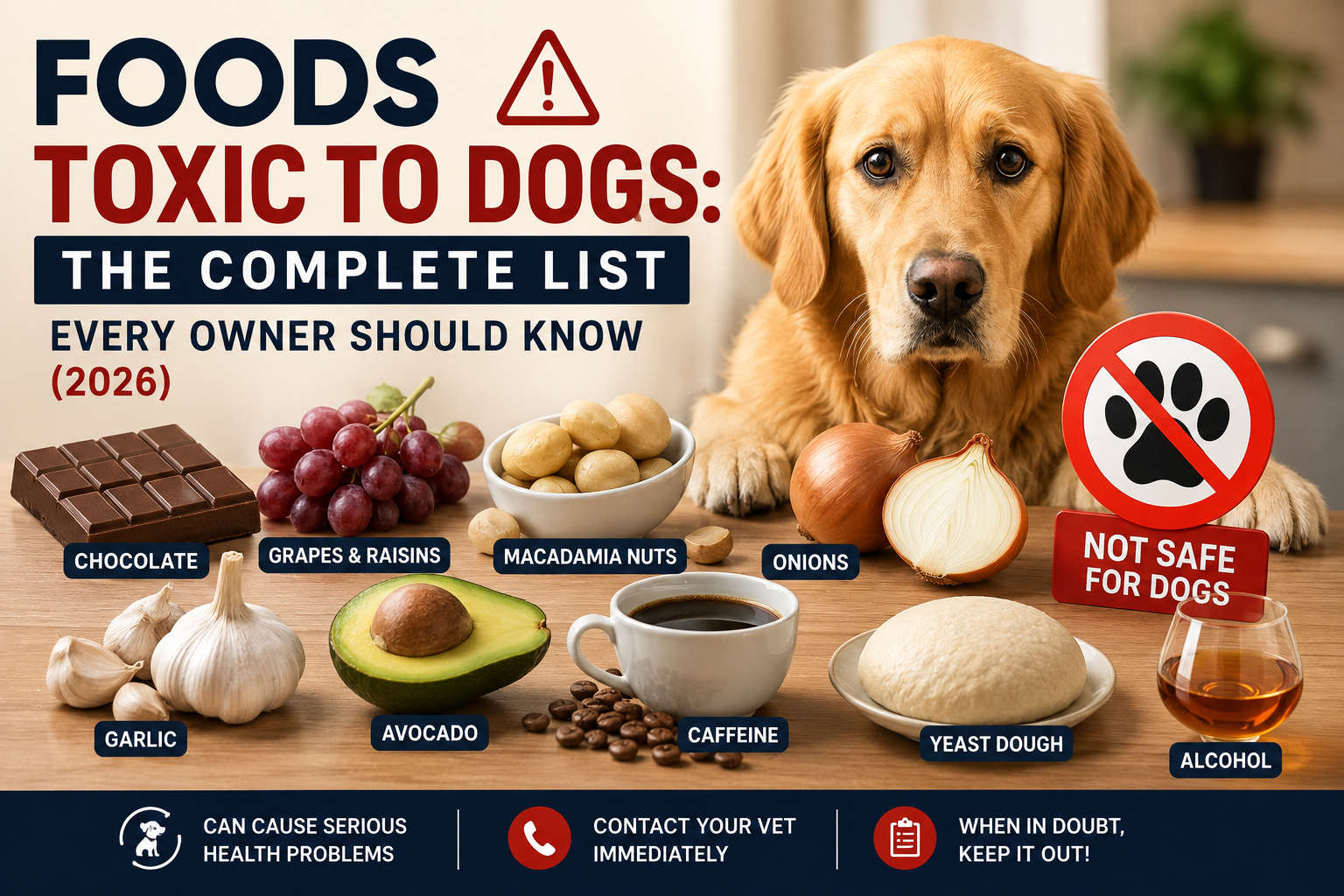
The most dangerous foods for dogs are chocolate, xylitol, grapes and raisins, onions and garlic, macadamia nuts, alcohol, caffeine, and raw yeast dough. Some cause damage in tiny amounts xylitol can trigger a life-threatening blood sugar crash within 30 minutes. If your dog has eaten any of these, call your veterinarian or a pet poison hotline straight away, before symptoms appear.
Emergency numbers to save now:
- ASPCA Animal Poison Control Center: 888-426-4435
- Pet Poison Helpline: 855-764-7661
- (Consultation fees may apply. UK owners: Animal PoisonLine, 01202 509000.)
Key Takeaways
- Xylitol and chocolate are the two most common serious poisonings in household dogs.
- Toxic dose usually depends on body weight a small dog is at risk from far less.
- Several foods are dangerous for reasons other than poison: obstruction, fat, or fermentation.
- Waiting for symptoms is the single most common owner mistake. Call early.
- Keep the packaging and note the time it genuinely changes treatment decisions.
The High Risk List
Xylitol (also labelled “birch sugar” or E967)
The most under-recognised danger in the modern kitchen. Xylitol is a sugar substitute in sugar-free gum, mints, protein bars, some peanut butters, baked goods, toothpaste, and nasal sprays.
In dogs it triggers a rapid, powerful insulin release, crashing blood sugar within 10 to 60 minutes. Larger doses cause acute liver failure over 12 to 72 hours.
Signs: vomiting, sudden weakness, wobbliness, collapse, tremors, seizures. Why it matters a couple of pieces of gum can be enough for a small dog. Because it hides in healthy products always read the label before sharing spreads a point we cover in detail in our guide to peanut butter and dogs.
Chocolate
Chocolate contains theobromine and caffeine which dogs metabolise very slowly.
| Type | Relative risk | Notes |
| Cocoa powder, baking chocolate | Highest | Very concentrated theobromine |
| Dark chocolate (70%+) | High | A common serious poisoning |
| Milk chocolate | Moderate | Volume matters a large bar is dangerous |
| White chocolate | Low for theobromine | But high fat can still cause pancreatitis |
Signs: restlessness, excessive thirst, vomiting, diarrhoea, racing heart, panting, tremors, seizures. Onset is typically 2–12 hours. Note: cocoa mulch used in gardens carries the same risk.
Grapes, raisins, sultanas and currants
Linked to sudden kidney failure, with no established safe dose. Tartaric acid is the suspected toxin. Dried forms are more concentrated and therefore more dangerous gram-for-gram. Hidden sources include trail mix, cereal bars, fruitcake, mince pies, and hot cross buns.
Signs: vomiting within 6–12 hours, then lethargy, increased or decreased urination, and kidney failure within 24–72 hours. Treat any amount as urgent — there is no established safe dose.
Onions, garlic, leeks, chives and shallots
The allium family contains N-propyl disulfide, which damages canine red blood cells and causes haemolytic anaemia. All forms count raw, cooked, dried, and powdered. Powders are the most concentrated, which is why stock cubes, gravy, curry pastes, and onion soup mix are frequent culprits.
Signs: often delayed by several days. Pale gums, weakness, rapid breathing, exercise intolerance, reddish or brown urine, jaundice.
Macadamia nuts
Uniquely toxic to dogs, by a mechanism still not fully understood. Even small amounts cause a striking syndrome.
Signs: hind-limb weakness or inability to walk, tremors, vomiting, raised body temperature, usually within 12 hours. Most dogs recover with supportive care, but veterinary assessment is important.
Alcohol
Dogs are far more sensitive than people. Sources include drinks, raw dough, fermenting fruit, and some mouthwashes.
Signs: disorientation, wobbliness, drooling, vomiting, low body temperature, slowed breathing, collapse.
Caffeine
Coffee, tea, energy drinks, and especially coffee grounds and used pods, which dogs raid from bins.
Signs: hyperactivity, restlessness, racing heart, tremors, seizures.
Raw yeast dough
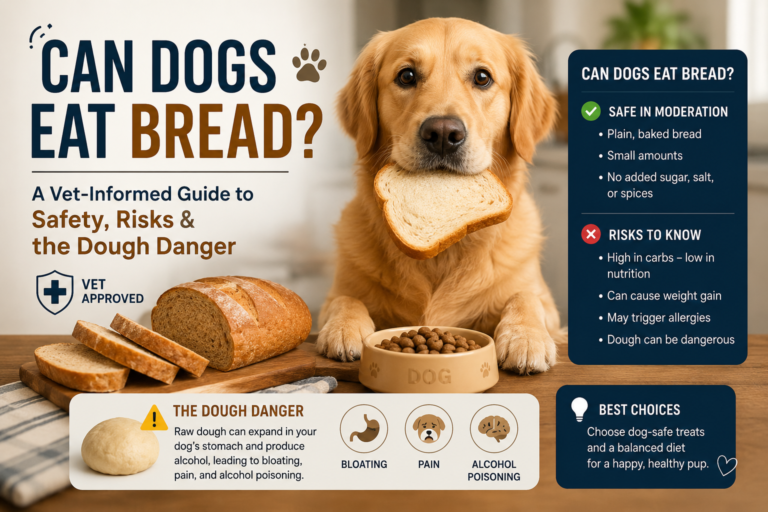
A double hazard: dough expands in the warm stomach, causing painful distension, while yeast ferments sugars into ethanol.
Signs: swollen hard abdomen, unproductive retching, drooling, wobbliness, collapse. Do not induce vomiting at home. Call a vet. See also can dogs eat bread for the baked-versus-raw distinction.
The Moderate-Risk List
| Food | Problem | What to watch for |
| Avocado | Persin (mild in dogs), but the pit is an obstruction and choking risk; flesh is very fatty | Vomiting, gagging, straining |
| Nutmeg | Myristicin in large amounts | Disorientation, raised heart rate, tremors |
| Salt / play dough / seawater | Sodium ion toxicosis | Excessive thirst, vomiting, tremors, seizures |
| Mouldy food & compost | Tremorgenic mycotoxins | Tremors, agitation, seizures within hours |
| Raw or undercooked meat & eggs | Salmonella, campylobacter, avidin | Vomiting, diarrhoea, household transmission |
| Fatty trimmings, fried food, gravy | Triggers pancreatitis | Repeated vomiting, hunched posture, refusing food, painful belly |
| Cooked bones | Splintering, perforation, obstruction | Gagging, drooling, straining, bloody stool |
| Corn cobs | Classic intestinal obstruction | Repeated vomiting, no stool, lethargy |
| Milk & large amounts of dairy | Lactose intolerance | Gas, bloating, diarrhoea see can dogs eat cheese |
| Green tomato, stems and leaves | Solanine | Drooling, upset stomach, weakness |
| Raw potato & potato peel | Solanine | Same as above |
| Apple, cherry and peach pits | Contain cyanogenic compounds; also obstruction | Difficulty breathing, bright red gums |
| Hops (home brewing) | Malignant hyperthermia | Panting, very high temperature, collapse |
For fruit specifically, our guide to what fruits dogs can eat covers the safe list alongside the ones to skip.
What to Do If Your Dog Eats Something Toxic
- Remove access. Secure the remaining food and move your dog away.
- Identify and quantify. What, how much, and when. Keep the wrapper or packaging.
- Call before you act. Your vet, an emergency clinic, or a poison hotline. Have your dog’s weight ready.
- Do not induce vomiting unless instructed. It is genuinely dangerous with caustic substances, with expanding dough, and if your dog is already wobbly or unconscious.
- Skip the home remedies. Milk, salt, oil, and bread do not neutralise poisons and can waste critical time.
- Go in if asked. Decontamination is far more effective early. Bring the packaging with you.
What treatment usually involves: induced vomiting, activated charcoal, intravenous fluids, bloodwork to check liver and kidney function, and targeted therapy such as intravenous dextrose for xylitol, or heart medication for chocolate.
Prevention That Actually Works
- Bin discipline. A lidded, latched, or under-sink bin prevents most poisonings outright.
- Counter and handbag audit. Sugar-free gum in a visitor’s bag is a classic route to xylitol exposure.
- Brief the household. Children, guests, and dog-sitters need one clear rule: nothing from the table without asking.
- Holiday vigilance. Christmas, Easter, Halloween, and Diwali all bring chocolate, dried fruit, and rich food into reach at once.
- Read spread labels. Peanut butter, protein bars, and “no added sugar” products.
- Feed a complete diet. A dog satisfied by a complete and balanced food scavenges less.
- Save the numbers. Programme your vet and a poison line into your phone today, not during an emergency.
Frequently Asked Questions
What is the most toxic food for dogs? Xylitol and chocolate cause the most serious household poisonings, but grapes and raisins are arguably the most unpredictable because there is no known safe dose.
How much chocolate is dangerous for a dog? It depends on the type and your dog’s weight dark and baking chocolate are far more concentrated than milk chocolate. Rather than estimating, call a poison line with the product details and your dog’s weight.
How long after eating something toxic will a dog show symptoms? It varies widely. Xylitol can act within 30 minutes, chocolate within 2–12 hours, onion toxicity over several days, and grape-related kidney injury over 24–72 hours.
Should I make my dog vomit at home? Only under direct veterinary instruction. Inducing vomiting is unsafe with certain substances and in dogs that are already unwell.
Is peanut butter safe for dogs? Plain peanut butter is, but many brands now contain xylitol. Always check the label see our full peanut butter guide.
Are these foods toxic to cats as well? Many are, though the risks differ. Cats are especially sensitive to onion, garlic, and lilies see our list of foods toxic to cats.
My dog ate something toxic days ago and seems fine. Should I still call? Yes, particularly with onion, garlic, or grapes, where damage develops quietly. A phone call and a blood test are cheap reassurance.
Can a dog recover from food poisoning? Most dogs recover fully when treated early. Outcomes worsen significantly once organ damage is established, which is why timing matters more than anything else.
Final Thoughts
Most poisonings are not feeding mistakes they are access mistakes. A bin left open, a handbag on the floor, a chocolate box on the coffee table.
Learn the eight high-risk foods well enough to recognise them instantly, keep them physically out of reach, and put two phone numbers in your phone. If something does happen, call early rather than watching and waiting. In toxicology, the hours you save are the treatment.
Related Reading
- Can Dogs Eat Peanut Butter? (Xylitol Warning)
- What Fruits Can Dogs Eat? A Complete Guide
- What to Feed a Dog With Diarrhea
- Emergency Alert: 10 Human Foods That Are Toxic to Cats
A Note on Pet Health
Serlig publishes researched pet care information for everyday owners. It is general guidance, not veterinary advice, and it does not replace an examination by a licensed veterinarian who knows your pet. If your pet is unwell, or anything in this guide does not match what you are seeing at home, contact your vet.
About the Author
The Serlig Pet Care Team creates researched, plain-language pet care guides for everyday owners. Our content is written from hands-on pet-care experience and cross-checked against established veterinary sources so you can make confident decisions for your dog.


One Comment