
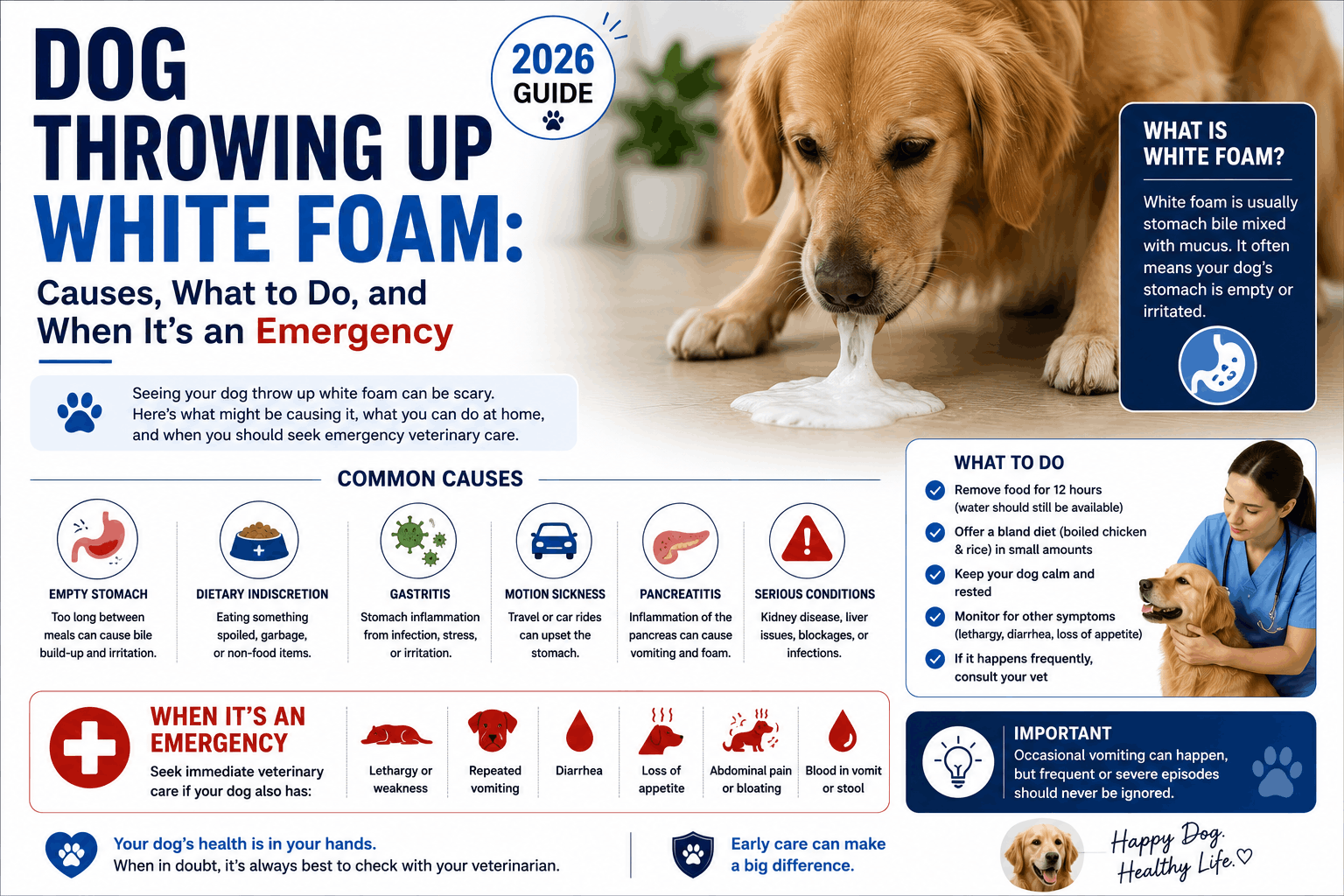
Finding your dog throwing up white foam can be alarming, and it is one of the most common reasons pet owners call the vet. In most cases, white foam is simply a mix of stomach acid, saliva, and air that appears when a dog’s stomach is empty, often harmless and self-resolving. But the same symptom can also be an early warning sign of a life-threatening emergency such as bloat or poisoning. This guide, grounded in veterinary guidance, explains what white foam vomit means, the common and serious causes, and most importantly exactly when to seek urgent care.
What Does It Mean When a Dog Throws Up White Foam?
When a dog throws up white foam, the foam is usually saliva and gastric (stomach) juices from the upper digestive tract. It looks foamy or bubbly because stomach acid mixes with saliva and swallowed air. This most often happens when the stomach is empty, which is why many dogs bring up white foam in the early morning or late at night.
One important distinction: true vomiting brings material up from the stomach, while coughing up white foam can be a respiratory issue, such as kennel cough a different problem entirely. If your dog is honking, hacking, or bringing up foam while coughing rather than heaving, mention that to your vet, as it changes the likely cause.
Common Causes of a Dog Throwing Up White Foam
Many cases are mild, especially if your dog is otherwise acting normally. Common, usually less-serious causes include:
- Empty stomach (bilious vomiting syndrome): When a dog goes too long without eating, bile can build up and irritate the stomach lining, producing white or yellow foam typically in the morning or overnight.
- Acid reflux: Excess stomach acid can cause foamy vomit and nausea.
- Dietary upset or indigestion: Eating fatty foods, spoiled leftovers, or a sudden diet change can upset the stomach.
- Eating grass or non-food items: These can irritate the stomach lining and trigger foamy vomiting.
- Stress, excitement, or motion sickness: Anxiety and car rides can cause some dogs to bring up foam.
A single episode in a dog that is eating, drinking, and behaving normally is usually not a cause for panic, but it should still be monitored.
Serious Causes That Need Urgent Care
The same symptom can signal a genuine emergency. These causes require immediate veterinary attention:
- Bloat (Gastric Dilatation-Volvulus / GDV): One of the most serious emergencies in veterinary medicine. The stomach fills with gas and can twist. Early signs include retching without producing vomit, drooling, a swollen or distended belly, and restlessness. Large, deep-chested breeds such as Great Danes, German Shepherds, Standard Poodles, and Doberman Pinschers are at higher risk, though it can affect any dog. Bloat is fatal without prompt surgery, treat it as a true emergency.
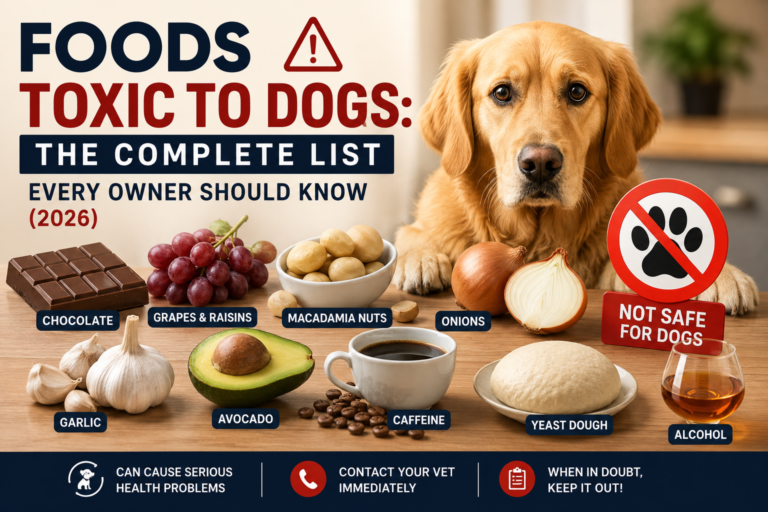
- Toxin or poison ingestion: Chocolate, xylitol, grapes, rodenticides, household cleaners, certain plants, and human medications can all cause foamy vomiting. This needs immediate care.
- Pancreatitis: Inflammation of the pancreas, often triggered by fatty food, causing vomiting, abdominal pain, and lethargy.
- Gastritis or gastroenteritis: Inflammation from infections, parasites, or swallowed foreign substances can cause persistent foamy vomiting.
- Foreign body obstruction: A swallowed object blocking the digestive tract.
- Parvovirus: A serious viral infection, especially dangerous in unvaccinated puppies.
- Pyometra: A life-threatening uterine infection in unspayed females; vomiting can be a sign.
- Kidney disease or cancer: In older dogs with recurrent foamy vomiting, these are worth investigating.
When to Call the Vet
Contact a veterinarian right away if your dog throwing up white foam also shows any of these warning signs:
- Vomiting three or more times in 24 hours, or repeated heaving
- A swollen, bloated, or painful abdomen
- Retching or gagging without bringing anything up
- Weakness, collapse, or pale gums
- Difficulty breathing
- Blood in the vomit
- Lethargy, refusing food or water, or signs of pain
- Suspected ingestion of a toxin or foreign object
- The dog is a puppy, a senior, or has an existing health condition
When in doubt, call. Puppies, seniors, and dogs with chronic conditions should be seen sooner rather than later, because they can decline quickly.
What to Do at Home for Mild Cases
If your dog has vomited white foam only once and is otherwise bright, alert, and acting normal, veterinary sources suggest a cautious approach:
- Monitor closely for the next 2–3 hours and throughout the day for any repeat vomiting or other symptoms.
- Withholding food briefly many vets suggest resting the stomach for about 6–12 hours while always keeping fresh water available to prevent dehydration.
- Reintroduce a bland diet such as boiled, plain chicken and plain white rice in small amounts once vomiting has stopped.
- Do not give human medications unless your veterinarian has specifically prescribed them.
If vomiting returns, worsens, or is joined by any of the warning signs above, stop home care and contact your vet immediately.
How to Help Prevent It
A few habits can reduce the odds of an empty-stomach or diet-related episode:
- Feed smaller, more frequent meals so the stomach is not empty for long stretches, which helps dogs prone to bilious vomiting.
- Avoid sudden diet changes and transition foods gradually over 7-10 days.
- Keep toxins out of reach, secure medications, cleaners, and dangerous foods like chocolate, grapes, and xylitol.
- Discourage grass and garbage eating on walks and at home.
- Reduce bloat risk in at-risk breeds by avoiding heavy exercise right after eating and asking your vet about feeding strategies.
Frequently Asked Questions
Why is my dog throwing up white foam? Most often it is stomach acid and saliva brought up on an empty stomach, from acid reflux, or from minor indigestion. However, it can also signal serious problems like bloat, poisoning, or pancreatitis, so watch for other symptoms.
Is a dog throwing up white foam an emergency? It can be. A single episode in a dog acting normally is usually not urgent. But it is an emergency if it is repeated or paired with a swollen belly, unproductive retching, weakness, pale gums, breathing trouble, or suspected poisoning.
What should I do if my dog throws up white foam but acts normal? Monitor closely, keep fresh water available, briefly rest the stomach, and reintroduce a small bland meal (boiled chicken and rice). Contact your vet if it happens again or other symptoms appear.
Can stress cause a dog to vomit white foam? Yes. Anxiety, excitement, and motion sickness can trigger foamy vomiting in some dogs.
Should I feed my dog after it vomits white foam? Wait a few hours, then offer a small, bland meal if the vomiting has stopped and your dog seems comfortable. Never force food.
My dog is trying to vomit but nothing comes out. What does that mean? Unproductive retching, especially with a swollen belly and restlessness, can be a sign of bloat (GDV), a life-threatening emergency. Seek veterinary care immediately.
Is my dog coughing up foam or vomiting? Coughing up white foam can point to a respiratory issue like kennel cough, while vomiting brings material up from the stomach. Note which is happening, as it helps your vet find the cause.
Final Thoughts
A dog throwing up white foam is usually caused by something minor, like an empty stomach or mild indigestion, and often resolves with simple monitoring and a brief bland diet. But because the same symptom can be the first sign of an emergency such as bloat or poisoning, it always deserves a careful look. Watch your dog closely, know the warning signs, and never hesitate to call your veterinarian when something seems off. Acting quickly on the serious signs and staying calm with the mild ones is the best way to protect your dog’s health.
A Note on Pet Health
Serlig publishes researched pet care information for everyday owners. It is general guidance, not veterinary advice, and it does not replace an examination by a licensed veterinarian who knows your pet. If your pet is unwell, or anything in this guide does not match what you are seeing at home, contact your vet.
About the Author
The Serlig Pet Care Team creates researched, plain-language pet care guides for everyday owners. Our content is written from hands-on pet-care experience and cross-checked against established veterinary sources.


2 Comments