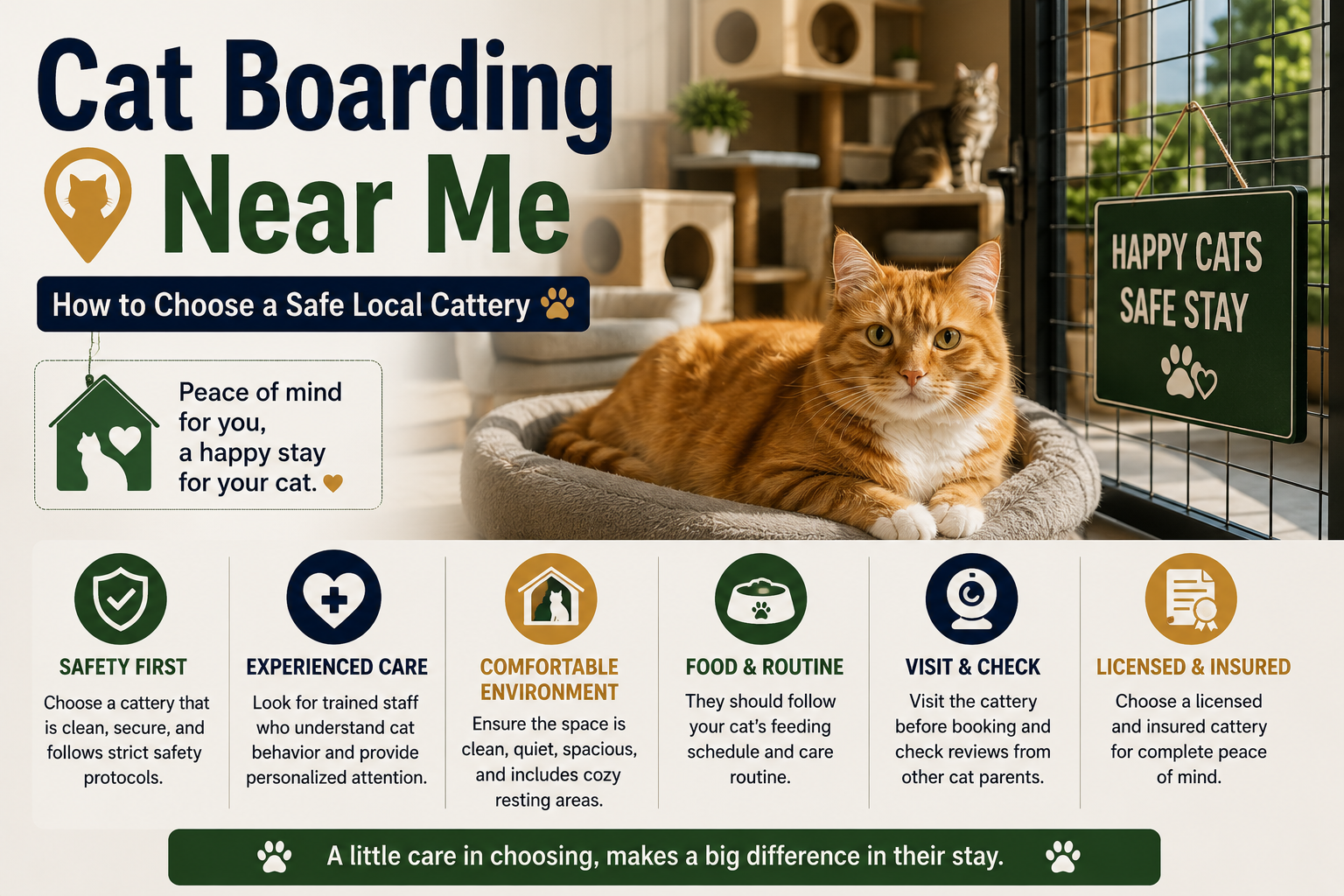
Searching for cat boarding near me usually means you need safe and dependable care while you travel, move home, attend an emergency or spend time away from your cat.
The nearest cattery is not always the best choice. A good boarding facility should be licensed when local rules require it. It should also be clean, secure, calm and prepared to follow your cats normal food medication and care routine.
This guide explains how to find local cat boarding, how to compare facilities, what to ask during a visit and how to prepare your cat for a comfortable stay.
Important Information
Boarding rules prices , vaccination requirements and availability vary by location. Check the current requirements with the facility, your veterinarian and the relevant local authority before booking.
How to Find Cat Boarding Near Me
Start your search early especially before school holidays, public holidays and summer travel periods. Popular boarding facilities can become fully booked weeks or months in advance.
Search by Town or Postcode
Use your exact town postcode or neighbourhood with the search term cat boarding. Useful searches include cat boarding near me, a local cattery near me, a cat hotel near me and licensed cat boarding near me.
Search results are only a starting point. A high position on a map does not prove that the facility provides suitable care.
Ask Your Veterinary Practice
Your local veterinary practice may know established catteries in the area. The practice may also explain which vaccinations your cat needs before boarding and whether your cat is healthy enough for the stay.
Ask Trusted Cat Owners
Recommendations from friends, neighbours , rescue volunteers and local cat owners can help you build a shortlist. Ask what happened during the stay and how the staff responded when the cat was anxious, ill or needed medication.
Check Local Authority Records
Where commercial boarding requires a licence, ask the facility for its licence number. Verify the details with the relevant local council or authority.
In England commercial cat boarding activities generally need a licence when they fall within the current animal activities licensing rules. The licence holder name and licence number should also be displayed on a website used for the licensed activity.
Visit the Cattery Before Booking
A website and reviews cannot show everything. Visit the facility before paying a deposit when possible.
Cats Protection advises owners to inspect a cattery before making a decision and to confirm that vaccinations are current. It also recommends checking the licence escape prevention separation between cats heating cleanliness and medication support.
Observe the General Environment
The cattery should look clean, organised and well maintained. A strong smell of waste dirty bowls overflowing litter trays or damp bedding may show that cleaning routines are not adequate.
Some cat smells are normal. A powerful smell throughout the building deserves further questions.
Listen to the Noise Level
Constant barking, loud music, shouting or machinery can increase stress. Cat areas should be protected from excessive noise and disturbance.
Check Security
Look for secure doors, strong mesh and an entrance system that reduces escape risk. Double doors or a safety corridor provide extra protection.
Ask how staff respond if a cat escapes from its unit and whether the outer boundary is secure.
Check Temperature and Ventilation
The sleeping area should remain comfortable in hot and cold weather. Ask how the facility controls temperature, airflow humidity and draughts.
In England current statutory guidance says cats must not be kept in areas that become too hot or too cold. It also sets temperature and ventilation expectations for licensed facilities.
What a Good Cat Boarding Room Should Include
A Private Secure Unit
Cats from different households should not be forced to share accommodation. Unfamiliar cats can become frightened, defensive or aggressive when placed together.
Ask whether cats from the same home can share and whether they can be separated quickly if tension develops.
A Separate Sleeping Area
Your cat should have a clean, dry and comfortable place to rest. The sleeping area should offer privacy and protection from direct contact with unfamiliar cats.
A Hiding Place
Hiding is a normal coping behaviour for many cats. A box covered bed shelf or screened section can help a nervous cat feel safer.
Space to Move and Stretch
The unit should allow the cat to walk, turn , stretch, stand normally and use different areas for resting, eating and toileting.
A Scratching Surface and Safe Enrichment
Ask whether the unit includes a scratching post, safe toys, elevated resting areas and daily interaction based on the cats preferences.
Clean Food Water and Litter Areas
Food, water and litter should be separated. Bowls and litter trays should be cleaned regularly and each cat should have access to fresh water.
Questions to Ask a Cat Boarding Facility
Prepare your questions before visiting. A responsible facility should answer clearly and should not pressure you to book immediately.
Are You Licensed
Ask to see the current licence when local rules require one. Check the business name address, licence number expiration date and any displayed rating.
What Vaccinations Are Required
Ask which vaccinations are required and how long before arrival they must be completed. Do not wait until the day before boarding because some facilities need records in advance.
Your veterinarian should decide which vaccines are suitable for your cat based on age, health , lifestyle and local disease risk.
Do Cats From Different Homes Mix
Choose individual accommodation rather than communal housing with unfamiliar cats. Separation allows staff to monitor eating, drinking litter use and behaviour more accurately.
How Often Are Cats Checked
Ask how many checks take place during the day and overnight. Staff should record appetite, water intake, litter use medication and changes in behaviour or health.
What Happens During a Medical Emergency
The facility should have a written emergency plan. Ask which veterinary practice they use, who can approve treatment, how transport is arranged and how quickly you will be contacted.
Can Staff Give Medication
Explain the exact medication dose timing and method. Ask whether staff have experience with tablets, liquid medicine injections, inhalers or prescription diets.
Some medical needs may require veterinary boarding or a trained home sitter instead of a standard cattery.
Can You Follow My Cats Diet
Ask whether you should bring your cats normal food. A sudden diet change can cause refusal to eat vomiting or diarrhoea.
Visit the Serlig Pet Nutrition guide for more information about feeding and balanced nutrition.
Will I Receive Updates
Some facilities send photos, videos or short daily reports. Ask what is included and whether an update service costs extra.
What Is Included in the Price
Request a written quotation. Confirm whether the daily rate includes food medication play sessions, heating grooming updates collection and late pickup.
Cat Boarding Reviews and Ratings
Online reviews can reveal useful patterns but one review should not decide the booking.
Read Recent Reviews
Focus on reviews from the last year because staff ownership and standards can change.
Look for Repeated Themes
Repeated comments about cleanliness, communication medication errors, escape incidents or unexplained illness deserve attention.
Read Business Responses
A professional response should be calm, clear and respectful. Aggressive replies or disclosure of private customer details may indicate poor judgement.
Do Not Trust Reviews Alone
Reviews can be incomplete, false or based on expectations that differ from your own. Verify the licence, visit the facility and ask detailed questions.
Cat Boarding Cost Near Me
Cat boarding prices depend on location, room size, season length of stay, number of cats and extra services.
Luxury suites collection medication administration grooming and one to one play may increase the total price.
Ask for the Full Cost
Request the daily rate and all possible extra charges in writing. Ask whether arrival and departure days are charged as full days.
Check Deposit and Cancellation Terms
Read the cancellation policy before paying. Holiday bookings may require a non refundable deposit or full payment in advance.
Do Not Choose Only by Price
The cheapest option may not provide the right environment or staffing. The most expensive option is not automatically the safest either.
Compare welfare standards, security staff experience and emergency planning before comparing luxury extras.
Cattery or Cat Sitter
Some cats cope well in a carefully selected cattery. Other cats are calmer in their own home with a reliable sitter.
Cats Protection says staying at home is often the least unsettling option for cats. It recommends sitter visits at least twice daily with more frequent care for very young senior or medically vulnerable cats.
Cat Boarding May Suit Your Cat When
- Your cat adapts well to new people and environments
- Your home cannot be visited safely
- Your cat needs regular observation
- You prefer staff and secure purpose built accommodation
- The facility can manage the cats medication and diet
A Cat Sitter May Suit Your Cat When
- Your cat becomes highly stressed during travel
- Your cat is strongly attached to its home territory
- Your cat hides from unfamiliar people and places
- You have several cats that are comfortable together at home
- A trusted insured sitter can provide enough daily visits
An automatic cat feeder can support a feeding routine but it does not replace human checks, play litter cleaning fresh water or emergency care.
How to Prepare Your Cat for Boarding
Book a Veterinary Check
Ask your veterinarian whether your cat is fit for boarding. Update required vaccinations, parasite control and medication before the stay.
Update Identification Details
Make sure the microchip record and contact information are current. Add an emergency contact who can make decisions when you cannot be reached.
Use a Secure Carrier
Choose a strong well ventilated carrier that closes securely. Place familiar bedding inside when the facility allows it.
Keep Food Consistent
Provide enough of the normal food when requested. Label each container clearly with the cat’s name, portion size and feeding times.
Write Clear Care Instructions
Include feeding medication behaviour, litter preferences, medical history veterinary details and emergency contacts.
Pack Familiar Items
A familiar blanket or small item carrying the scent of home may help some cats settle. Ask the facility which items are allowed and how they prevent belongings from being lost.
Tell Staff About Normal Behaviour
Explain whether your cat is shy, vocal , playful , defensive or likely to stop eating when stressed. Staff need a clear baseline so they can recognise changes.
Medication and Special Needs
Senior Cats
Senior cats may need softer bedding, closer monitoring and more frequent health checks. Discuss mobility appetite kidney disease arthritis and medication before booking.
Diabetic Cats
A diabetic cat needs precise feeding medication and monitoring. Confirm that trained staff are available at every required time.
Cats With Kidney or Urinary Disease
Ask how water intake, urination appetite and prescription food will be monitored. A veterinary boarding service may be safer for an unstable condition.
Anxious Cats
Ask whether the unit has visual barriers hiding places, quiet areas and staff trained in low stress handling.
Cats With a History of Vomiting
Give staff clear instructions about your cats normal eating pattern and warning signs. Read our guide about why cats vomit for causes that may need veterinary attention.
Red Flags When Choosing Cat Boarding
- The facility refuses all visits before booking
- The business cannot show a required licence
- Different household cats are placed together
- Units look dirty damaged damp or insecure
- Food water and litter are not kept clean
- Staff cannot explain emergency procedures
- Medication instructions are treated casually
- There is no isolation plan for a sick cat
- The business pressures you to pay immediately
- Prices and cancellation terms are not provided in writing
- Cats appear extremely distressed or unwell
- Strong waste smells are present throughout the facility
Leave and choose another option when the facility does not feel safe or transparent.
What to Provide on Check In Day
- Vaccination record
- Medication in original packaging
- Written medication instructions
- Normal food when required
- Veterinary practice details
- Your contact details
- An emergency contact
- Insurance information when relevant
- Information about medical and behavioural needs
- A secure labelled carrier
Keep a copy of every document and ask for written confirmation that the facility received the medication and instructions.
What to Expect After Boarding
Some cats hide, sleep more, eat less or become unusually affectionate for a short time after returning home. Keep the home calm and return to the normal routine gradually.
Monitor Eating and Drinking
Contact a veterinarian if your cat refuses food or water or shows signs of dehydration.
Watch for Vomiting or Diarrhoea
Stress or a diet change can affect digestion but repeated vomiting, severe diarrhoea blood or weakness requires veterinary advice.
Check for Respiratory Symptoms
Sneezing eye discharge, coughing breathing difficulty or marked tiredness should be discussed with a veterinarian.
Give Your Cat Space
Allow the cat to rest in a familiar quiet area. Do not force interaction if the cat wants to hide.
Visit the Serlig Cat Care hub for more guidance about cat health feeding, grooming and daily care.
Frequently Asked Questions
How Do I Find the Best Cat Boarding Near Me
Search by town or postcode and ask your veterinarian and trusted cat owners for recommendations. Verify the licence when required. Visit the facility and compare cleanliness security staff experience separation emergency care and medication support.
How Early Should I Book Cat Boarding
Book as early as possible for weekends, summer trips and public holidays. Popular facilities may fill several months before peak travel dates.
Do Cats Need Vaccinations for Boarding
Most boarding facilities require current vaccination records. Exact requirements vary. Ask the facility and your veterinarian well before the stay.
Is Cat Boarding Stressful
Boarding can be stressful for some cats because they are territorial and sensitive to change. A quiet private unit hiding places familiar food and experienced staff can reduce stress.
Can Two Cats From the Same Home Stay Together
Many facilities allow compatible cats from the same home to share with owner consent. The room should provide enough food, water litter, resting areas and space for every cat. Staff should be able to separate them if problems develop.
Can a Cattery Give My Cat Medication
Some facilities can give medication while others cannot manage complex treatment. Explain the medication before booking and confirm staff experience timing fees and emergency arrangements in writing.
Should I Bring My Cats Own Food
Keeping the normal food can reduce digestive upset. Ask the facility whether food is included or whether you should provide measured labelled portions.
Is a Cat Sitter Better Than Boarding
A sitter may be better for cats that are highly stressed by travel or unfamiliar environments. Boarding may suit cats that tolerate change and need secure supervised care. Choose according to your cats health, personality and care needs.