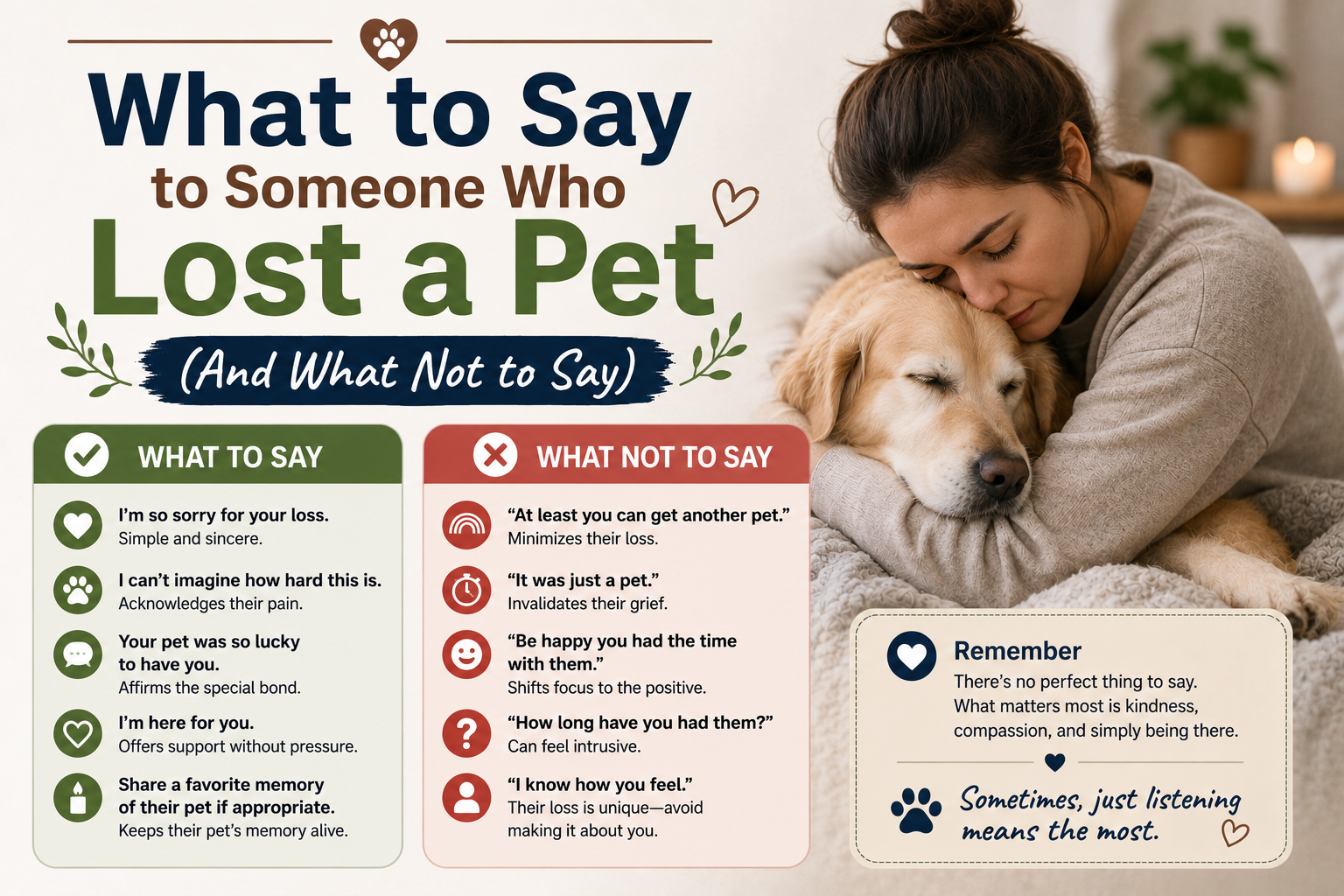
The most comforting thing you can say to someone who lost a pet is simple and direct: I’m so sorry. Pet’s name was so loved, and I’m here for you. Use the pet’s name, acknowledge the loss without minimizing it, and offer something specific, not just let me know if you need anything. That combination of recognition, warmth, and practical offer does more good than any perfectly crafted sentence.
🐾 A note from Serlig: Pet loss is real grief, and the people experiencing it need the same respect and compassion as anyone mourning a significant loss. This guide is built around that understanding, with input from veterinary and grief counseling perspectives.
When someone you care about loses a pet, the first instinct is often to say something to help. The second instinct, for most people, is paralysis. You worry about saying the wrong thing, about making it worse, about not having the right words.
Here is the truth: knowing what to say to someone who lost a pet matters less than most people think, and the effort of reaching out matters more. Most people in grief are not grading your phrasing. They are noticing whether you showed up at all.
Why Pet Loss Is Real Grief And Why That Matters
Before the words, the context: pets are family. The grief that follows their loss can be as intense as sometimes more intense than grief for a human relationship, because pets are present in a way that most humans are not. They are there every morning, every evening, often in every room. Their absence is felt in dozens of small moments a day, long after the initial shock has passed.
Dr. Seth Schwartz, a veterinarian specializing in end-of-life care at Paws at Peace, puts it directly: “You don’t need the perfect words. A simple ‘I’m so sorry for your loss’ is often enough letting them know you care enough to reach out brings comfort.”
That is the foundation everything else builds on. You are not trying to fix the grief or make it go away. You are showing up alongside it.
What to Say to Someone Who Lost a Pet: A Practical Guide
In person or over the phone
Face-to-face or voice to voice, the most important things are:
- Say the pet’s name: This is one of the most comforting things you can do. It tells the grieving person that you saw their pet as real, as specific, as irreplaceable — not just “a dog” or “a cat.”
- Acknowledge the loss plainly:I’m so sorry you lost [name]” lands differently than “I heard what happened.”
- Don’t rush past it: Let there be silence if the moment calls for it. Sitting quietly with someone in grief is a form of support.
By text or message
A message does not need to be long. In fact, a short, sincere message often feels more genuine than a carefully crafted paragraph. Some examples that work:
That last one, a specific memory, is particularly powerful. It shows you knew the pet as an individual, not just an abstract loss.
In a sympathy card
Pet loss grief counselor Beth Bigler, founder of Honoring our Animals, recommends combining a sincere acknowledgment with a concrete offer: Take action without asking ‘what can I do? Drop off a comforting meal, help with chores, write a heartfelt note and your initiative speaks volumes.
For a card, try building your message from four simple moves: acknowledge the loss, use the pet’s name, name something true about the bond, and offer something specific.
Example:
I’m so sorry you lost [name]. The joy [he/she] brought to your life and to everyone around you was unmistakable. I’m dropping dinner off Thursday. No need to respond.
What to Avoid Saying
Knowing what to say to someone who lost a pet also means knowing what tends to land badly, even with the best intentions. These phrases are almost universally unhelpful:
| What not to say | Why it lands badly |
| It was just a pet | Minimizes the relationship entirely |
| You can always get another one | Pets are not interchangeable |
| At least [he/she] lived a long life | Shifts focus away from the loss |
| Everything happens for a reason | Platitudes feel dismissive in acute grief |
| You’re being too emotional. | Pet grief is real grief this shames the person |
| At least they’re not suffering anymore.” | May be true, but often feels like a pivot away from the pain |
| I know how you feel. | Every relationship is unique this can feel reductive |
The pattern here is anything that minimizes, rushes past, or explains away the pain. The instinct behind these phrases is usually kindness wanting to make the person feel better but they tend to do the opposite.
Going Beyond Words: Practical Ways to Help
Sometimes the most supportive thing is not what you say but what you do. Some ideas:
- Bring food: Grief is exhausting, and cooking is often the last thing someone can manage. A meal dropped off without fanfare is a genuine act of care.
- Offer your company: A walk, a phone call, sitting together with no agenda presence matters.
- Make a memorial donation: Donating to an animal shelter or rescue in the pet’s name is a meaningful gesture that honors the pet’s life.
- Send a pet memorial gift: A personalized keepsake, a custom portrait, a garden stone, a printed photo book gives the grief somewhere to rest.
- Remember the pet in the weeks ahead: The initial wave of support often disappears quickly. A message a few weeks later I’ve been thinking about [name] today can mean more than the first round of condolences.
What About Children Who Lost a Pet?
If you are speaking to a child, or to a parent whose child lost a pet, a few adjustments matter:
- To be honest about death, use the word “died,” not “fell asleep or “crossed the rainbow bridge,” which can confuse young children.
- Let them know their feelings are valid. Children sometimes feel embarrassed by the intensity of their grief over an animal.
- Offer to share a memory if you knew the pet.
- Avoid rushing reassurance. “You’ll feel better soon” sounds dismissive; “this is really hard, and it’s okay to be sad” is more helpful.
Frequently Asked Questions
What do you say to someone who lost a pet unexpectedly?
Sudden loss adds shock to grief. Acknowledge that the unexpectedness makes it harder: “I’m so sorry this happened so suddenly. There was no time to prepare, and that makes the loss even harder. Then offer your presence a call, a message, a visit without waiting to be asked.
Is it okay to ask about how the pet died?
Only if the person brings it up first. Not asking for details about the illness, accident, or decision to euthanize these questions can pull someone back into painful specifics before they are ready. If they want to tell you, they will.
What if I didn’t know the pet well?
You do not need to have known the pet to offer sincere condolence. I’m so sorry that your loss is genuine even if you never met the pet. The relationship between the owner and their pet is what you are acknowledging.
When is it too late to say something?
It is never too late. Pet grief can resurface weeks and months after the loss, and a message sent three weeks later I’ve been thinking about you is often more meaningful than one sent in the first flood of condolences.
Conclusion
Knowing what to say to someone who lost a pet comes down to one guiding principle: acknowledge the loss, honor the relationship, and show up. The words do not need to be perfect. They need to be sincere.
Use the pet’s name. Say you are sorry. Offer something specific. And come back in a week, in a month to let them know you are still thinking of their loss. That steady presence, more than any particular phrasing, is what people remember.
If you are supporting someone through this, the most useful thing is usually presence rather than advice — and checking in again a week later, when everyone else has stopped.
A Note on Pet Health
Serlig publishes researched pet care information for everyday owners. It is general guidance, not veterinary advice, and it does not replace an examination by a licensed veterinarian who knows your pet. If your pet is unwell, or anything in this guide does not match what you are seeing at home, contact your vet.