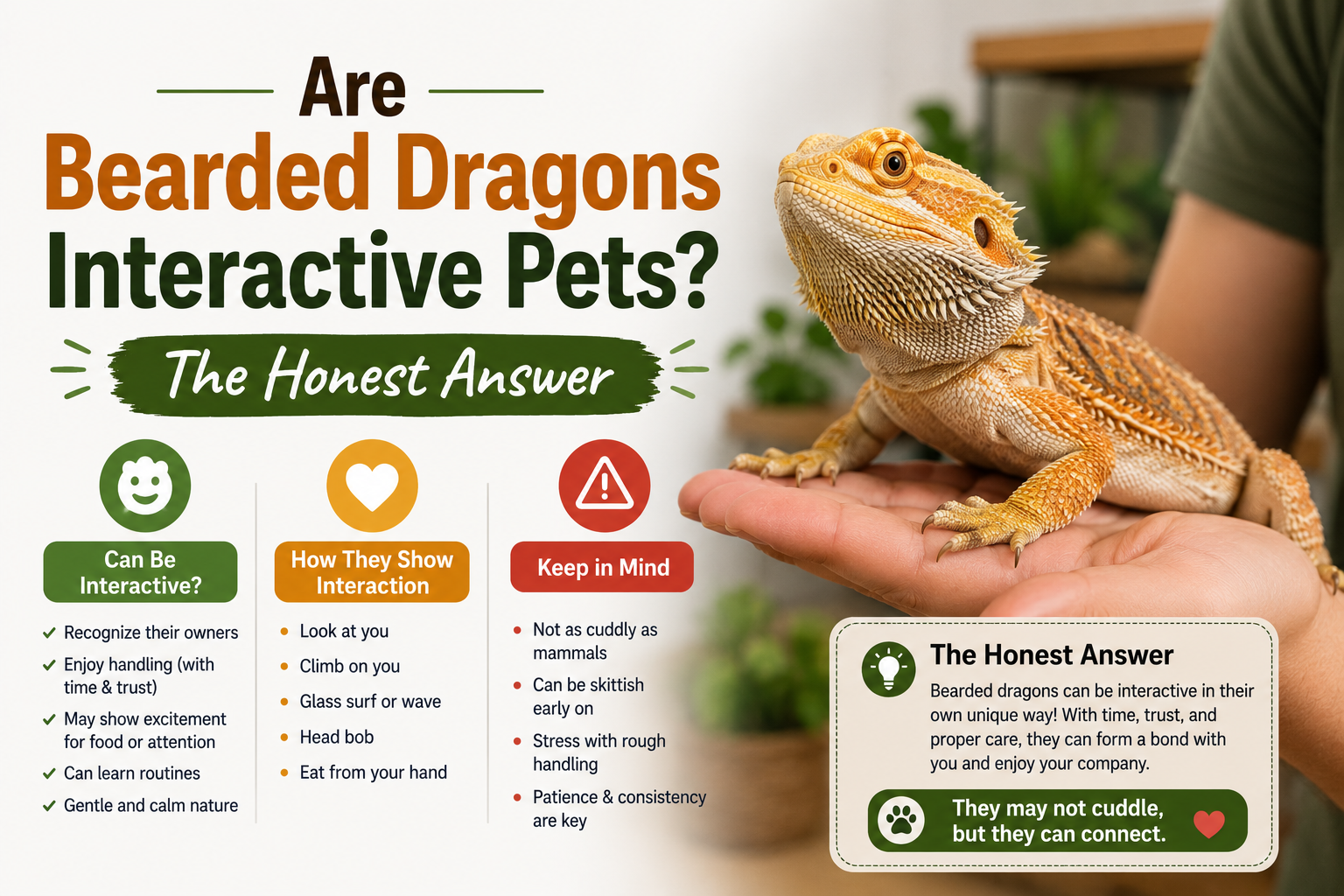
Yes, bearded dragons are interactive pets but not in the same way dogs or cats are. Most bearded dragons tolerate and gradually enjoy handling, recognize their owners, and show curiosity toward humans. However, they do not crave constant attention or show emotional attachment the way mammals do. The interaction is real, it just works on the dragon’s terms, not yours. For the right owner, that is actually part of the appeal.
A note from Serlig: Bearded dragons are one of the most rewarding exotic pets available, but they require specific husbandry lighting, temperature, diet that goes beyond what most beginners expect. This guide covers their interactive nature honestly. For full care requirements, consult a reptile-experienced veterinarian.
If you have been wondering whether bearded dragons are interactive pets before bringing one home, you are asking exactly the right question. Too many people expect a small, scaly dog. Others assume reptiles are cold, unresponsive, and essentially living decorations. Neither picture is quite right.
The truth is more interesting than either.
What “Interactive” Actually Means for a Bearded Dragon
Bearded dragons are not domesticated animals in the way dogs and cats are. Thousands of years of co-evolution with humans have shaped dogs to seek human companionship instinctively. Bearded dragons do not have that history. What they do have is a surprisingly adaptable temperament and a genuine capacity to recognize, learn, and respond to their owners on their own schedule.
Here is what you can realistically expect:
- Your beardie will recognize you Regular owners report that their dragons track them with their eyes, respond to their voice, and behave more calmly with familiar people than strangers.
- Many will tolerate and enjoy handling once trust is established sitting calmly on a shoulder, resting in a lap, or exploring their owner’s arms.
- Some genuinely seem to seek out human warmth and company choosing to stay close or even falling asleep on a person’s chest.
- They will not pester you for attention the way a dog does, and will not become distressed from brief periods of solitude the way some mammals do.
Mark Pyle a reptile educator and former president of the DFW Herpetological Society
summarizes it wel Most that have acclimated well to captivity seem to at least not mind being held That might sound like faint praise but for a reptile, it is genuinely significant. And for many beardies, it goes well beyond tolerance.
Are Bearded Dragons Interactive Pets Compared to Other Reptiles?
Yes and this is one of the strongest arguments for the species. Among commonly kept reptiles, bearded dragons consistently rank among the most interactive pets available.
Ball pythons are docile but largely passive. Leopard geckos are friendly but tend to be quicker and less patient with extended handling. Crested geckos are charming but fragile. Corn snakes are excellent beginners’ reptiles but offer limited interaction beyond being held.
Bearded dragons stand out because they will:
- Make and hold eye contact with their owners
- Follow movement in the room, particularly familiar people
- Respond to hand feeding, which naturally builds trust and association
- Engage with toys and novel objects small balls, tunnels, and even cat wands are all documented beardie enrichment items
- Sit calmly for extended periods during handling once comfortable
The Long Island Avian & Exotic Vet Clinic notes that bearded dragons are among the only reptiles known to show affection-like behavior toward their human companions though the scientific basis for calling it affection remains debated. What is clear is that well-socialized bearded dragons behave very differently from reptiles with no handling history.
Signs Your Bearded Dragon Is Comfortable with Interaction
Reading body language correctly is essential both to build trust and to avoid stressing your pet
Here is what to look for:
Signs they are open to interaction:
- Relaxed, flat posture (not puffed up or tense)
- Calm eyes, not darting rapidly
- Walking slowly onto your hand rather than bolting
- Staying in place when you approach, rather than fleeing
- Displaying bright, warm coloring (dark, dull colors often indicate stress)
Signs they want space:
- Beard darkening or puffing out
- Mouth opening as a warning
- Rapid head bobbing
- Attempting to flee consistently when approached
- Hissing or biting
Never force interaction when a beardie is showing stress signals. The relationship you build by respecting their limits is far more valuable than any session where you pick them up against their will.
How to Build an Interactive Relationship
Start slow: In the first days and weeks at home, let your bearded dragon get used to the environment before attempting much handling. Sit near the enclosure and talk quietly. Let them see you regularly without being touched.
Use food: Hand-feeding is one of the fastest ways to build positive association. Offering live insects or leafy greens from your fingers teaches the dragon to approach you rather than flee.
Keep early sessions short: Aim for 10–15 minutes of handling at first, returning the dragon to its enclosure before it shows signs of stress. Gradually extend as comfort builds.
Let them lead: The best interactions happen when the dragon initiates contact or at least does not resist it. Over time, many owners find their beardie walks onto their hand voluntarily.
Handle consistently: Regular, gentle interaction several times a week is what produces a social, relaxed dragon. Infrequent handling produces a skittish one.
The Honest Trade-Off: What Bearded Dragons Are Not
Are bearded dragons interactive pets? Yes. Are they the right interactive pet for everyone? No and being honest about this matters.
Bearded dragons are not low-effort companions. They require:
- UVB lighting : For 10–12 hours daily (without it, they develop metabolic bone disease)
- Temperature Gradients: a basking spot of 100–110°F and a cool side around 80°F
- Diet variety: A rotating mix of live insects (dubia roaches, crickets) and fresh leafy greens, with appropriate calcium and vitamin supplementation
- Space: A 120-gallon enclosure for an adult
- Veterinary access: -specifically a reptile-experienced exotic vet, not a standard dog-and-cat practice
Their lifespan is also a commitment: with good care bearded dragons live 8-15 years. This is not a short-term pet.
If you are weighing your options among exotic pets, our best reptile pets for beginners guide compares bearded dragons to other popular species and helps you match the right reptile to your lifestyle. And if you are looking for the lowest possible maintenance across all pet types, our low-maintenance pets guide gives you an honest picture of where beardies sit relative to other exotic options.
Frequently Asked Questions
Are bearded dragons interactive pets compared to dogs?
No not in the same way. Dogs seek attention, read human emotions, and initiate play constantly. Bearded dragons are curious and recognize their owners but they are solitary by nature and do not need or want constant interaction. Think of them as a companion that enjoys your company on their own schedule rather than one that demands yours.
Do bearded dragons get attached to their owners?
They develop familiarity and comfort with specific people particularly those who feed and handle them regularly. Whether this constitutes attachment in the emotional sense is debated. What is clear is that well-handled beardies behave differently with their regular caregivers than with strangers, which is meaningful even if the underlying mechanism differs from mammalian bonding.
How long should I handle my bearded dragon each day?
15–30 minutes per session, several times a week, is a healthy target for an adult that is comfortable with handling. Young dragons and newly acquired adults may need shorter sessions initially. Always watch body language and end the session before stress signals appear.
Can bearded dragons be left alone for a day?
Yes, unlike dogs, bearded dragons do not suffer from separation anxiety and do not need constant company. Ensure their lighting is on a timer, food and water are available, and they will be fine for a day. Extended absences of several days require a trusted caretaker.
Are bearded dragons good pets for beginners?
They are manageable for committed beginners, but they are not the easiest exotic pet. Their husbandry requirements lighting, temperature, diet have several non-negotiables where mistakes cause serious health problems. A leopard gecko involves simpler care for a first reptile; a bearded dragon suits someone who has done thorough research and is genuinely committed to meeting their needs.
Are bearded dragons interactive pets Genuinely yes more so than almost any other reptile you are likely to encounter. They recognize their owners, tolerate and often enjoy handling, and reward patient, consistent care with a relationship that many owners describe as surprisingly rewarding. They are not dogs. They are not going to greet you at the door or cuddle on command But on their own terms, they offer something real and for the right owner, that is more than enough.
A Note on Pet Health
Serlig publishes researched pet care information for everyday owners. It is general guidance, not veterinary advice, and it does not replace an examination by a licensed veterinarian who knows your pet. If your pet is unwell, or anything in this guide does not match what you are seeing at home, contact your vet.