
Quick Answer
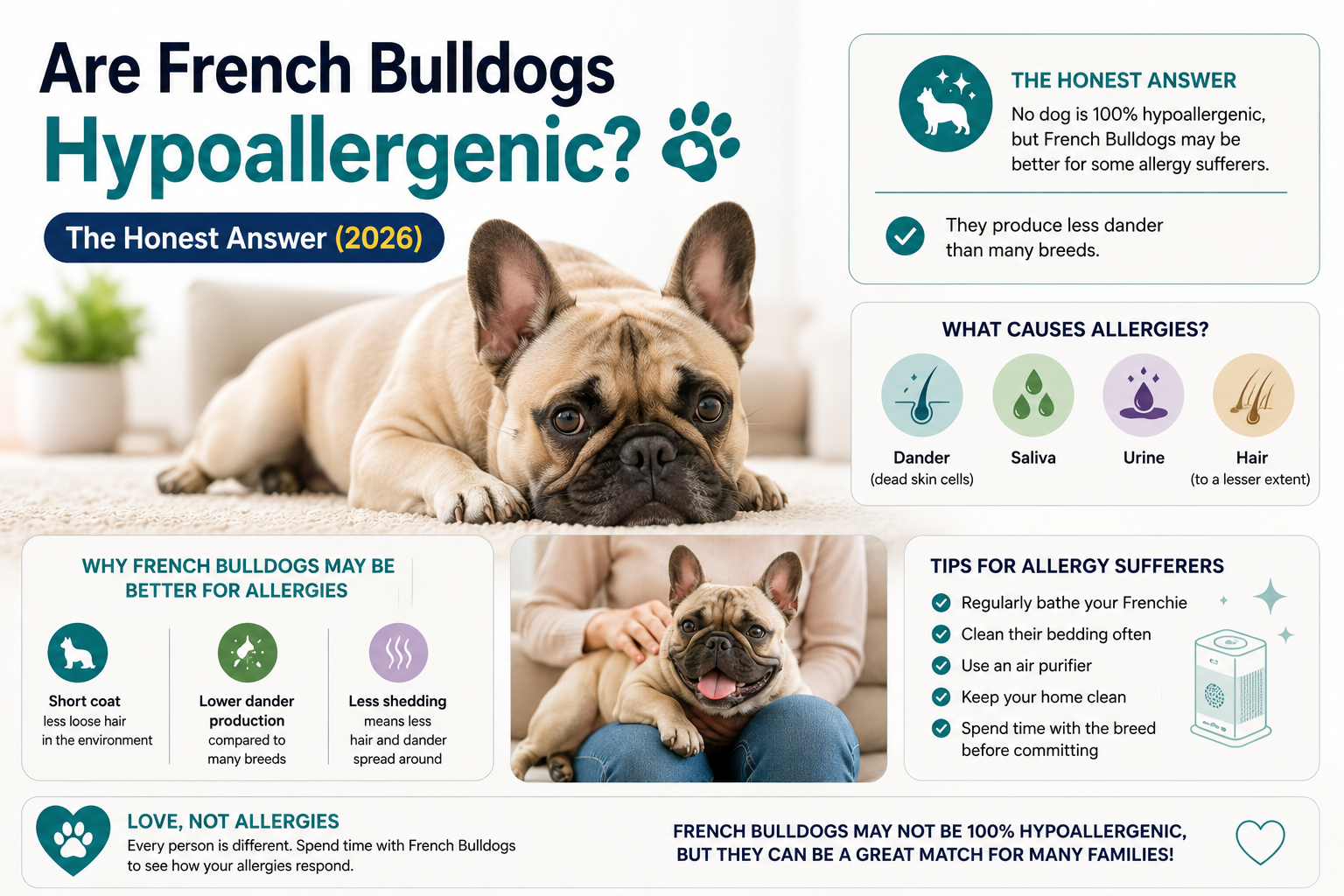
No French Bulldogs are not hypoallergenic, and no dog breed truly is. Dog allergy is caused by proteins found in saliva, dander (skin flakes), and urine most importantly Can f 1 not by hair itself. Frenchies have short coats, but they shed year-round, produce normal amounts of dander, drool, and lick a great deal. In some respects they are a poorer choice for allergy sufferers than a low-shedding curly-coated breed, because their skin folds require frequent handling and their skin problems increase dander production.
Key Takeaways
- The allergen is protein, not fur. Short hair does not mean fewer allergens.
- Can f 1 is the primary dog allergen, found in saliva, dander, and urine.
- French Bulldogs shed moderately and year-round, despite the short coat.
- Frenchies are prone to skin allergies themselves, which increases flaking and dander.
- No breed is scientifically hypoallergenic the term is marketing, not medicine.
- Test your reaction before committing, ideally over several visits.
Why “Hypoallergenic” Is Misleading
The word suggests a dog that does not trigger allergies. No such dog exists.
Human allergy to dogs is a reaction to specific proteins the dog produces. The most significant is Can f 1, a lipocalin protein present in saliva, skin secretions, and urine. There are several others Can f 2 through Can f 6 and individual people react to different ones, which is why one person may tolerate a particular dog while another does not.
Every dog produces these proteins. Hair is simply the vehicle: allergen-carrying dander and dried saliva attach to shed hair and then circulate through the home.
That explains two things that confuse people. First, low-shedding breeds such as Poodles and Bichons distribute less allergen around the house but they still produce it. Second, studies comparing allergen levels in homes with “hypoallergenic” versus other breeds have generally found no consistent reduction, and in some cases higher levels.
Where French Bulldogs Actually Land
| Factor | French Bulldog | Effect on allergies |
| Coat type | Short, fine, single | Sheds year-round, moderately |
| Shedding level | Moderate heavier in spring and autumn | Fine short hairs embed in fabric |
| Dander production | Normal to high | The main allergen carrier |
| Drooling | Moderate, more after eating and in heat | Saliva is a primary allergen source |
| Licking behaviour | High face folds and paws | Spreads saliva onto coat and furniture |
| Skin condition | Prone to allergies and fold dermatitis | Inflamed skin flakes more |
| Grooming contact | Folds need cleaning several times weekly | Direct, repeated allergen exposure |
The short-coat misconception is worth spelling out. Frenchie hairs are fine and short, which means they are less visible than a Labrador’s but they work their way into upholstery and clothing efficiently and are harder to remove. Less noticeable is not less present.
The skin-fold factor is the one specific to this breed. French Bulldogs have deep facial folds, and often a tail pocket, that require regular cleaning to prevent infection. That means an allergy sufferer is putting their hands on the dog’s face several times a week and then, inevitably, on their own face.
And Frenchies are themselves allergic. Atopic dermatitis is common in the breed, producing itching, scratching, licking, and flaking which raises dander output. If you notice constant paw licking, our guide on why dogs lick their paws covers what is happening and why treating it matters for the household air as well as the dog.
Breeds Often Marketed as Hypoallergenic
For context, these are the breeds usually recommended to allergy sufferers with the caveat that none are allergen-free:
Poodles and Poodle crosses, Bichon Frise, Portuguese Water Dog, Maltese, Yorkshire Terrier, Schnauzers, Soft Coated Wheaten Terrier, Basenji, Chinese Crested, Kerry Blue Terrier.
What they share is a coat that sheds minimally, trapping hair in the coat until it is brushed or clipped out. This reduces how much allergen circulates. They still produce Can f 1 in saliva and skin, and they require frequent professional grooming which is its own cost.
Individual variation is large. Allergen production differs dog to dog within a breed, and there is evidence that male dogs may produce more Can f 1 than females, with neutered males producing less than intact ones. This is why testing your reaction to a specific dog matters far more than choosing a breed from a list.
If You Have Allergies and Want a Frenchie
It is not automatically impossible, but go in informed.
Test properly first:
- Spend time with adult French Bulldogs on several separate occasions, not once. Allergic reactions can build with repeated exposure.
- Visit a home with a Frenchie, not just a breeder’s kennel home allergen levels differ.
- See an allergist and get tested. Knowing whether you react to dogs specifically, and how strongly, is far more useful than guessing.
- Ask about immunotherapy (allergy shots or sublingual drops). It is a genuine long-term treatment, not a workaround, and takes months to years to work.
If you go ahead, manage the environment:
- Keep the bedroom dog-free. The single most effective measure you spend a third of your life there.
- HEPA air purifier in the main living area and bedroom.
- HEPA vacuum, used two or three times a week.
- Hard floors over carpet wherever possible; wash rugs regularly.
- Wash the dog weekly. Bathing measurably reduces surface allergen, though the effect fades within days. Use a dog shampoo suitable for sensitive skin Frenchies’ skin is easily irritated.
- Wipe the coat daily with a damp cloth between baths.
- Have someone else do the grooming and fold cleaning if possible.
- Wash hands after handling, and avoid touching your face.
- Wash dog bedding weekly at 60°C.
- Treat the dog’s own skin problems promptly a healthy-skinned dog produces less dander. A good quality complete diet supports skin barrier function.
Managing Frenchie Shedding
Even without allergies, moderate year-round shedding surprises new owners who bought a short-coated dog expecting none.
- Brush two or three times weekly with a rubber curry brush or grooming mitt these suit short single coats better than slicker brushes.
- Increase to daily during spring and autumn, when shedding peaks.
- Bathe every 4–6 weeks, and no more; over-bathing strips oils and worsens the dry, flaking skin the breed is already prone to.
- Dry the folds thoroughly after every bath trapped moisture causes infection.
- Support skin from the inside with a complete diet and, on veterinary advice, omega-3 supplementation.
Sudden increases in shedding are worth investigating rather than accepting. Hormonal conditions, parasites, poor diet, and stress all increase hair loss a theme we cover from the other extreme in our guide to Golden Retriever shedding.
Frequently Asked Questions
Are French Bulldogs hypoallergenic? No. They shed year-round, produce normal dander, and drool and lick a great deal. No dog breed is genuinely hypoallergenic.
Do French Bulldogs shed a lot? They shed moderately and continuously, with heavier periods in spring and autumn. The hairs are short and fine but embed readily in fabric.
What causes dog allergies? Proteins chiefly Can f 1 found in saliva, dander, and urine. Hair carries these proteins but is not itself the allergen.
Which dogs are best for allergy sufferers? Low-shedding breeds like Poodles, Bichons, and Portuguese Water Dogs distribute less allergen, but none are allergen-free. Individual reaction varies more than breed.
Can I build immunity to my dog? Some people report reduced symptoms over time, but others worsen. Immunotherapy under an allergist is the evidence-based route rather than hoping to adapt.
Does bathing my dog help with allergies? Yes, measurably weekly bathing reduces surface allergen. The effect fades within days, so it needs to be consistent.
Are male or female dogs better for allergies? There is evidence that male dogs produce more Can f 1, and that neutered males produce less than intact ones. It is a small factor compared with individual variation.
My Frenchie makes my allergies worse than my last dog why? Likely the combination of frequent face-fold handling, the breed’s tendency toward skin problems, and simply a different individual dog’s allergen output.
Final Thoughts
The honest answer is the unpopular one: French Bulldogs are not a solution to a dog allergy, and the short coat that makes them look like a safe bet has almost nothing to do with the problem.
If you have mild allergies and your heart is set on the breed, it can be workable a dog-free bedroom, a HEPA filter, weekly baths, and someone else on fold-cleaning duty go a long way. But test your reaction over several visits before committing, and see an allergist first. Discovering an incompatibility after a dog has joined your family is a difficult situation for everyone, and the dog has the least say in how it resolves.
Related Reading
- French Bulldog Price: Full Cost Breakdown
- Do Golden Retrievers Shed a Lot?
- Why Is My Dog Licking His Paws?
- Why Is My Dog Panting So Much?
A Note on Pet Health
Serlig publishes researched pet care information for everyday owners. It is general guidance, not veterinary advice, and it does not replace an examination by a licensed veterinarian who knows your pet. If your pet is unwell, or anything in this guide does not match what you are seeing at home, contact your vet.
About the Author
The Serlig Pet Care Team creates researched, plain-language pet care guides for everyday owners. Our content is written from hands-on pet-care experience and cross-checked against established veterinary sources so you can make confident decisions for your dog.