
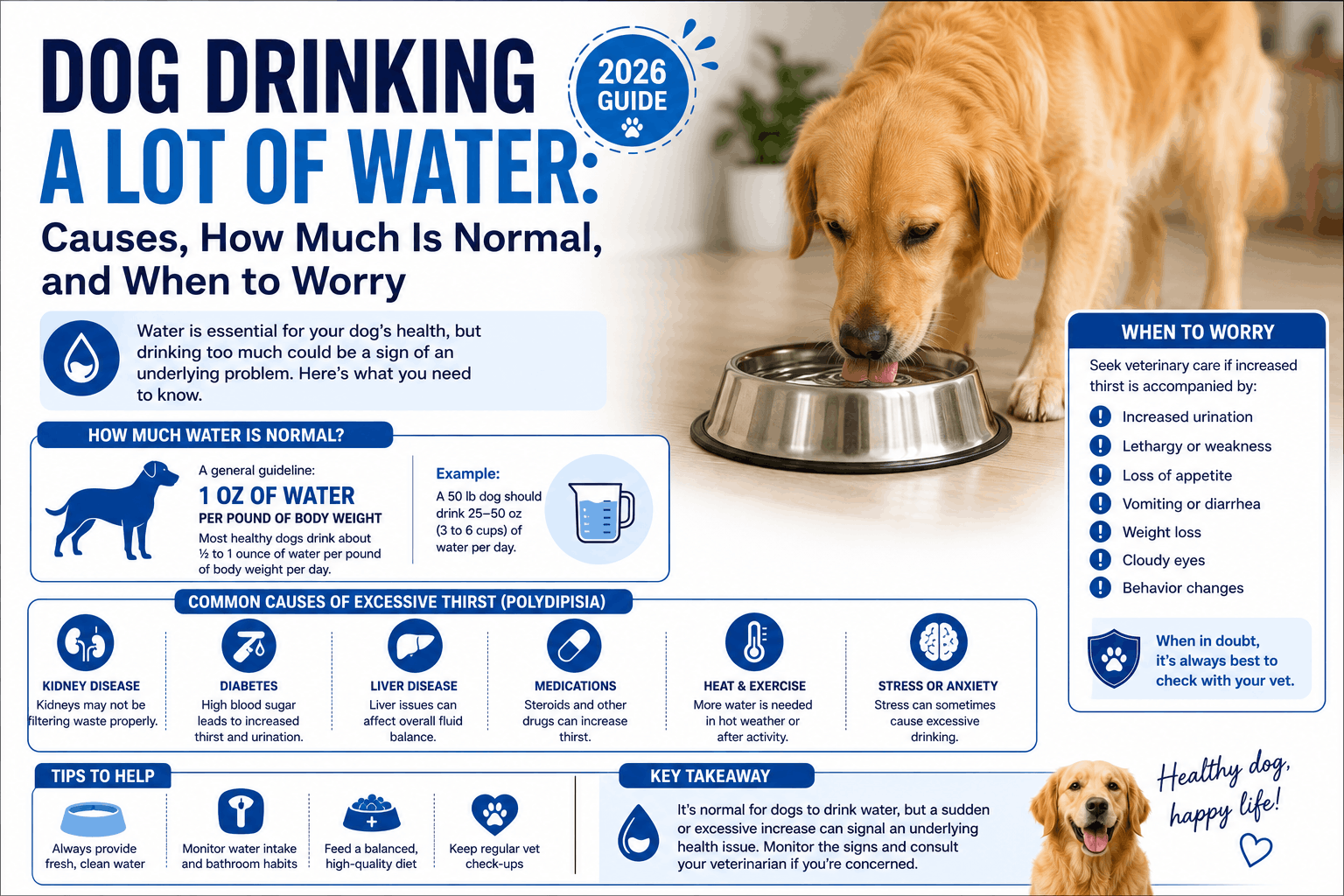
Noticing your dog drinking a lot of water, emptying the bowl faster than usual and asking to go outside more often, is worth paying attention to. A little extra thirst after a hot day, exercise, or a salty meal is completely normal. But a consistent, unexplained increase in drinking can be one of the earliest clues of an underlying health problem. This guide, grounded in veterinary guidance, explains how much water is normal, what excessive thirst (called polydipsia) really means, the common and medical causes, and exactly when to call your vet.
Quick answer: A dog normally drinks about 1 ounce of water per pound of body weight per day. Drinking is considered excessive (polydipsia) when it exceeds roughly 100 ml per kilogram of body weight per day. Occasional extra thirst from heat or exercise is normal, but persistent increased drinking. especially with more urination or other symptoms, should be checked by a veterinarian.
How Much Water Should a Dog Drink?
A common veterinary guideline is that a healthy dog drinks about 1 ounce of water per pound of body weight per day. For example, a 10-pound dog should drink roughly 10 ounces (about 1.25 cups) daily.
Several everyday factors change this normal amount:
- Diet: Dogs on dry kibble drink more than dogs on canned food, because canned food already contains a lot of moisture.
- Activity and weather: Active dogs and hot days both increase water needs.
- Life stage: Puppies often drink more because their kidneys do not concentrate urine as well, and nursing or pregnant dogs also drink more.
Because “normal” varies from dog to dog, the most useful thing you can do is learn your dog’s typical intake, so you can spot a real change.
What Counts as “Drinking Too Much”?
The medical term for excessive thirst is polydipsia. According to veterinary guidance, including from Cornell University’s Riney Canine Health Center, polydipsia is generally defined as a dog drinking more than 100 ml per kilogram of body weight per day, roughly one cup of water per 5 pounds of body weight. Intake between 60–100 ml/kg is considered a “grey zone” worth monitoring.
Importantly, even amounts below that threshold can matter if they represent a clear, sustained increase from your dog’s normal baseline. Polydipsia almost always comes paired with polyuria (increased urination), because what goes in must come out. Together these are known as PU/PD.
Common (Less Serious) Reasons Your Dog Is Drinking a Lot of Water
Not every increase in thirst signals illness. Common, usually harmless reasons include:
- Hot weather or exercise: The most normal causes of temporary extra thirst.
- A salty or dry diet: Certain foods and dry kibble increase water needs.
- Boredom: Some dogs drink more simply because they are under-stimulated.
- Recent activity or panting: Dogs lose water through panting and replace it by drinking.
- Being a puppy, or a nursing/pregnant dog: All naturally drink more.
If your dog is suddenly thirsty for a day or so but otherwise acts completely normal, it is usually not a cause for alarm. The key is whether the increase is persistent.
Medical Causes of Excessive Thirst in Dogs
When increased drinking lasts more than a few days or comes with other symptoms, it can point to an underlying condition. Common medical causes include:
- Kidney disease: Damaged kidneys cannot concentrate urine, so the dog drinks more to compensate. Other signs include lethargy, poor appetite, and vomiting.
- Diabetes mellitus: High blood sugar draws water into the urine, causing thirst. Other signs include increased appetite, weight loss, weakness, recurrent infections, and cataracts.
- Cushing’s disease (hyperadrenocorticism): An overproduction of cortisol that frequently causes increased thirst and urination.
- Addison’s disease (hypoadrenocorticism): A hormonal disorder that can also affect thirst.
- Pyometra: A serious uterine infection in unspayed female dogs; increased thirst can be an early sign. This is an emergency.
- Liver disease: Can disrupt normal fluid balance.
- Diabetes insipidus: A rarer condition affecting the body’s water regulation.
- Certain medications: Steroids and diuretics, among others, can increase thirst.
Because so many conditions share this symptom, a veterinarian identifies the cause with a systematic approach, typically a physical exam, blood work, and a urinalysis, with further testing if needed.
How to Measure Your Dog’s Water Intake at Home
If you suspect your dog is drinking a lot of water, measuring gives your vet valuable information:
- Fill the bowl with a measured amount of water at the start of a 24-hour period.
- Measure what is left after 24 hours and calculate the difference.
- Count refills and note if your dog seeks water elsewhere, dripping taps, puddles, toilets, or other pets’ bowls.
- Track it for several days to see whether the higher intake is consistent, not just a one-off hot day.
- Note other changes, more frequent urination, accidents in the house, appetite shifts, or energy changes.
Bring these notes to your appointment. A clear picture of the pattern helps your vet reach a diagnosis faster.
When to See the Vet
Book a veterinary visit if your dog shows any of the following:
- Increased drinking that lasts more than a few days
- A clear, sustained change from your dog’s normal baseline
- Increased urination, accidents, or larger urine volumes
- Other symptoms such as weight change, appetite change, lethargy, or vomiting
Seek urgent care if your dog has a previously diagnosed chronic condition, such as kidney disease, liver disease, or diabetes, and its thirst suddenly changes, or if increased thirst appears alongside signs of serious illness. Early diagnosis often makes treatment simpler and more successful.
Frequently Asked Questions
How much water is too much for a dog? Drinking more than about 100 ml per kilogram of body weight per day (roughly one cup per 5 pounds) is considered excessive. Sustained drinking well above your dog’s normal amount is also a red flag, even below that number.
Why is my dog suddenly drinking a lot of water? Sudden thirst is often from heat, exercise, or a salty meal and resolves quickly. If it persists, it can signal kidney disease, diabetes, Cushing’s disease, or another condition, so see your vet.
Should I limit my dog’s water if it’s drinking too much? No. Never restrict water unless your veterinarian tells you to. A dog drinking excessively can become dangerously dehydrated if water is taken away. Instead, have the cause diagnosed.
Is a dog drinking a lot of water a sign of diabetes? It can be. Excessive thirst and urination are classic early signs of diabetes mellitus, often alongside increased appetite and weight loss. A vet can confirm with blood and urine tests.
Does drinking a lot of water always mean something is wrong? No. Heat, exercise, diet, puppies, and nursing dogs all cause more drinking naturally. What matters is a persistent change from your dog’s normal pattern.
How can I tell if my dog is drinking more than usual? Measure the water you put in the bowl and what remains after 24 hours, count refills, and watch for your dog seeking water elsewhere or urinating more often.
Final Thoughts
A dog drinking a lot of water is often explained by something simple, like a hot day or a dry, salty meal. But because persistent excessive thirst can be an early sign of kidney disease, diabetes, Cushing’s disease, or other conditions, a lasting change deserves attention. Learn your dog’s normal intake, measure it if something seems off, and never withhold water on your own. When drinking stays higher than usual or comes with other symptoms, a veterinarian can find the cause early, when it is most treatable.
A Note on Pet Health
Serlig publishes researched pet care information for everyday owners. It is general guidance, not veterinary advice, and it does not replace an examination by a licensed veterinarian who knows your pet. If your pet is unwell, or anything in this guide does not match what you are seeing at home, contact your vet.
About the Author
The Serlig Pet Care Team creates researched, plain-language pet care guides for everyday owners. Our content is written from hands-on pet-care experience and cross-checked against established veterinary sources.




One Comment