Finding the best pet air purifier is less about chasing a brand name and more about matching the right filtration to your home, your pets, and your room size. If you live with a shedding dog, a cat with a litter box, or you simply want to control dander, hair, and that lingering “pet smell,” the correct purifier can make a real difference. This guide, grounded in independent air-quality testing and expert guidance, explains exactly what to look for, how to size a unit to your room, and how to choose based on your specific pet situation — so you buy on performance, not marketing.
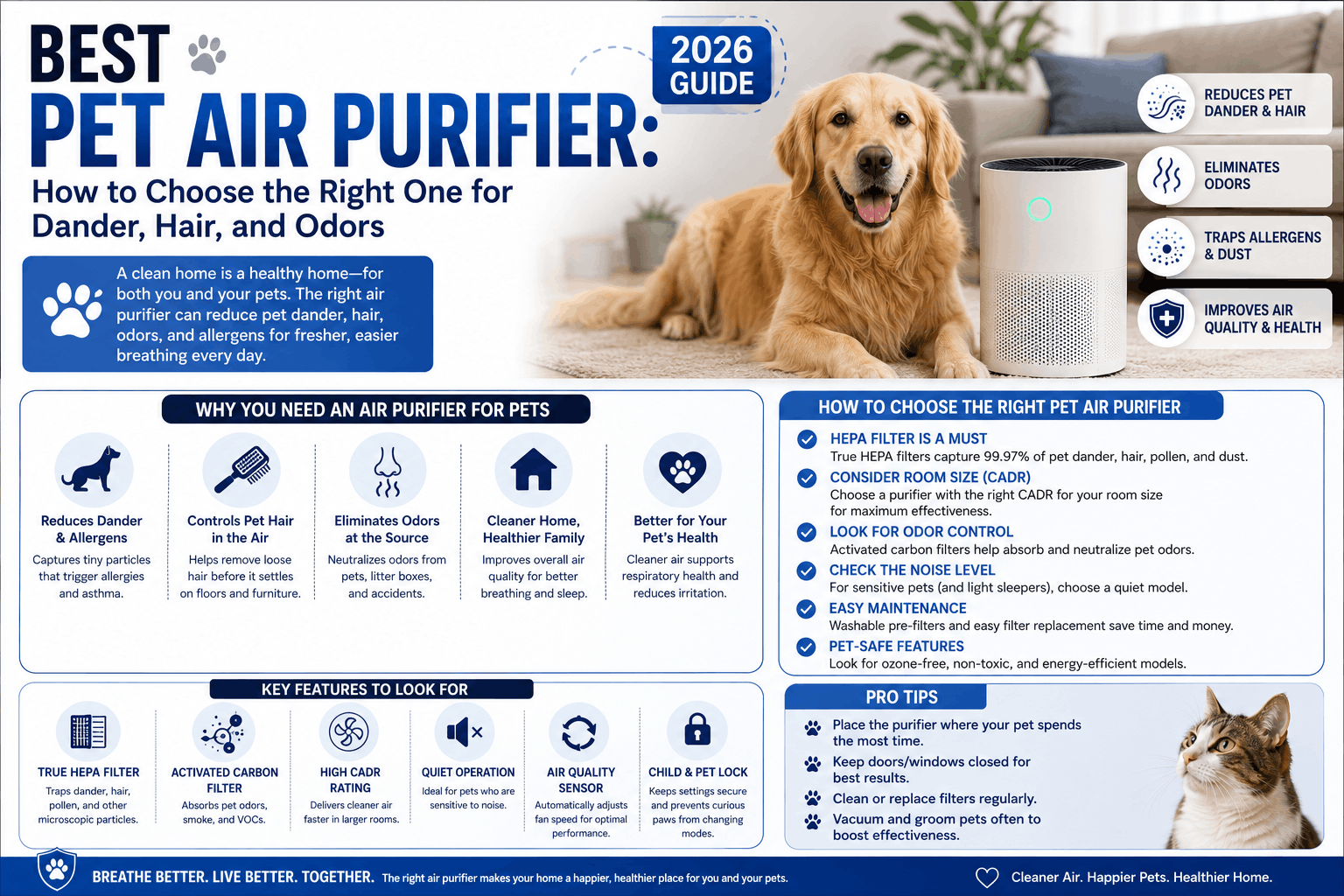
Quick answer: The best pet air purifier combines a True (H13) HEPA filter to capture dander and allergens, a substantial activated carbon filter (at least ~200g) to neutralize odors, and a washable pre-filter to trap hair. Choose a unit whose CADR matches your room’s square footage for at least 4 air changes per hour, and make sure it is ozone-free (CARB certified) for your pets’ safety.
Do Air Purifiers Actually Work for Pets?
Yes — but with realistic expectations. Pets introduce microscopic particles like dander, hair fragments, pollen, and dirt into your home, and a good purifier meaningfully reduces them. According to air-quality experts and independent testing, most pet-allergy sufferers report roughly 50–80% symptom reduction with a properly sized purifier.
The key phrase is “part of a strategy.” An air purifier works best alongside regular vacuuming with a HEPA vacuum, washing pet bedding weekly, and grooming pets outdoors when possible. It reduces airborne allergens; it does not eliminate allergies entirely.
What to Look for in the Best Pet Air Purifier
Judge any unit against these six criteria before you buy.
1. True HEPA Filter (Ideally H13)
A True HEPA filter captures 99.97% of airborne particles down to 0.3 microns, which easily covers pet dander (typically 2.5–10 microns), pollen, dust mites, and hair fragments. Look for the words “True HEPA” or “H13 HEPA” — not “HEPA-type” or “HEPA-like,” which are weaker imitations. HEPA is the single most important feature for allergens.
2. A Substantial Activated Carbon Filter
Here is what many buyers miss: HEPA does not remove odors. Only an activated carbon filter neutralizes smells and VOCs. For pet households, thin carbon sheets do very little — look for a meaningful amount of pelleted activated carbon, ideally at least 200 grams. If you have a cat, litter-box ammonia specifically demands heavy carbon to control.
3. A Washable Pre-Filter
A pre-filter traps large particles like pet hair before they reach the HEPA and carbon layers. A washable, slide-out pre-filter is ideal because you can vacuum or rinse it every few weeks, which extends the life of the more expensive inner filters and saves money over time.
4. The Right CADR for Your Room Size
CADR (Clean Air Delivery Rate), measured in CFM, tells you how much clean air a unit delivers per minute. This is where most people under-buy. Manufacturers’ “covers up to X square feet” claims usually assume just one air change per hour — barely adequate. For a pet or allergy household, match the CADR number directly to your room’s square footage so you achieve at least 4 air changes per hour. Size to the actual room, not the box’s marketing number.
5. Ozone-Free and CARB Certified (Pet Safety)
Some purifiers include ionizers or ozone generators. Ozone can irritate the respiratory systems of both people and pets and birds are especially sensitive. Choose a unit that is CARB certified (California Air Resources Board), which confirms it does not emit harmful ozone. If a model has an optional ionizer, you can simply leave it switched off.
6. Noise Level and Filter Costs
Check the noise range in decibels (dBA) if the unit will run in a bedroom, and factor in ongoing filter replacement costs most HEPA and carbon filters last around 6–8 months. A washable pre-filter helps lower this long-term cost.
How to Choose Based on Your Pet Situation
The “best” purifier depends on your household:
- Cats with litter boxes: Prioritize more activated carbon, since cat urine produces ammonia that needs heavy carbon to neutralize.
- Multiple or large dogs: Choose a higher CADR and expect more frequent filter changes, because more shedding means more airborne volume.
- Allergy or asthma sufferers: Size CADR to the room for 4+ air changes per hour, and consider an H13 medical-grade HEPA.
- Birds in the home: Be especially careful to choose ozone-free units and avoid scented or ionizing features.
- Small apartments: A compact unit with True HEPA and carbon is plenty; you do not need to overspend on coverage you will not use.
Commonly Recommended Pet Air Purifiers
Rather than a single “winner,” look for units that consistently meet the criteria above. Models frequently recommended by independent reviewers for pet homes include the Levoit Core series, Winix 5510 (washable pre-filter, pelleted carbon, True HEPA), Coway Airmega line (high CADR for larger spaces), and Honeywell HPA series (budget-friendly certified HEPA).
These are examples, not a fixed ranking — brands update models often. Always confirm the current filter configuration, CADR, and CARB certification before buying, since specifications and prices change. The right pick is the one whose HEPA, carbon, and CADR match your room and your pets.
Getting the Most From Your Air Purifier
To maximize results:
- Place it correctly in the room where your pet spends the most time, with clear airflow (not tucked behind furniture).
- Run it continuously on auto mode; air quality improves with consistent operation, not occasional bursts.
- Clean the pre-filter every few weeks and replace filters on schedule, or sooner with heavy shedding.
- Combine it with cleaning habits vacuuming, washing bedding, and grooming for the biggest reduction in dander and odor.
Frequently Asked Questions
Do air purifiers remove pet odor or just dander? Both, but through different filters. HEPA captures dander and hair, while activated carbon neutralizes odors and VOCs. For strong pet smells, choose a unit with a substantial carbon filter (ideally 200g or more).
What size air purifier do I need for my pet? Match the unit’s CADR (in CFM) to your room’s square footage so it delivers at least 4 air changes per hour. Ignore the inflated “covers up to X sq ft” claim, which usually assumes only one air change per hour.
Do air purifiers help with pet allergies? Yes, they significantly reduce airborne allergens, and most allergy sufferers report 50–80% symptom relief. They work best combined with vacuuming, washing bedding, and grooming, and do not cure allergies entirely.
Are air purifiers safe for pets? Yes, as long as you choose an ozone-free, CARB-certified model. Avoid ozone generators and unnecessary ionizers, since ozone can irritate the airways of pets — especially birds.
How often do I replace the filters? Most HEPA and carbon filters last about 6–8 months, but homes with multiple pets may need to replace them sooner. A washable pre-filter extends the life of the inner filters.
Do I need a special purifier for cats versus dogs? The core technology is the same, but cats with litter boxes benefit from more activated carbon (for ammonia), while multiple large dogs call for a higher CADR and more frequent filter changes.
Final Thoughts
The best pet air purifier is the one that matches real filtration to your real home. Prioritize a True HEPA filter for dander, a generous activated carbon filter for odors, and a washable pre-filter for hair — then size the CADR to your room for at least four air changes per hour, and confirm it is ozone-free for your pets’ safety. Pair it with consistent cleaning habits, and you will notice cleaner air, fewer allergens, and far less “pet smell.” Buy on specifications, not slogans, and you will get a purifier that actually earns its place in your home.
A Note on Pet Health
Serlig publishes researched pet care information for everyday owners. It is general guidance, not veterinary advice, and it does not replace an examination by a licensed veterinarian who knows your pet. If your pet is unwell, or anything in this guide does not match what you are seeing at home, contact your vet.
About the Author
The Serlig Pet Care Team creates researched, plain-language pet care and product guides for everyday owners. Our recommendations are based on hands-on pet-care experience and cross-checked against independent air-quality testing and expert guidance.