Yes, dogs can eat strawberries. Fresh strawberries are non-toxic and safe for most healthy dogs when fed in moderation. They are low in calories and rich in vitamin C, fiber, and antioxidants, but they are also high in natural sugar. Always wash the berries, remove the stems and leaves, cut them into small pieces, and keep treats under 10% of your dog’s daily calories.
Key Takeaways
- Strawberries are safe and non-toxic for dogs in moderation.
- They provide vitamin C, fiber, antioxidants, and omega-3 fatty acids, with few calories.
- Strawberries are high in natural sugar, so overfeeding can cause an upset stomach.
- Remove the stems, leaves, and green tops, they are hard to digest.
- Whole strawberries are a choking hazard; always slice or mash them, especially for small dogs.
- Feed only fresh or plain frozen berries, avoid canned, syrup, jam, and anything with xylitol.
- Keep strawberries, like all treats, under 10% of your dog’s daily calories.
Can Dogs Eat Strawberries?
Yes. Strawberries are one of the safe, dog-friendly fruits when they are washed, prepared, and served in the right amount. Trusted authorities including the American Kennel Club (AKC) and PetMD list strawberries as a healthy treat option for most dogs.
The key word, as always, is moderation. Strawberries are a supplement to a good diet, never a replacement for it, most of your dog’s nutrition should come from a complete and balanced dog food that meets AAFCO standards. The berries simply add a sweet, low-calorie, vitamin-rich reward.
Strawberries are just one of several fruits dogs can safely eat. If your dog enjoys fruit, you might also like our guides on bananas, watermelon, and apples, all safe, healthy options when prepared correctly.
Are Strawberries Good for Dogs? The Benefits
Strawberries are more than a sweet snack. They are a nutrient-dense, low-calorie fruit, which is one reason many owners like them as an occasional fresh treat. Here is what a few slices bring to your dog’s bowl:
| Nutrient | What it does for your dog |
|---|---|
| Vitamin C | An antioxidant that supports the immune system. |
| Dietary fiber | Supports normal digestion and healthy stools. |
| Antioxidants | Help protect cells from everyday damage. |
| Omega-3 fatty acids | Support skin, coat, and overall health. |
| Potassium & manganese | Support muscle, nerve, and metabolic function. |
| Low calorie | A light treat that suits weight-conscious dogs. |
A low-calorie, antioxidant-rich treat
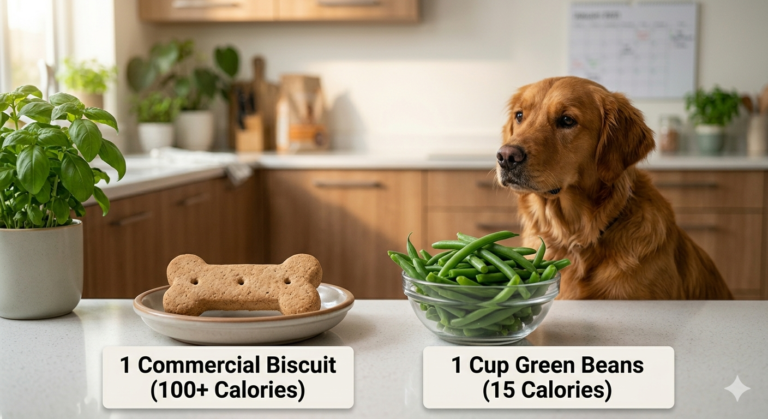
Strawberries are naturally low in calories and fat, which makes them a smart swap for richer, processed treats, especially for dogs watching their weight. For more low-calorie ideas, see our guide on The 10% Rule: Best Low-Calorie Treats for Overweight Pets.
A useful training reward
Because they are soft, sweet, and easy to cut small, sliced strawberries make a handy training reward. Most dogs enjoy the taste, and a small piece costs far less than many packaged treats.
One common claim is that strawberries contain an enzyme that helps whiten a dog’s teeth. There is little strong evidence for this, so treat it as a nice bonus rather than a reason to feed them, strawberries are never a substitute for proper dental care.
Strawberry Risks: Sugar, Stems & Choking
Strawberries are safe, but “safe” is not the same as “unlimited.” A few clear rules keep them trouble-free.
High natural sugar
Strawberries contain natural sugar. In small amounts this is fine, but too much can cause an upset stomach, gas, or diarrhea, and over time it can contribute to weight gain and dental problems. This is the main reason to keep portions small. If your dog does get loose stools, our guide on what to feed a dog with diarrhea can help, and ongoing diarrhea always needs a vet.
Not ideal for certain health conditions
Because of the sugar, strawberries are not the right treat for every dog. Check with your veterinarian first if your dog has:
- Diabetes or insulin resistance
- Obesity or is on a weight-management plan
- A sensitive stomach or a history of pancreatitis
Choking hazard from whole berries
A whole strawberry can be a choking hazard, especially for small dogs and puppies. Always slice or mash the fruit before serving, and use thin slices or a mash for very small dogs.
Stems, leaves, and green tops
The stems, leaves, and green tops are not highly toxic, but they are difficult to digest and can cause mild stomach upset. Remove them completely before serving.
Processed strawberry products
This is where real danger hides. Never give your dog:
- Canned strawberries or strawberries in syrup: far too much sugar.
- Strawberry jam, jelly, or pie filling: high sugar and preservatives.
- Chocolate-covered strawberries: chocolate is toxic to dogs.
- Strawberry yogurt or products with xylitol: xylitol is highly toxic to dogs.
Stick to plain, fresh, or unsweetened frozen strawberries only.
Allergies
True strawberry allergies are uncommon, but some allergy-prone dogs may react. Watch for itching, swelling around the mouth or paws, hives, or digestive upset. If your dog already has skin allergies or chronic itching, introduce strawberries carefully and check with your vet if symptoms appear.
How Many Strawberries Can a Dog Eat? (Serving Size by Weight)
Portion control comes down to the 10% rule: snacks of every kind should make up no more than a tenth of your dog’s daily calorie intake, and balanced food should cover the rest.
Use this general guide and adjust with your vet. For reference, one “slice” is about a quarter of an average-size strawberry:
| Dog size | Body weight | Suggested serving | Frequency |
|---|---|---|---|
| Extra-small | Under 10 lb (Chihuahua, Yorkie) | 1–2 thin slices | 2–3× per week |
| Small | 10–25 lb | 2–3 slices | 2–3× per week |
| Medium | 25–50 lb | 4–6 slices (about 1 strawberry) | 2–3× per week |
| Large | 50–90 lb | A small handful of sliced berries | 2–3× per week |
| Giant | Over 90 lb | A small handful of sliced berries | 2–3× per week |
Keep that first serving small and give your dog a day to show whether strawberries agree with them, going especially gently with puppies, small breeds, and sensitive tummies.
How to Safely Feed Strawberries to Your Dog
Good preparation removes almost every strawberry risk. Follow these steps:
- Wash the berries: Rinse thoroughly to remove dirt, residue, and pesticides.
- Remove the stems and leaves: Cut off the green top, stem, and any leaves.
- Slice or mash: Cut into small, bite-sized pieces, or mash for very small dogs, seniors, or dogs missing teeth.
- Start small: For a first-timer, offer one small piece and wait a day to check for any digestive upset.
- Keep it plain: No added sugar, syrup, chocolate, or artificial sweeteners.
Fun, safe ways to serve strawberries
- Fresh slices: offer small pieces directly as a treat or training reward.
- Frozen pieces: freeze sliced strawberries for a cool summer snack (cut small to avoid tooth injury and choking).
- Mashed or pureed: mix a small spoonful into your dog’s food or spread it on a lick mat.
- Homemade treats: bake strawberries into simple dog treats. For ideas, see our 5 Homemade Organic Dog Treat Recipes.
Always avoid products containing xylitol, a sugar substitute found in some yogurts, peanut butters, and baked goods. If you pair strawberries with yogurt or peanut butter, make sure it is plain and xylitol-free.
Can Puppies Eat Strawberries?
Yes, puppies can eat strawberries, but in smaller amounts and introduced slowly. Puppies have developing digestive systems, so start with one tiny, washed, sliced piece and watch closely for any stomach upset.
Introduce only one new food at a time, keep to the extra-small serving size, and make sure a balanced puppy food still makes up the vast majority of your puppy’s diet. When in doubt, ask your veterinarian.
When to Skip Strawberries or Call Your Vet
Strawberries are safe for most dogs, but check with your veterinarian first if your dog:
- Has diabetes, obesity, or a history of pancreatitis.
- Is on a prescription or weight-management diet.
- Has a sensitive stomach, food sensitivities, or skin allergies.
Contact your vet if, after eating strawberries, your dog shows repeated vomiting or diarrhea, swelling around the face or paws, hives, or difficulty breathing, or if digestive upset does not settle within a day.
Frequently Asked Questions
How many strawberries can a dog eat? Keep strawberries and all treats under 10% of your dog’s daily calories. Small dogs should have only a slice or two, while larger dogs can have a small handful of sliced berries a few times a week.
Can dogs eat strawberry tops, stems, or leaves? No. They are not highly toxic, but they are hard to digest and can cause mild stomach upset, so remove them before serving.
Can dogs eat frozen strawberries? Yes, if they are plain and unsweetened. Cut them into small pieces first, as whole frozen berries can be a choking or tooth-injury risk.
Can dogs eat strawberry yogurt or jam? No. These usually contain added sugar or artificial sweeteners like xylitol, which is toxic to dogs. Stick to plain, fresh, or frozen strawberries.
Can puppies eat strawberries? Yes, in very small, washed, sliced amounts introduced slowly, while watching for any digestive upset.
Can strawberries cause diarrhea in dogs? Too many can. The natural sugar and fiber may cause loose stools or an upset stomach, so keep portions small.
My dog ate one strawberry, should I worry? A single plain strawberry is generally safe for a dog of any size. Just make sure it was not part of a processed product like jam, cake, or a chocolate-covered treat.
Final Thoughts
Strawberries are a safe, healthy, and low-calorie treat for most dogs when you keep the rules simple: wash them, remove the stems, slice them small, and serve in moderation. Used this way, a few strawberry pieces give your dog a tasty reward plus a boost of vitamin C, fiber, and antioxidants. without the fat and salt of many processed treats.
No two dogs are alike, so bring strawberries in gradually, keep servings small, and talk to your veterinarian if your dog has a condition such as diabetes. Offered as an occasional bonus alongside a complete, balanced diet, strawberries can be a happy, healthy part of your dog’s snack routine.
Related Reading
- What Fruits Can Dogs Eat? A Complete Guide
- Can Dogs Eat Bananas?
- Can Dogs Eat Watermelon?
- Can Dogs Eat Apples? A Complete Nutrition Guide
- The 10% Rule: Best Low-Calorie Treats for Overweight Pets
About the Author
The Serlig Pet Care Team creates researched, plain-language pet care guides for everyday owners. Our content is written from hands-on pet-care experience and cross-checked against established veterinary sources so you can make confident decisions for your dog.
A Note on Pet Health
Serlig publishes researched pet care information for everyday owners. It is general guidance, not veterinary advice, and it does not replace an examination by a licensed veterinarian who knows your pet. If your pet is unwell, or anything in this guide does not match what you are seeing at home, contact your vet.