Worms in Dogs: Symptoms, Types and Treatment
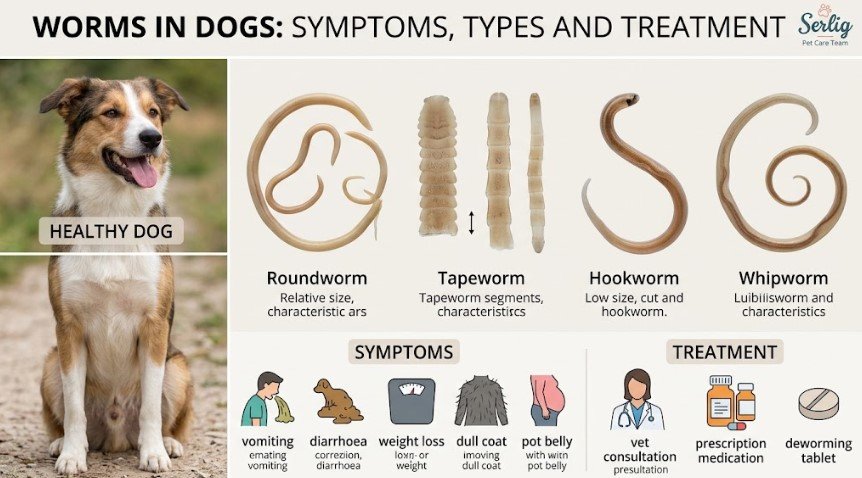
Worms in dogs symptoms include diarrhoea, weight loss despite a normal appetite, a dull coat, vomiting, a pot bellied appearance in puppies, and visible worms or rice like segments in stool. Many infected dogs show nothing at all. The four common intestinal worms are roundworm, hookworm, whipworm and tapeworm, and no single product treats all of them. Diagnosis is by faecal testing, though a negative result does not rule out worms, and puppies need a different schedule from adults.
Signs Your Dog May Have Worms
The most useful thing to know first: many dogs with worms show no signs at all. Owners are frequently unaware their dog is infected, which is why routine treatment and testing exist rather than waiting for symptoms.
When worms in dogs symptoms do appear, look for:
Digestive
- Diarrhoea, sometimes containing blood or mucus
- Vomiting, occasionally containing worms
- Weight loss despite a normal or increased appetite
- Reduced appetite
- Abdominal pain or a swollen, pot bellied belly, particularly in puppies
Physical
- A dull, dry coat
- Poor growth in puppies
- Lethargy and low energy
- Pale gums, which indicate anaemia from blood feeding worms
- Dark, tarry stool, which suggests digested blood
Visible
- Worms resembling spaghetti in stool or vomit, which are roundworms
- Small white segments like grains of rice around the tail or in stool, which are tapeworm segments
- Segments may still be moving when fresh
Pale gums in a puppy are urgent rather than something to monitor, because blood loss from hookworms can be fatal at that age. Dark or tarry stool also deserves prompt attention, and our guides to dog poop colour and black or dark stool explain what those changes mean.
The Four Intestinal Worms
| Worm | What it looks like | How dogs catch it | Key signs |
| Roundworm | Long, pale, spaghetti like. Several centimetres | From the mother before birth or in her milk, and from contaminated soil or faeces | Pot belly, poor growth, diarrhoea, vomiting, dull coat. Very common in puppies |
| Hookworm | Short, thin, rarely seen. Has teeth and feeds on blood | Contaminated soil, ingestion, the mother’s milk, and larvae burrowing through skin | Pale gums, weakness, dark tarry stool, weight loss. Can be fatal in puppies |
| Whipworm | Thin and whip shaped, rarely seen | Swallowing eggs from contaminated soil | Bloody or mucus filled diarrhoea, weight loss, straining. Often no early signs |
| Tapeworm | Flat and segmented. Segments look like rice grains | Almost always by swallowing an infected flea while grooming | Rice like segments near the tail, scooting, irritation around the rectum |
Roundworm deserves a note on its life cycle, because it explains why treatment is repeated. The larvae of Toxocara canis do not stay in the gut. They migrate through body tissues to the lungs, are coughed up, swallowed again and only then mature in the intestine. A single dose kills what is currently in the gut and misses what is still travelling.
Tapeworm is the one with an obvious trigger. Dogs get it by swallowing a flea. If your dog has had fleas, assume it may need tapeworm treatment, and our guide to getting rid of fleas on dogs covers the other half of that problem.
Heartworm and Lungworm Are Different Problems
Two worms do not live in the intestine, and they behave differently enough to need separating.
Heartworm is transmitted by mosquitoes and lives in the heart and lungs. It does not appear in stool, so a faecal test cannot find it. Diagnosis requires a blood test. Signs appear late and include coughing, exercise intolerance, fatigue and weight loss. Treatment is difficult, expensive and carries risk, which is why heartworm is described as the most preventable serious parasite in dogs. Monthly preventives are the answer, and they prevent rather than treat.
Lungworm matters in the UK and parts of Europe in particular. Dogs pick it up by eating slugs or snails, or by licking surfaces they have crossed, including toys and water bowls left outside. Signs include coughing, breathing difficulty, tiredness and, importantly, problems with blood clotting, which can show as unexplained bruising or prolonged bleeding from a small wound. Lungworm can be fatal and is not covered by every routine wormer, so ask your vet specifically whether your dog’s product includes it.
Why a Negative Test Does Not Mean No Worms
This is the most useful practical point on this page, and it is rarely explained to owners.
Worms are usually diagnosed by faecal flotation, in which a stool sample is examined under a microscope for eggs. It is a good test with real limitations.
Eggs are shed intermittently. A worm that is not laying on the day you collected the sample produces a negative result from an infected dog.
Tapeworm and whipworm eggs are particularly difficult to find. Tapeworms release segments rather than shedding eggs evenly, and whipworm eggs appear inconsistently. Both are frequently missed on a single sample.
Immature worms do not lay eggs at all. A dog infected recently can test negative while the infection is developing.
What to do about it
- Collect samples from several different days, ideally three consecutive ones, and submit them together. Accuracy improves substantially
- Tell your vet what you have actually seen at home. Rice like segments near the tail are diagnostic for tapeworm even when the test is clear
- Do not treat a negative result as an all clear if symptoms persist. Ask about repeat testing or treating empirically
- Retest about three weeks after treatment to confirm it worked
How Dogs Catch Worms
- From their mother. Roundworm and hookworm larvae cross the placenta or pass in milk, which is why most puppies are born with or quickly acquire worms
- Contaminated soil and faeces. Roundworm eggs survive in soil for years and resist most disinfectants
- Sniffing, licking and eating faeces in parks, gardens and kennels
- Swallowing fleas, which is the route for almost all tapeworm
- Through the skin. Hookworm larvae can penetrate paws and bellies from contaminated ground
- Eating wildlife, raw meat or slugs and snails. The last of these carries lungworm
- Mosquito bites, for heartworm
Treatment: Why One Dewormer Is Not Enough
This is the practical point most articles skip, and it causes real treatment failures.
Different worms need different drugs. A product that clears roundworms may do nothing for tapeworms. Tapeworm specifically requires praziquantel, which is not present in every wormer. Fenbendazole covers several of the intestinal worms but not all combinations.
So a generic dewormer from a shop may treat the wrong parasite entirely. If you are treating blind, you need a genuinely broad spectrum product, and it is worth confirming with your vet which worms it covers.
Multiple doses are usually required. Most products kill adult worms in the gut and not immature stages still developing or migrating through tissue. A second dose after a defined interval catches those. Complete the full course even after visible worms stop appearing.
Never use a product intended for another species, and never dose by eye. Check the weight band.
Treating is not preventing. A wormer clears the current infection and does nothing about reinfection from the same contaminated garden the following week. That is what routine preventives are for.
What to Expect After Deworming
Owners are rarely told what normal looks like, which causes unnecessary alarm.
You may see worms in the stool for a few days. Many dewormers kill or paralyse worms so they are passed out. Seeing dead worms is a sign the treatment is working, not a sign it has failed.
Mild side effects are common and usually brief. Temporary vomiting, loose stool, reduced appetite, tiredness or more frequent bowel movements can all occur as the parasites are cleared.
Contact your vet promptly if you see facial swelling, hives, breathing difficulty, collapse, persistent vomiting, or severe or bloody diarrhoea. These suggest a reaction rather than an expected effect.
Clean up thoroughly. Faeces passed in the days after treatment carry a heavy parasite load. Bag and bin it rather than leaving it in the garden.
Wash bedding and clean floors, and wash your hands afterwards.
If diarrhoea persists after treatment, our guide to what to feed a dog with diarrhoea covers short term management, though anything lasting beyond a day or two needs a vet.
Puppies Are a Special Case
Puppies are not small adults here. They are usually infected from birth, they carry higher worm burdens, and they have far less reserve.
Most puppies are born with or quickly acquire roundworms from their mother, which is why deworming is routine rather than a response to symptoms.
Treatment starts very young, typically from around two weeks of age, and is repeated at short intervals through the early weeks and then monthly for several months. Your vet sets the exact schedule, and it varies by region and by product.
A reputable breeder or rescue should have started this already and should give you written records. Ask for them.
Heavy infestations can be life threatening. Blood loss from hookworms and intestinal blockage from large numbers of roundworms both kill puppies. Pale gums, a swollen belly, failure to gain weight or lethargy in a puppy warrant a same day vet visit.
Our new puppy checklist covers what else to arrange in the first weeks.
Can People Catch Worms From Dogs?
Yes, and this section matters more than its usual one line treatment suggests, particularly in households with young children.
Roundworm. Humans can swallow Toxocara eggs from contaminated soil, sand or unwashed hands. In people the larvae migrate through tissue rather than maturing in the gut, a condition called larva migrans. It can affect the liver, lungs or, rarely and more seriously, the eye. Young children are most at risk because of hand to mouth behaviour and playing in soil and sandpits.
Hookworm. Larvae in contaminated soil or sand can burrow through human skin, typically bare feet, causing an itchy, winding red track known as cutaneous larva migrans.
Tapeworm. Transmission to people requires swallowing an infected flea, so it is uncommon but is reported, mostly in young children.
Practical protection
- Pick up dog faeces promptly and bag it. Roundworm eggs take time to become infectious, so same day removal genuinely helps
- Keep sandpits covered
- Wash hands after handling dogs, after gardening and before eating
- Do not let dogs lick faces, particularly children’s
- Keep dogs on a routine worming programme
- Wear shoes in areas where dogs toilet
None of this makes dogs unsafe around children. It makes routine worming and faeces disposal genuinely worth doing rather than optional.
Scooting Usually Is Not Worms
This deserves a correction, because it sends owners to the wrong treatment.
Scooting, dragging the bottom along the floor, is widely assumed to mean worms. In most cases it does not. The more common cause by a wide margin is anal gland irritation or impaction, which needs a completely different approach.
Tapeworm can cause scooting, and when it does you will usually also see rice like segments near the tail or in the stool. Without those segments, worms are the less likely explanation.
The practical consequence is that worming a scooting dog with no other signs often achieves nothing while the actual problem continues. Our guide to why a dog scoots covers the full list of causes.
When Worms Become an Emergency
Most worm infections are treated routinely. A few are not, and it is worth knowing which worms in dogs symptoms mean today rather than next week.
Go to a vet the same day if you see:
- Pale, white or grey gums. This indicates anaemia from blood feeding worms and is most dangerous in puppies, where it can be fatal
- A puppy that is lethargic, weak or not gaining weight
- A swollen, hard, painful abdomen, which in a heavily infested puppy can indicate intestinal blockage
- Repeated vomiting, particularly if worms are present in the vomit
- Bloody diarrhoea, or black tarry stool that suggests digested blood
- Collapse or unwillingness to stand
- Unexplained bruising or bleeding that does not stop, which in lungworm areas can indicate a clotting problem
- Coughing with breathing difficulty, which points toward lungworm or heartworm rather than an intestinal problem
The size difference matters. A worm burden that an adult Labrador tolerates without symptoms can kill an eight week old puppy, simply because the blood volume and nutritional reserve are so much smaller. Treat any of the signs above in a puppy as urgent by default.
Do not give a shop bought wormer to a collapsed or severely unwell dog and hope it resolves. A dog that is already anaemic or obstructed needs supportive treatment first, and killing a large worm burden quickly can occasionally cause its own problems. That is a veterinary decision.
A dog that has gone off its food entirely also warrants attention, and our guide to why a dog stops eating covers the wider picture.
- Keep every dog on a routine worming programme, with the interval set by your vet based on age, lifestyle and local risks
- Monthly combination preventives often cover heartworm alongside common intestinal worms, which is simpler than separate products
- Control fleas year round. This is the single most effective tapeworm prevention there is
- Pick up faeces immediately, in your garden and on walks
- Discourage eating faeces, wildlife, slugs and snails
- Bring water bowls and toys indoors overnight in lungworm areas
- Faecal test at least annually, and more often for puppies, dogs that scavenge and multi dog households
- Treat all pets in the household, since worms pass between dogs and cats
Frequently Asked Questions
What are the first signs of worms in dogs? Often none. When signs appear, the earliest are usually diarrhoea, a dull coat, weight loss despite a normal appetite and, in puppies, a pot bellied appearance and poor growth.
Can I see worms in my dog’s poop? Sometimes. Roundworms look like spaghetti and tapeworm segments look like rice grains. Hookworms and whipworms are rarely visible, so not seeing worms does not mean there are none.
How often should I worm my dog? It depends on age, lifestyle and where you live. Puppies need frequent treatment from a few weeks old, and adults typically need regular treatment throughout the year. Your vet should set the interval rather than a packet.
Will one dose of dewormer clear the infection? Often not. Most products kill adult worms in the gut but not immature stages still developing, so a repeat dose is usually needed. Complete the full course.
My dog tested negative but still has symptoms. What now? A negative faecal test does not rule out worms, since eggs are shed intermittently and tapeworm and whipworm are easily missed. Ask about testing samples from several days, or about treating empirically.
Can my dog give worms to my children? Roundworm and hookworm can infect people, usually through contaminated soil rather than direct contact. Prompt faeces disposal, covered sandpits, handwashing and routine worming reduce that risk substantially.
My dog is scooting. Does he have worms? Probably not. Anal gland problems are a far more common cause. Worms are more likely if you can also see rice like segments near the tail.
The Bottom Line
Worms in dogs symptoms are easy to miss, because a large share of infected dogs look completely well. That is the reason worming is routine rather than reactive.
Three things are worth carrying away. No single dewormer covers every worm, so a product that clears roundworms may leave a tapeworm infection untouched. A negative faecal test is not an all clear, because eggs are shed intermittently and two of the four common worms are easily missed. And treating is not preventing, since a dose clears today’s infection and does nothing about the same contaminated ground next week.
If your dog has had fleas, ask about tapeworm. If you have young children, pick up faeces the same day and keep the sandpit covered. And if a puppy has pale gums, that is a vet visit today rather than a wormer from the shop.