
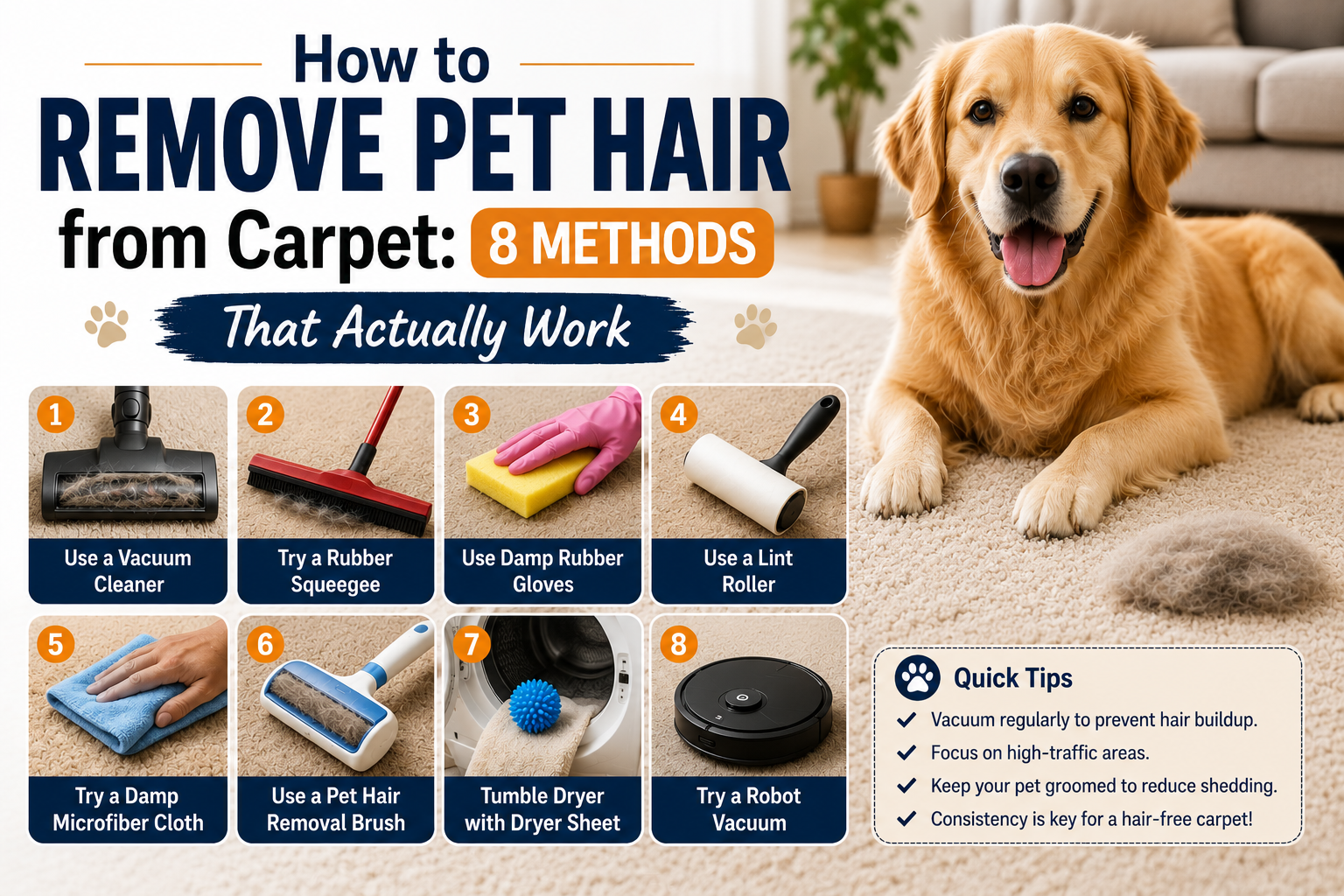
The most effective way to remove pet hair from carpet is a two-step approach
loosen the hair first (with a rubber squeegee, carpet rake, or fabric softener spray), then vacuum it up with slow, overlapping passes using a motorized pet brush attachment. For stubborn, deeply embedded hair, baking soda and rubber gloves are your best household allies. Prevention through regular grooming cuts the problem significantly at the source.
A note from Serlig: Pet hair in carpet is not just a cleaning annoyance it traps dander and allergens that affect both human and pet health. Regular removal keeps your home fresher and your pet’s coat in better condition. For persistent, heavy shedding, the real fix often starts with your pet’s diet and grooming routine.
If you share your home with a dog or cat, you already know the feeling: you have just vacuumed, you turn around, and somehow the carpet is already covered again. Pet hair embeds itself deep into carpet fibers, clings with static, and resists ordinary vacuuming in a way that loose dirt simply does not.
The good news is that knowing how to remove pet hair from carpet properly with the right tools in the right order makes the job dramatically faster and more effective. Here are the eight best methods, starting with the ones that work hardest.
Why Pet Hair Is So Stubborn in Carpet
Before the methods, a quick explanation of why this problem is harder than it looks. Pet hair especially from double-coated breeds like German Shepherds, Golden Retrievers, and Huskies does not just sit on top of carpet fibers. It works its way into the weave with every footstep, where suction alone cannot always reach it. Static electricity makes it cling even harder. And the finer the hair cats in particular the deeper it can penetrate.
That is why the most effective approach always involves loosening the hair before vacuuming, not just running a vacuum over the surface.
8 Methods to Remove Pet Hair from Carpet
1. Rubber Squeegee (Most Effective for Large Areas)
A rubber-edged window squeegee is one of the most underrated tools for pet hair removal. The rubber edge generates static as it drags across the carpet, pulling embedded hair up into clumps that are easy to vacuum or collect by hand.
How to use it:
- Work in short, firm strokes moving in one direction
- Collect the clumped hair as you go
- Follow immediately with a vacuum
This method works remarkably well on medium and short-pile carpets and covers ground quickly. It is the closest thing to a professional-level result using a household tool.
2. Proper Vacuuming with the Right Attachment
Most people vacuum too fast. For pet hair specifically, slow, overlapping passes are what actually pull embedded hair out of the fibers.
For best results:
- Use a motorized pet brush or turbo head, not a standard floor attachment
- Move front to back first then side to side cross-hatch pattern
- Keep the brush roll adjusted to just touch the carpet surface
- Empty the bin or bag before it gets more than half full suction drops significantly when it is full
- Clean the brush roll regularly; wrapped hair reduces effectiveness fast
If you have a high-pile or shag carpet turn off the brush roll and use suction only spinning bristles can damage looser weaves.
3. Rubber Gloves
One of the cheapest and most effective DIY solutions. Rubber or latex gloves create static that pulls pet hair to the surface and holds it there
How to use them:
- Put on rubber gloves and run your palms firmly over the carpet in circular or sweeping motions
- For extra grip dampen the gloves slightly before starting
- Collect the hair balls and dispose of them before vacuuming
This method is particularly good for stairs car carpet and smaller areas where a vacuum is awkward to maneuver.
4. Fabric Softener Spray (for Stubborn Embedded Hair)
Fabric softener works because it relaxes carpet fibers, releasing their grip on embedded pet hair and reducing the static charge that helps hair cling.
How to make it:
- Mix one part liquid fabric softener with three parts water in a spray bottle
- Lightly mist the carpet do not soak it
- Allow to dry completely 15-20 minutes
- Vacuum as normal
You will notice the vacuum picks up significantly more hair after this treatment. The spray bottle keeps indefinitely and can be reused each time you clean.
5. Baking Soda Removes Hair and Odor Together
Baking soda loosens hair from carpet fibers while simultaneously neutralizing the pet odors that come with it making it a two-for-one solution that is especially useful if your carpet has developed that distinctive dog smell
How to use it:
- Sprinkle a thin, even layer of baking soda over the carpet
- Leave for 10-15 minutes longer if odor removal is the priority
- Vacuum thoroughly
Baking soda is safe for pets once vacuumed up, inexpensive, and one of the most effective natural treatments for both hair removal and odor. For lingering odour, sprinkle it across the carpet, leave it at least fifteen minutes, then vacuum thoroughly.
6. Carpet Rake
A carpet rake looks like a wide-toothed comb on a long handle. Dragged across carpet it lifts embedded hair to the surface where a vacuum can capture it. It is particularly effective on high-pile or plush carpets where hair sinks deep.
How to use it:
- Work in one direction, raking the carpet toward you
- Do not press too hard on delicate carpet types
- Vacuum immediately after to collect the loosened hair
A carpet rake used before vacuuming can double the amount of hair your vacuum picks up in a single pass.
7. Lint Roller (for Spot Cleaning)
Lint rollers are not practical for large areas you would go through a roll in minutes. But for a quick spot clean on a small rug a stair tread or a favorite corner where your pet always sits they are fast and effective.
Keep one in a handy location and use it for daily touch-ups between deeper cleans.
8. Professional Hot Water Extraction for Heavy Buildup
When pet hair has been accumulating in carpet fibers for a long time and nothing else is shifting it, professional hot water extraction (steam cleaning) reaches deeper into the carpet than any household tool. The combination of hot water, cleaning solution, and powerful extraction pulls out embedded hair, dander, and allergens that surface cleaning leaves behind.
For households with multiple heavy-shedding pets, a professional deep clean once or twice a year is worth considering alongside your regular routine.
The Right Order Makes All the Difference
Knowing how to remove pet hair from carpet effectively is as much about sequence as it is about tools:
- Loosen first : carpet rake, squeegee, or rubber gloves
- Treat if needed : baking soda or fabric softener spray
- Vacuum thoroughly : slow, cross-hatch passes with the right attachment
- Spot clean : lint roller for corners and stairs
Skipping step one and going straight to vacuuming is why most people feel like their vacuum is not working it is not the vacuum, it is the order.
The Real Fix: Reduce Shedding at the Source
All these methods work better when there is less hair to deal with in the first place. The amount of hair your pet sheds every day is influenced by factors you can actually control most importantly, diet and grooming.
Diet: A diet deficient in omega-3 fatty acids, protein quality, or essential vitamins will show up in your pet’s coat -more shedding, duller fur, and more hair on your carpet. Improving diet quality often visibly reduces shedding within a few weeks. See Serlig guides to best dog food for weight loss and is fresh dog food good for dogs for practical food improvements that also affect coat health.
Grooming: Regular brushing ideally outdoors removes loose hair before it reaches your carpet. For cat our guide on how to improve cat coat naturally and for dogs dealing with excessive shedding why is my cat shedding so much covers the causes worth addressing.
Air purifier: A good air purifier with a HEPA filter captures airborne pet hair and dander before it settles into carpet. See our best pet air purifier guide for practical options.
Frequently Asked Questions
What is the fastest way to remove pet hair from carpet?
A rubber squeegee dragged across the carpet surface followed immediately by vacuuming is the fastest effective method for large areas. It clumps embedded hair quickly and your vacuum can collect it in one pass
Can I use a regular vacuum for pet hair?
A regular vacuum works but a motorized pet brush attachment makes a significant difference. Standard flat attachments cannot reach into carpet fibers the way a spinning brush roll can. If pet hair is a consistent problem upgrading to a vacuum with a tangle-free pet brush is worth the investment.
How often should I vacuum if I have pets?
At least twice a week in high-traffic areas and daily during heavy shedding seasons (spring and autumn for most breeds). Regular vacuuming prevents hair from working its way deep into the carpet where it is much harder to remove.
Does baking soda damage carpet?
No -baking soda is safe for most carpet types and does not leave residue once vacuumed up thoroughly. Avoid using it on natural fiber carpets like wool or sisal without testing a small area first, as the alkalinity can affect some natural fibers.
How do I stop pet hair from sticking to carpet?
Anti-static carpet sprays reduce the static charge that helps hair cling to fibers. Regular grooming removes loose hair before it reaches the floor. And a pet air purifier running continuously captures airborne hair before it settles.
Quick Reference: Tool Comparison
| Method | Best for | Effort level |
| Rubber squeegee | Large areas, medium pile | Low |
| Motorized vacuum | All areas, deep cleaning | Low |
| Rubber gloves | Stairs, small areas, spot clean | Medium |
| Fabric softener spray | Stubborn embedded hair | Low (wait time) |
| Baking soda | Hair + odor removal together | Low (wait time) |
| Carpet rake | High-pile, plush carpets | Medium |
| Lint roller | Spot cleaning, quick touch-ups | Very low |
| Professional extraction | Heavy buildup, annual deep clean | Professional |
A Note on Pet Health
Serlig publishes researched pet care information for everyday owners. It is general guidance, not veterinary advice, and it does not replace an examination by a licensed veterinarian who knows your pet. If your pet is unwell, or anything in this guide does not match what you are seeing at home, contact your vet.





One Comment