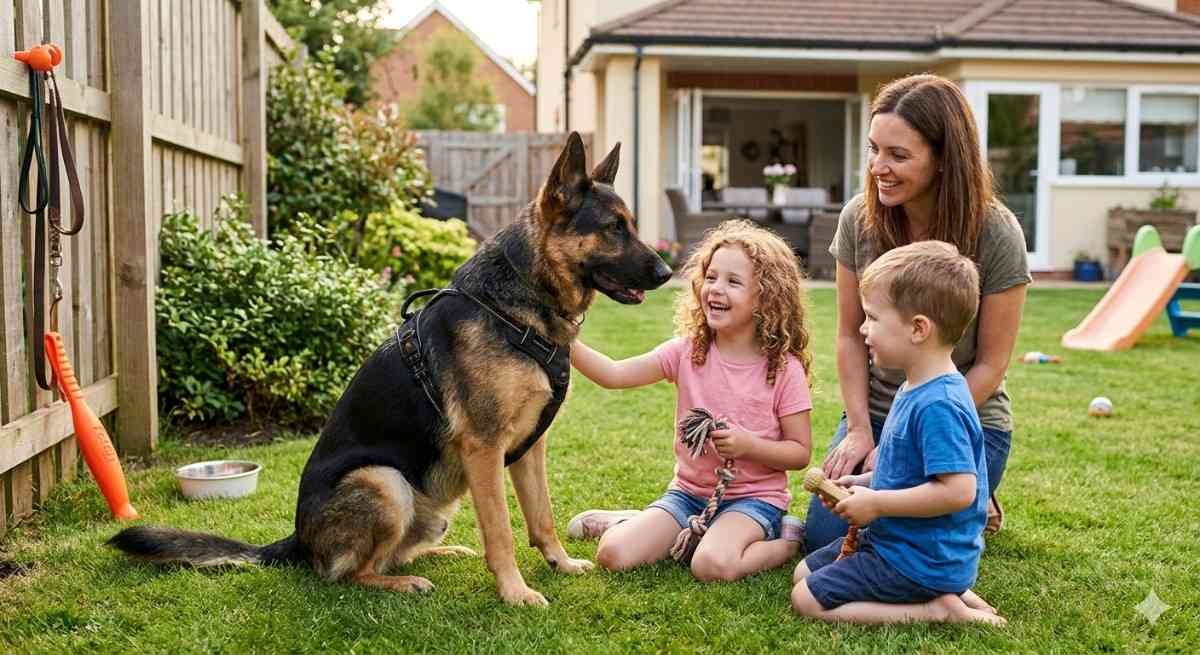
Many families dream of bringing a loyal, intelligent dog into their home. The German Shepherd often tops that list. They are famous for their courage, devotion, and striking appearance. Bringing a large, powerful breed into a house with children requires careful planning and a deep understanding of canine behavioral science.
You need to know how these dogs think, react, and bond. It takes work to ensure a safe environment for both the dog and your children. A successful relationship relies on proper training and mutual respect.
This guide breaks down GSD temperament with toddlers, the importance of the socialization window, and practical safety tips for dogs and kids. You will learn how to read canine body language and establish rules that foster a secure, loving relationship between your family and your new dog.
The Quick Answer: Is a GSD Right for Your Family?
German Shepherds make excellent family dogs when provided with early socialization, consistent training, and active supervision. They are fiercely loyal and protective. However, their high energy, herding instinct, and size mean they require an experienced, dedicated owner to thrive safely alongside children.
Understanding Core GSD Traits
To successfully integrate a German Shepherd into a family, you must understand their innate drives. These dogs possess a strong pack orientation, meaning they bond deeply with their human family members.
Herding Instinct vs. Protective Nature
People often confuse a dog’s herding instinct with its protective nature. A herding drive compels the dog to control the movement of other animals or people. In a home, this might look like your dog gently nudging or blocking children as they run through the yard.
A protective nature stems from a desire to guard the pack from perceived threats. A German Shepherd might place itself between a child and a stranger. Both behaviors require careful management using operant conditioning. You must teach the dog appropriate ways to channel these instincts so they do not escalate into problematic behavior.
Managing Prey Drive
German Shepherds have a natural prey drive. Quick, erratic movements and high-pitched noises can trigger this instinct. Since children frequently run and squeal, early training is vital. Teaching strong impulse control helps the dog distinguish between a fleeing animal and a playing child.
Age-Specific Guidance for Your Home
The dynamic between a dog and a child changes depending on the age of both the animal and the kids.
Raising GSD Puppies Around Children
Puppies explore the world with their mouths. They have incredibly sharp teeth, and “nipping” behavior is entirely normal during their developmental stages. You must teach bite inhibition early on. When the puppy nips a child, redirect the behavior to an appropriate chew toy and use positive reinforcement when the dog makes the right choice.
Introducing Adult GSDs to the Family
Adult German Shepherds often bring stability and patience to a household. If you are adopting an older dog, verify their history with children. A mature dog that missed crucial exposure during its early socialization window might find loud, unpredictable toddlers overwhelming.
Toddlers vs. Older Kids
Toddlers do not understand boundaries. They will pull ears, grab tails, and stumble into resting dogs. You must manage the environment to prevent the dog from feeling trapped. Older children can take an active role in the dog’s life. Teach them how to give basic commands and feed the dog, which helps establish the child as a respected member of the pack hierarchy.
The Safety First Protocol
Safety relies on your ability to read the dog’s emotional state before a situation escalates. Dogs rarely bite without warning. They communicate discomfort through subtle canine body language long before they resort to a growl or a snap.
Watch for these critical warning signs when your dog interacts with children:
- Lip licking when no food is present
- Yawning outside of sleepy contexts
- Showing the “whale eye” (the whites of the dog’s eyes become visible as they turn their head slightly away)
- Stiffening of the body or a suddenly closed mouth
- Ears pinned tightly against the head
If you see any of these signs, separate the dog and the child immediately. Give the dog a quiet, safe space to decompress.
GSD vs. Other Family Breeds
When evaluating family dogs, it helps to compare the German Shepherd with other popular choices.
| Feature | German Shepherd | Labrador Retriever | Golden Retriever |
| Energy Level | Very High (Needs intense mental & physical work) | High (Needs daily vigorous exercise) | High (Needs regular daily exercise) |
| Protection | Very High (Naturally guards the home and family) | Low (Generally friendly to everyone) | Low (Highly sociable with strangers) |
| Patience | Moderate (Requires space and strong boundaries) | High (Very forgiving of clumsy interactions) | Very High (Extremely tolerant and gentle) |
What If My German Shepherd Grows Protective of the Baby?
If your German Shepherd starts acting overly protective of a new baby, you must intervene early. A dog guarding a baby might block other family members or guests from approaching the crib. While this seems sweet, it is a form of resource guarding that can lead to aggressive outbursts.
Redirect the dog’s focus. Teach a strong “place” command, requiring the dog to sit on a specific mat while you handle the baby. Reward the dog for calm, detached behavior. You want the dog to understand that you are the pack leader and you have the situation under control.
Frequently Asked Questions
Can a German Shepherd be left alone with a toddler?
Never. You should never leave a toddler alone with any dog, regardless of the breed or the dog’s training history. Toddlers are unpredictable, and even the most patient German Shepherd can react poorly if startled or hurt. Active adult supervision is always required.
Are male or female GSDs better with children?
Both can be wonderful with children, but they often show different dynamics. Females tend to be more naturally nurturing and protective of the specific family unit. Males are often larger, slightly more territorial, and can be more boisterous during play. Individual temperament and proper socializing matter far more than gender.
How do I introduce my GSD to a newborn?
Start preparing the dog before the baby arrives. Bring home a blanket carrying the baby’s scent from the hospital and let the dog sniff it from a respectful distance. When you bring the baby home, keep the dog leashed and in a calm state. Reward the dog for ignoring the baby or showing mild, polite interest. Gradually decrease the distance over several weeks as the dog proves it can remain relaxed.
What are the best games for kids to play with a German Shepherd?
Older children should focus on structured, low-contact games. Fetch is excellent because it burns the dog’s energy without physical wrestling. Hide-and-seek engages the dog’s powerful nose and mind. Avoid roughhousing, tug-of-war, or wrestling games, as these can overstimulate the dog and accidentally trigger its prey drive.
Building a Lifelong Bond
A well-trained German Shepherd is an incredible addition to a family. They offer unmatched loyalty and can teach children valuable lessons about empathy, responsibility, and respect for animals. By prioritizing canine behavioral science, active supervision, and positive reinforcement, you can create a safe environment where both your kids and your dog can thrive together.
A Note on Pet Health
Serlig publishes researched pet care information for everyday owners. It is general guidance, not veterinary advice, and it does not replace an examination by a licensed veterinarian who knows your pet. If your pet is unwell, or anything in this guide does not match what you are seeing at home, contact your vet.